Artwork
Delhi. Great Arch and Iron Pillar Near the Kootub Minar, Ruin of Old Delhi
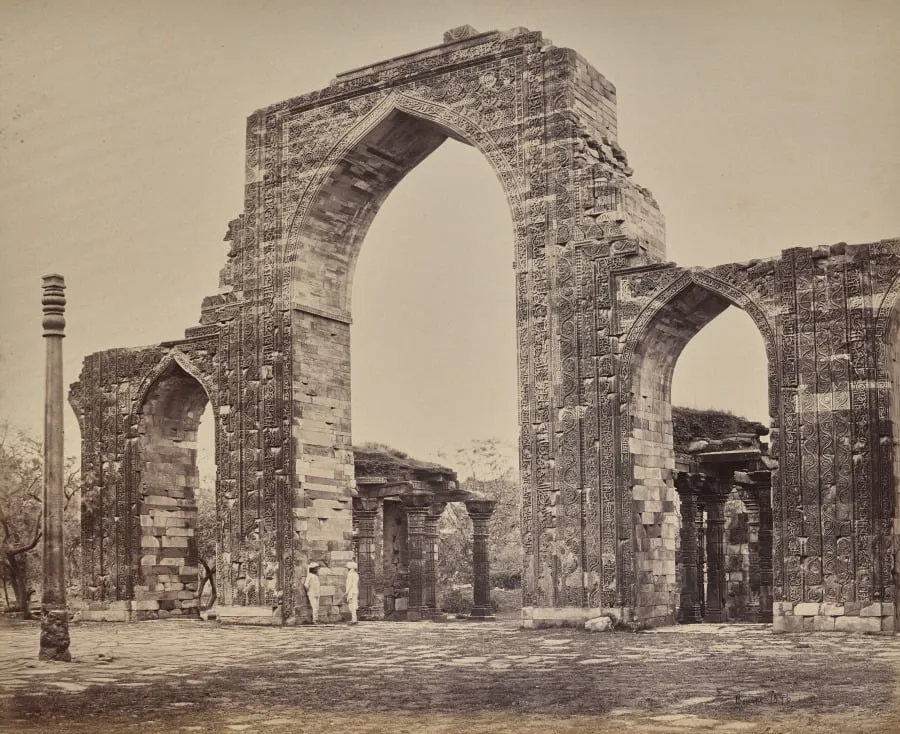
Delhi. Great Arch and Iron Pillar Near the Kootub Minar, Ruin of Old Delhi is a photography by the Impressionist artist Samuel Bourne. It dates from 1866 and is held in the collection of the Cleveland Museum of Art. The black‑and‑white photograph captures a deteriorating stone arch and the adjacent iron pillar that stand beside the Qutub Minar in Delhi.
About this work
It’s one of the earliest images of these ruins, showing them just as they were when the British first documented them.
You see a black-and-white photo of a crumbling stone arch and a tall iron pillar next to the Qutub Minar in Delhi. The arch frames the scene like a window, and the pillar stands straight, untouched by time.
This photo was taken in the 1860s, before the site was restored. It’s one of the earliest images of these ruins, showing them just as they were when the British first documented them. The iron pillar, over a thousand years old, hasn’t rusted—a mystery still unsolved.
To see more early photos of India’s landmarks, look up Samuel Bourne (British, 1834–1912).
Overview
The black‑and‑white photograph captures a deteriorating stone arch and the adjacent iron pillar that stand beside the Qutub Minar in Delhi. Taken in the 1860s, the image records the condition of the monuments before any twentieth‑century restoration work altered their appearance.
Subject & Meaning
The composition frames the ruined arch as a visual portal, emphasizing the contrast between the weathered masonry and the remarkably preserved iron column, which rises upright despite its age. The juxtaposition highlights the endurance of the pillar against the decay of surrounding structures.
Technique & Style
Executed with the large‑format wet‑plate collodion process typical of mid‑nineteenth‑century photography, the image presents fine tonal gradations that render the textures of stone and metal with clarity. The photographer employed a careful framing that isolates the arch and pillar, creating a study‑like perspective.
History & Provenance
The photograph belongs to a series of about fifty images produced in the 1860s that document sites from the Himalayan foothills to major urban centers such as Lahore, Lucknow, Agra, Varanasi, and Calcutta. It is among the earliest visual records of the Qutub Minar complex, captured before British officials began systematic conservation efforts.
Context
During the mid‑nineteenth century, British surveyors and photographers traveled across the Indian subcontinent to document its architectural heritage. The images served both administrative purposes and scholarly interest, providing reference material for later restoration projects and for scholars studying Mughal and pre‑Mughal architecture.
Legacy
The iron pillar, reputed to be over a millennium old and noted for its resistance to corrosion, continues to intrigue researchers. Early photographs like this one remain essential primary sources for historians assessing the original state of Delhi’s historic monuments prior to modern interventions.
Artist & collection

Artist
Samuel Bourne was a British photographer known for his prolific seven years' work in India, from 1863 to 1870.

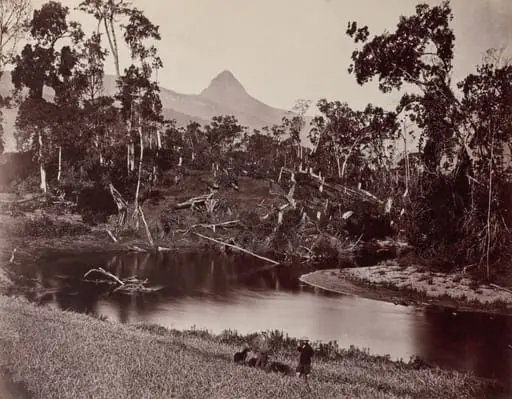 Ceylon Views to Adam's Tooth
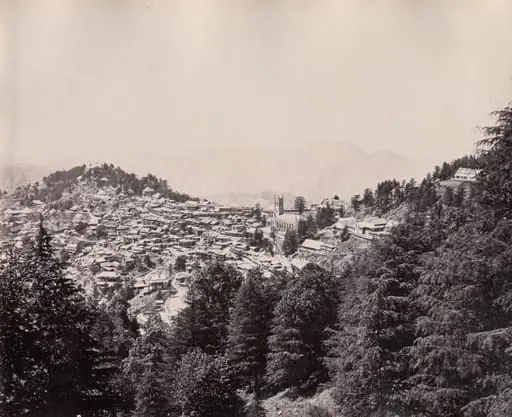 Shimla
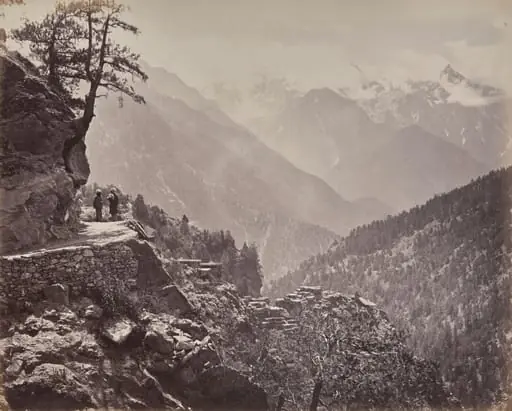 The Upper Himmalayahs. View on the New Road between India and China. Mt. Pangi with the Snowy Peaks of China in the Distance
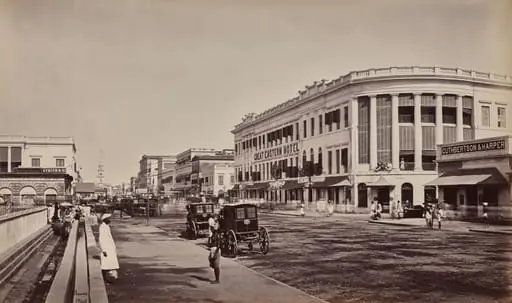 Calcutta. Old Court House Street
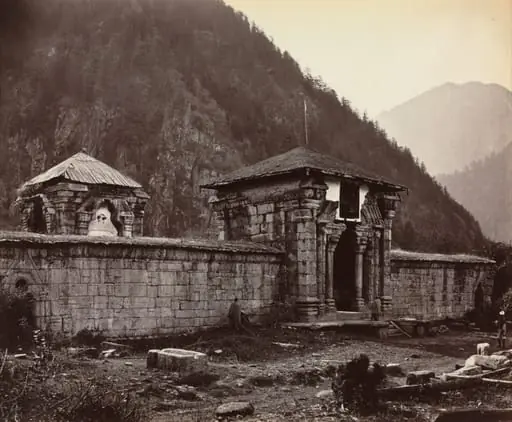 Temple at Naveshera, Kashmir, India
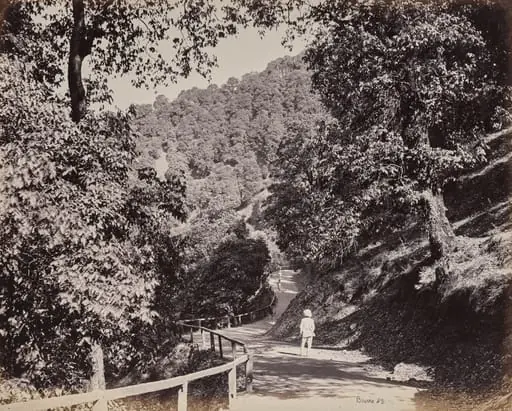 Shimla. The Mall near Rabq Lodge
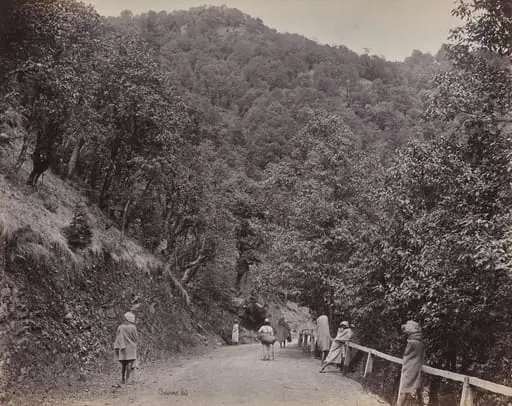 Shimla. The Mall or Principal
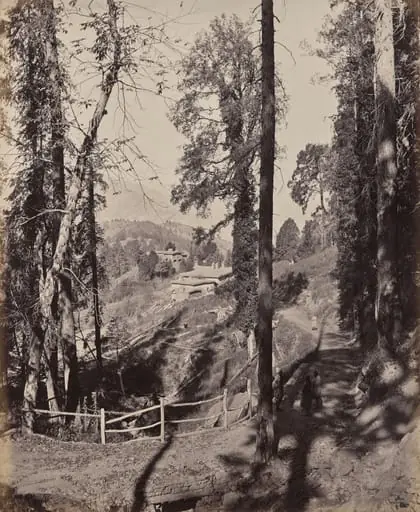 Murree. A Hill Station in the Himmalayahs, View Through the Forest
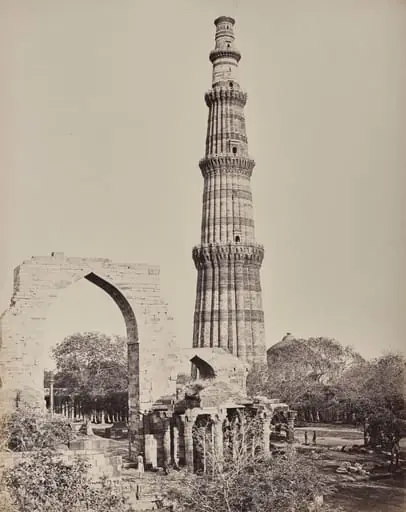 Delhi. The Kootub Minar or Tower in the Ruined City of Old Delhi
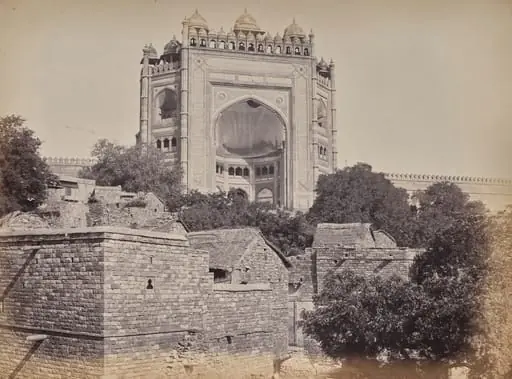 Futheypoor Sikre Guard Gate of the Fort
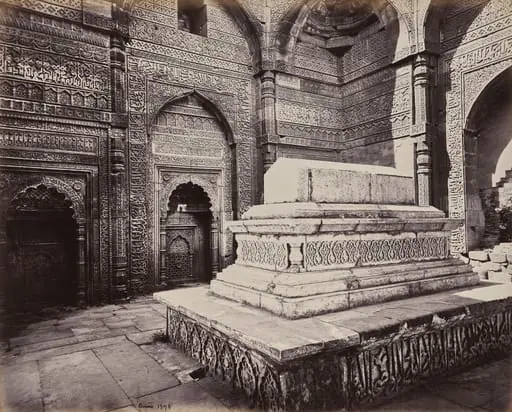 Delhi. Tomb of the Emperor Shums ooo deen Allomsh, Builder of the Kootub Minar in the Ruins of Old Delhi
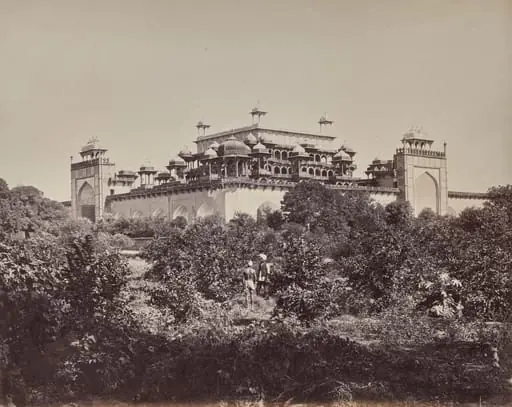 Secundra Near Agra. The Mausoleum of the Emperor Akbar
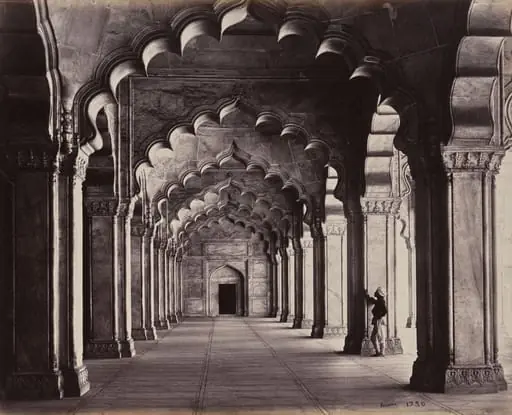 Agra. The Motee Hasjid in Pearl Mosque. View of the Entire Aisle
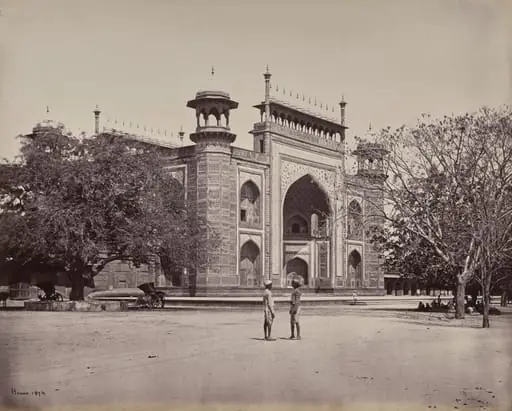 Agra. The Gateway of the Gardens Surrounding the Taj
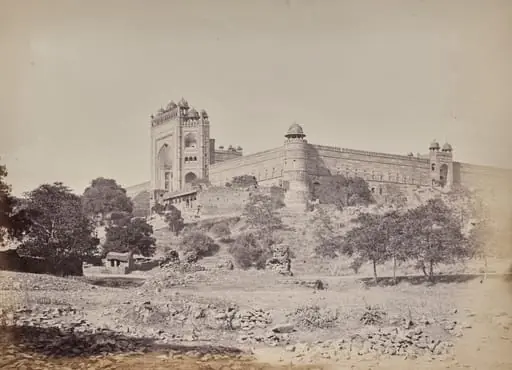 Fort of Futheypoor Sikre near Agra. The Residence of the Emperor Akbar
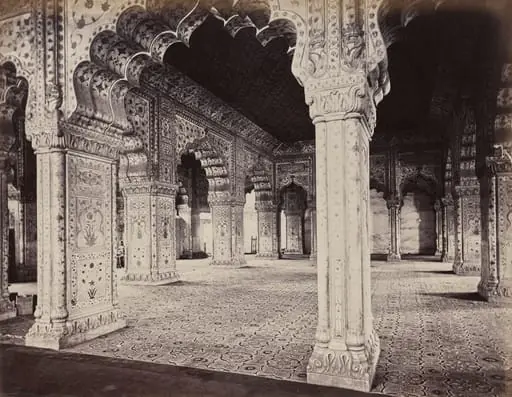 Delhi. The Emperor's Palace. Interior of Dewani in Private Hall