Artwork
An Egyptian Stage Design
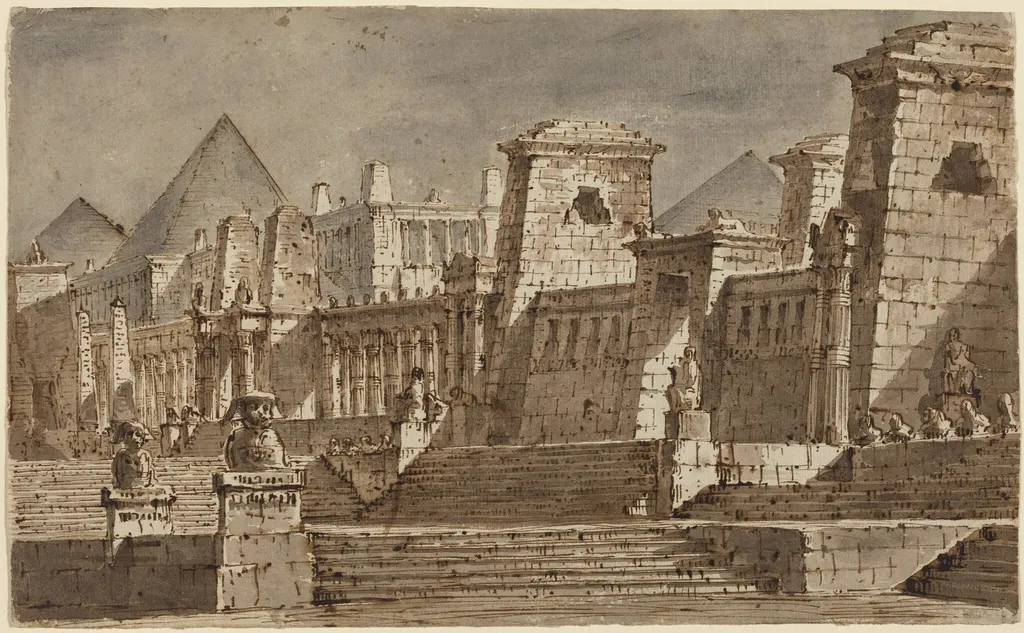
An Egyptian Stage Design is an ink drawing by the Romanticist artist Pietro Gonzaga. It dates from 1815 and is held in the collection of the National Gallery of Art.
About this work
Overview
Pietro Gonzaga's An Egyptian Stage Design is a drawing executed in pen and brown ink with gray and brown wash on laid paper, dating to circa 1815.
Subject & Meaning
The subject of the drawing is a stage design inspired by Egyptian motifs, reflecting the early 19th-century European fascination with Egyptian antiquity. The design likely intended for theatrical use, capturing the era's penchant for exotic, ancient settings in opera and theater productions.
Technique & Style
Gonzaga employed a combination of pen and brown ink for delineation, complemented by gray and brown washes to achieve depth and texture. This technique was characteristic of architectural and stage design drawings of the period, emphasizing clarity of form and spatial arrangement.
History & Provenance
Created around 1815, the drawing's provenance prior to its current location is not detailed here. It is attributed to Pietro Gonzaga, an artist whose works often explored architectural and scenographic themes.
Context
An Egyptian Stage Design situates itself within the broader Neoclassical and Orientalist movements of the early 19th century. The piece reflects the influence of Napoleon's Egyptian campaign (1798-1801), which spurred a widespread European interest in Egyptian culture and architecture.
Legacy
While specific influence or direct legacy of An Egyptian Stage Design by Gonzaga is not highlighted in available information, it contributes to the historical record of stage design evolution and the transient yet impactful trend of Egyptianesque themes in early 19th-century European art and theater.
Artist & collection


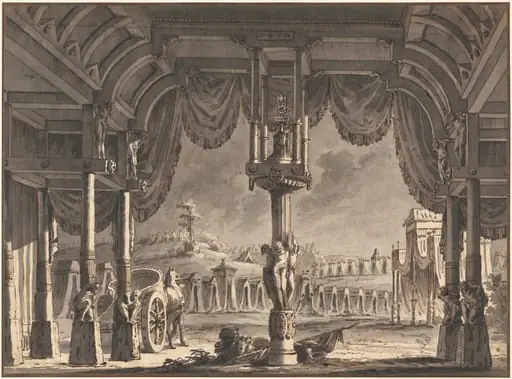 Stage Design of an Ancient Roman Encampment by Night (recto)
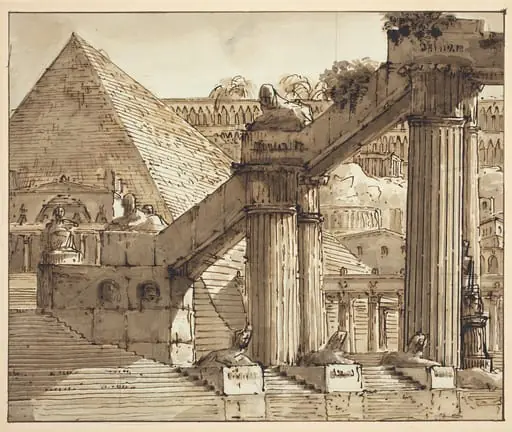 Egyptian Stage Design
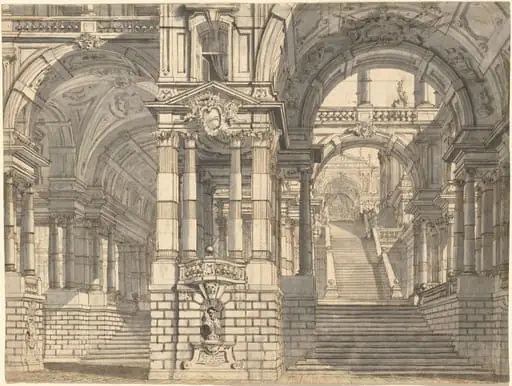 Fantasy of Magnificent Courtyards and Loggie with a Monumental Staircase
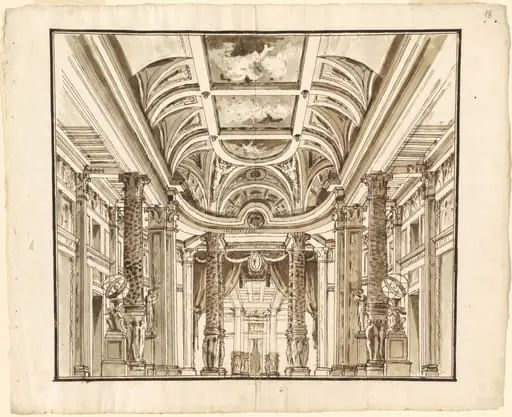 Fantasy of a Great Hall with Basketweave Columns
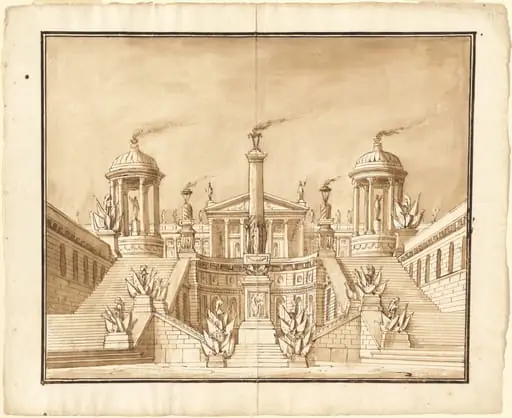 Fantasy of an Ancient Capitol with Trophies and Grand Staircases
 Architectural Fantasy on a Round Temple Enclosed with an Ambulatory (verso)
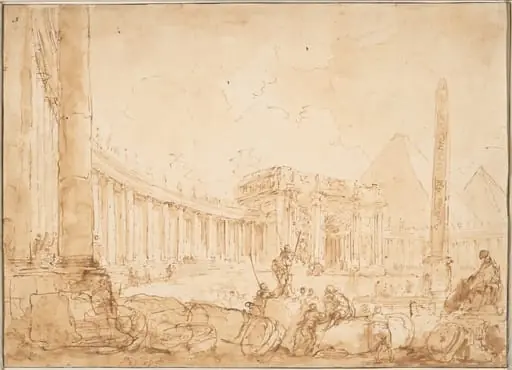 A Roman Capriccio
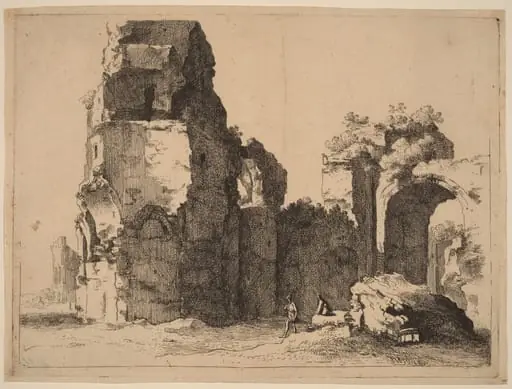 Ruins
Ruins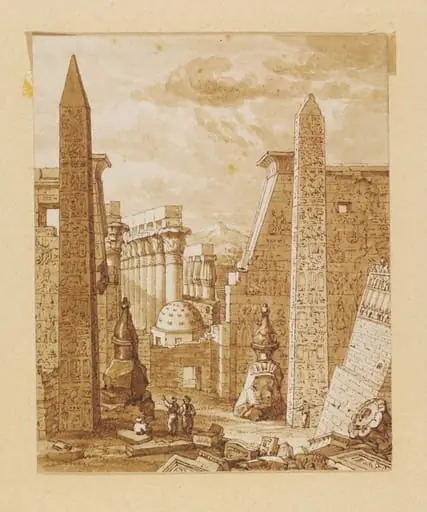 Entry of Palace of Luxor, formerly Thebes
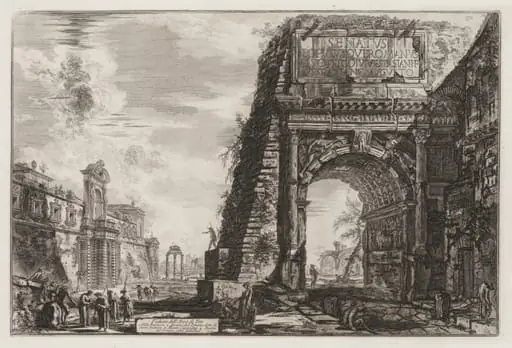 Views of Rome: The Arch or Titus
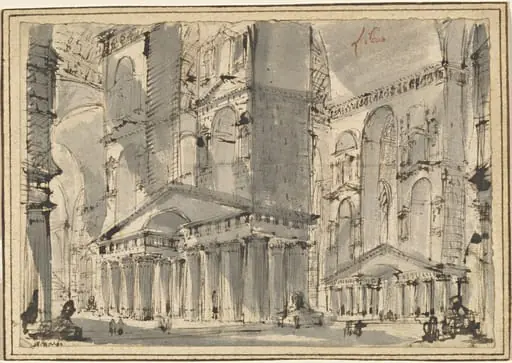 Fantasy of an Ancient Bath
 View of Ancient Buildings
 Architectural Fantasy with a Pyramidal Mausoleum
 Views of Rome: Rovine del Sisto o sia della gran sala delle Terme Antoniniane
 Capriccio with a Palladian Villa