Artwork
Corner of an Italian Garden with a Church Beyond
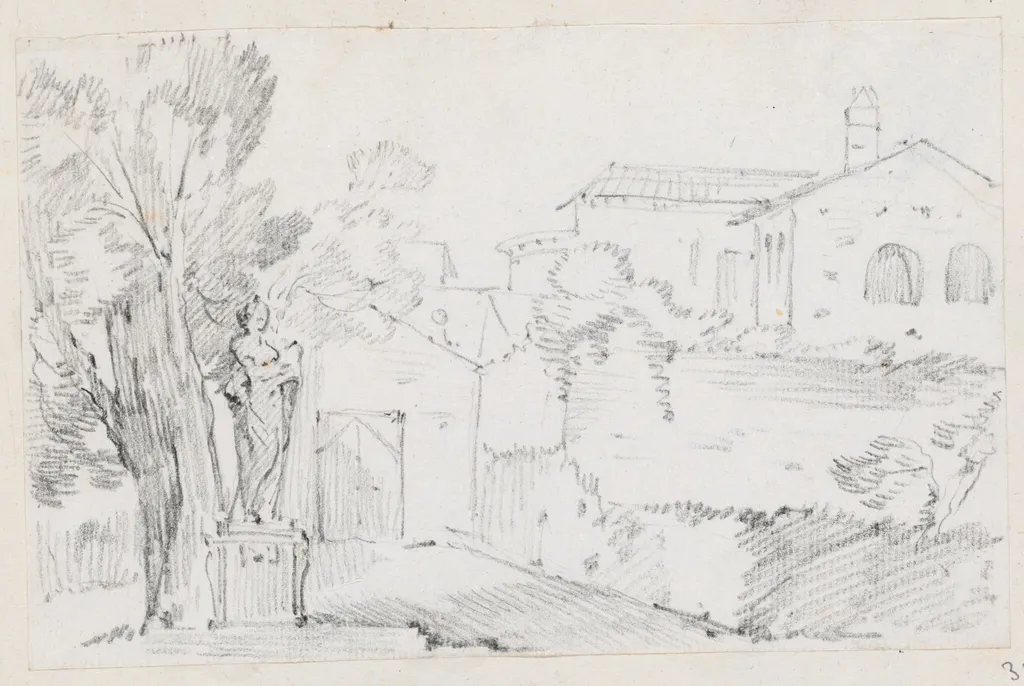
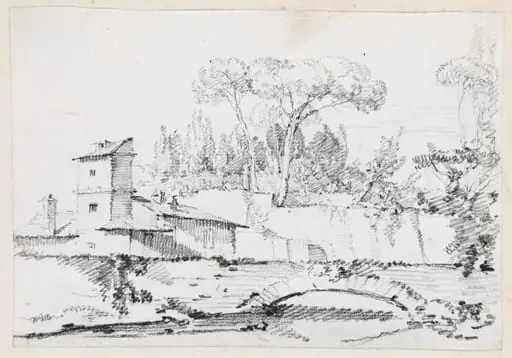
Corner of an Italian Garden with a Church Beyond is a graphite drawing by the Baroque artist Joseph-Marie Vien. It dates from 1747 and is held in the collection of the National Gallery of Art.
About this work
The artist worked on both sides of the paper, doing a tree study on the back, which shows they were experimenting with different ideas.
The painting is called Corner of an Italian Garden with a Church Beyond.
It was made by Joseph-Marie Vien between 1744 and 1750.
The artist worked on both sides of the paper, doing a tree study on the back, which shows they were experimenting with different ideas.
This was a common practice for artists at the time, allowing them to try out different techniques and compositions.
The fact that Vien did this suggests he was interested in exploring his creative options.
To learn more about this style of artwork, look into the movement: Baroque.
Overview
Joseph-Marie Vien’s drawing, titled *Corner of an Italian Garden with a Church Beyond*, was executed in graphite on laid paper sometime between 1744 and 1750. The composition presents a cultivated garden space that opens onto a distant church, offering a glimpse of the artist’s interest in integrating natural and built environments. The paper’s reverse side bears a separate study of a tree, indicating a dual use of the sheet.
Subject & Meaning
The work captures a tranquil garden corner framed by foliage and architectural hints, leading the eye toward a modest ecclesiastical structure on the horizon. This juxtaposition of cultivated nature and sacred architecture reflects the eighteenth‑century fascination with idealized landscapes that combine pastoral serenity with cultural landmarks, suggesting a harmonious relationship between humanity’s creations and the surrounding environment.
Technique & Style
Vien employed graphite to render delicate tonal variations on laid paper, a surface that imparts a subtle texture to the drawing. The front side demonstrates careful modeling of light and shadow to convey depth, while the verso contains a more experimental tree study, illustrating the artist’s practice of using a single sheet for multiple investigations. The handling aligns with the Baroque tradition of dynamic composition and chiaroscuro, albeit rendered in a restrained, drawing medium.
History & Provenance
Created during Vien’s early career, the drawing predates his appointment as Premier peintre du Roi (1789‑1791). Its date places it within the artist’s formative period, when he was absorbing Italianate influences that would later inform his official duties at the French court. The piece’s later ownership history is not extensively documented, but its survival indicates continued scholarly interest in Vien’s preparatory works.
Context
Mid‑eighteenth‑century French artists often traveled to Italy to study classical architecture and landscape motifs, integrating these observations into their own practices. Vien’s garden scene reflects this cross‑cultural exchange, merging the Italian garden ideal with French compositional sensibilities. The inclusion of a church beyond the garden aligns with contemporary Baroque tendencies to embed narrative or symbolic elements within seemingly simple vistas.
Artist & collection
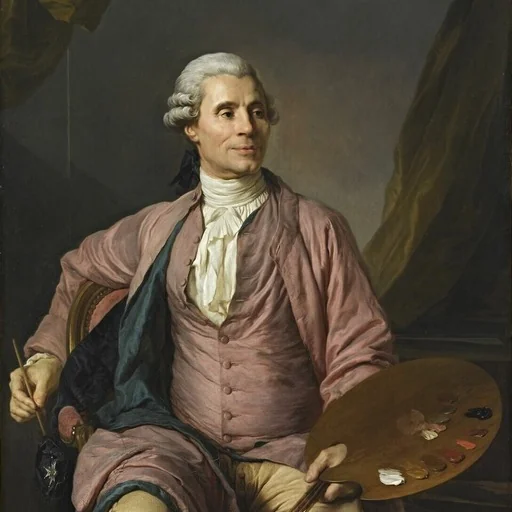
Artist
Joseph-Marie Vien (18 June 1716 – 27 March 1809) was a French painter. He was the last holder of the post of Premier peintre du Roi, serving from 1789 to 1791, before it was abolished during the French Revolution.

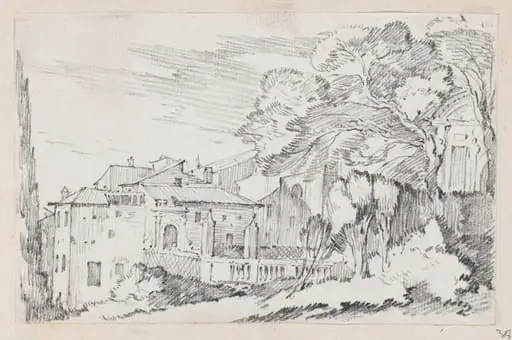 Houses and a Garden on a Hillside in Italy
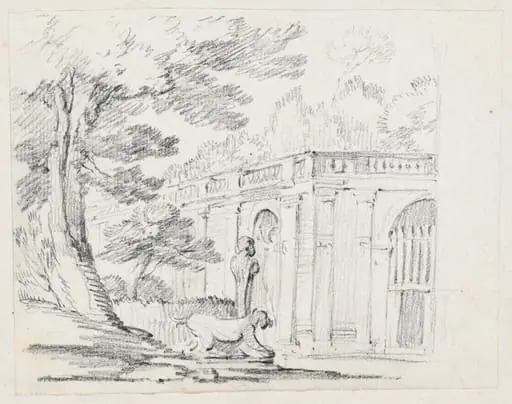 Loggia and Statuary in an Italian Garden
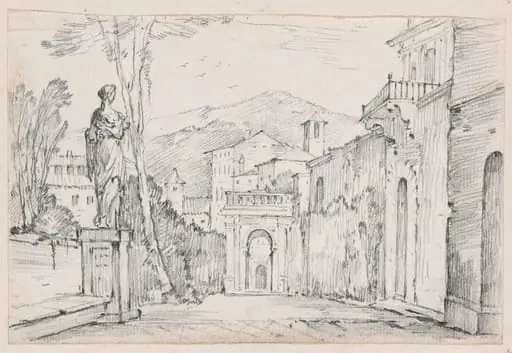 A Roman Street with Monte Cavo in the Distance
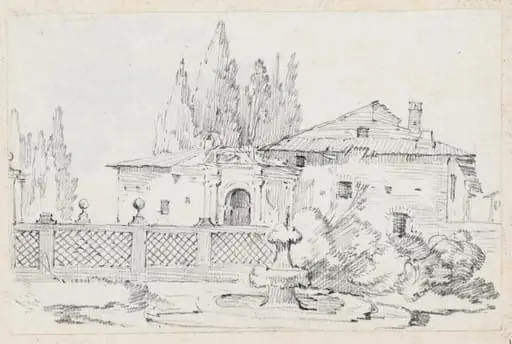 House and Trees across a Garden Wall
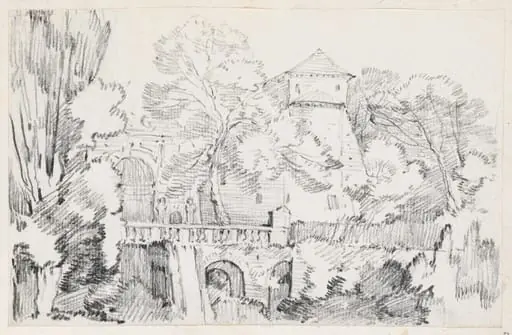 The Water Organ in the Gardens of the Villa d'Este, Tivoli
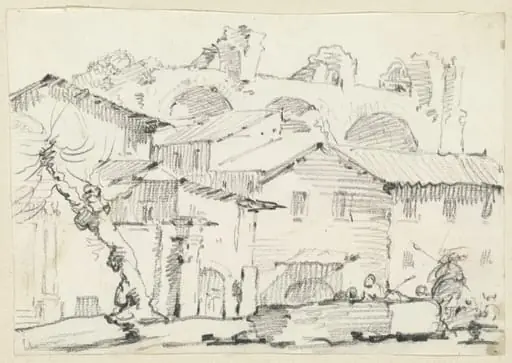 Houses on the North Side of the Forum with the Basilica of Maxentius Beyond
 View of the Prato of the Villa Borghese