Artwork
The Temple of Flora, or Garden of Nature: The Nodding Renealmia
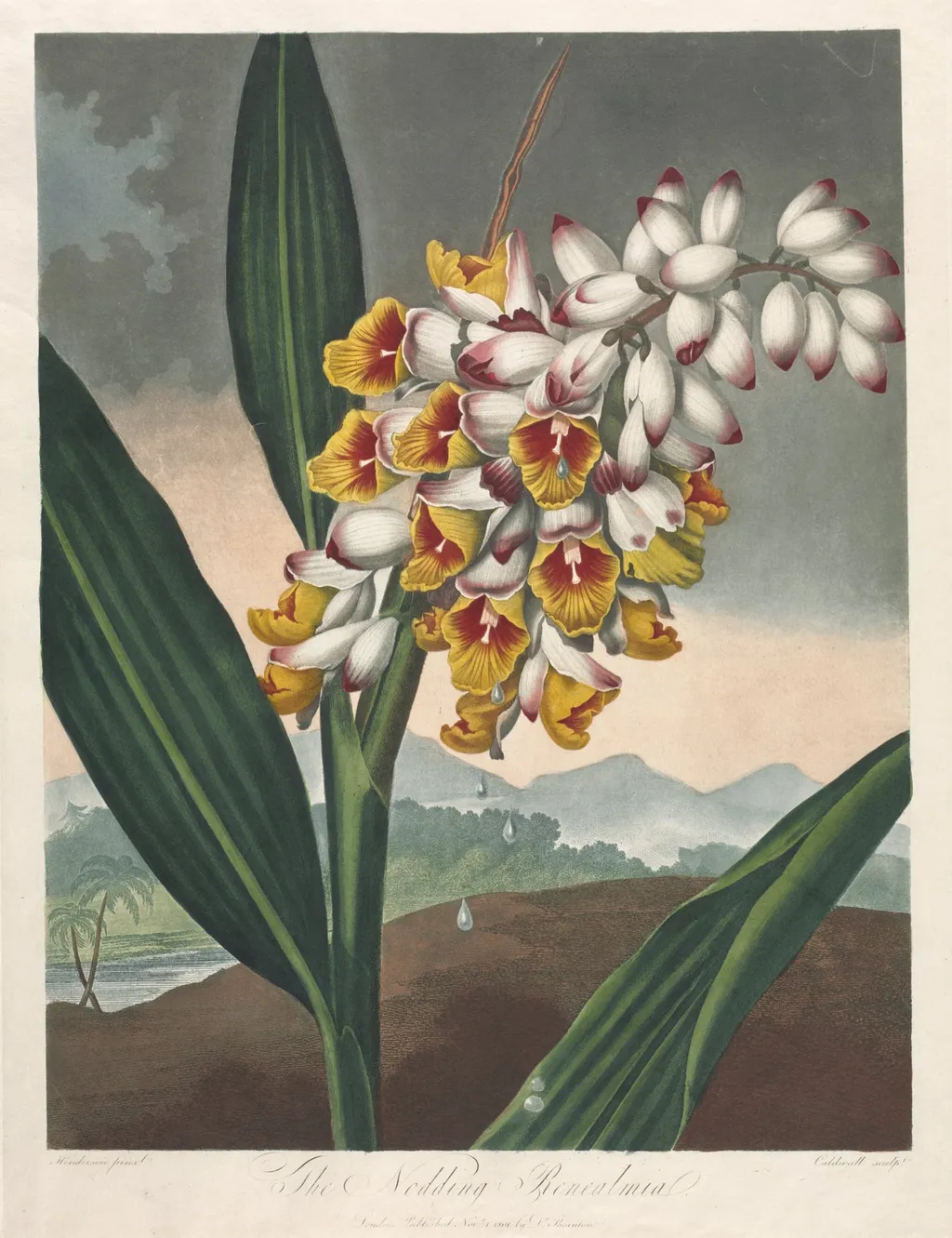
The Temple of Flora, or Garden of Nature: The Nodding Renealmia is a print by the Romanticist artist Robert John Thornton. It dates from 1801 and is held in the collection of the Cleveland Museum of Art.
About this work
Behind it, a dark leaf cuts across the scene, and in the far background, a hazy landscape with a lake, palm trees, and rolling hills fades into the sky.
This painting shows a single plant with bright yellow and white flowers drooping on a thick green stem. Behind it, a dark leaf cuts across the scene, and in the far background, a hazy landscape with a lake, palm trees, and rolling hills fades into the sky. Tiny water droplets cling to the petals and leaf edges.
The title calls it *The Nodding Renealmia*, a rare tropical flower. Thornton painted it in 1801, when Europeans were fascinated by exotic plants.
Next, look up Romanticism to see how artists used nature to explore big ideas.
Overview
The Temple of Flora, or Garden of Nature: The Nodding Renealmia is a print created by Robert John Thornton in 1801, currently part of The Cleveland Museum of Art's collection. The work depicts a single Nodding Renealmia plant in meticulous detail.
Subject & Meaning
The subject is a rare tropical Nodding Renealmia flower, highlighted against a contrasting background. The choice of this exotic plant reflects early 19th-century European fascination with unusual botanical specimens.
Technique & Style
The print showcases detailed rendering, with notable attention to the plant's textures and the environment. Tiny water droplets on petals and leaf edges add a sense of realism. The composition combines a sharply defined foreground with a softly rendered, dreamy landscape background.
History & Provenance
Created in 1801 by Robert John Thornton, the work is now held at The Cleveland Museum of Art. Its creation coincides with the peak of European interest in exotic flora.
Context
The piece aligns with the broader cultural context of Romanticism, where nature was often used to evoke emotions and explore philosophical ideas. The emphasis on an exotic, singular specimen also reflects the era's botanical discoveries and the allure of the unknown.
Legacy
As part of *The Temple of Flora* series, this print contributes to the historical record of botanical illustration's evolution and the Romantic era's artistic engagement with nature.
Artist & collection

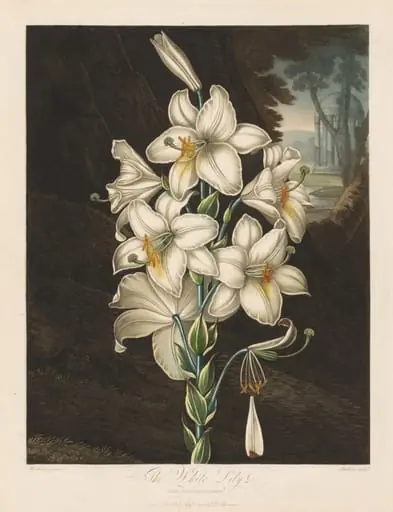 The Temple of Flora, or Garden of Nature: The White Lily with Variegated Leaves
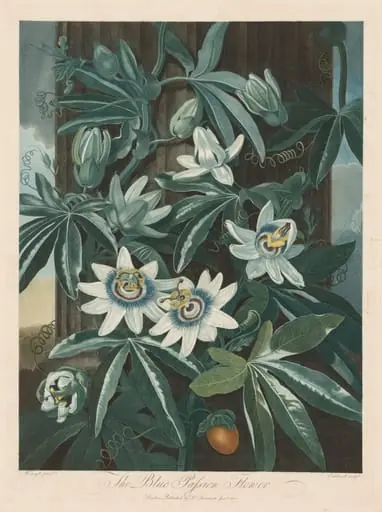 The Blue Passion-flower
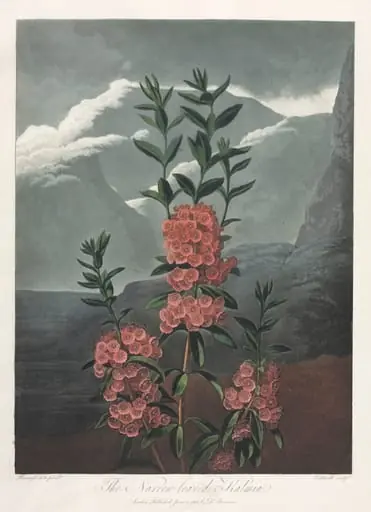 The Temple of Flora, or Garden of Nature: The Narrow-leaved Kalmia
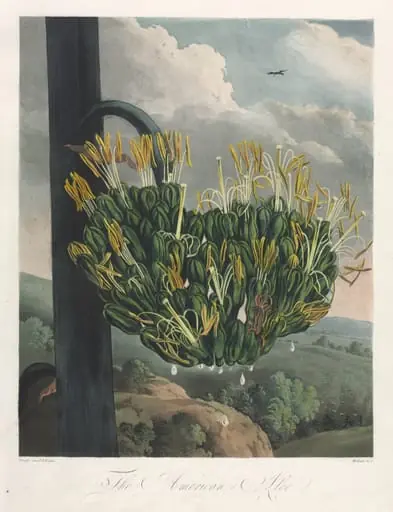 The Temple of Flora, or Garden of Nature: The American Aloe
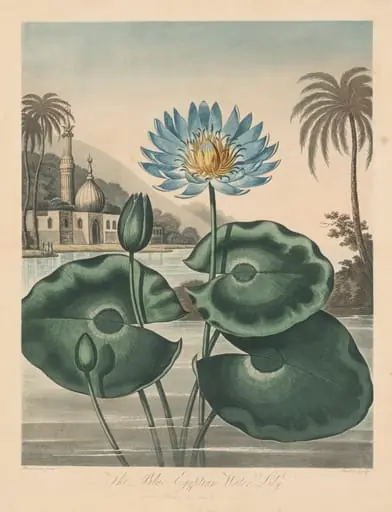 The Temple of Flora, or Garden of Nature: Blue Egyptian Waterlily
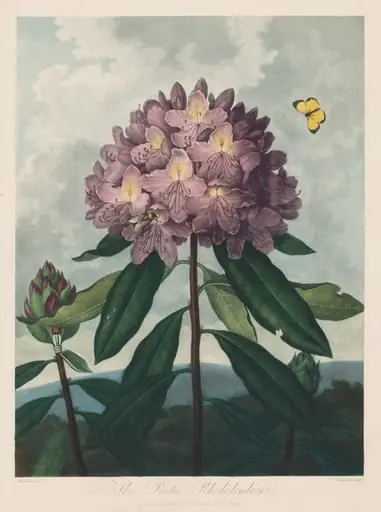 The Temple of Flora, or Garden of Nature: The Pontic Rhododendron
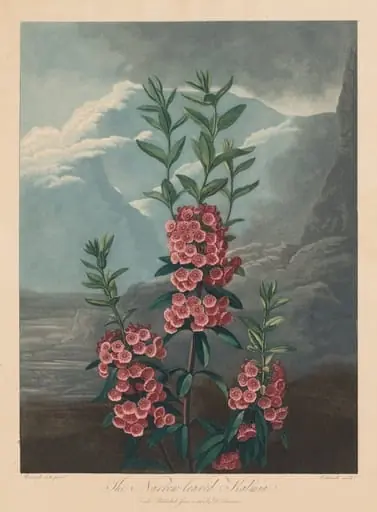 The Temple of Flora, or Garden of Nature: The Narrow-leaved Kalmia, Mountain Laurel
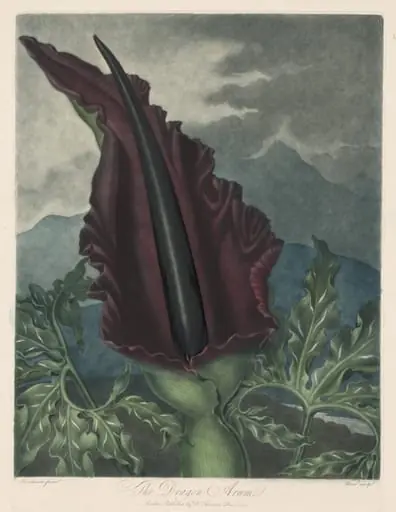 The Dragon Arum, Black Calla or Solomon's Lily