Artwork
Countryside landscape
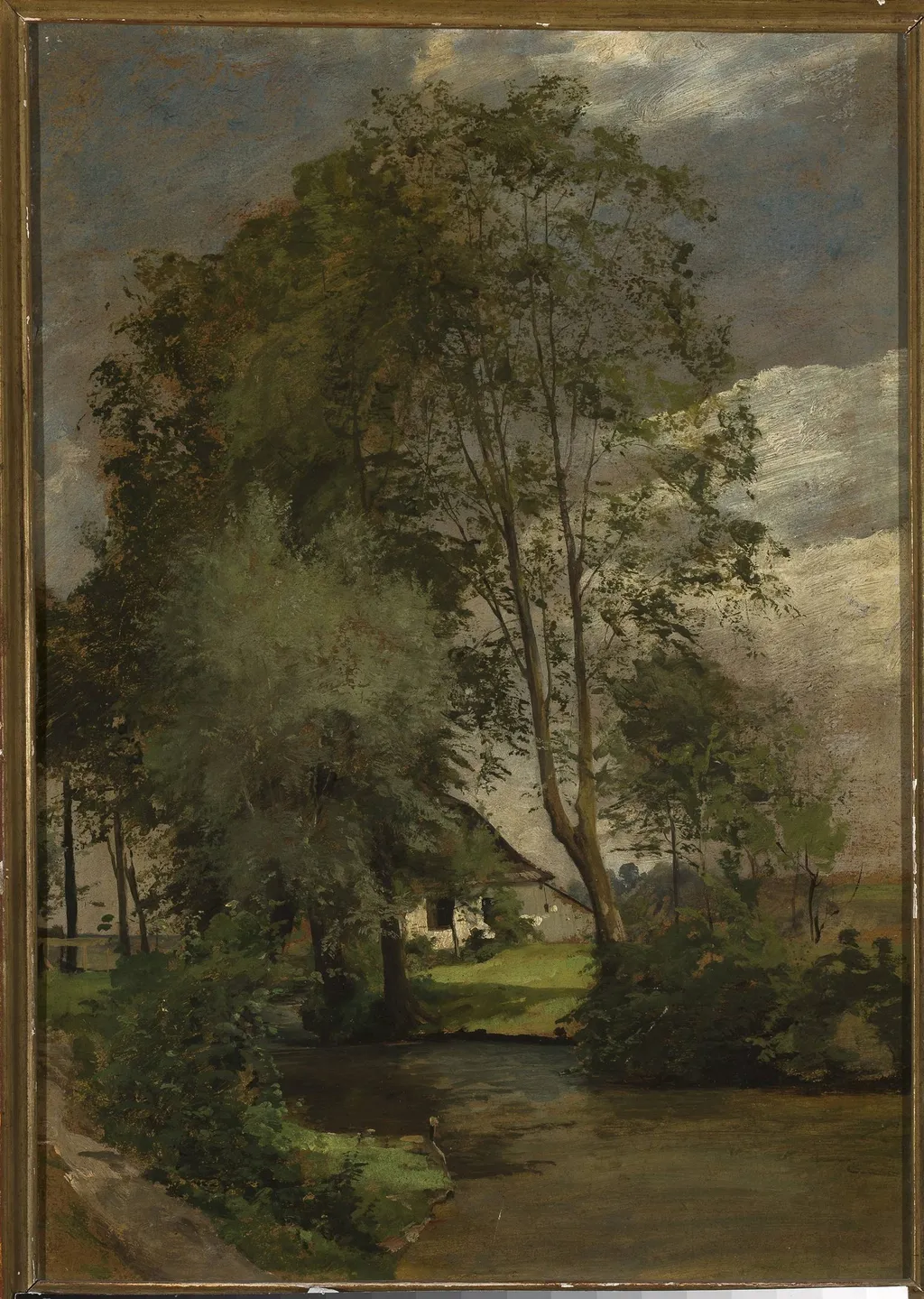
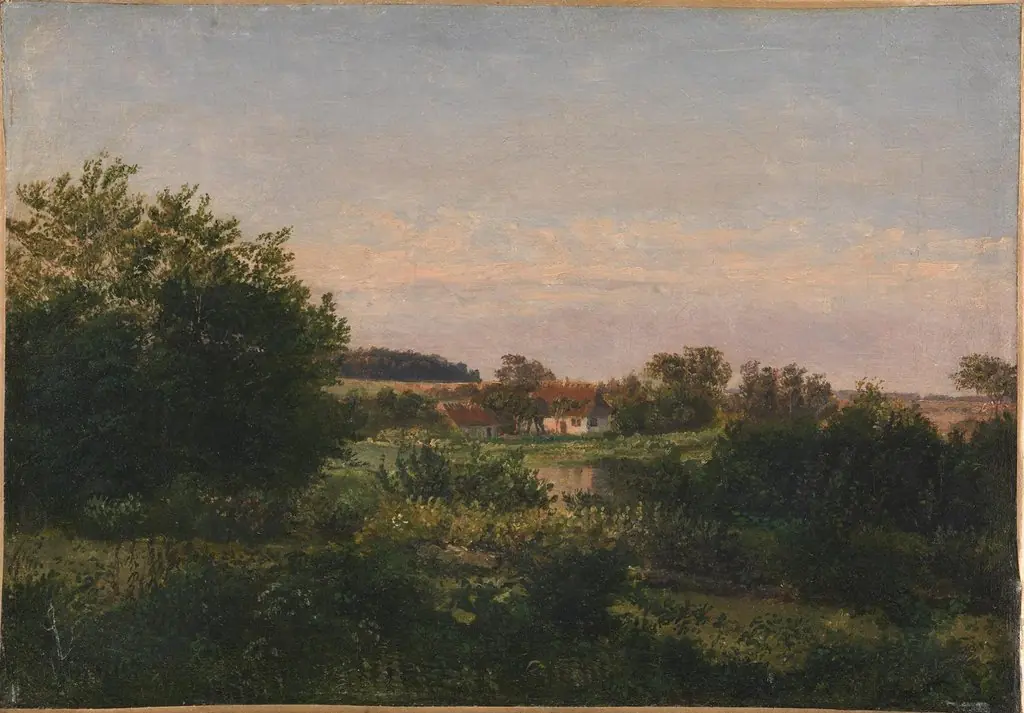
Countryside landscape is an oil painting by Robert Śliwiński. It dates from 1881 and is held in the collection of the National Museum in Warsaw.
About this work
Overview
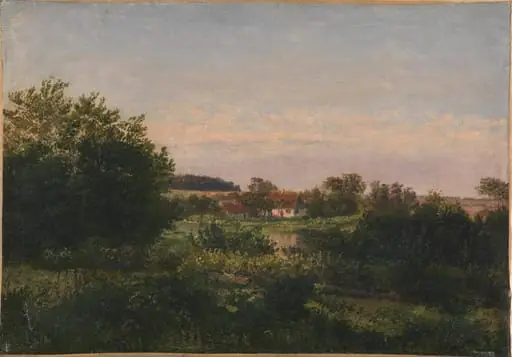
The composition centers on a modest dwelling surrounded by dense vegetation, with a body of water mirroring the sky and trees.
Countryside Landscape, painted around 1881 by Robert Śliwiński, is an oil-on-canvas work depicting a quiet rural scene. It resides in the collection of the National Museum in Warsaw. The composition centers on a modest dwelling surrounded by dense vegetation, with a body of water mirroring the sky and trees. The atmosphere is calm, rendered through subtle shifts in light and color rather than dramatic contrast.
Subject & Meaning
The painting presents an unidealized view of rural life, focusing on the quiet integration of human habitation within nature. The small house, barely prominent, suggests modesty and harmony with the environment. There is no narrative or human figure, emphasizing solitude and the enduring presence of the land. The stillness of the scene invites contemplation rather than storytelling.
Technique & Style
Śliwiński employed loose, visible brushwork to convey texture and movement in foliage and water. Greens vary in tone and saturation to suggest depth and light filtering through leaves, while earth tones ground the structure and trees. The sky, painted with blended grays and blues, softens the horizon. The technique avoids sharp definition, favoring atmospheric suggestion over detail.
History & Provenance
The painting entered the National Museum in Warsaw’s collection in the late 19th or early 20th century, likely through acquisition or donation. Its origin as a private work is undocumented, but its preservation suggests early recognition within Polish artistic circles. No major exhibitions or ownership changes are recorded prior to its institutional acquisition.
Context
Created during a period when Polish artists were exploring national identity through landscape, Śliwiński’s work aligns with regional trends favoring naturalism over romanticism. While not part of a formal movement, his approach reflects broader European tendencies toward plein air observation and subdued tonality, distinct from the more dramatic chiaroscuro traditions of earlier centuries.
Legacy
The painting remains a quiet example of late 19th-century Polish landscape painting, valued for its restraint and sensitivity to natural light. It contributes to the museum’s representation of regional artists who documented the Polish countryside without theatricality. Though not widely reproduced, it continues to inform scholarly understanding of provincial artistic practice in the era.
Artist & collection

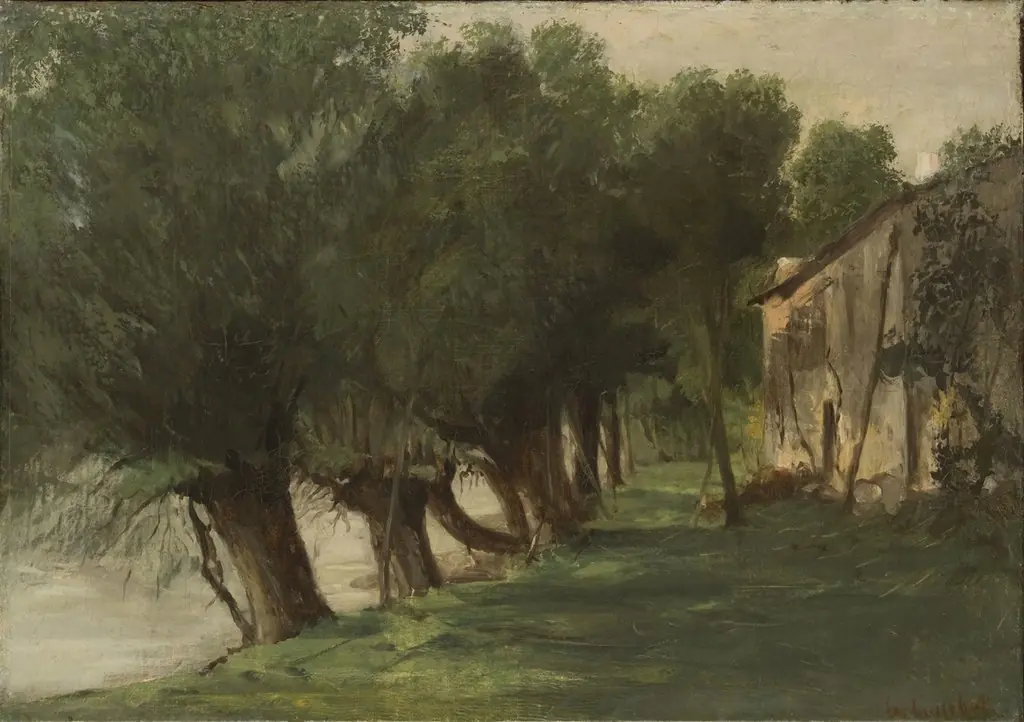 La Charente, Port-Berteau
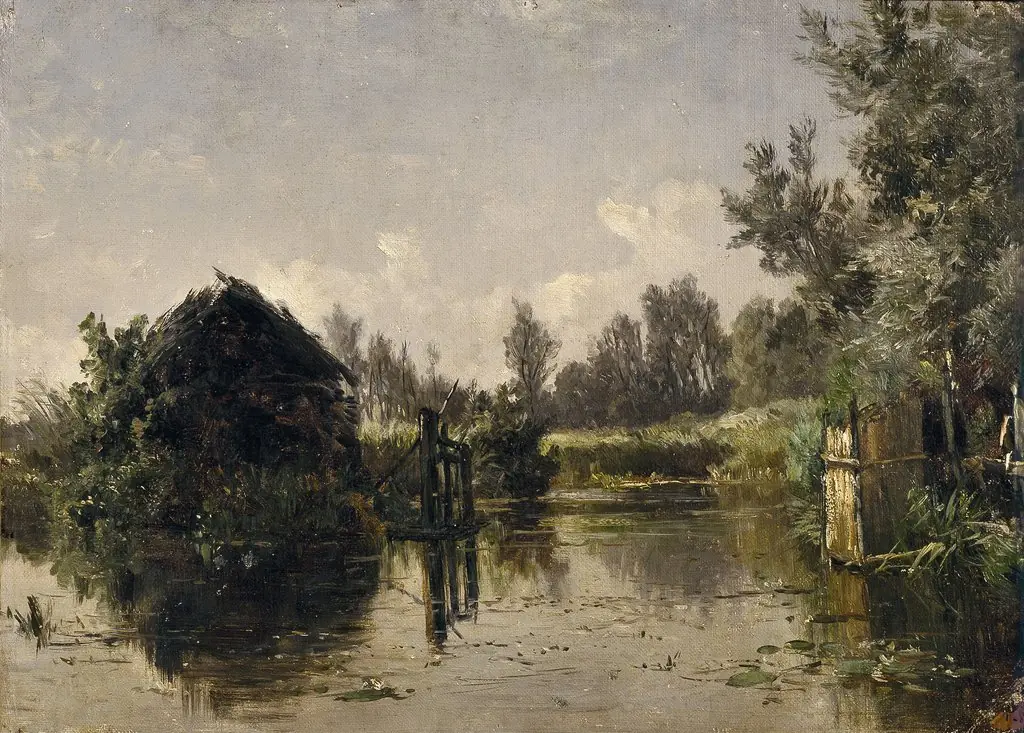 Canal abandonado en Vriesland (Holanda)
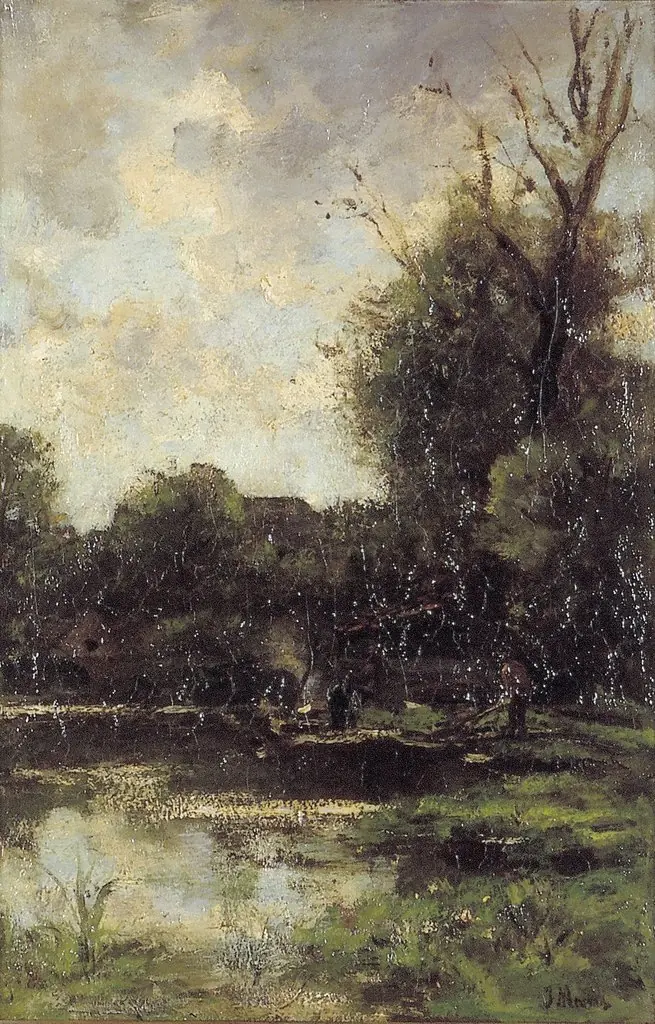 Summer
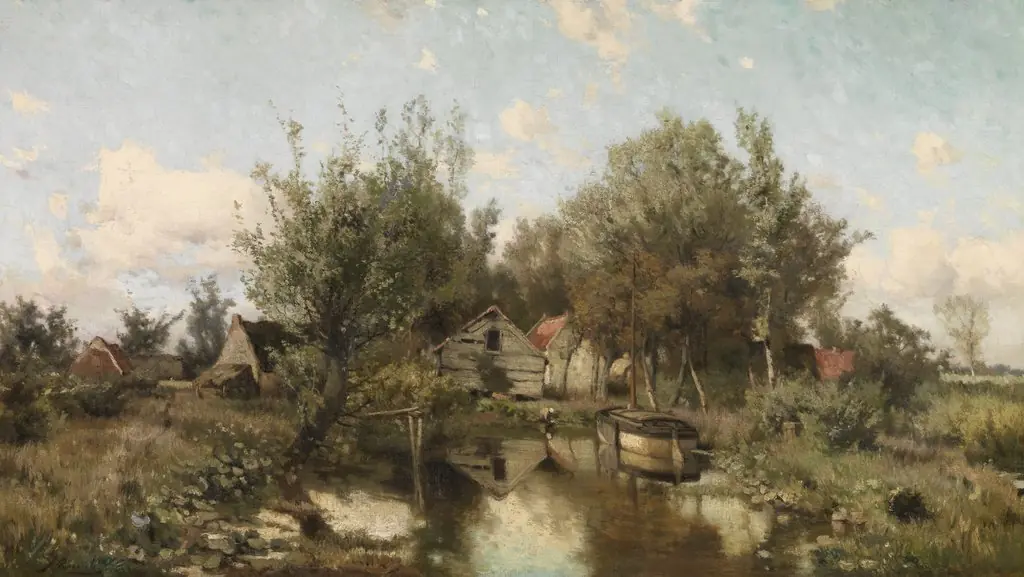 Landscape near Waasmunster
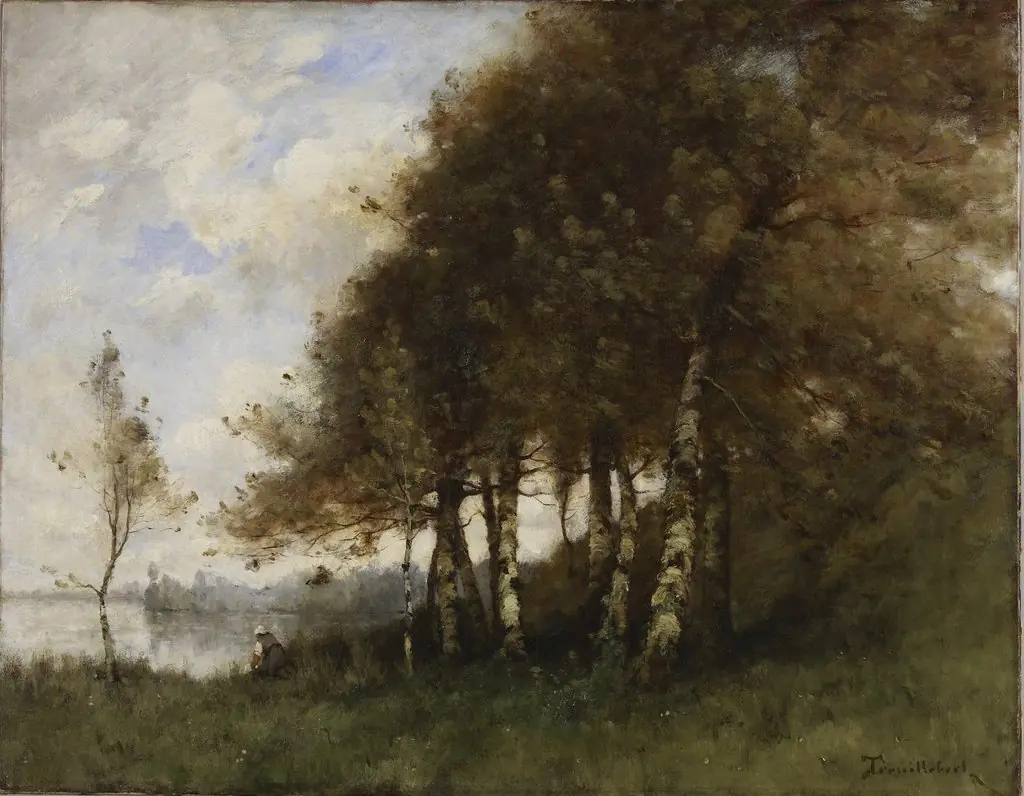 Landscape.
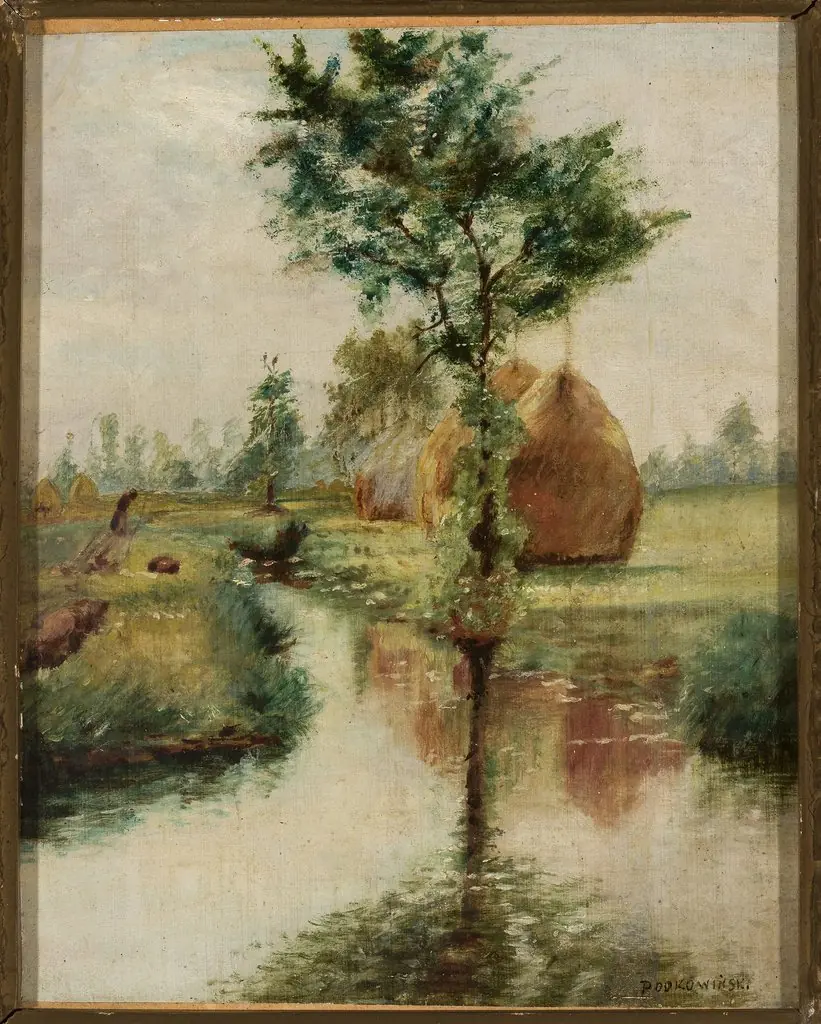 Haystacks at a stream
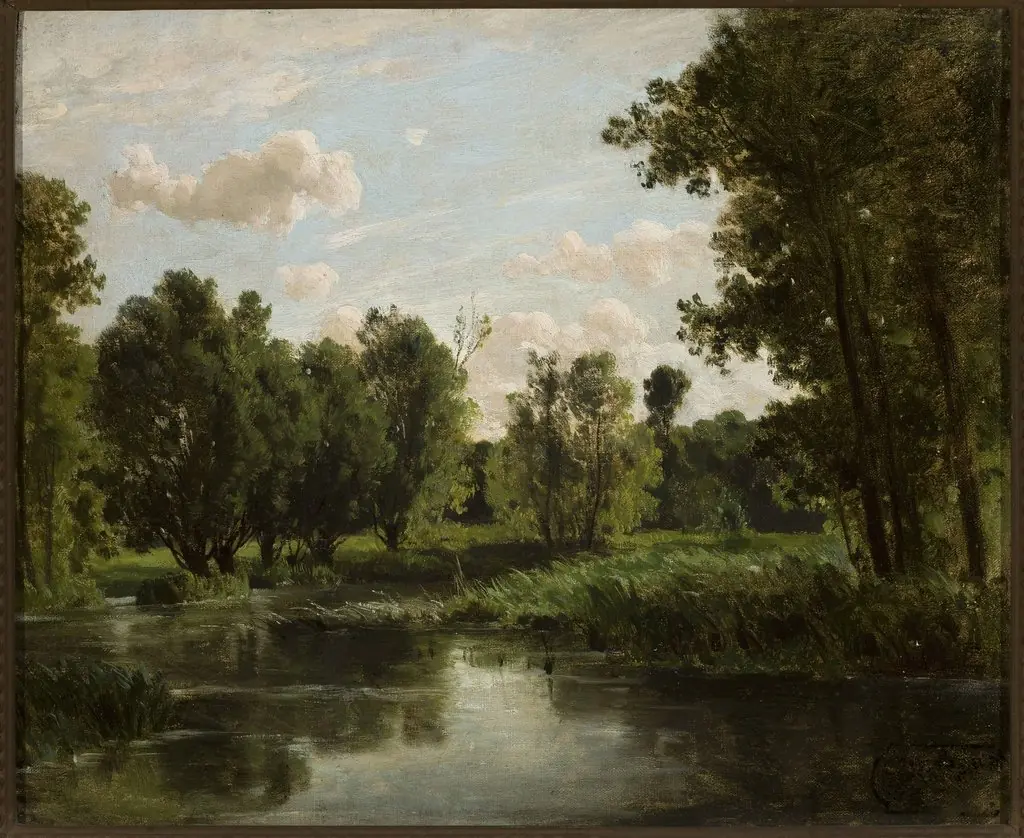 Lake in the forest
 Willows and Farmhouse at Sainte-Catherine-lès-Arras
 Landscape
 Willows and Farmhouse at Sainte-Catherine-lès-Arras
 Landscape with a Cottage beside a Pond
 Landscape with a Cottage beside a Pond