Artwork
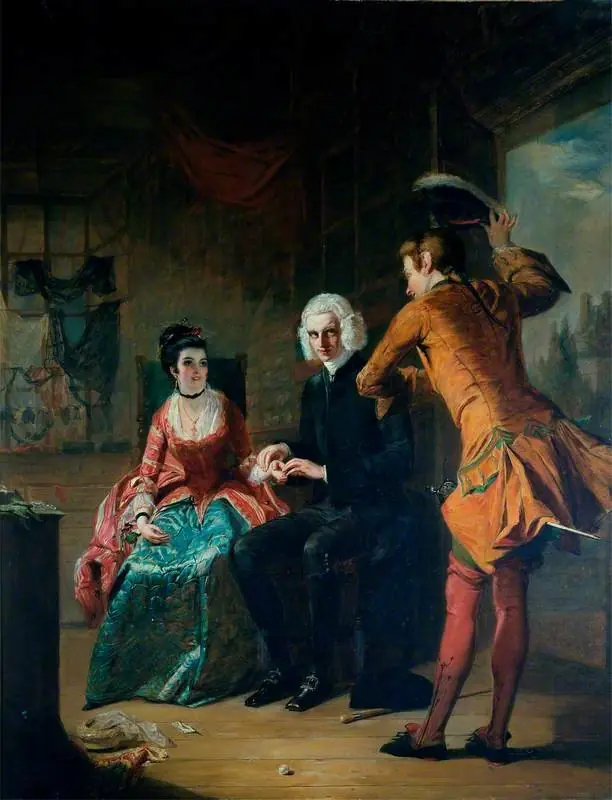
Melinda and Lucy Consult Kite (from George Farquhar's 'The Recruiting Officer', Act IV, Scene 2)
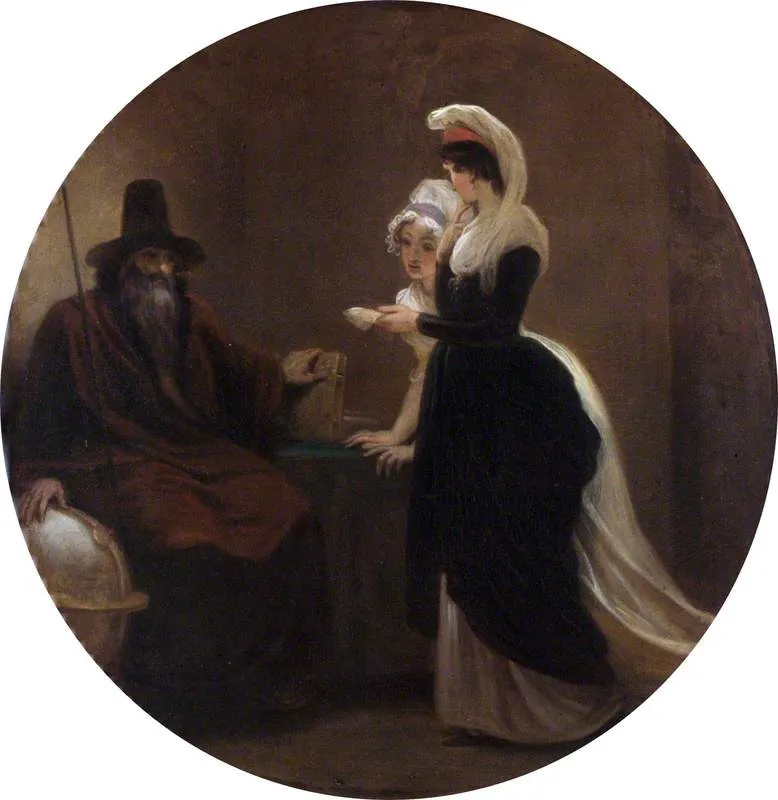
Melinda and Lucy Consult Kite (from George Farquhar's 'The Recruiting Officer', Act IV, Scene 2) is an oil painting by Robert Smirke. It dates from 1803 and is held in the collection of the Victoria and Albert Museum.
About this work
Overview
Robert Smirke’s oil painting, dated around 1803, captures a moment from George Farquhar’s comedy *The Recruiting Officer*. As a Royal Academy member, Smirke frequently translated theatrical scenes into intimate visual narratives. This work is part of a series in which he rendered literary drama with quiet precision, favoring domestic interiors and subtle emotional exchanges over grand spectacle.
Subject & Meaning
The moment reflects the play’s focus on social maneuvering, particularly how women navigate power in a male-dominated world.
The scene portrays Melinda and Lucy, two women, consulting with Kite, a recruiting officer, in a dimly lit room. Their interaction suggests negotiation or persuasion, central to the play’s themes of deception and survival. Kite’s shadowed face implies ambiguity, while the women’s direct gazes convey agency. The moment reflects the play’s focus on social maneuvering, particularly how women navigate power in a male-dominated world.
Technique & Style
Smirke employs chiaroscuro to model form and direct focus, casting the women’s faces in soft light while leaving Kite’s in partial shadow. The figures are rendered with restrained detail, emphasizing gesture and expression over elaborate costume or setting. The composition is tightly framed, isolating the trio within a confined space, enhancing the intimacy and psychological tension of the exchange.
History & Provenance
Painted circa 1803, the work emerged during Smirke’s period of active engagement with literary subjects. It was likely created for private collectors interested in theatrical culture, rather than public exhibition. While its early ownership is undocumented, it remains within the corpus of Smirke’s known theatrical illustrations, reflecting the popularity of stage-inspired art in early 19th-century Britain.
Context
In the early 1800s, British audiences were deeply engaged with the theater, and visual art often mirrored popular plays. Smirke’s paintings responded to this trend, offering private viewers a way to relive dramatic moments. His focus on domestic interiors and nuanced character dynamics aligned with broader shifts toward psychological realism in both literature and painting of the period.
Legacy
Smirke’s adaptation of Farquhar’s comedy contributes to a tradition of literary illustration that bridged stage and canvas. Though not widely exhibited today, his works remain significant for their quiet fidelity to textual sources and their role in shaping how 19th-century viewers visualized theatrical narratives. The painting exemplifies a genre that prioritized narrative intimacy over spectacle.
Artist & collection
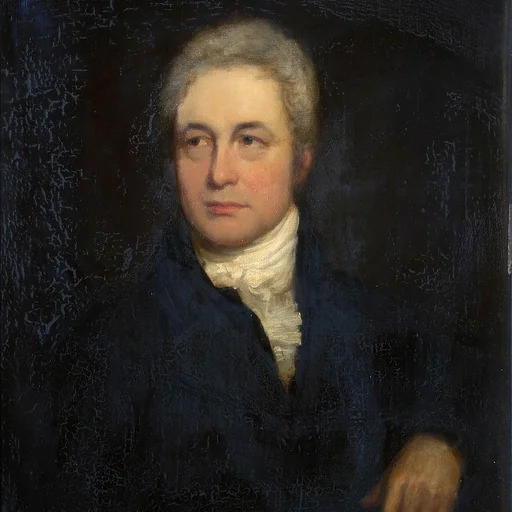
Artist
Robert Smirke (15 April 1753 – 5 January 1845) was an English painter and illustrator, specialising in small paintings showing subjects taken from literature. He was a member of the Royal Academy.

 H Beard Print Collection
 A young Woman mocking an elderly Admirer
 Scene from Laurence Sterne's 'A Sentimental Journey'
 Milton Dictating to His Daughter
 Milton Dictating to His Daughter
 Nurse and Children in the Fields
 Untitled
 Courtship
 The Artist's Parents (The Revd David Wilkie, 1738 - 1812 and his Wife Isabella Lister, 1763 - 1824)
 Scene from John Poole's Comedy 'Paul Pry', with Portraits of Madame Vestris, Miss P. Glover, Mr Williams, and Mr Liston
 Vous êtes jolie...
 Olivia's Return