Artwork
Untitled
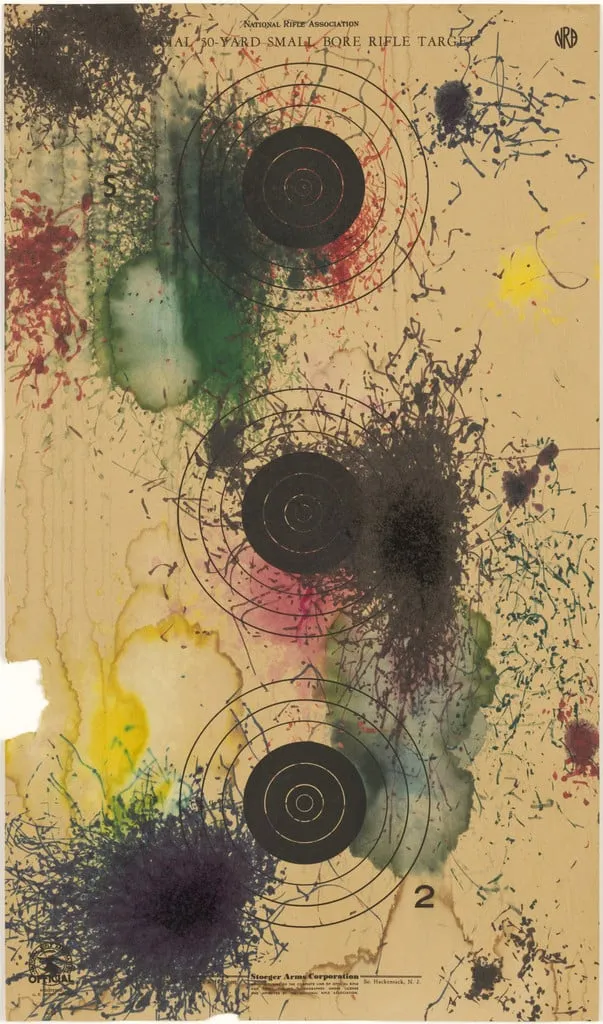
Untitled is a drawing by Robert Watts. It dates from 1984 and is held in the collection of the Museum of Modern Art.
About this work
Overview
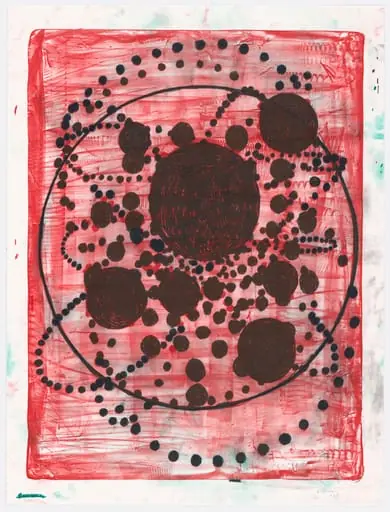
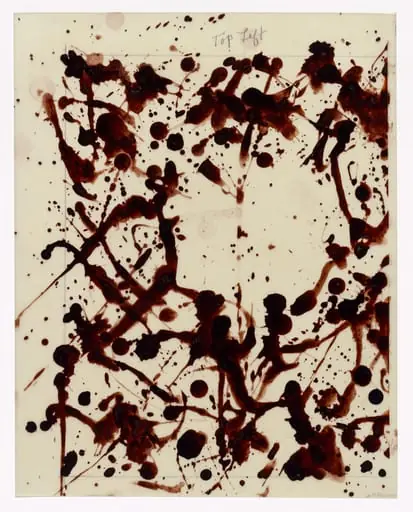
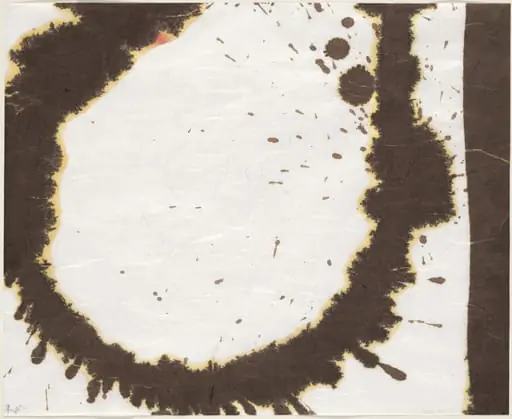
Created in 1984, this drawing by Robert Watts employs felt-tip pen on pre-printed paper, transforming a commercial target design into an abstract intervention.
Created in 1984, this drawing by Robert Watts employs felt-tip pen on pre-printed paper, transforming a commercial target design into an abstract intervention. Watts, active in the Fluxus movement and a long-time Rutgers professor, used mundane materials to challenge artistic conventions. The work resists clear narrative, instead emphasizing material spontaneity and the disruption of expected forms.
Subject & Meaning
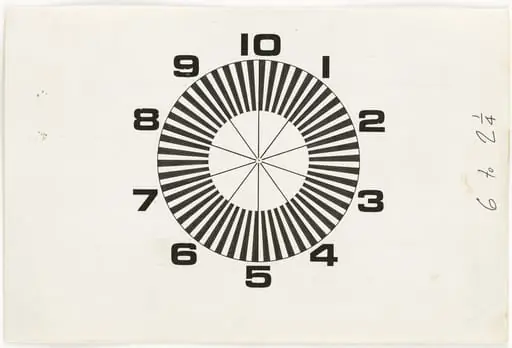
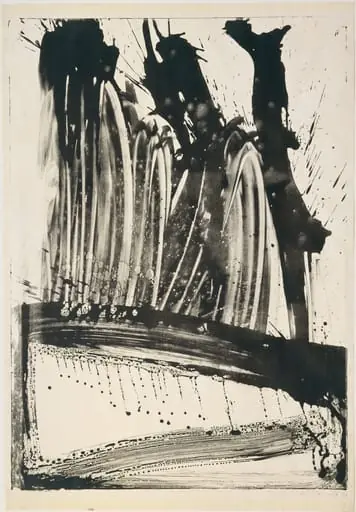
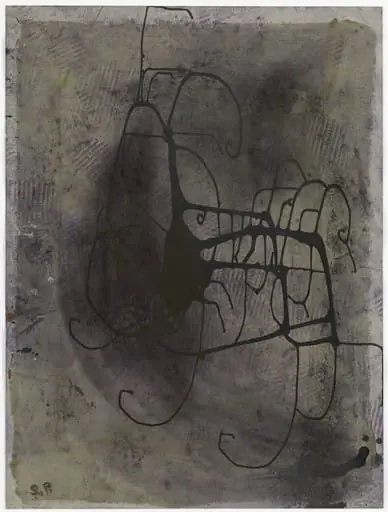
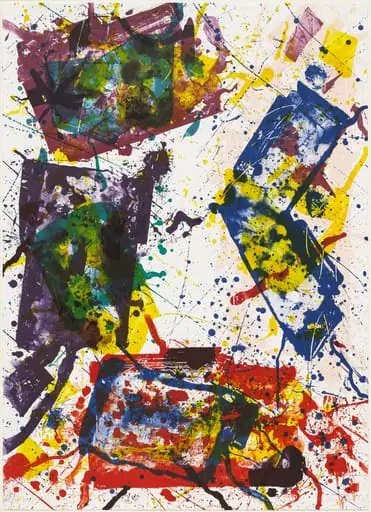
The underlying image is a standard shooting target, but its symbolic function is subverted. Watts overlays it with uncontrolled ink splatters in red, green, yellow, and brown, eroding its original purpose. The title, *Untitled*, refuses to anchor interpretation, inviting viewers to confront the tension between order and chaos, intention and accident, without recourse to explicit meaning.
Technique & Style
Watts applied felt-tip pen with deliberate irregularity, allowing ink to bleed, dry unevenly, and smudge across the printed surface. The contrast between the crisp, geometric target and the erratic, gestural stains creates a visual dissonance. His method embraces imperfection, aligning with Fluxus principles that valorize process over polished result and elevate the mundane through intervention.
History & Provenance
The work entered The Museum of Modern Art’s collection as part of its broader engagement with post-1960s experimental drawing. Watts’s association with Fluxus and his academic role at Rutgers positioned him as a bridge between conceptual art and institutional critique. This piece reflects his sustained interest in recontextualizing everyday visual language within fine art frameworks.
Context
Emerging from the Fluxus circle, Watts shared with peers like Allan Kaprow and Roy Lichtenstein a fascination with blurring art and life. His work often repurposed mass-produced imagery—targets, game boards, packaging—to question authorship and meaning. This piece fits within a broader 1970s–80s trend of artists using appropriation and material disruption to destabilize traditional art hierarchies.
Legacy
Watts’s interventions on printed surfaces influenced later generations of artists who treated found imagery as raw material for conceptual play. His use of accidental effects and institutional critique through simple materials helped expand the definition of drawing beyond traditional mark-making. This work remains a quiet example of how everyday objects can be reanimated through deliberate disorder.
Artist & collection
Artist
Robert Marshall Watts (1923–1988) was an American artist best known for his work as a member of the international group of artists Fluxus.