Artwork
Untitled
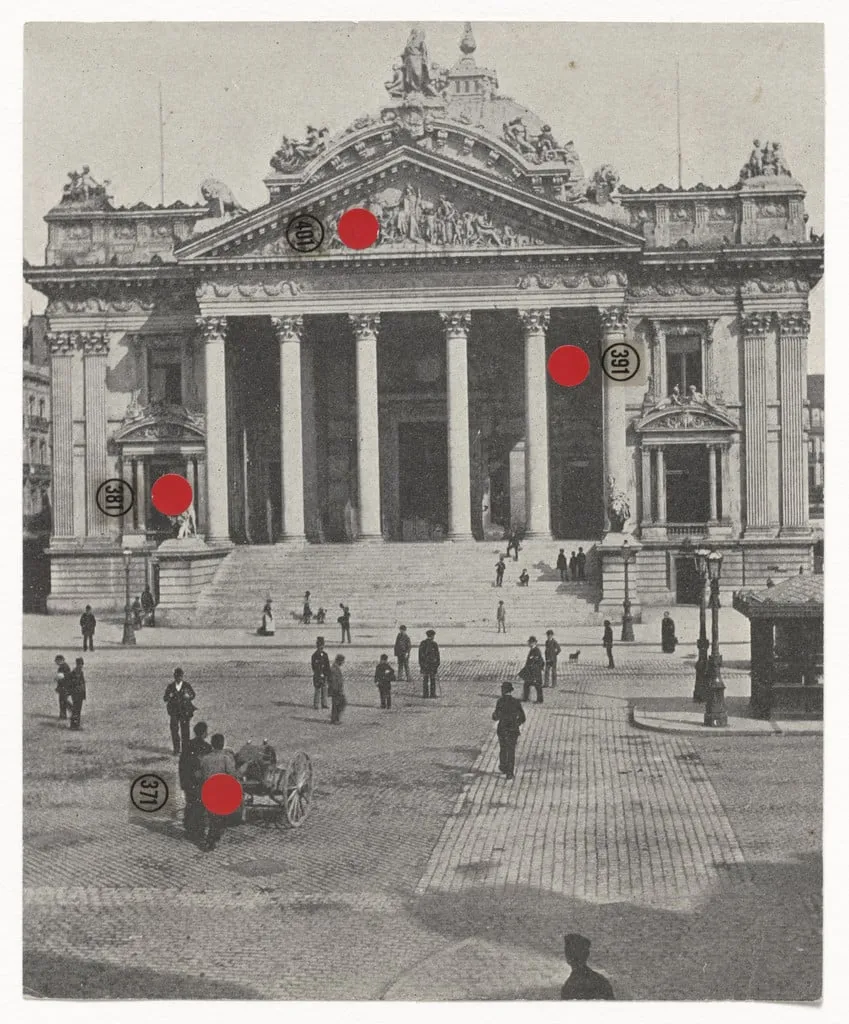
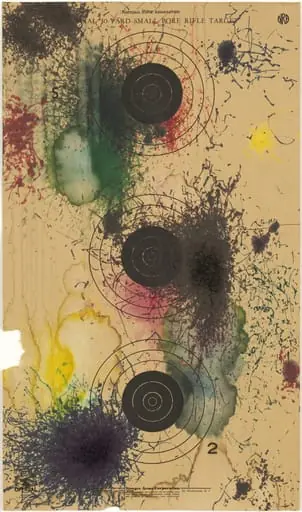
Untitled is an ink drawing by Robert Watts. It dates from 1963 and is held in the collection of the Museum of Modern Art.
About this work
Overview
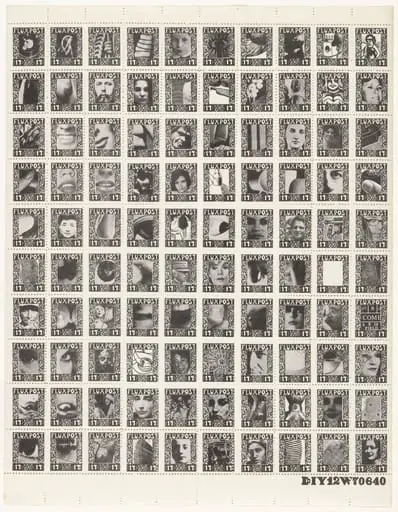
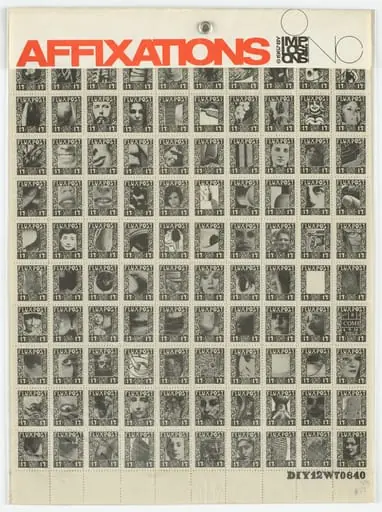
Created in 1963, this offset lithograph by Robert Watts incorporates presstype and adhesive stickers, blending mechanical reproduction with manual intervention.
Created in 1963, this offset lithograph by Robert Watts incorporates presstype and adhesive stickers, blending mechanical reproduction with manual intervention. The work belongs to a broader experimental phase in American art, emerging from Rutgers University’s vibrant artistic community. Its construction reflects Fluxus principles, prioritizing process and everyday materials over traditional aesthetics.
Subject & Meaning
The image depicts a neoclassical public building with figures in period attire, a horse-drawn carriage, and flags—elements suggesting civic ritual. Red dots obscure faces, while circled numbers label positions, disrupting narrative coherence. These interventions question authorship, identity, and the staging of public life, aligning with Fluxus’s interest in subverting institutional norms.
Technique & Style
Watts combined offset lithography with pressure-sensitive stickers and presstype, merging industrial printing methods with hand-applied elements. The black-and-white palette and layered textures create a fragmented visual field. The use of stickers introduces irregularity and impermanence, contrasting with the precision of lithographic reproduction and emphasizing the work’s conceptual nature.
History & Provenance
Made during Watts’s tenure at Rutgers, the piece coincided with his collaboration with George Brecht on the Yam Festival, a key precursor to Fluxus. It emerged from a milieu where artists challenged distinctions between art and life. The work’s materials and methods reflect the era’s interest in dematerialization and anti-commercial strategies within emerging conceptual practices.
Context
In the early 1960s, Rutgers became a hub for artists exploring performance, event-based art, and mass-produced imagery. Watts’s work intersected with contemporaries like Allan Kaprow and Roy Lichtenstein, though his approach leaned toward procedural play rather than pop iconography. This piece exemplifies how Fluxus ideas took root in academic settings, prioritizing participation and ephemerality.
Legacy
Though not widely exhibited, the work contributes to understanding how Fluxus principles were adapted in institutional contexts. Its use of everyday materials and disruption of visual authority influenced later conceptual and post-minimalist practices. Watts’s integration of printing technologies with manual interventions remains a quiet but significant precedent in the evolution of artist multiples.
Artist & collection
Artist
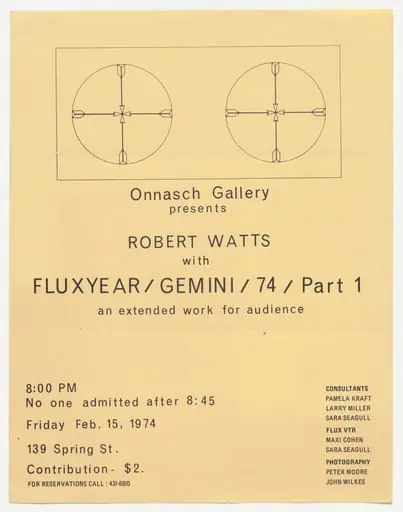
Robert Marshall Watts (1923–1988) was an American artist best known for his work as a member of the international group of artists Fluxus.

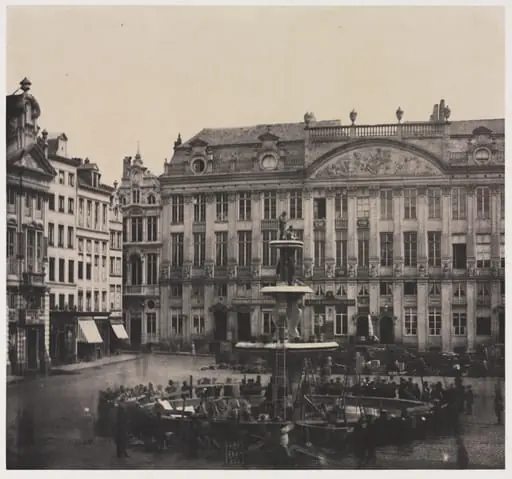 Untitled (Construction of Commemorative Fountain)
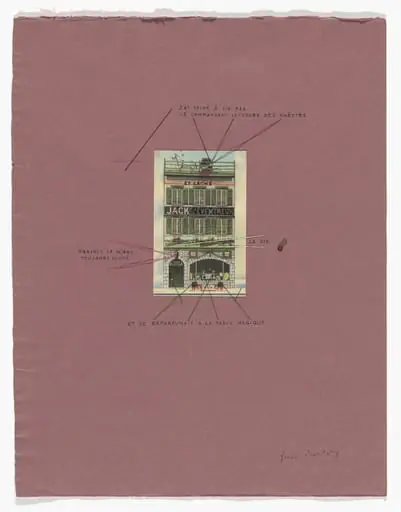 Untitled
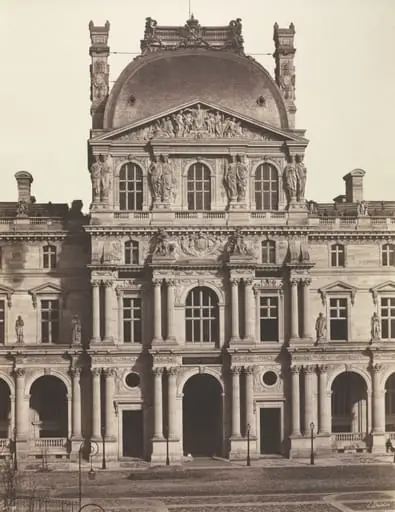 Pavilion Richelieu, Louvre, Paris
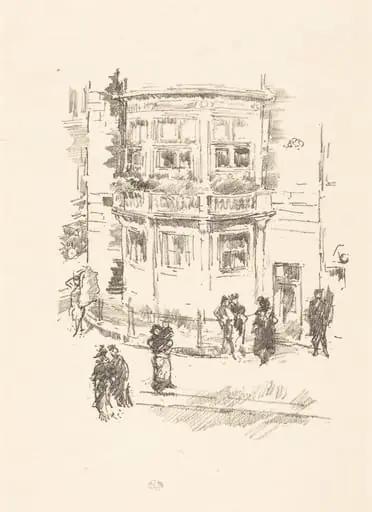 The Manager's Window, Gaiety Theatre
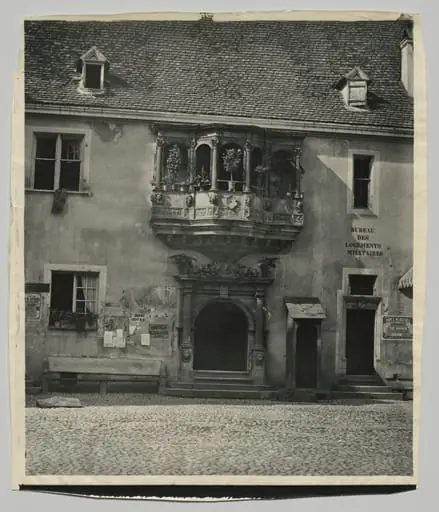 Façade Alsacienne, Corps de Garde à Colmar
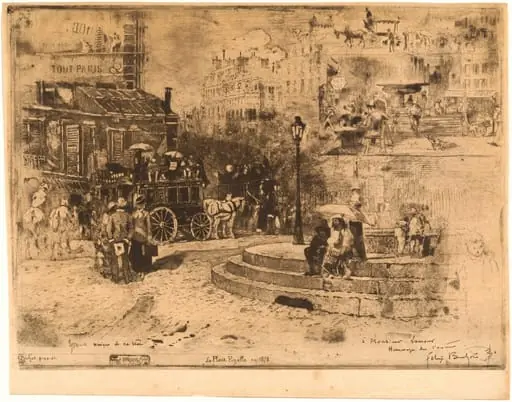 La Place Pigalle en 1878 (Place Pigalle in 1878)
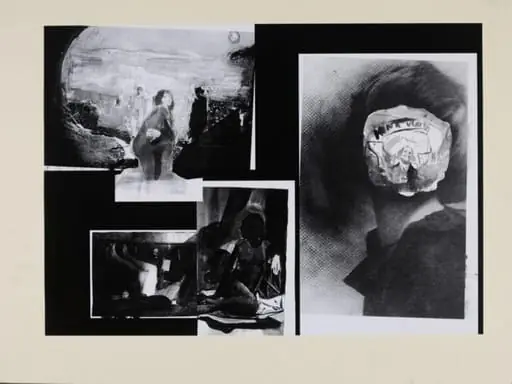 Number 34
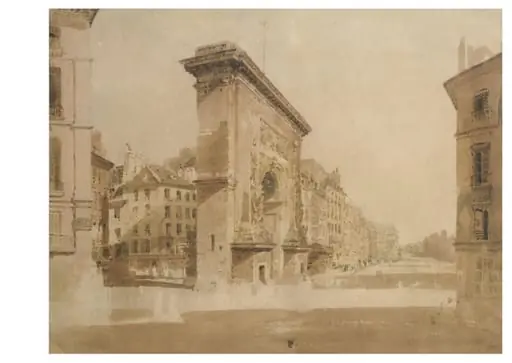 Porte St Denis, Paris
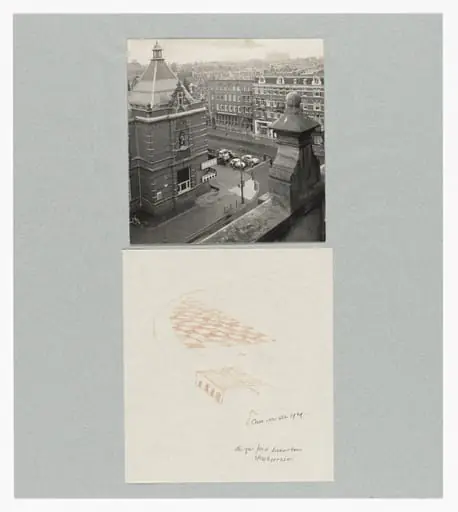 Untitled
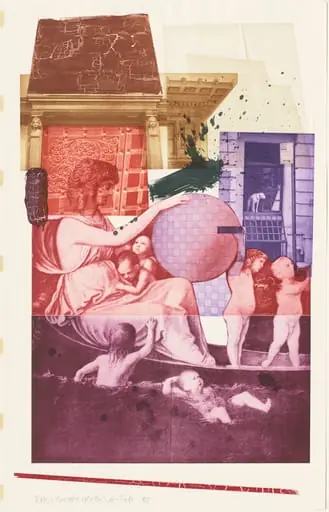 Untitled
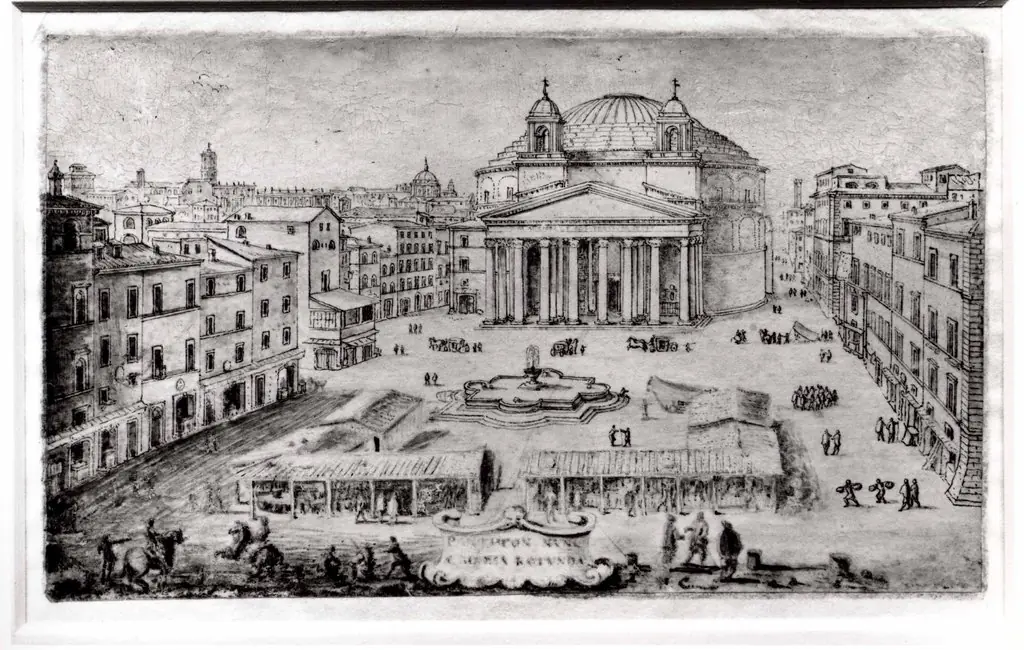 View of the Pantheon, Rome
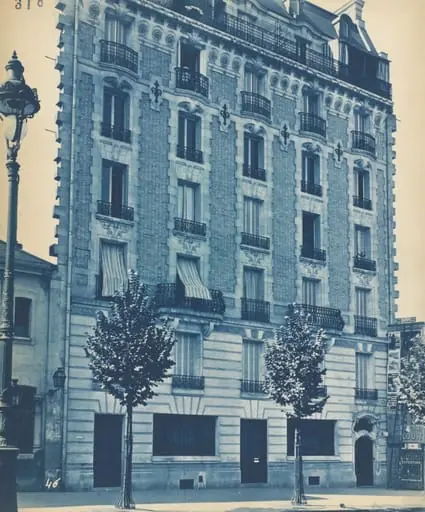 Townhouse Facade