Artwork
Untitled
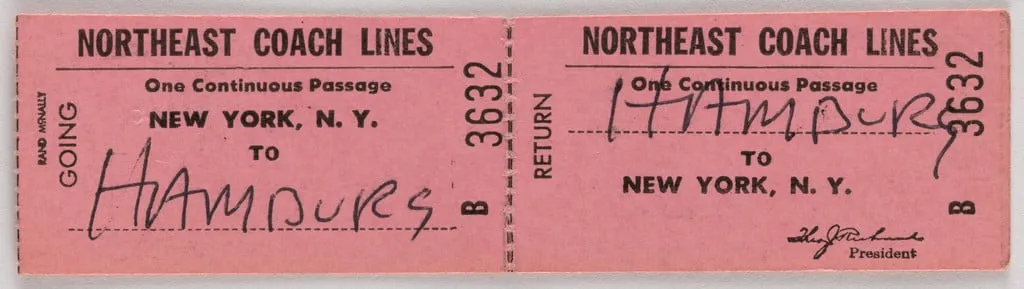
Untitled is a print by Robert Watts. It dates from 1970 and is held in the collection of the Museum of Modern Art.
About this work
Overview
Using letterpress as a base and adding ballpoint pen markings by hand, Watts blurred the line between mass-produced ephemera and intentional art.
Created in 1970, this work by Robert Watts transforms a discarded bus ticket into a printed object with handwritten interventions. Using letterpress as a base and adding ballpoint pen markings by hand, Watts blurred the line between mass-produced ephemera and intentional art. The piece retains the physical traces of use, elevating a mundane travel document into a quiet meditation on routine and revision.
Subject & Meaning
The object is a Northeast Coach Lines ticket with destinations labeled 'Going' to Hamburg and 'Return' to New York. The word 'Hamburg' is crossed out and rewritten identically, suggesting hesitation, error, or deliberate repetition. A signature reading 'President' and a ticket number (3632) further anchor it in bureaucratic realism. The work invites speculation about identity, travel, and the arbitrary authority embedded in everyday documents.
Technique & Style
Watts employed letterpress to reproduce the ticket’s original layout, then layered it with spontaneous ballpoint pen markings. The contrast between the crisp, mechanical print and the irregular, human handwriting underscores his interest in the tension between industrial reproduction and individual gesture. The physical wear on the surface reinforces the object’s history, making the intervention feel both deliberate and accidental.
History & Provenance
The work entered the collection of The Museum of Modern Art as part of its broader engagement with Fluxus and postwar experimental practices. Watts, a long-time faculty member at Rutgers University, was connected to key figures in the development of conceptual and Pop art. This piece reflects his practice of recontextualizing ordinary items, a strategy shared with contemporaries who questioned traditional art materials and institutions.
Context
Emerging from the Fluxus ethos, Watts’s work aligned with a generation of artists who treated everyday objects as valid artistic material. The ticket’s altered text and worn condition echo Fluxus’s fascination with chance, impermanence, and the poetic potential of the discarded. In the context of 1970s America, such works challenged the notion of art as a unique, precious object, favoring instead the significance of the ordinary and the overlooked.
Legacy
This piece contributes to a broader shift in late 20th-century art toward dematerialization and the use of found objects. Watts’s integration of handwriting into printed forms influenced later conceptual practices that prioritized process and context over formal beauty. Its presence in MoMA’s collection affirms its role in documenting how artists redefined the boundaries of art through mundane, personal, and transient materials.
Artist & collection
Artist
Robert Marshall Watts (1923–1988) was an American artist best known for his work as a member of the international group of artists Fluxus.