Artwork
Figure Studies, Tangier
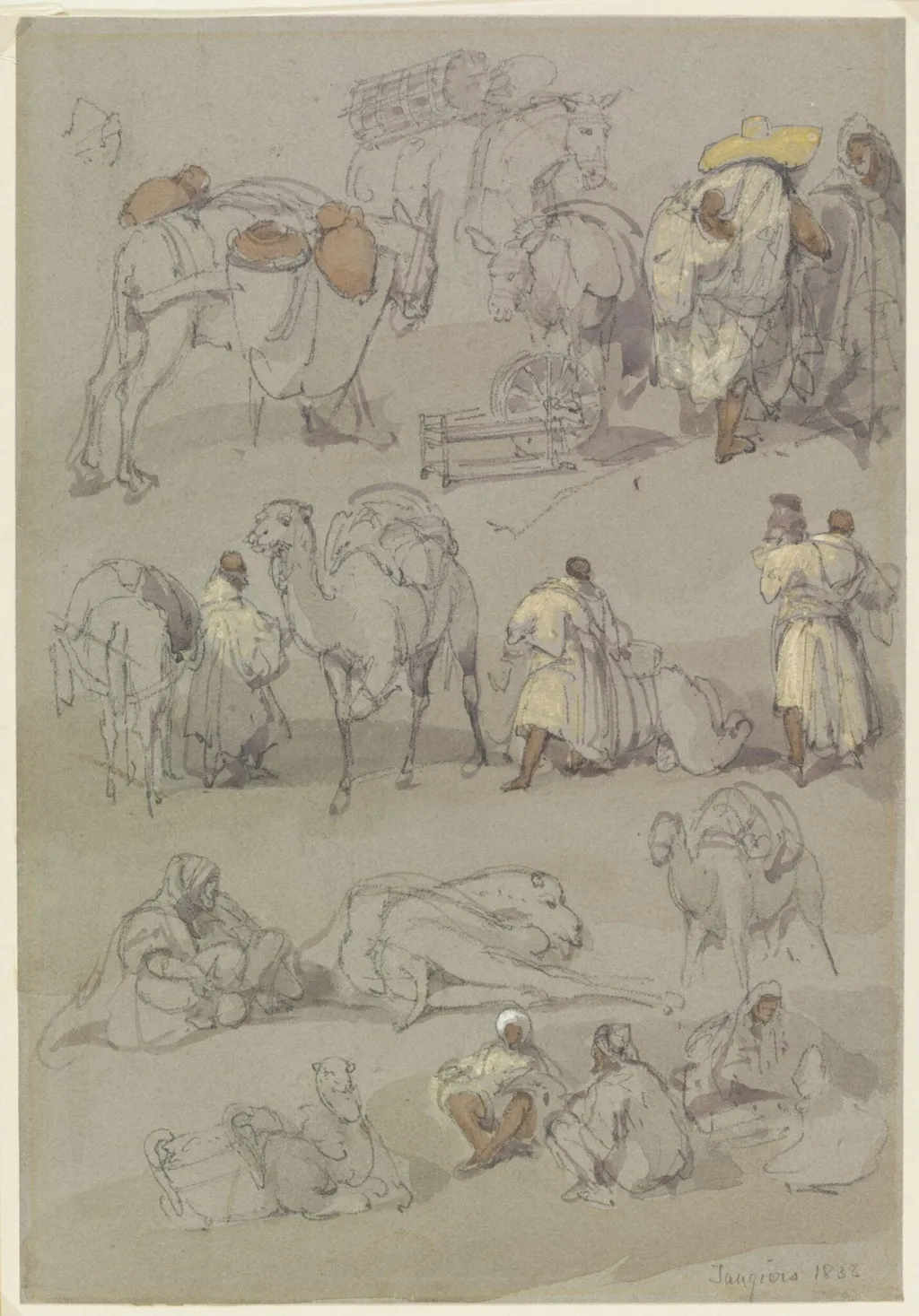
Figure Studies, Tangier is a watercolor work on paper by the Orientalist artist David RA Roberts. It dates from 1833 and is held in the collection of the Victoria and Albert Museum.
About this work
Overview
Figure Studies, Tangier is a watercolour executed by David Roberts in 1833 while he was travelling in Tangier, Morocco. The sketch records a bustling street scene populated by pedestrians and animals, rendered with rapid washes and sketchy line work that suggest immediacy rather than finished composition.
Subject & Meaning
The composition captures a moment of everyday activity: a woman in a long dress walks beside a camel, while other figures sit, stand, or rest on the ground. The inclusion of both people and livestock highlights the intertwined nature of human and animal presence in the city's public spaces.
Technique & Style
Roberts employed loose, fluid watercolor washes combined with quick, gestural lines to convey movement. The handling is characteristic of on‑site sketching, emphasizing the transient qualities of light and motion over detailed rendering, aligning with the observational practices of early 19th‑century travel artists.
History & Provenance
After its creation, the drawing entered the art market and was acquired from the dealers Abbott & Holder in October 1961 for a modest sum of £5, as documented by Rodney Searight. Its provenance traces back to Roberts’s original field studies during his North African itinerary.
Context
Roberts’s Tangier studies were produced during a period when Romantic artists sought exotic locales to expand visual vocabularies. The work reflects the Romantic fascination with distant cultures and the desire to record vivid, immediate impressions of foreign environments.
Artist & collection
Artist
Traveler and watercolorist David RA Roberts captured distant landmarks in crisp detail during the 1830s–40s.

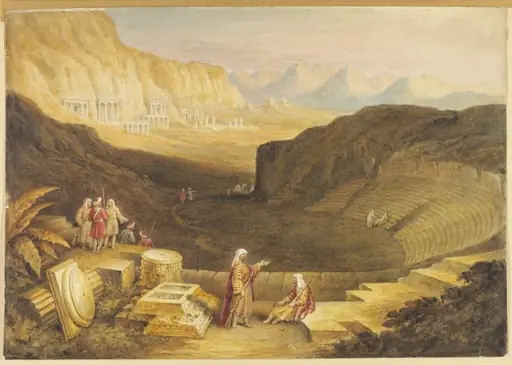 View of Petra from the top of the Theatre
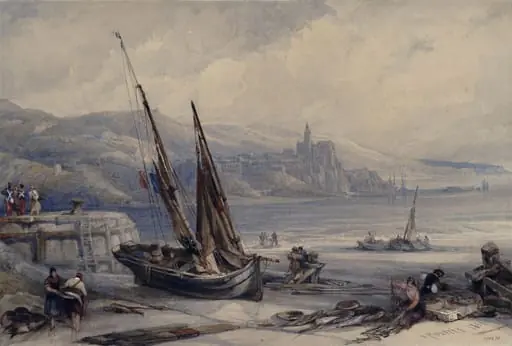 Fontarabia, Spain
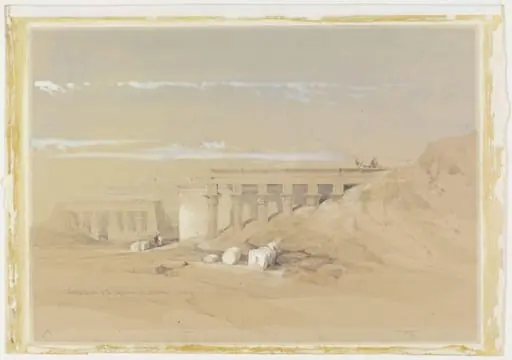 Lateral Elevation of the Typhonium at Dendera
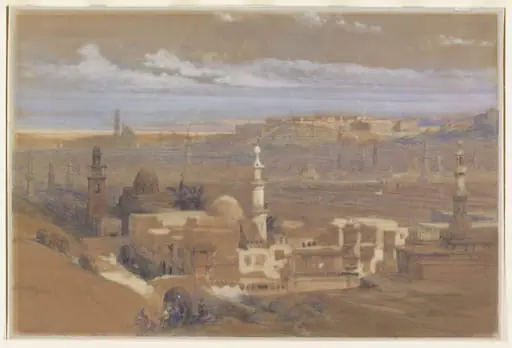 Grand Cairo
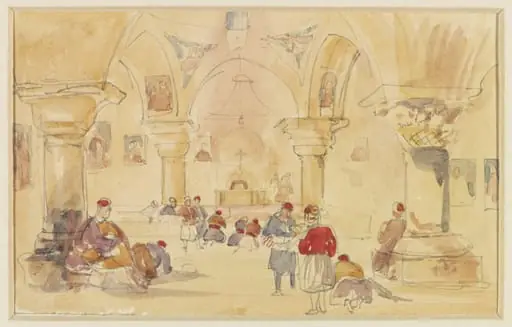 Chapel of St. Helena, Crypt of the Holy Sepulchre, Jerusalem
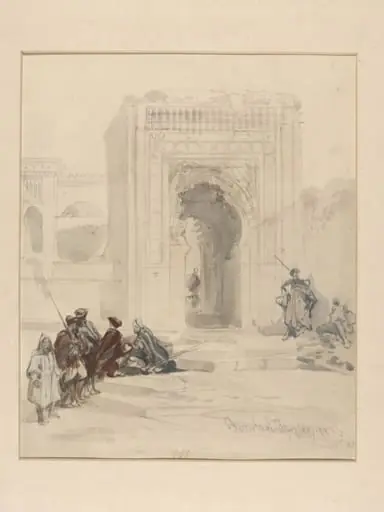 Fortress of Tangier
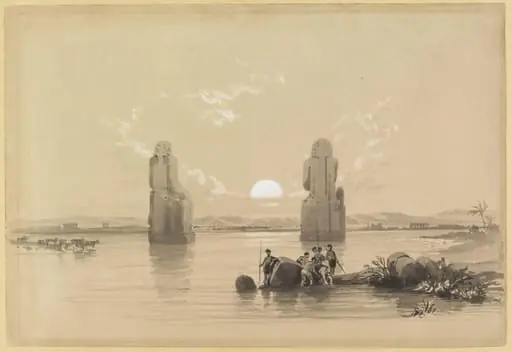 Colossal Statues in the Plain of Thebes, during the Inundation of the Nile
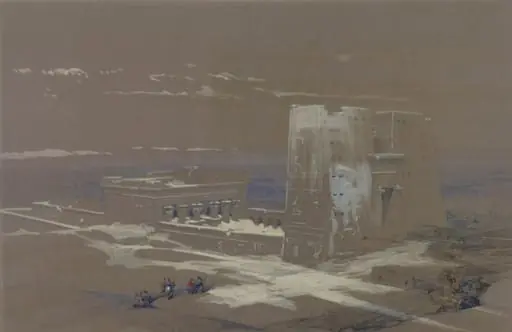 Great Temple of Edfu, Upper Egypt
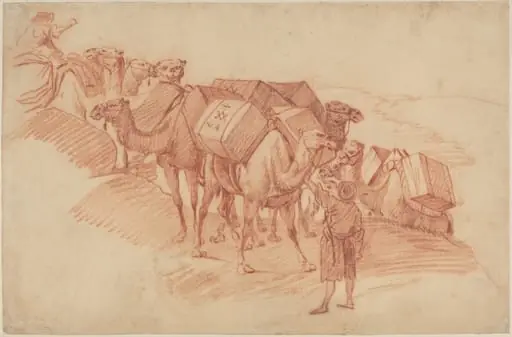 Camel Caravan
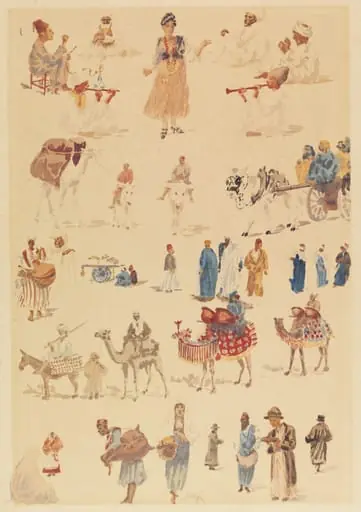 Egyptian Types
 A Scene in the Church of the Holy Sepulchre, Jerusalem
![A Shaykh with his Son[?] on Mules, with their Sais [groom], by S. Bossi](https://artifactworldgallery.com/img/s-bossi--a-shaykh-with-his-son-on-mules-with-their-sais-groom--240d85ba529e2bf3-w320.webp) A Shaykh with his Son[?] on Mules, with their Sais [groom]
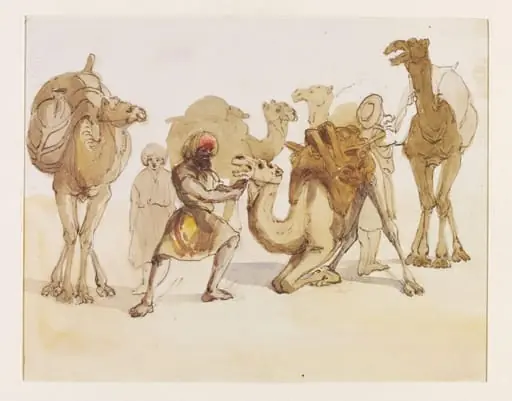
A Shaykh with his Son[?] on Mules, with their Sais [groom]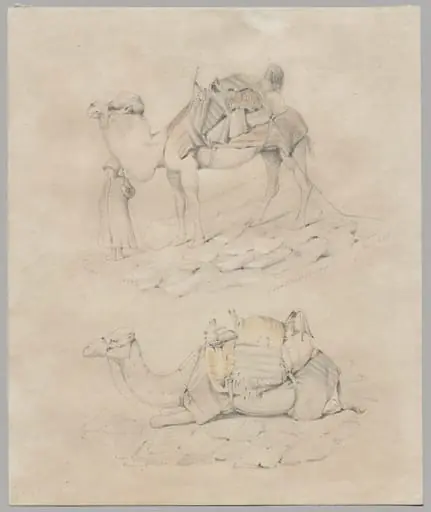 Study of Camels
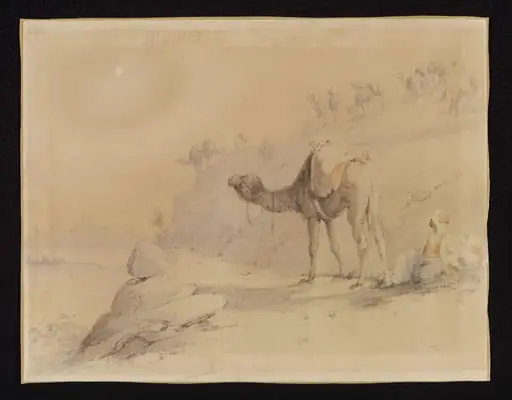 On the Road from Smyrna to Brussa
![Advanced guard & Baggage of the Royal artillery landi[ng] a[t] Alexandria en route for India, by T. B. S.](https://artifactworldgallery.com/img/t-b-s--advanced-guard-baggage-of-the-royal-artillery-landi-ng-a-t-a--605f6f4d9d8dfe93-w320.webp) Advanced guard & Baggage of the Royal artillery landi[ng] a[t] Alexandria en route for India
Advanced guard & Baggage of the Royal artillery landi[ng] a[t] Alexandria en route for India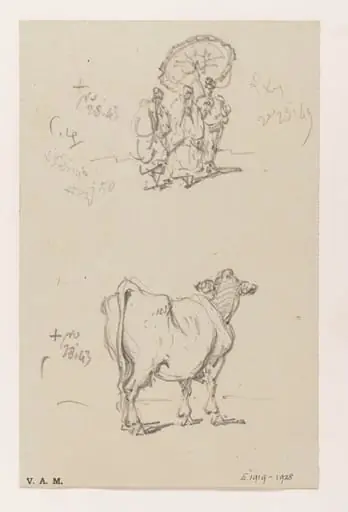 Three figures with a parasol, and a cow
![Arabs and camels beside a Tomb, Algeria[?], by Victor-Pierre Huguet](https://artifactworldgallery.com/img/victor-pierre-huguet--arabs-and-camels-beside-a-tomb-algeria--d8831a130920c80b-w320.webp) Arabs and camels beside a Tomb, Algeria[?]
Arabs and camels beside a Tomb, Algeria[?]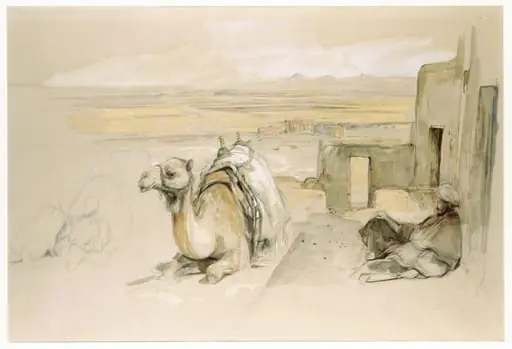 Camels, West Thebes, Egypt
 Capitulation of a Town
 Camels at a well, Tunisia