Artwork
Kersey
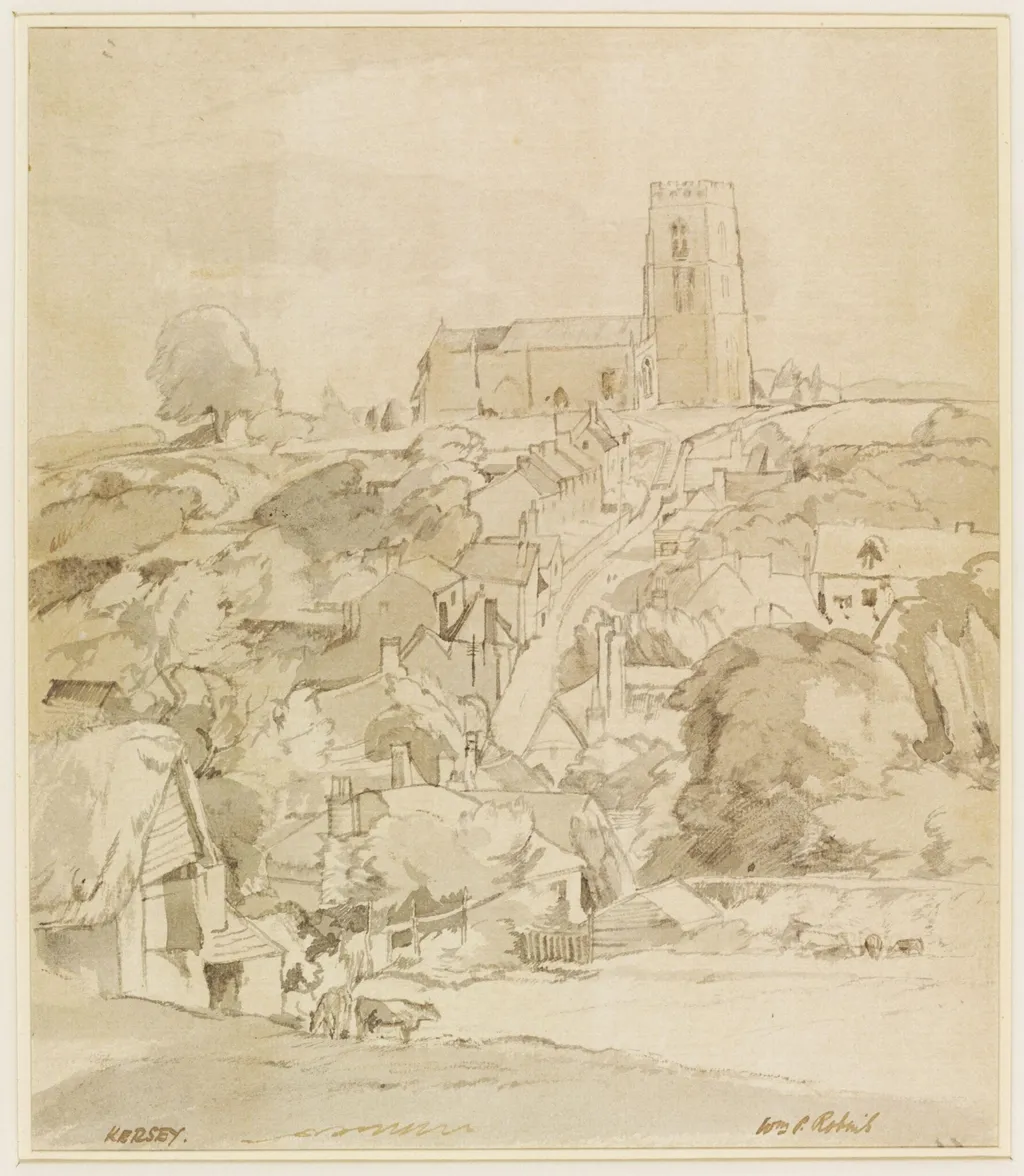
Kersey is a watercolor work on paper by Robins. It dates from 1940 and is held in the collection of the Victoria and Albert Museum.
About this work
Overview
The piece is held in the Victoria and Albert Museum’s collection, where it stands as a modest yet deliberate record of a place undergoing quiet transformation.
Created in 1940, *Kersey* is a watercolour by Robins that captures a quiet English village nestled on a slope. Executed as part of the *Recording Britain* project, the work contributes to a broader effort to document rural landscapes at risk during wartime. The piece is held in the Victoria and Albert Museum’s collection, where it stands as a modest yet deliberate record of a place undergoing quiet transformation.
Subject & Meaning
The scene centers on a modest village with a prominent church tower rising above clustered dwellings. Cattle graze in the foreground, grounding the composition in daily rural life. The elevated viewpoint suggests observation rather than immersion, emphasizing the village’s isolation and vulnerability. The work conveys no grand narrative, but rather a quiet acknowledgment of place as something worth preserving.
Technique & Style
Robins employed loose, rapid watercolour strokes to suggest form without detail. Roofs, stone walls, and foliage are rendered with minimal pigment, relying on washes and drybrush to imply texture. The sketchlike quality reflects immediacy—this is not a polished finish but a visual note taken on site. Figures near the bottom are barely defined, reinforcing the focus on landscape over human activity.
History & Provenance
Commissioned by the Pilgrim Trust and directed by Sir Kenneth Clark, *Kersey* was produced under the *Recording Britain* initiative, which ran from 1939 to 1942. Artists were sent across the country to record scenes deemed at risk from war or modern development. The work entered the V&A’s collection as part of this official archive, preserving its role as a historical document rather than a decorative object.
Context
During the early years of World War II, Britain faced uncertainty over the fate of its rural heritage. The *Recording Britain* project emerged as a cultural response, prioritizing villages, churches, and vernacular architecture over urban or military subjects. Robins’s depiction of Kersey aligns with this mission—not as a monument, but as a quiet testament to ordinary places that might vanish.
Legacy
Though not widely exhibited, *Kersey* remains part of a significant archive that shaped postwar attitudes toward heritage conservation. Its unassuming style and subject matter reflect the project’s democratic ethos: every village, however small, held value. Today, it serves as a reference point for understanding how art was mobilized to safeguard national identity during crisis.
Artist & collection
Artist
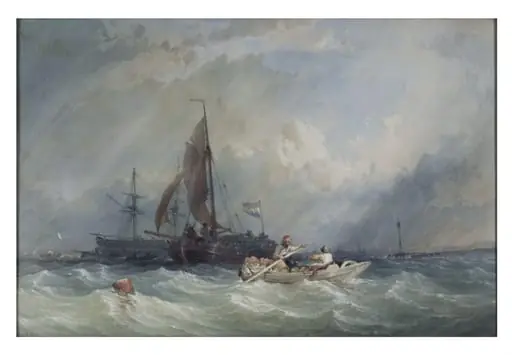
Robins filled thin sheets of paper with watercolour to show English villages, churchyards and ships at sea.

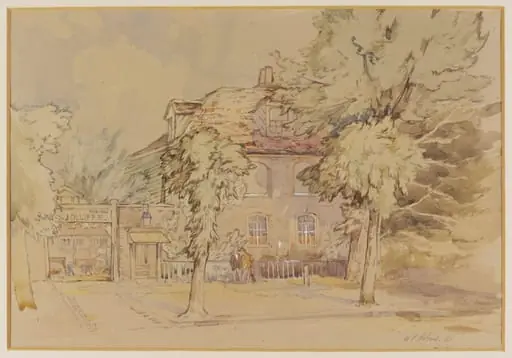
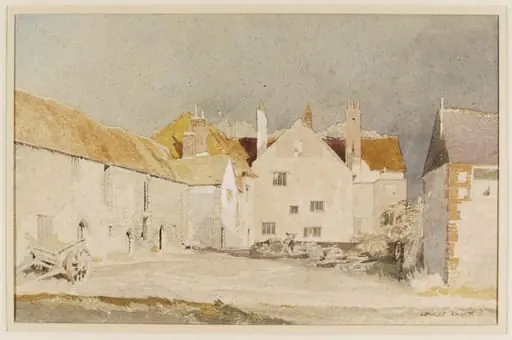 Hangleton Manor, near Brighton
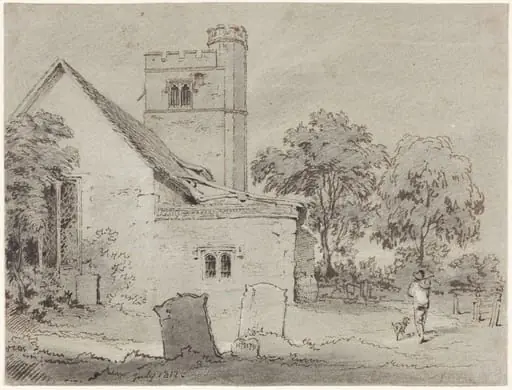 Aldenham Church, Hertfordshire
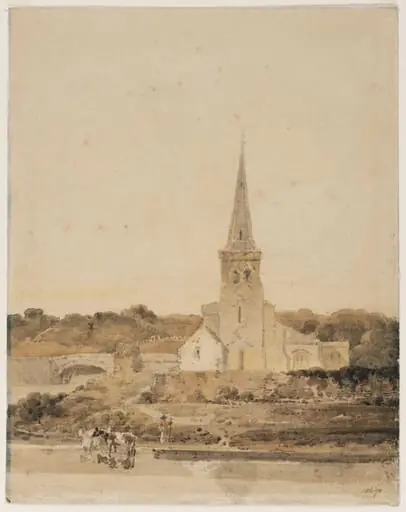 Landscape, with church beside a river
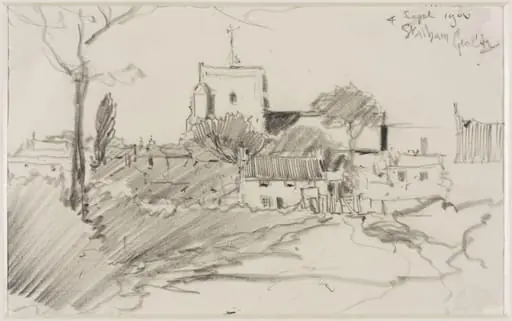 Stalham Church.
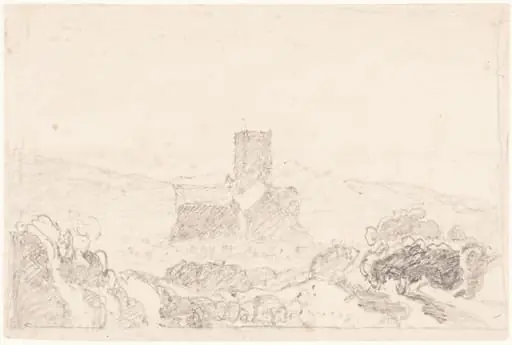 Landscape with Church
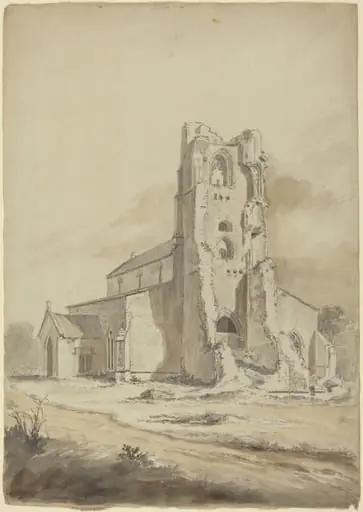 Ruined Church
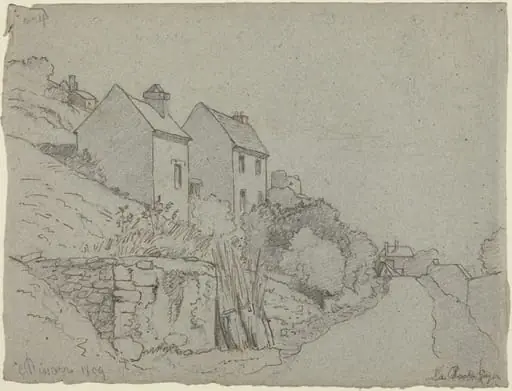 Houses by a Road
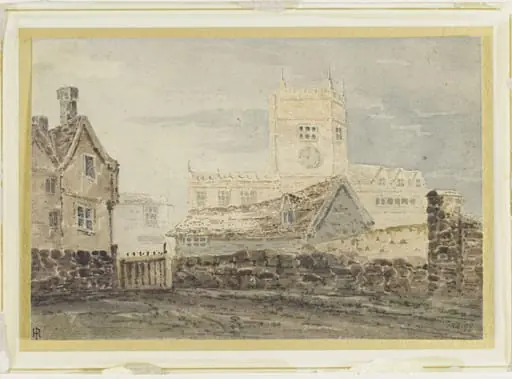 The school, Shrewsbury
![Figures on the Anthoniesdijk Entering Houtewael [verso], by Rembrandt](https://artifactworldgallery.com/img/rembrandt--figures-on-the-anthoniesdijk-entering-houtewael-verso--34adc78d6ee3c51d-w320.webp) Figures on the Anthoniesdijk Entering Houtewael [verso]
Figures on the Anthoniesdijk Entering Houtewael [verso]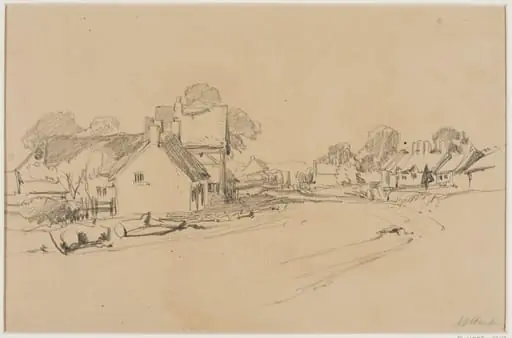 A village street
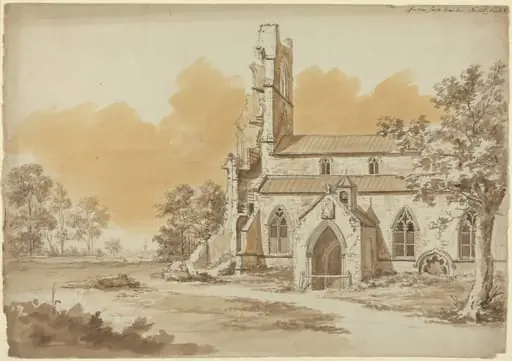 Fauldon, South Greenhoe, Norfolk
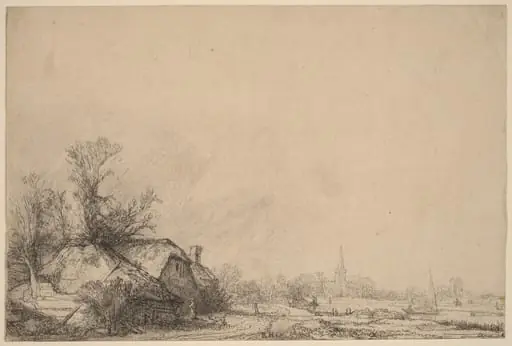 Cottage beside a Canal