Artwork
London Bridge
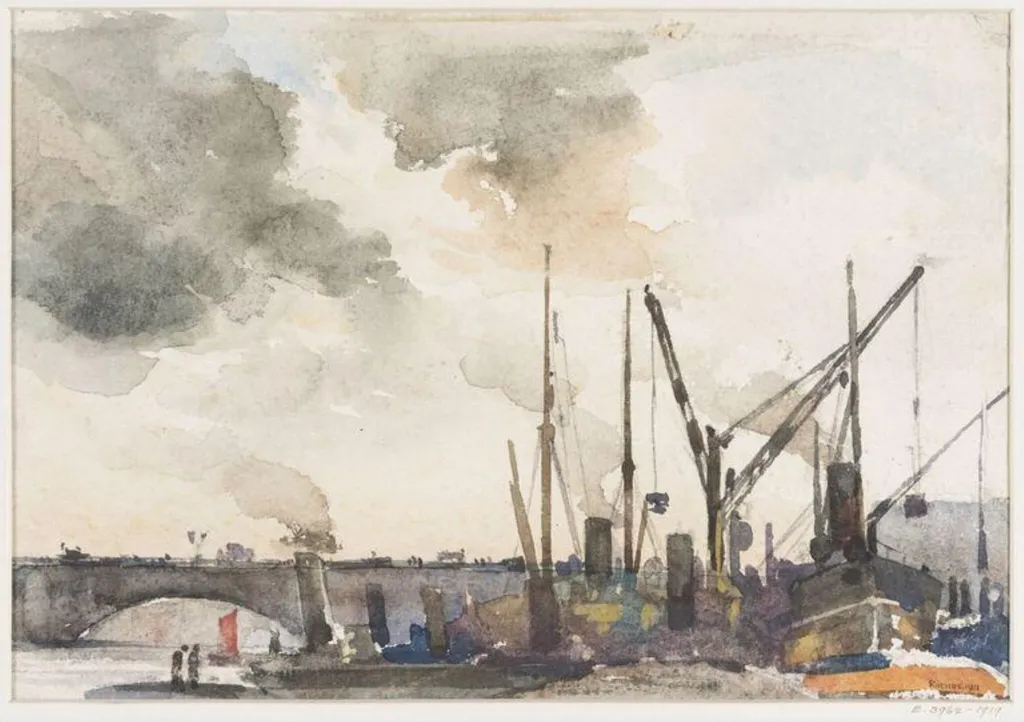
London Bridge is a drawing by William Palmer Robins. It dates from 1911 and is held in the collection of the Victoria and Albert Museum.
About this work
Overview
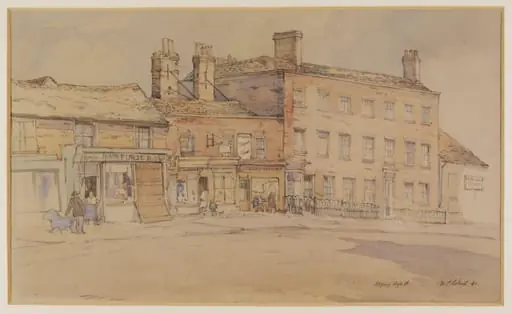
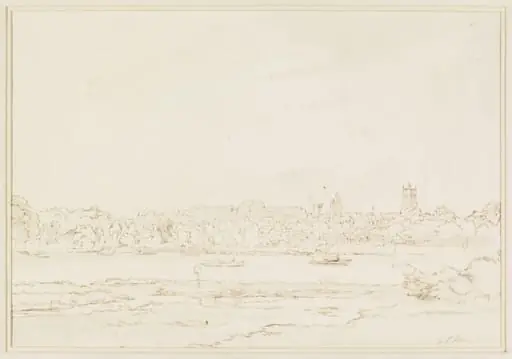
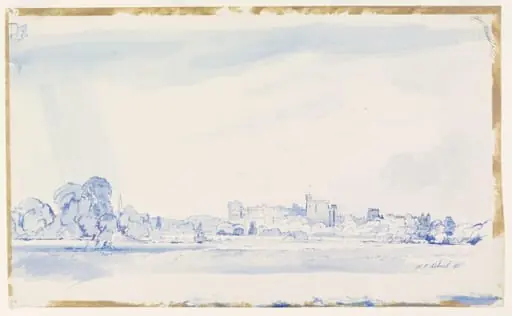
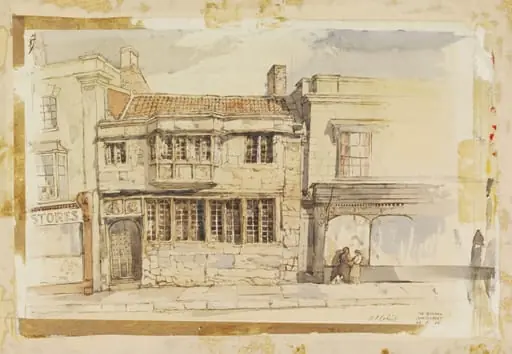
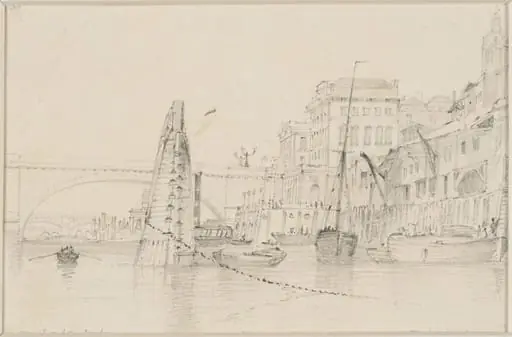
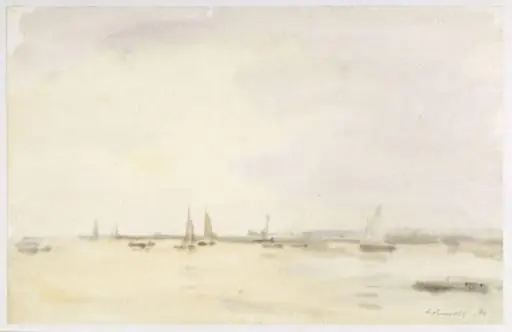
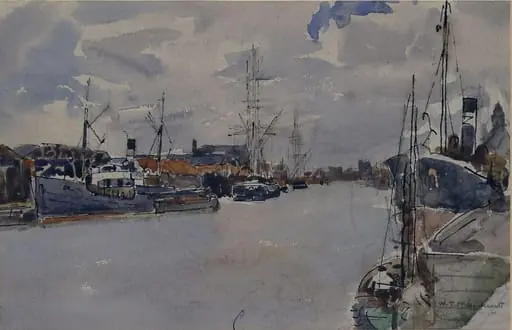
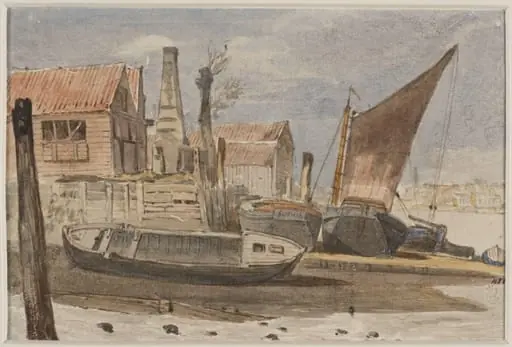
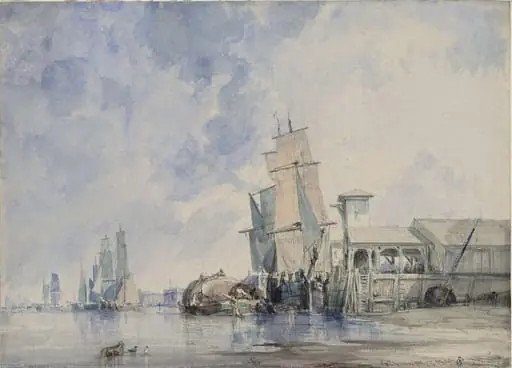
Created in 1911 by William Palmer Robins, this drawing depicts London Bridge as a bustling urban landmark. Executed in pencil and watercolor, the work captures a quiet moment on the Thames with vessels moored along its piers. The drawing resides in the Victoria and Albert Museum’s collection, where it is valued for its observational precision and restrained palette.
Subject & Meaning
The scene centers on the bridge as a conduit of daily life, with figures moving along its length and ships anchored in the river below. The composition emphasizes routine rather than spectacle, suggesting the bridge’s role as a functional artery in early 20th-century London. The calm water and muted tones reinforce a sense of ordinary continuity, not grandeur.
Technique & Style
Robins employed loose, fluid lines to suggest motion and texture, avoiding rigid definition. Watercolor washes create soft atmospheric effects in the sky, while delicate pencil strokes outline masts, ropes, and architectural details. The palette is subdued, with occasional accents of color on the boats drawing attention without disrupting the overall tonal harmony.
History & Provenance
The drawing was completed in 1911 and entered the Victoria and Albert Museum’s collection shortly thereafter. It reflects the museum’s early 20th-century interest in documenting everyday British life through graphic art. No significant alterations or provenance gaps are recorded; its history remains tied to the institution since acquisition.
Context
Made during a period of industrial expansion, the drawing quietly records a Thames still dominated by sail and steam-powered vessels. Unlike contemporary urban scenes focused on progress or chaos, Robins’ work favors stillness and observation, aligning with a broader trend in British drawing of the era that valued quiet realism over dramatic narrative.
Legacy
The drawing contributes to a modest but enduring body of work by Robins that documents London’s riverscape with restraint. It is not widely reproduced, but within museum circles, it is recognized as a thoughtful example of early modern British topographical drawing—valued for its sensitivity to light, scale, and the rhythms of everyday life.
Artist & collection
Artist
William Palmer Robins painted quiet English streets and buildings in watercolor during the 1940s.