Artwork
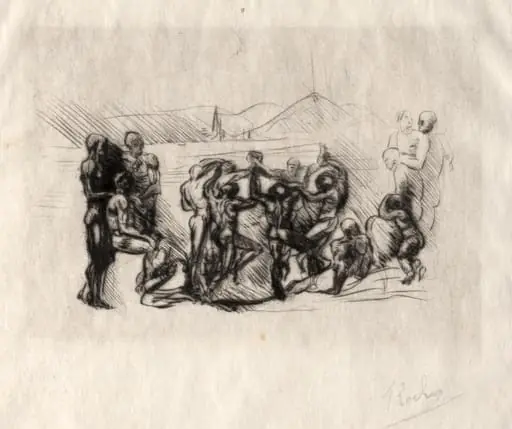
La Ronde
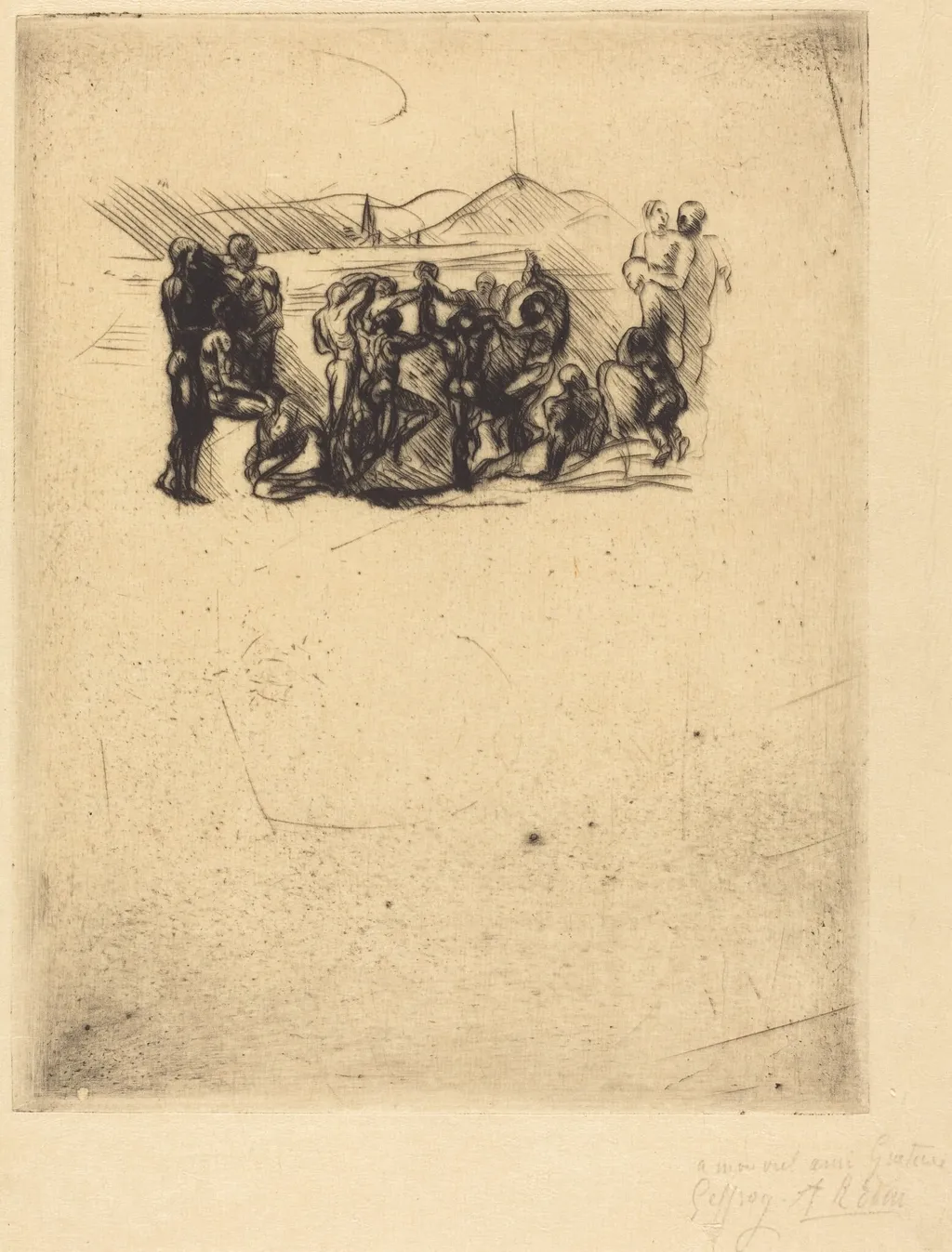
La Ronde is an ink print by the Impressionist artist Auguste Rodin. It dates from 1883 and is held in the collection of the National Gallery of Art.
About this work
Overview
Created circa 1883, *La Ronde* is a dry‑point print by Auguste Rodin, the French artist best known for his contributions to modern sculpture. Though primarily a sculptor, Rodin employed the intaglio technique to explore the same concerns with form and movement that characterize his three‑dimensional work, producing a compact, monochrome image that invites close inspection.
Subject & Meaning
The composition presents a group of figures arranged in a circular formation, their bodies and faces intertwined in a quiet, almost ritualistic pose. The participants appear to be dancing or embracing, yet their expressions remain neutral, lending the scene a restrained intimacy that emphasizes the unity of the group over individual emotion.
Technique & Style
Rodin executed the image by incising lines directly into a metal plate, a process known as dry‑point. The technique yields soft, velvety lines and a rich tonal range, allowing subtle gradations of shadow that convey the overlapping forms. The print’s linear quality mirrors the sculptor’s interest in surface texture and the play of light on flesh.
History & Provenance
*La Ronde* emerged during a period when Rodin was expanding his practice beyond clay and bronze, experimenting with printmaking to disseminate his ideas. The work has remained in the collections of several European institutions, reflecting its role in illustrating the breadth of Rodin’s artistic output beyond his more widely recognized sculptural oeuvre.
Artist & collection
Artist
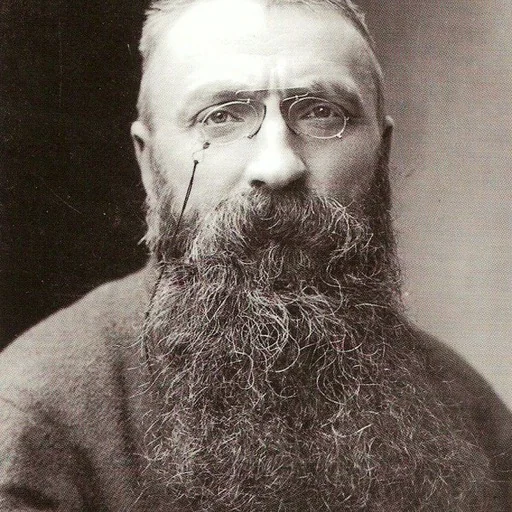
François Auguste René Rodin (; French: ; 12 November 1840 – 17 November 1917) was a French sculptor generally considered the founder of modern sculpture.

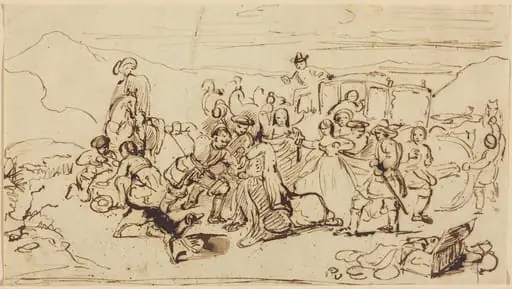 The Murder of Archbishop Sharpe
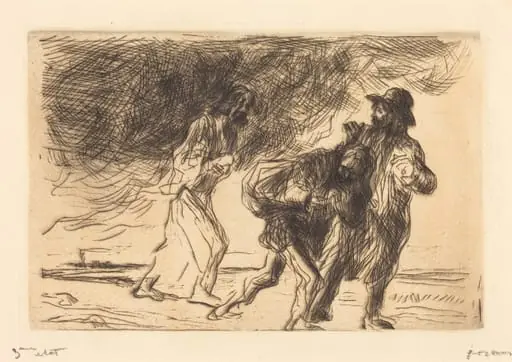 La route d'Emmaüs (1ère planche) (The Road to Emmaus) (first plate)
 Untitled
 Study for "The Deluge"
 Les notables (petite planche) (The Notables) (small plate)
 "Wohl auf, kameraden, aufs pferd, aufs pferd! Ins feld, in die freiheit gezogen!" ("Come On, Comrades, to Horse, to Horse! To Battle, Bound for Liberty!")
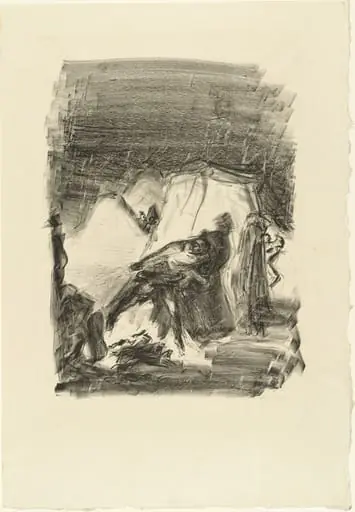 Untitled
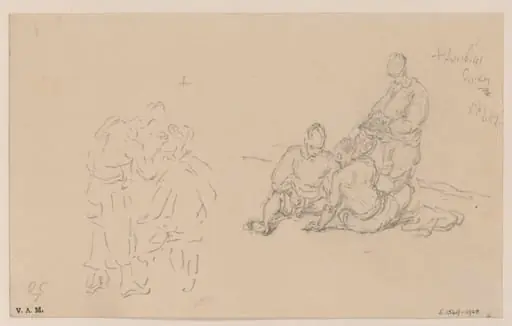 Two sketches of groups of Chinese figures
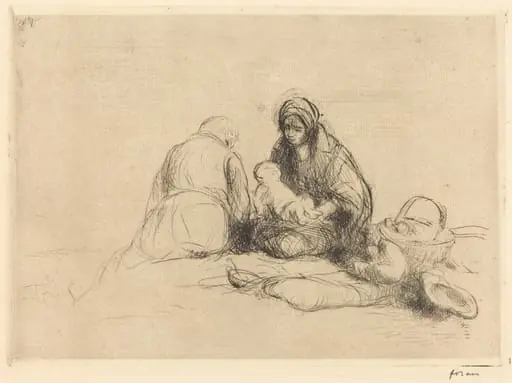 Le repos en Egypte (The Rest in Egypt)
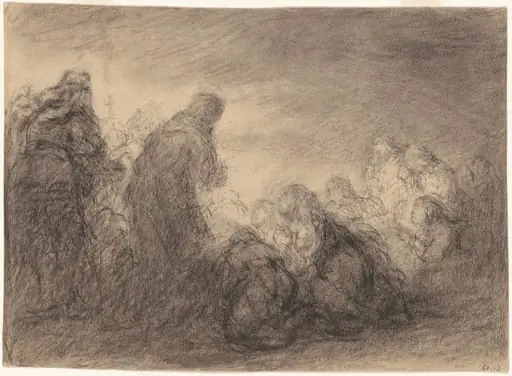 Group of Figures
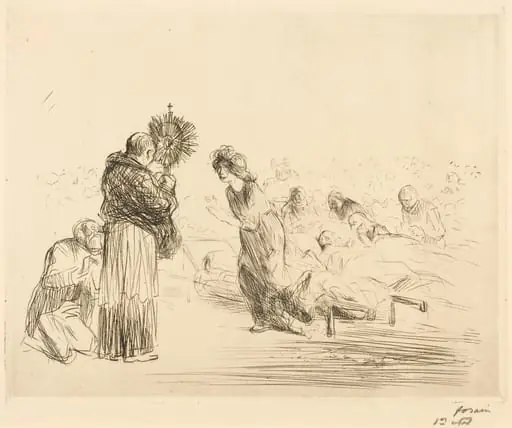 Le miraculé devant l'ostensoir (4e planche) (The Miracle before the Blessed Sacrament) (fourth plate)
 La Ronde