Artwork
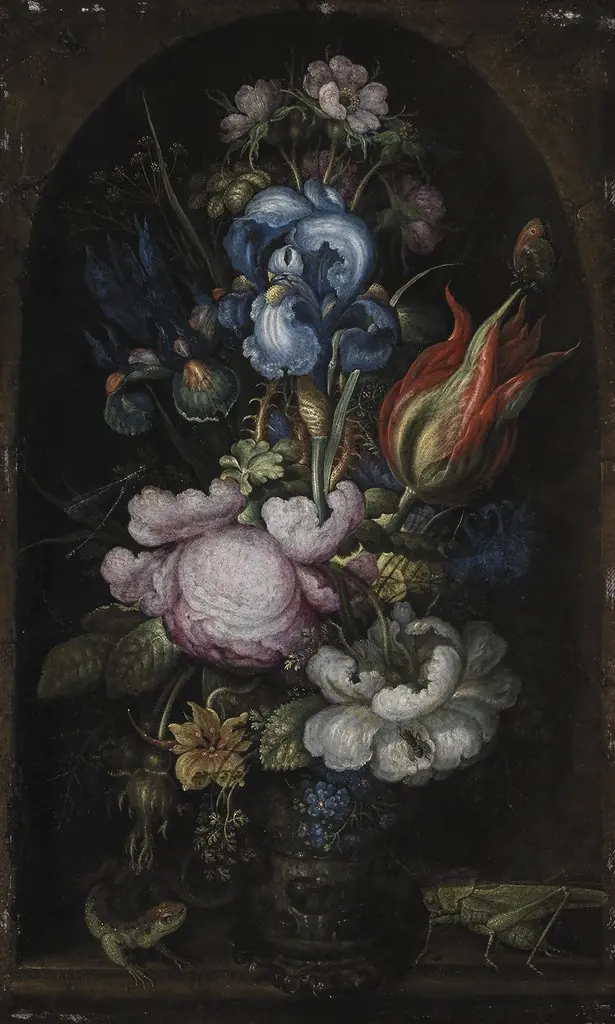
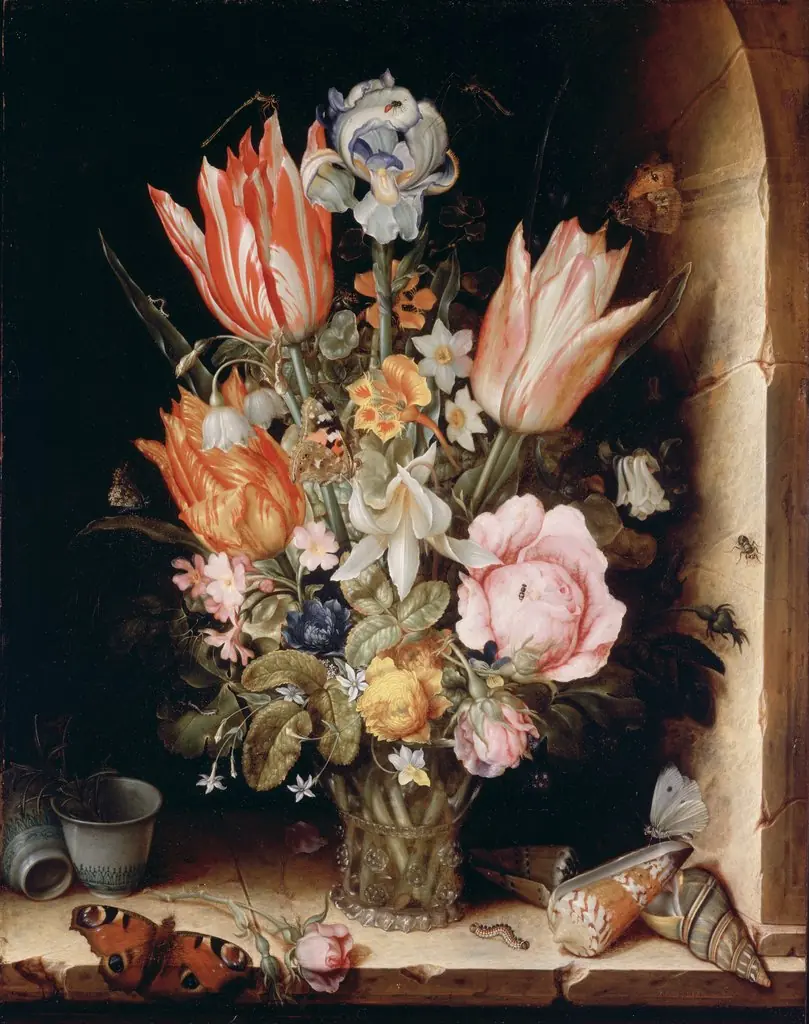
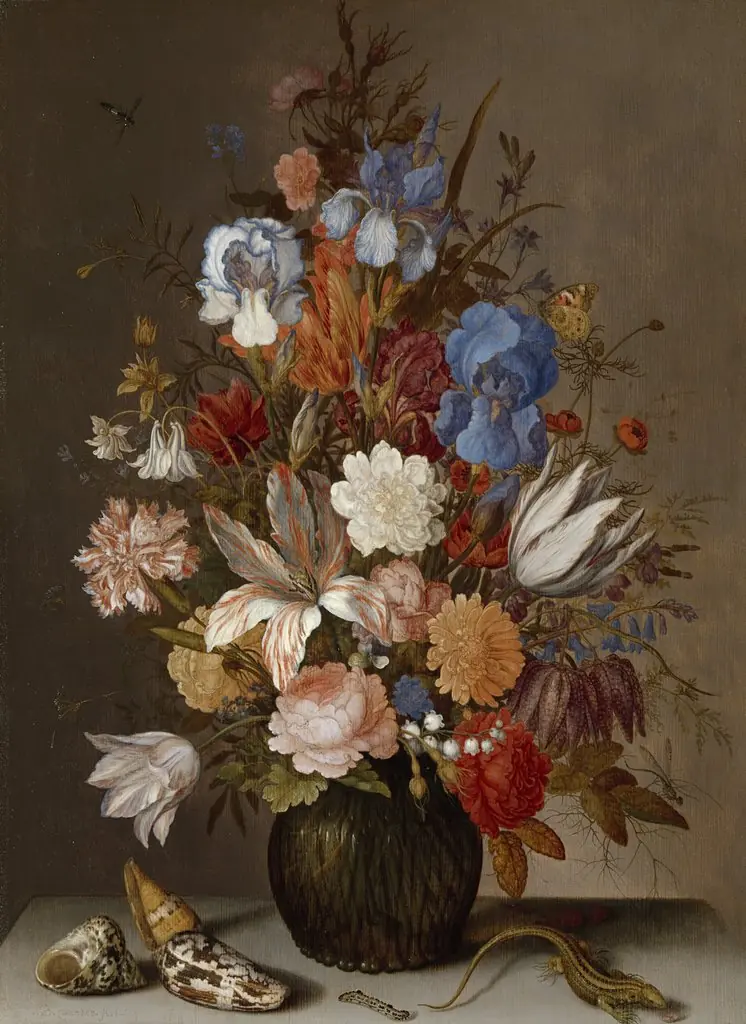
Still life with flowers in a glass berkemeyer with a lizard, frog and dragonfly on a ledge
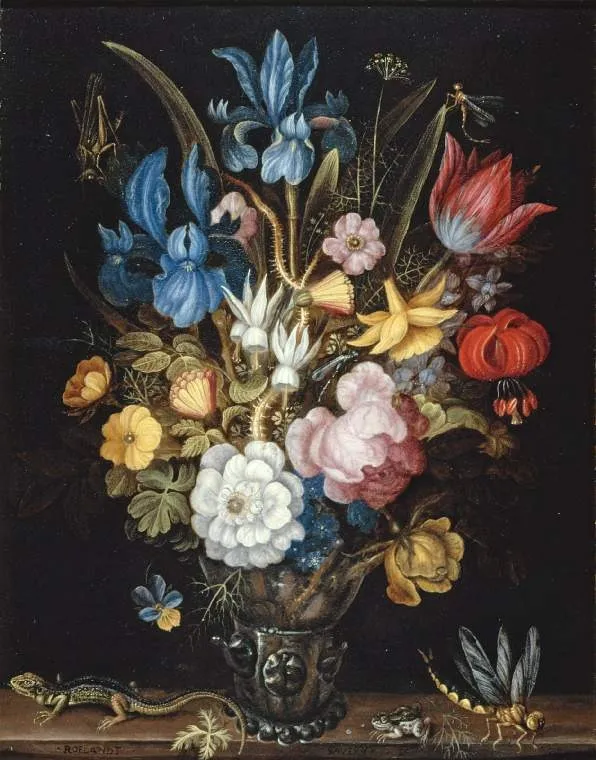
Still life with flowers in a glass berkemeyer with a lizard, frog and dragonfly on a ledge is an oil painting by the Dutch Golden Age artist Roelant Savery. It dates from 1637 and is held in the collection of the Fitzwilliam Museum.
About this work
Overview
Painted in 1637 on copper, this still life by Roelant Savery combines botanical precision with small animal life arranged on a stone ledge.
Painted in 1637 on copper, this still life by Roelant Savery combines botanical precision with small animal life arranged on a stone ledge. The work exemplifies the Dutch Golden Age’s fascination with natural detail and material richness. Its compact format and luminous pigments reflect the artist’s skill in rendering texture and light on a metal support, a technique favored for its smooth surface and reflective qualities.
Subject & Meaning
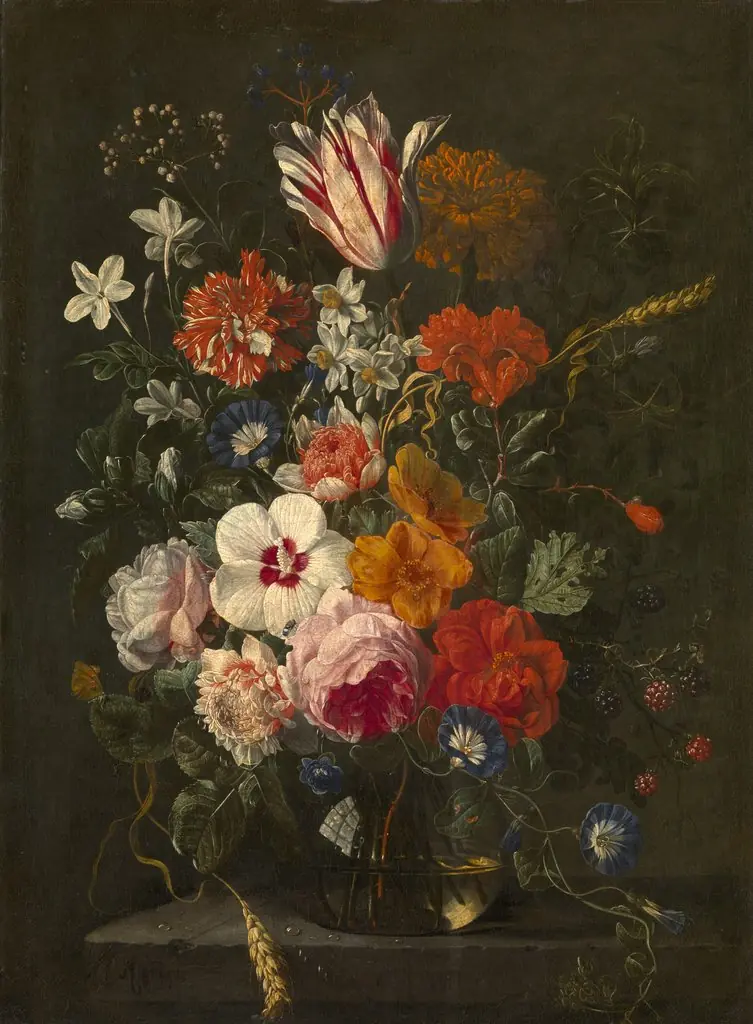
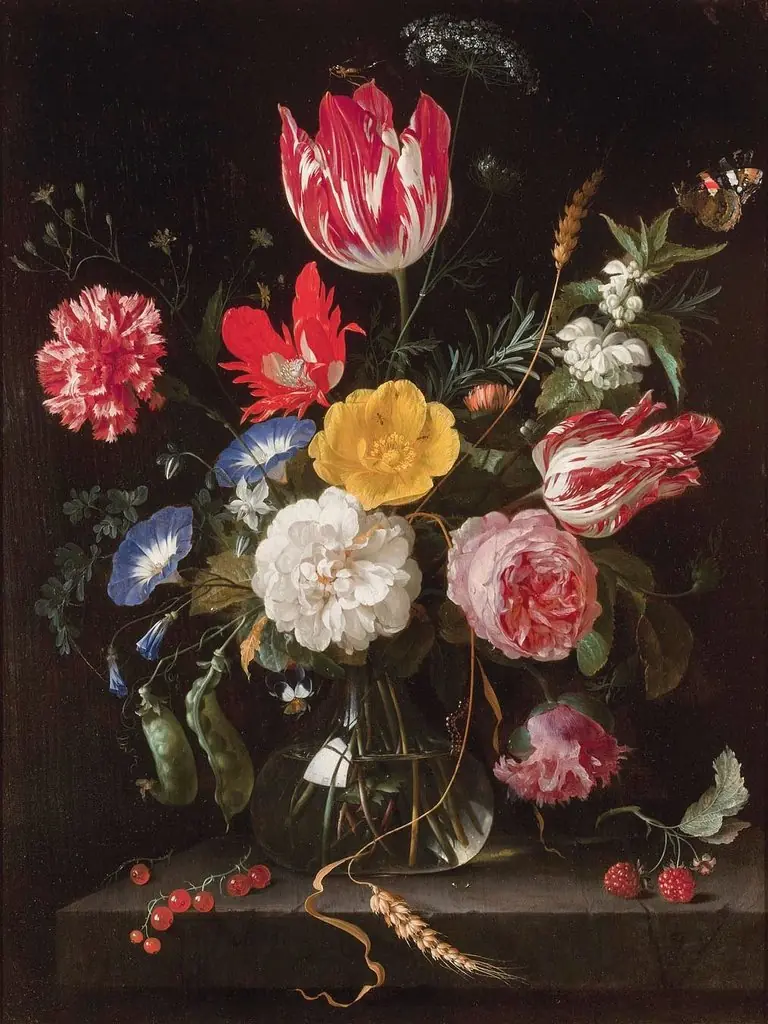
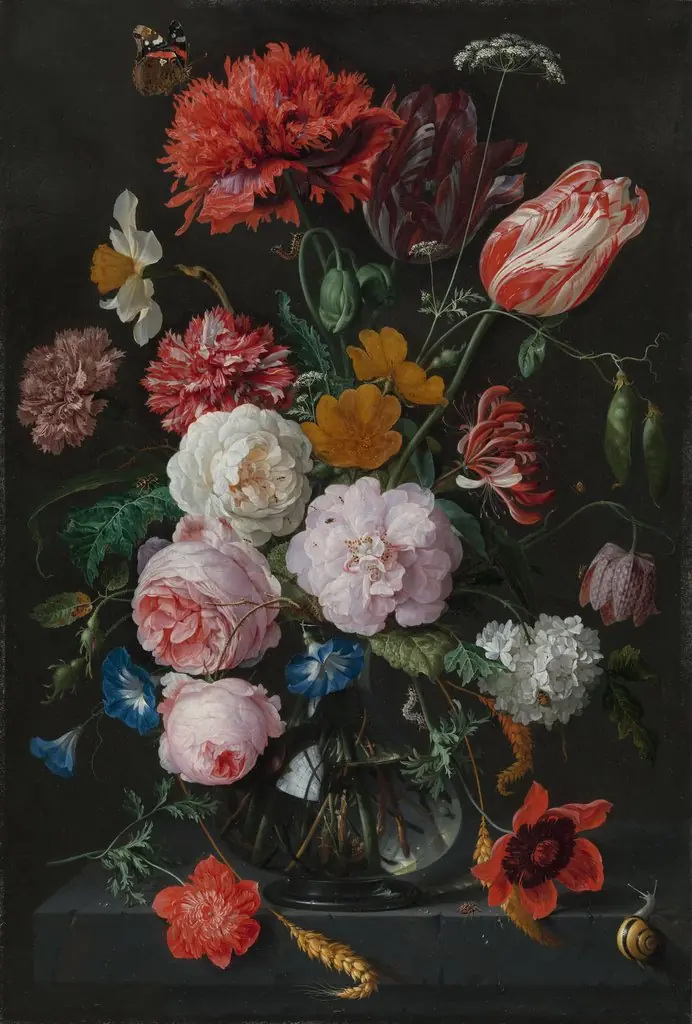
The composition centers on a glass berkemeyer filled with seasonal blooms—irises, tulips, roses, and a poppy—interspersed with delicate white flowers. A lizard, frog, and dragonfly rest along the ledge, suggesting the coexistence of cultivated beauty and wild nature. These creatures may allude to transience, a common theme in Dutch still lifes, where life and decay exist in quiet tension beneath the surface order.
Technique & Style
Savery employed fine brushwork to capture the translucency of petals, the glossy sheen of the vase, and the intricate scales of the lizard. The dragonfly’s wings are rendered with near-microscopic detail, while the frog’s skin suggests dampness. The dark, unmodulated background heightens the vibrancy of the colors and focuses attention on the objects, a deliberate use of contrast to enhance visual clarity and tactile presence.
History & Provenance
Created during Savery’s time in the Netherlands, the painting entered the Fitzwilliam Museum’s collection in the 19th century. Its survival in good condition reflects its early recognition as a work of exceptional craftsmanship. The copper support, though less common than canvas, was prized by specialists for its durability and ability to hold fine detail, aligning with Savery’s reputation as a meticulous observer of nature.
Context
In early 17th-century Dutch society, still lifes like this one appealed to collectors interested in natural science and the aesthetics of order. Botanical accuracy was valued alongside symbolic undertones, often tied to themes of mortality and divine creation. Savery’s work fits within a broader tradition of Flemish and Dutch artists who merged scientific curiosity with artistic refinement in depictions of the natural world.
Legacy
Savery’s attention to minute natural details influenced later still life painters in the Netherlands. His integration of fauna into floral arrangements became a recognizable motif, contributing to the genre’s evolution beyond mere decoration into a vehicle for contemplation on life cycles. The painting remains a key example of how art and observation converged in the Dutch Golden Age.
Artist & collection
Artist
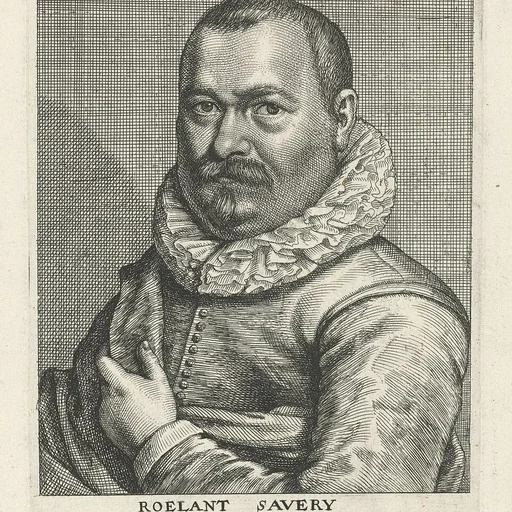
Roelant Savery (or Roeland(t) Maertensz Saverij, or de Savery, or many variants; 1576 – buried 25 February 1639) was a Flanders-born Dutch Golden Age painter.