Artwork
Saint Luke Portraying the Virgin
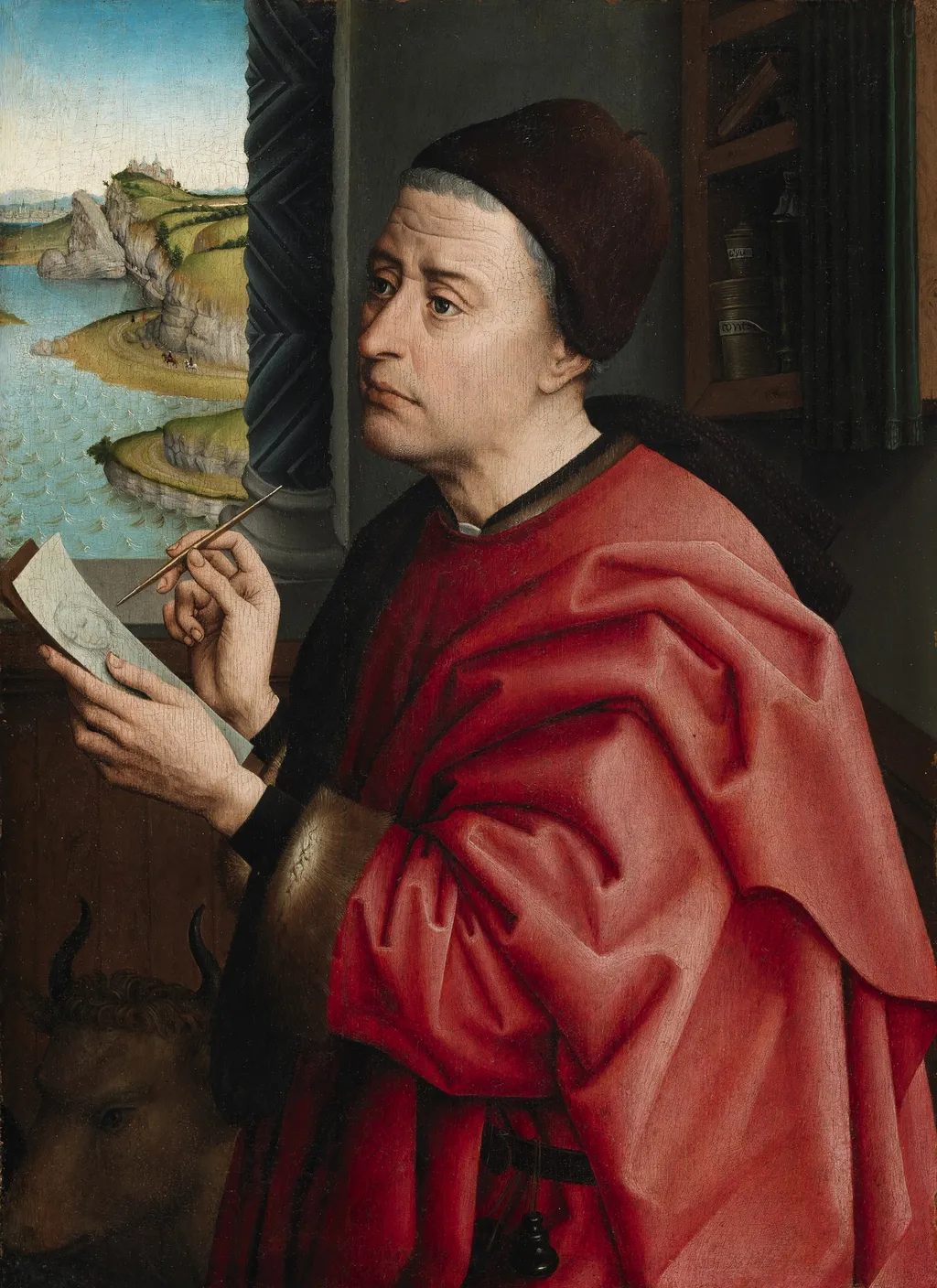
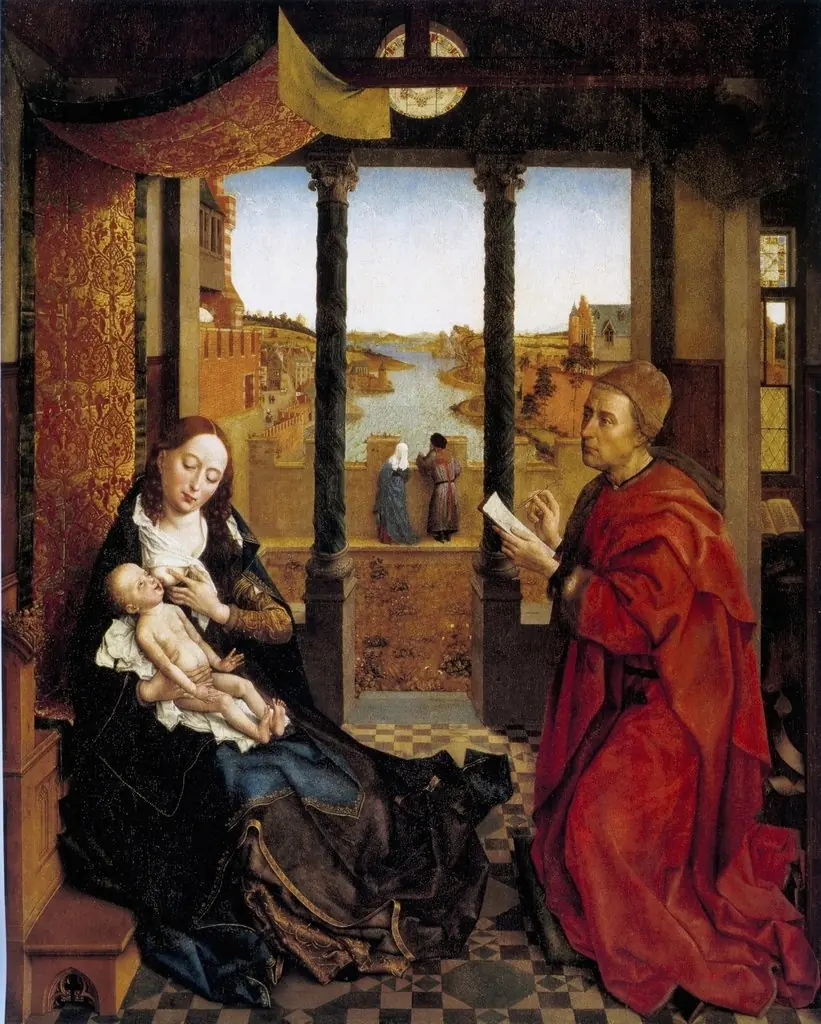
Saint Luke Portraying the Virgin is an oil painting by the Northern Renaissance artist Rogier van der Weyden. It dates from 1431 and is held in the collection of the National Gallery of Ireland.
About this work
Overview
Painted in 1431 by Rogier van der Weyden, this oil-on-panel work presents Saint Luke as a painter capturing the Virgin Mary. It reflects the Northern Renaissance emphasis on quiet devotion and meticulous observation. The painting is part of the National Gallery of Ireland’s collection, where it remains one of the earliest known depictions of an artist at work within a sacred context.
Subject & Meaning
The scene portrays Saint Luke, traditionally regarded as the first Christian artist, sketching the Virgin Mary while she sits beside him. His gaze is directed outward, suggesting he observes her not just physically but spiritually. The act of painting becomes an act of reverence, merging artistic labor with theological contemplation, reinforcing the idea that art can serve divine truth.
Technique & Style
Van der Weyden employs oil paint to achieve fine detail in textures—folds of fabric, skin tones, and the distant landscape.
Van der Weyden employs oil paint to achieve fine detail in textures—folds of fabric, skin tones, and the distant landscape. The lighting is soft and naturalistic, modeling forms with subtle gradations. The background, with its rocky coast and hazy sky, extends spatial depth, while the figure’s turned head and restrained expression convey introspection, characteristic of Northern Renaissance portraiture.
History & Provenance
Commissioned likely for a religious or guild setting, the painting entered the National Gallery of Ireland’s collection in the 19th century. Its early date and intact condition make it a rare surviving example of van der Weyden’s initial period. No documented alterations or major restorations are recorded, preserving its original tonal harmony and compositional balance.
Context
In early 15th-century Bruges, where van der Weyden worked, artists were increasingly recognized as skilled professionals rather than mere craftsmen. This painting aligns with a growing cultural interest in the artist’s role as a witness to sacred events. The inclusion of a detailed landscape reflects broader trends in Netherlandish art toward naturalism and spatial coherence.
Legacy
The painting influenced later depictions of artists in sacred settings, reinforcing the link between creativity and piety. Its quiet intensity and technical precision became a model for Northern European painters. Though not widely reproduced in its time, it remains a key reference for understanding how early Netherlandish artists viewed their own vocation.
Own this work as a print
Artist & collection
Artist
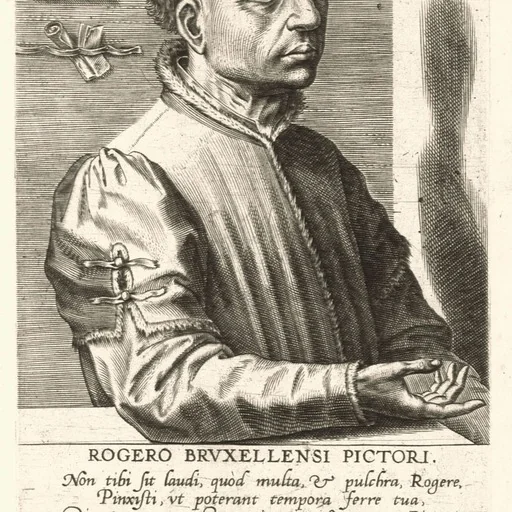
Rogier van der Weyden (Dutch: ; 1399 or 1400 – 18 June 1464), initially known as Roger de la Pasture (French: ), was an early Netherlandish painter whose surviving works consist mainly of religious triptychs,…