Artwork
The Prisoner (Der Gefangene)
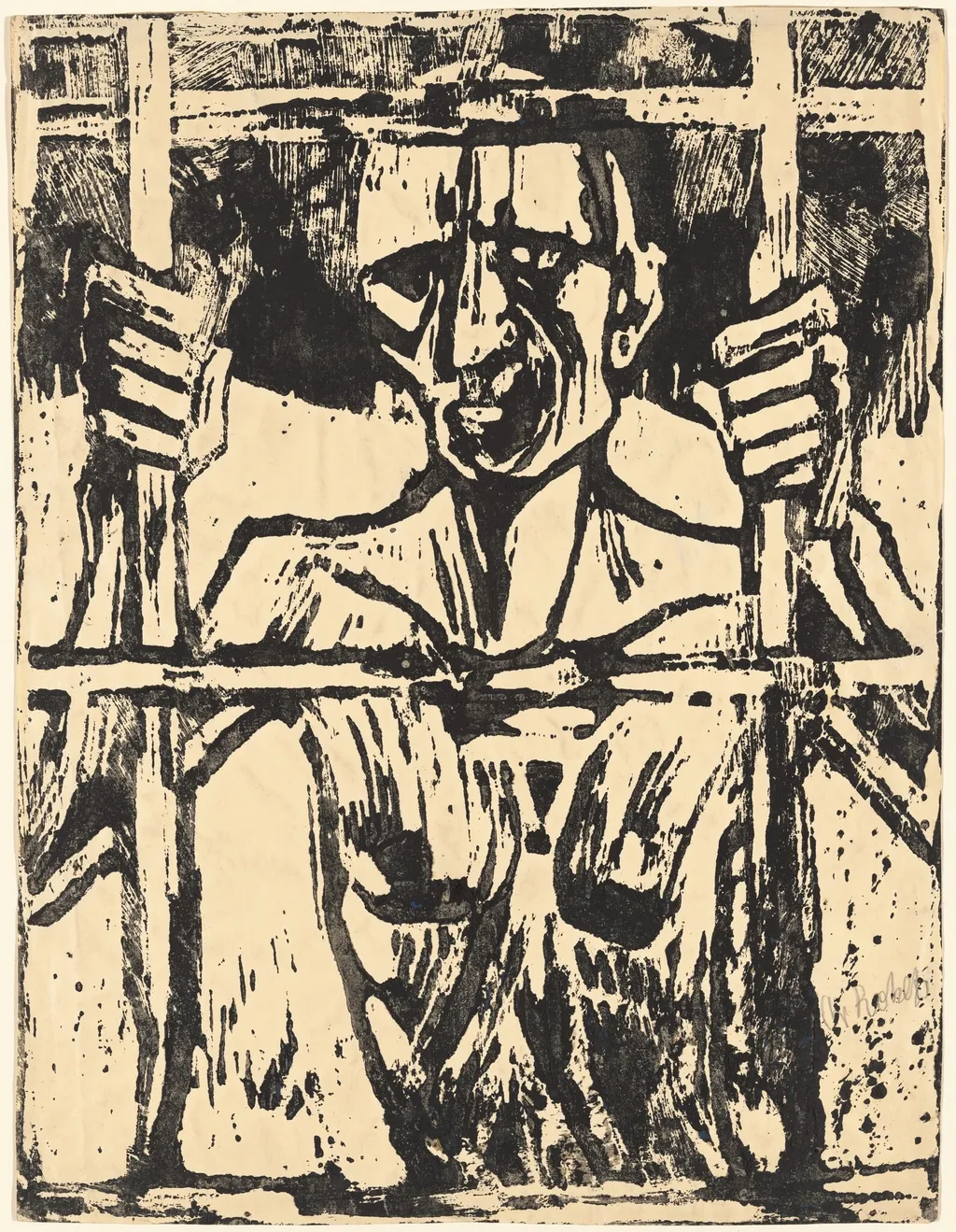
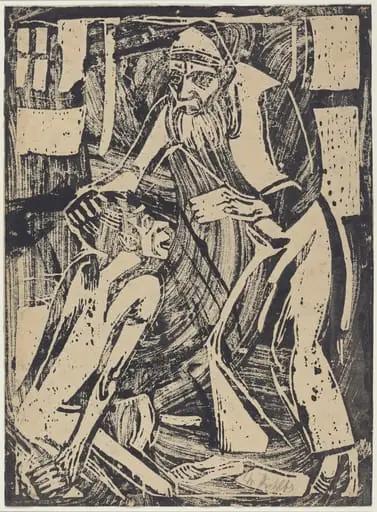
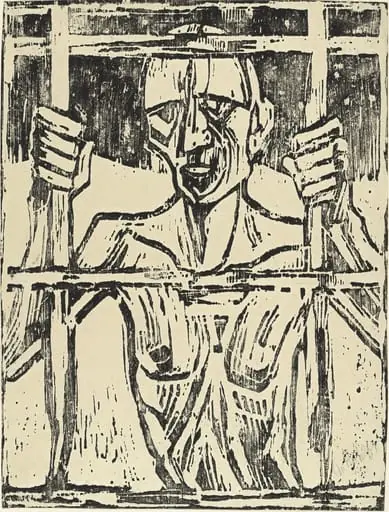
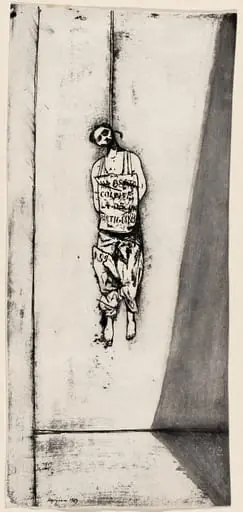
The Prisoner (Der Gefangene) is an ink print by Christian Rohlfs. It dates from 1918 and is held in the collection of the National Gallery of Art.
About this work
Overview
Created in 1918, *The Prisoner (Der Gefangene)* is a woodcut print executed on wove paper by German artist Christian Rohlfs. The image is rendered in stark black‑and‑white contrasts, employing the characteristic bold lines and simplified forms associated with Rohlfs’s expressionist approach.
Subject & Meaning
The composition centers on a solitary figure in a white shirt, hands raised and gripping thick, cage‑like bars. The man's facial expression and posture convey a mixture of fear, desperation, and resignation, suggesting a psychological state of confinement and hopelessness.
Technique & Style
Rohlfs utilized the woodcut process, carving the design into a block and printing it onto paper, which imparts a rough, textured surface. The angular, geometric framing of the bars and the stark chiaroscuro enhance the work’s somber tone and emphasize the sense of restriction.
History & Provenance
The print emerged toward the end of World War I, a period marked by social upheaval in Germany. While specific ownership records are limited, the work is documented as part of Rohlff’s print output during his mature expressionist phase.
Context
Rohlfs was a prominent figure in German expressionism, a movement that favored emotional intensity over realistic representation. *The Prisoner* reflects the broader artistic preoccupation with alienation and the psychological impact of confinement prevalent in the post‑war era.
Artist & collection

Artist
Christian Rohlfs (November 22, 1849 - January 8, 1938) was a German painter and printmaker, one of the important representatives of German expressionism.