Artwork
Oude-Kate
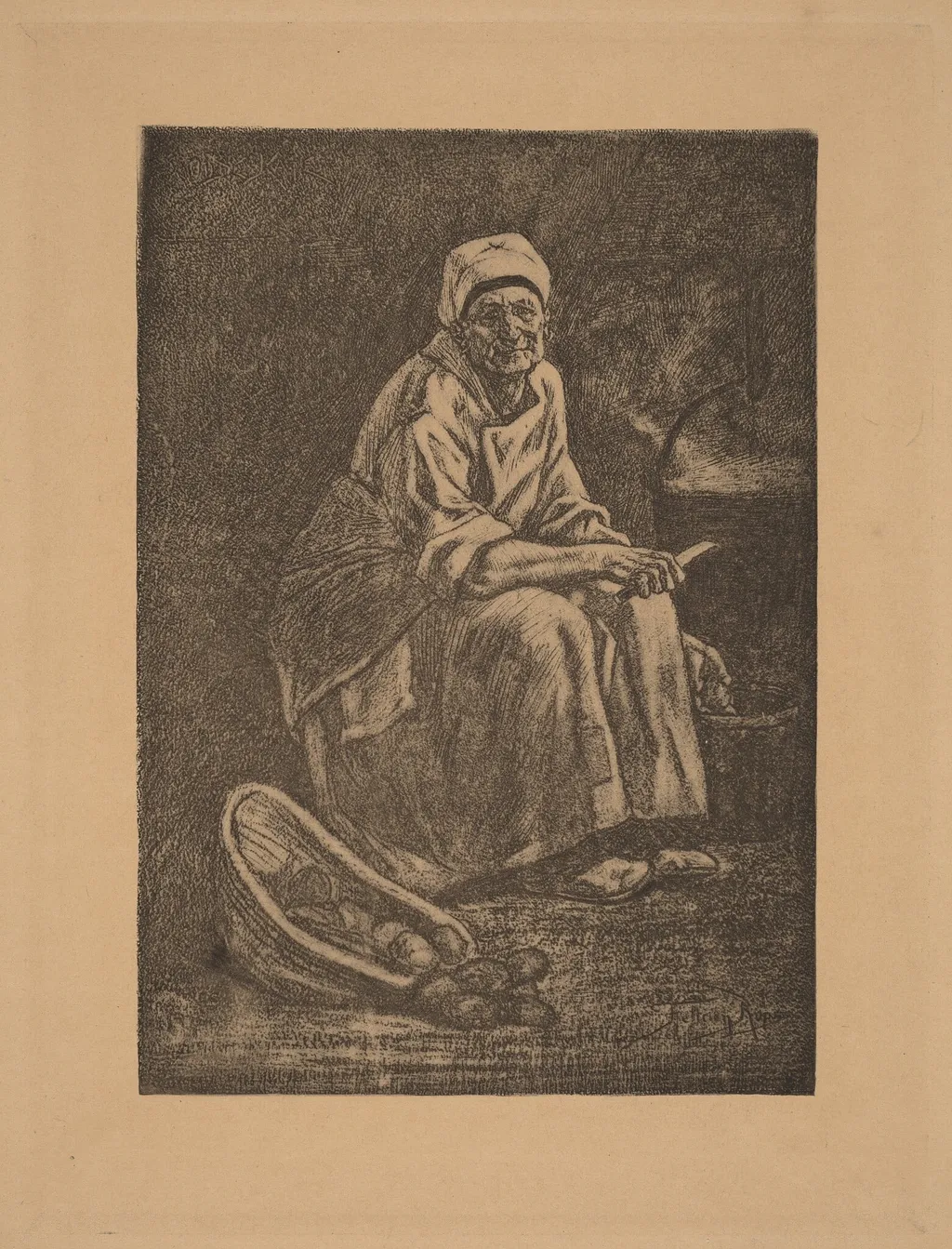
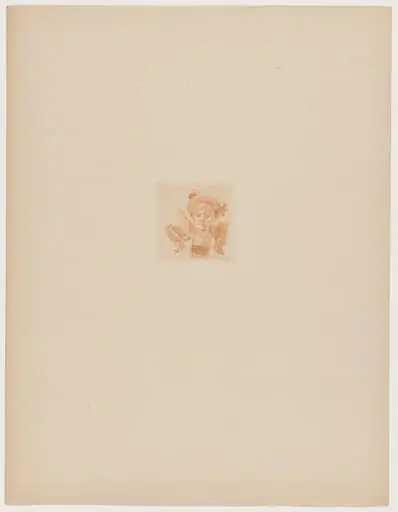
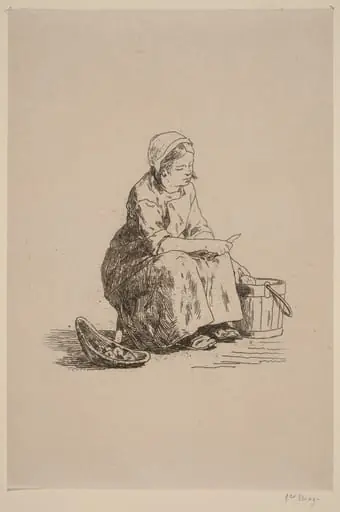
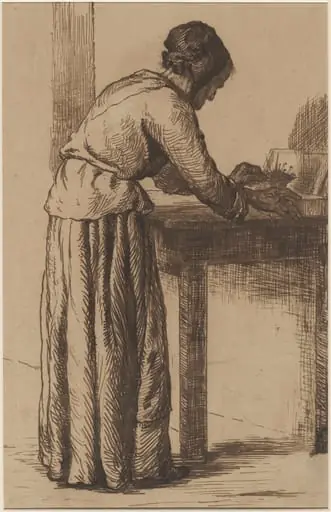
Oude-Kate is an ink print by the Romanticist artist Félicien Rops. It dates from 1866 and is held in the collection of the National Gallery of Art.
About this work
Overview
Oude-Kate is an 1866 etching by Félicien Rops, a Belgian artist associated with Symbolism and Decadence. The work features a somber depiction of an elderly woman in contemplative solitude.
Subject & Meaning
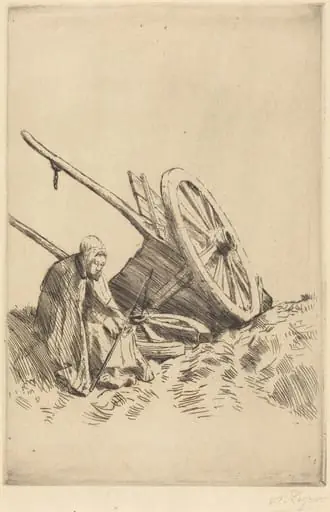
The etching portrays an aged woman seated in introspection, her face hidden and gaze downward, conveying a sense of melancholy. Symbols such as a knife and scattered objects near a basket may allude to themes of mortality, isolation, or the weight of experience.
Technique & Style
Rops employed intaglio etching techniques to achieve textured depth, emphasizing the subject's wrinkled face and loose robe. The somber tone and detailed rendering reflect Rops's mastery of etching, characteristic of his contributions to the medium.
History & Provenance
Created in 1866, Oude-Kate was part of Rops's early output that, while not widely recognized by the general public at the time, earned him respect among bohemian circles and literary collaborators.
Context
Oude-Kate aligns with the aesthetic of Les XX, a group Rops was associated with, and resonates with the fin de siècle's exploration of the human condition, though its specific inspiration or commission context is not detailed here.
Legacy
While Rops's broader recognition grew posthumously, works like Oude-Kate demonstrate his influence on Symbolist printmaking and his ability to evoke profound emotional states through simple, yet powerful, compositions.
Artist & collection
Artist
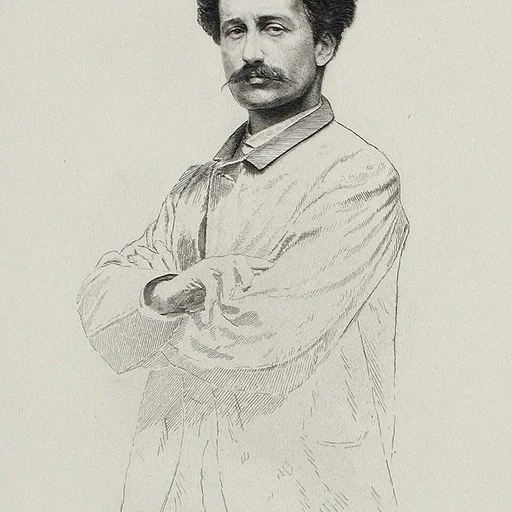
Félicien Victor Joseph Rops (French: ; 7 July 1833 – 23 August 1898) was a Belgian artist associated with Symbolism, Decadence, and the Parisian fin de siècle, and was a member of the Les XX group.