Artwork
Vanitas
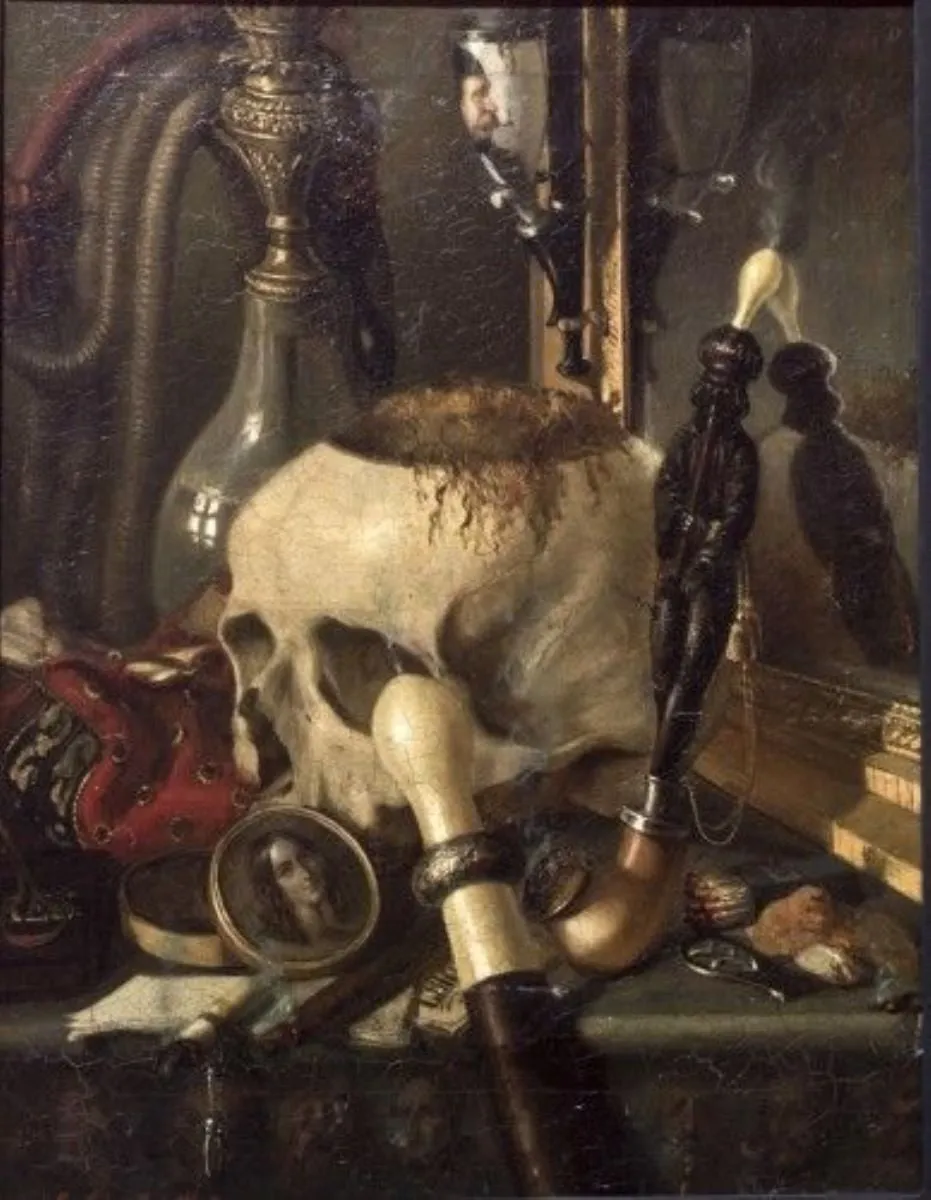
Vanitas is an unspecified painting by the Biedermeier artist Constantin Daniel Rosenthal. It dates from 1848 and is held in the collection of the National Museum of Art of Romania.
About this work
Overview
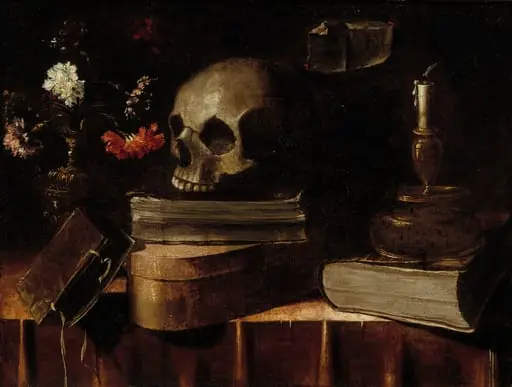
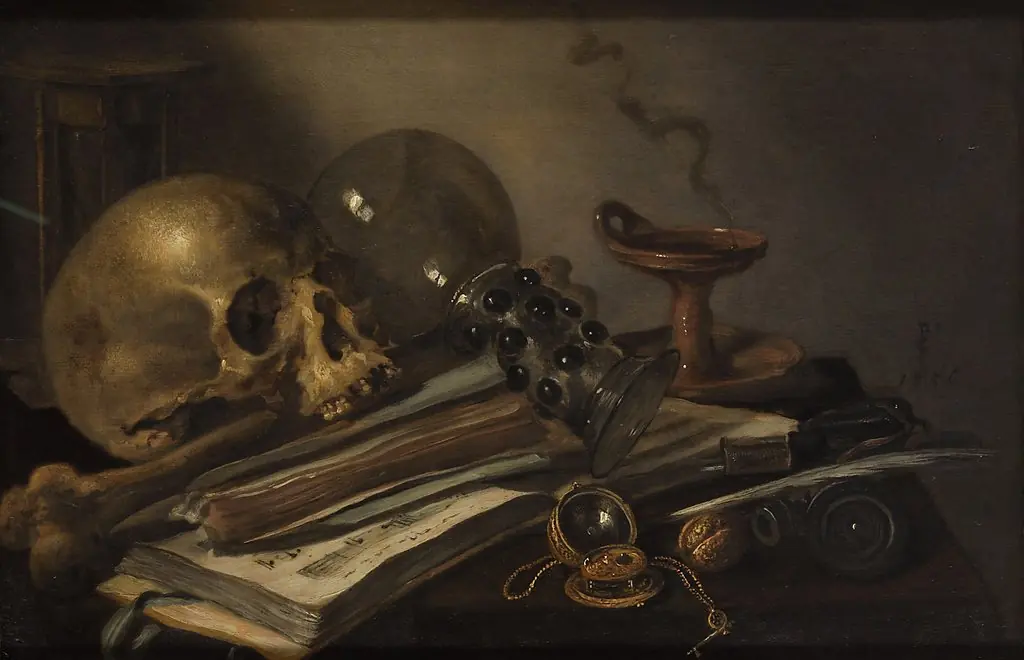
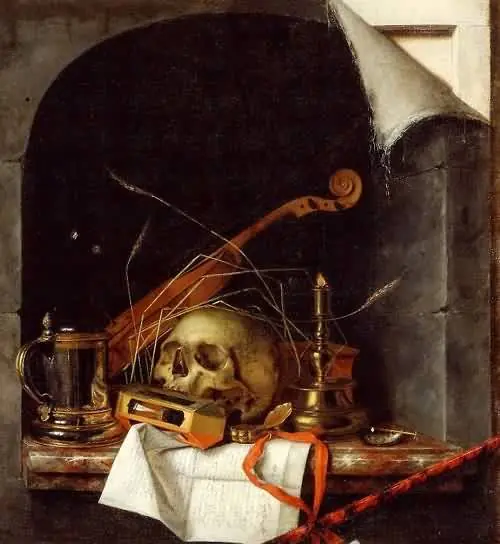
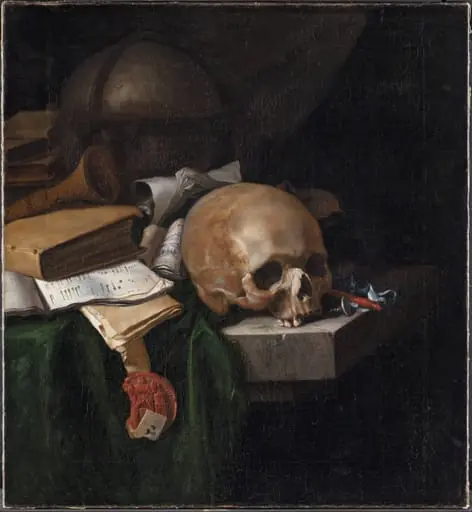
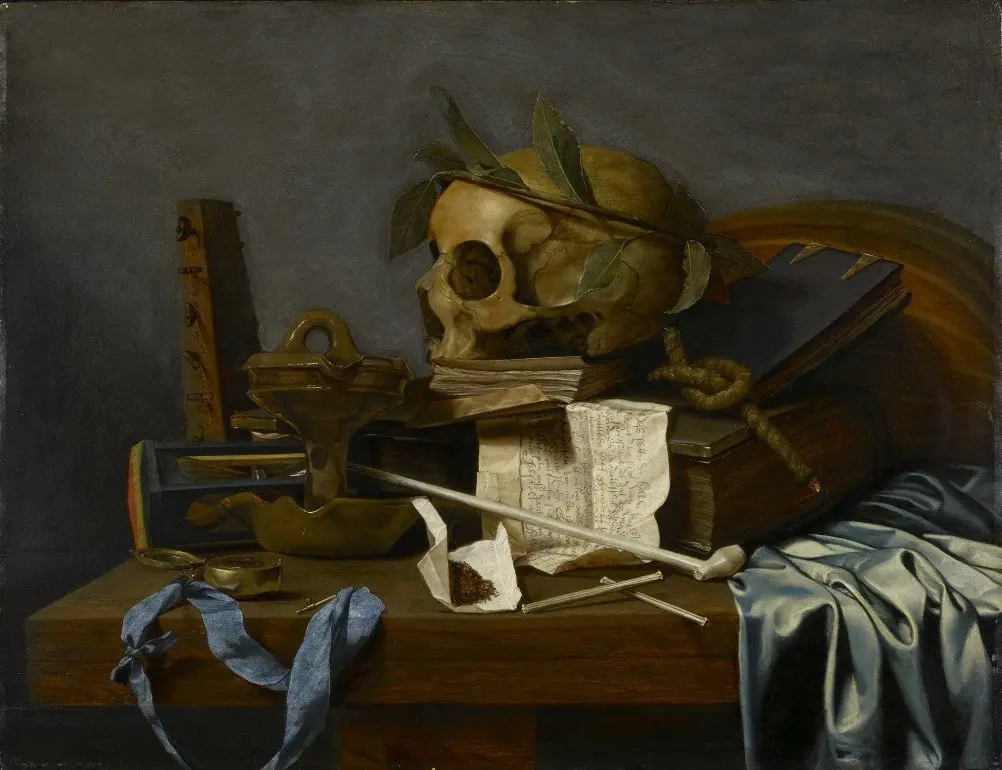
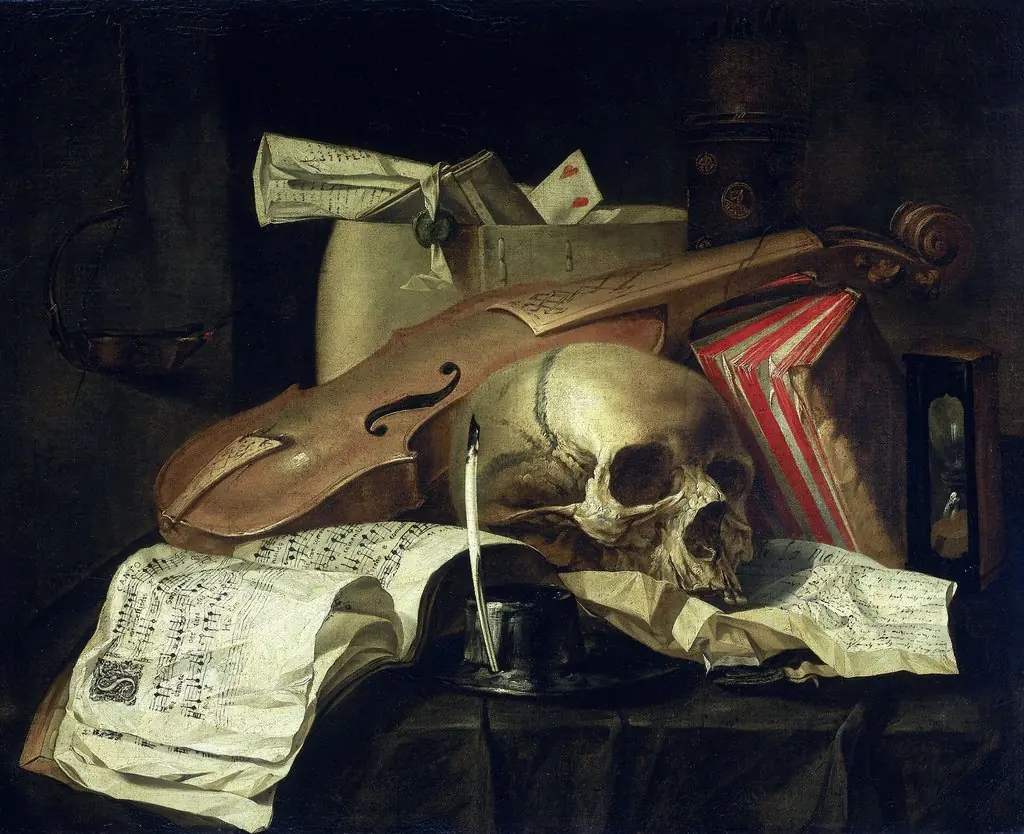
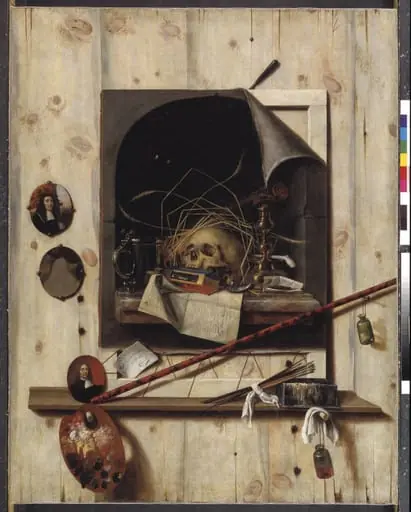
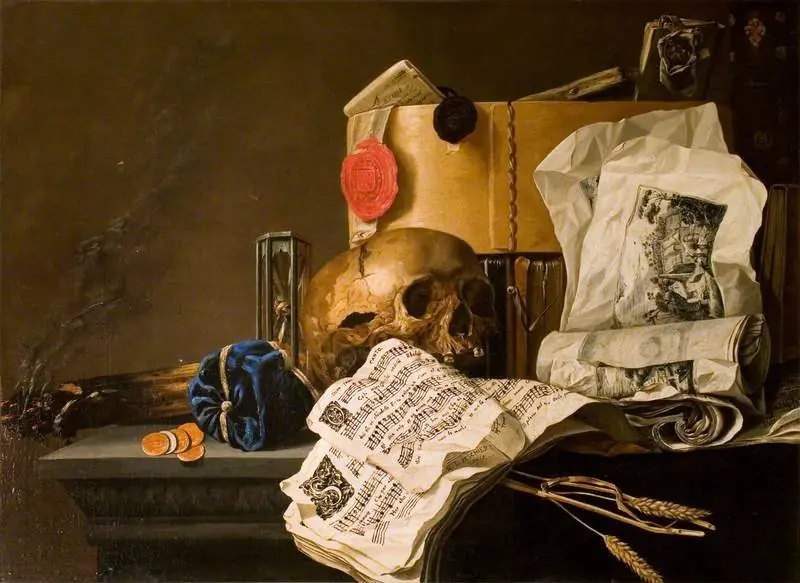
Constantin Daniel Rosenthal’s 1848 still‑life, titled Vanitas, presents a densely arranged tabletop populated by a skull, a fur hat, a cracked mirror, a red leather pouch and scattered coins. A dimly lit candle flickers in the background beside a shadowy armored figure, casting deep shadows that heighten the composition’s somber tone.
Subject & Meaning
The central skull serves as a memento mori, reminding viewers of mortality and the fleeting nature of earthly pursuits. The surrounding objects—luxury items now tarnished, a broken mirror, and loose currency—underscore the transience of wealth and status, while the candle’s waning light reinforces the inevitability of decay.
Technique & Style
Rosenthal employs chiaroscuro to model forms, allowing stark contrasts between illuminated surfaces and enveloping darkness. The rendering of textures—fur, leather, cracked glass—demonstrates meticulous brushwork, while the composition’s cluttered arrangement creates a sense of disorder that mirrors the theme of impermanence.
History & Provenance
Created in 1848, Vanitas reflects mid‑nineteenth‑century European preoccupations with moralizing still‑life motifs. The work remains attributed to Rosenthal, whose oeuvre includes several genre scenes, and it has been documented in museum collections focused on symbolic art, though its precise ownership trail after the artist’s death is not extensively recorded.
Artist & collection

Artist
Constantin Daniel Rosenthal (b.Rosenthal Konstantin, 1820 – July 23, 1851) was a painter and sculptor of Austrian birth and a Romanian 1848 revolutionary, best known for his portraits and his choice of Romanian Romantic nationalist…