Artwork
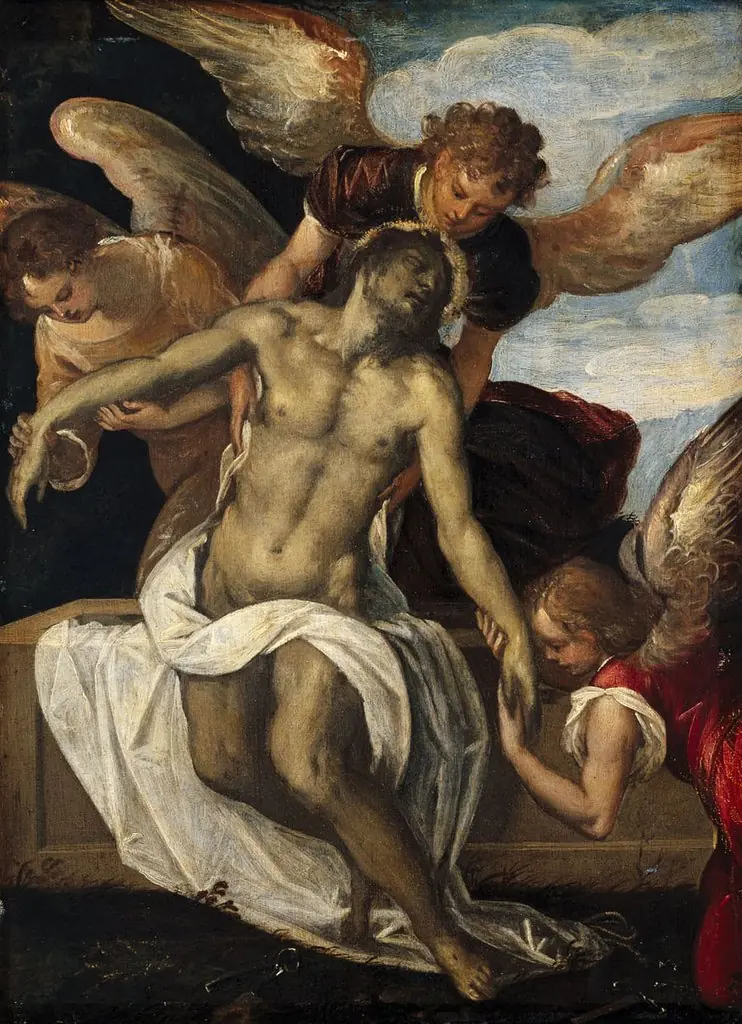
The Dead Christ with Angels
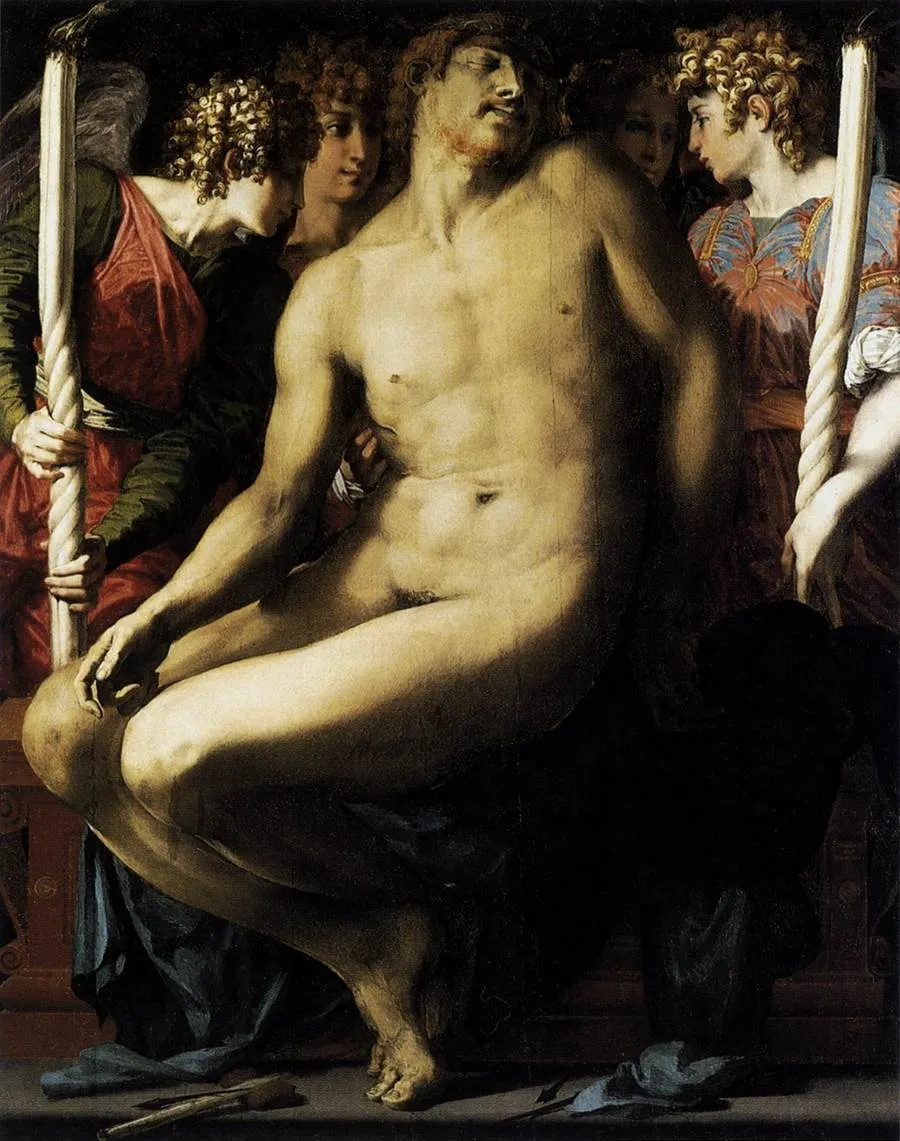
The Dead Christ with Angels is an oil painting by the Mannerist artist Rosso Fiorentino. It is held in the collection of the Museum of Fine Arts Boston.
About this work
Overview
The Dead Christ with Angels is an oil on panel painting created by Rosso Fiorentino circa 1525–1526, currently housed at the Museum of Fine Arts in Boston. The work depicts a poignant scene of Christ's death, surrounded by three attendants.
Subject & Meaning
The painting shows a slumped, naked Christ with pale, weary skin, emphasizing the physicality of his demise. Three robed figures—a woman in vibrant attire and two curly-haired men—tend to him, conveying a sense of mournful intimacy. Christ's slightly curled fingers suggest a subtle, enigmatic gesture.
Technique & Style
Rosso Fiorentino employed chiaroscuro to dramatic effect, using deep shadows to render Christ's body heavy and realistically slack. The contrast between light and dark accentuates the emotional weight of the scene, while the figures' interactions introduce a sense of tender humanity.
History & Provenance
Originally commissioned for Leonardo Tornabuoni, Bishop of Sansepolcro, the painting's early location is uncertain due to Vasari's lack of specificity. It was likely in Rosso's studio during the Sack of Rome before being entrusted to Sister Maria Maddalena at the San Lorenzo in Colonna monastery.
Context
Created during the tumultuous period leading up to the Sack of Rome (1527), the painting reflects the artistic and religious sensibilities of the Italian Renaissance. Its emotional depth and innovative use of chiaroscuro align with the era's artistic innovations.
Legacy
While its direct influence is not broadly documented, The Dead Christ with Angels remains a significant work in Rosso Fiorentino's oeuvre, exemplifying his ability to merge technical innovation with profound emotional expression, contributing to the broader legacy of Renaissance art.
Artist & collection

Artist
Rosso Fiorentino stood out in the Italian Renaissance for one reason—he was always bent on doing things his own way.

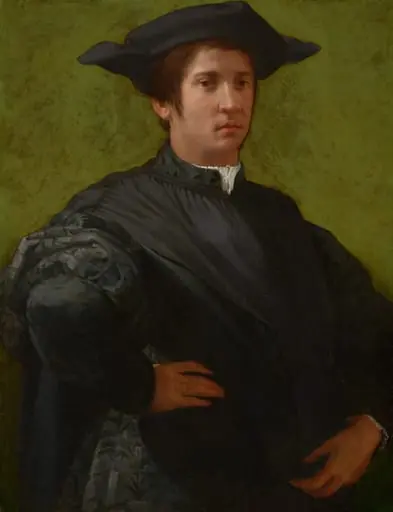 Portrait of a Man
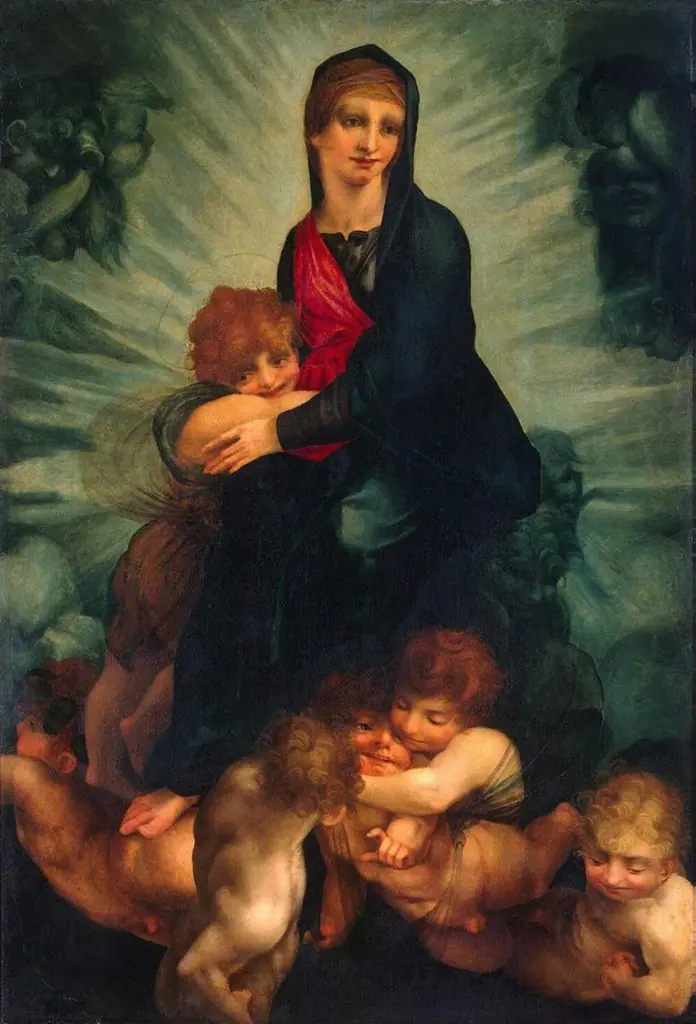 Madonna and Child with Cherubs
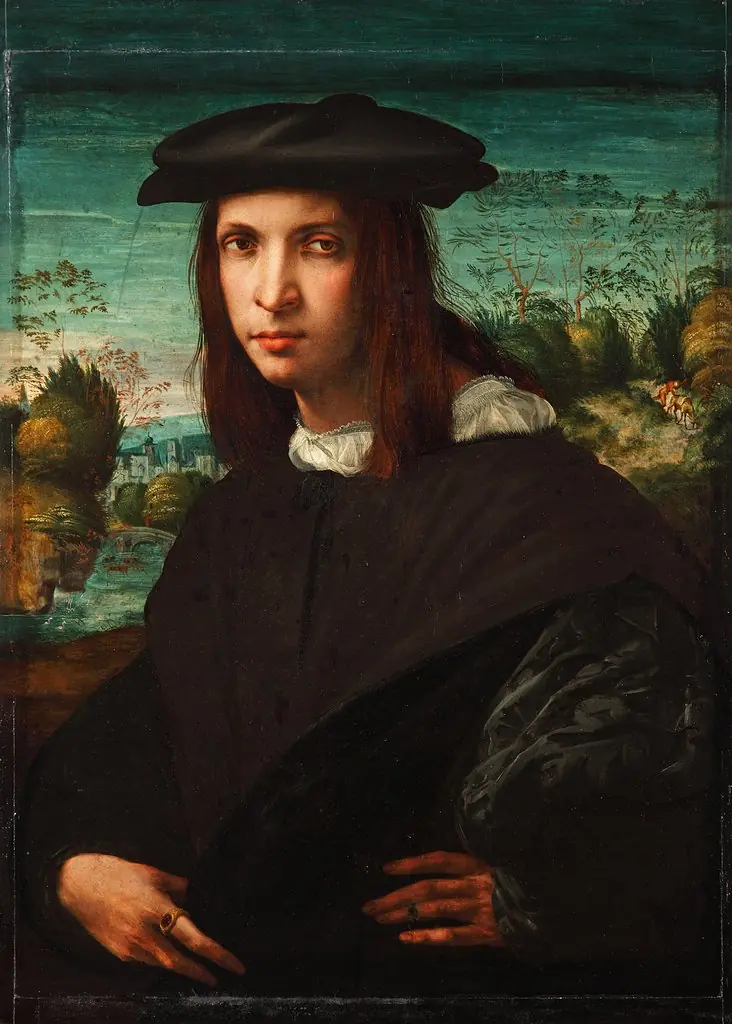 Portrait of a Young Man
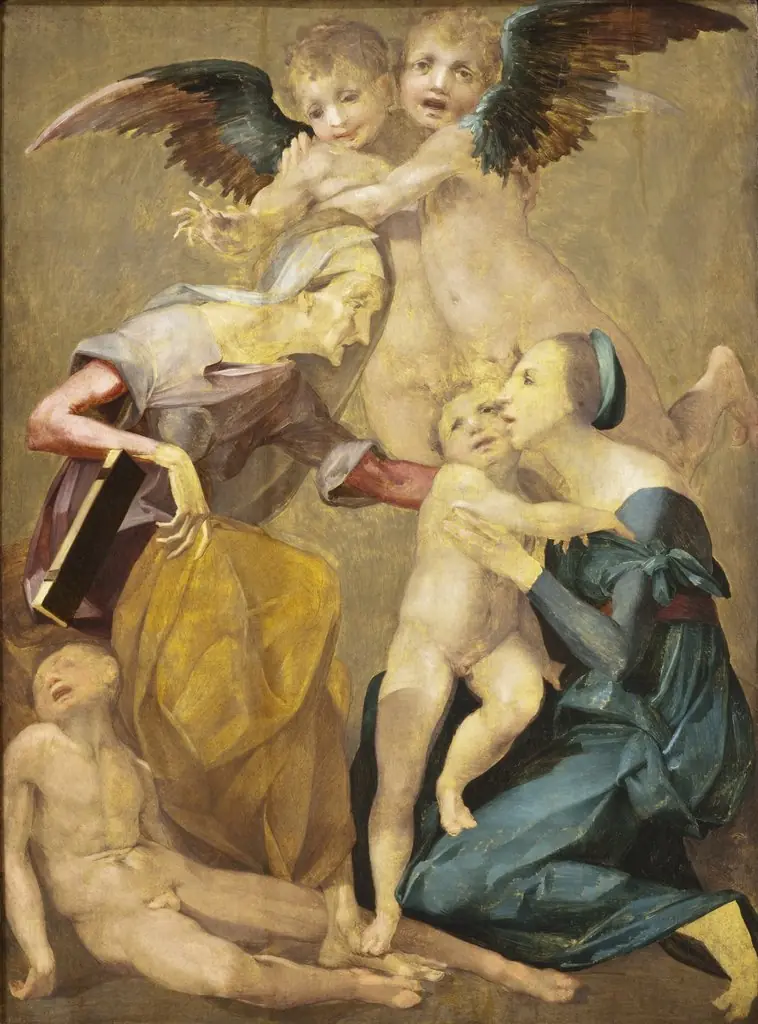 Allegory of Salvation with the Virgin and Christ Child, St. Elizabeth, the Young St. John the Baptist and Two Angels
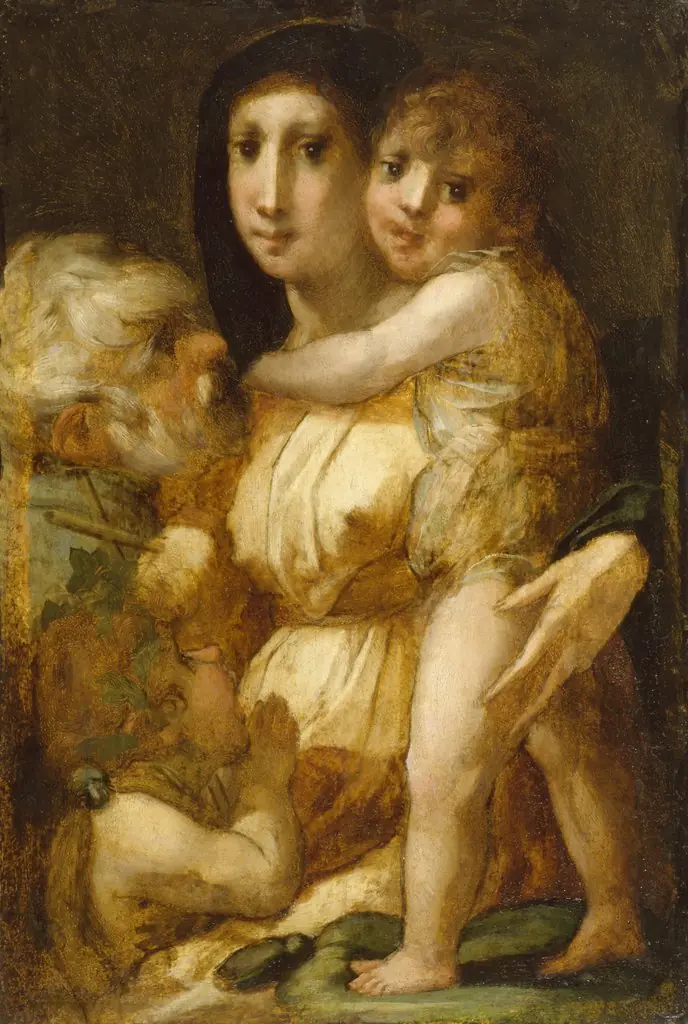 The Holy Family with the Infant Saint John the Baptist
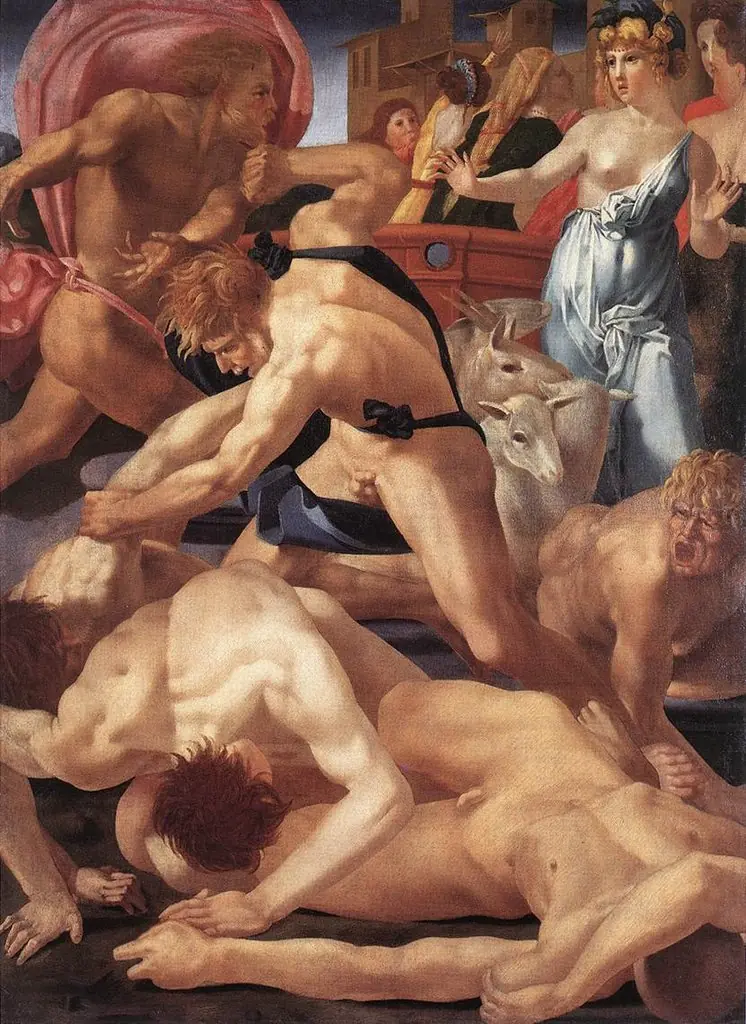 Moses Defending the Daughters of Jethro
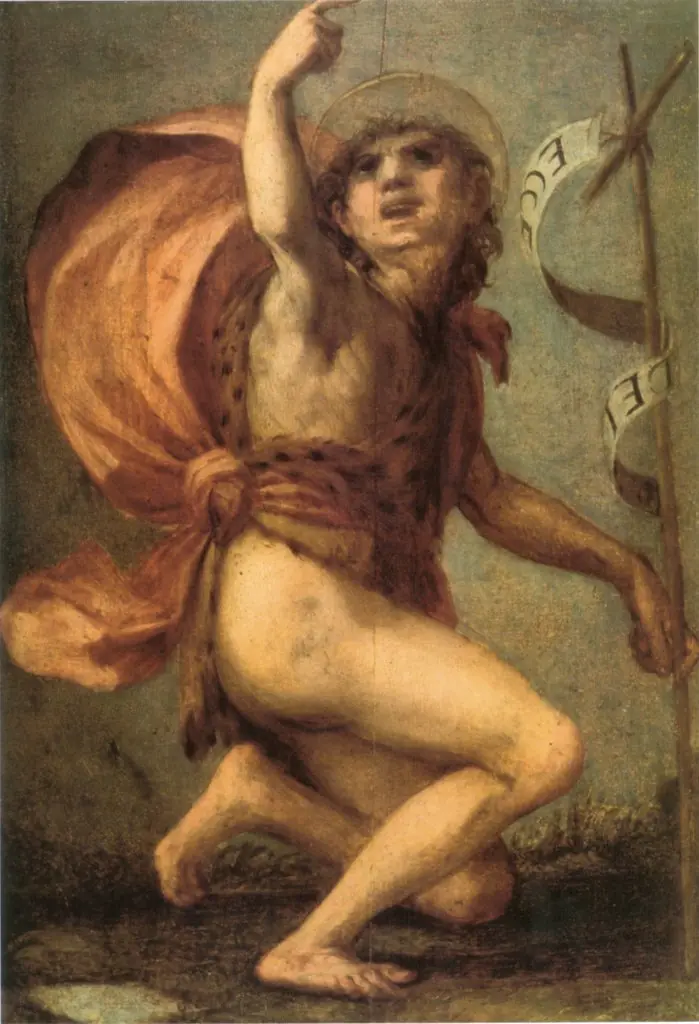 Saint John the Baptist as a Boy
 Cleopatra