Artwork
Post Mill, Finchingfield, Essex
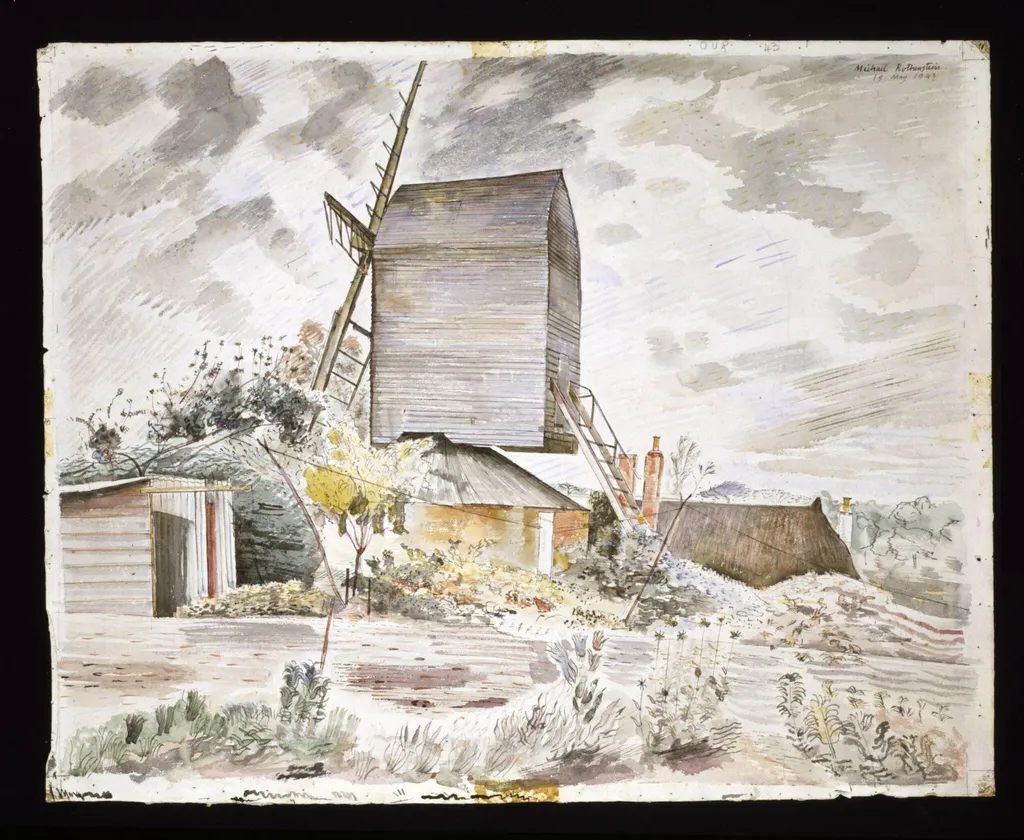
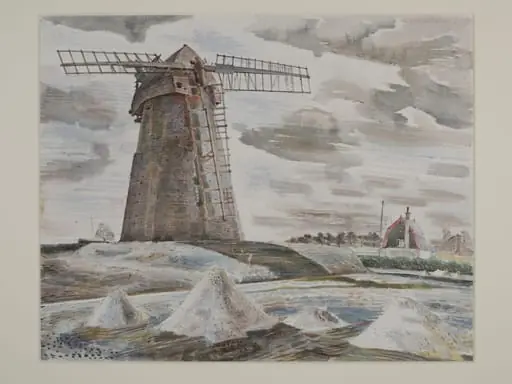
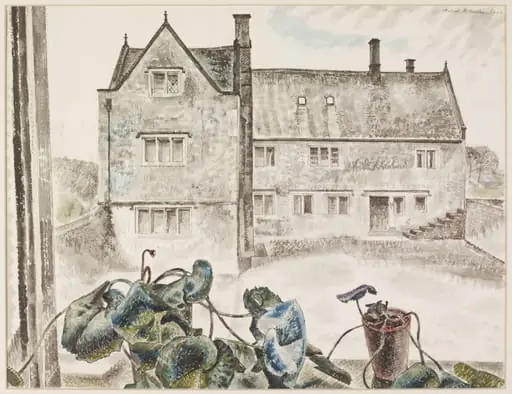
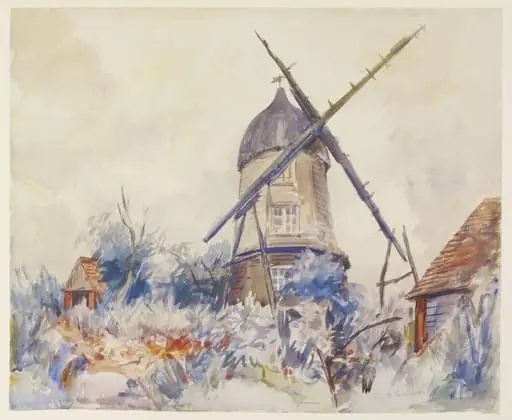
Post Mill, Finchingfield, Essex is a watercolor work on paper by Michael Rothenstein. It dates from 1943 and is held in the collection of the Victoria and Albert Museum.
About this work
His local knowledge came from living in Great Bardfield and joining the Recording Britain project.
This watercolor by Michael Rothenstein shows a windmill in the village of Finchingfield, Essex. The painting was made in 1943 using water-based paints. It captures a quiet moment around a weathered old mill.
Rothenstein chose to paint the neglected yard behind the mill instead of the sails. He focused on weeds and decay, not the village’s charm. His local knowledge came from living in Great Bardfield and joining the Recording Britain project.
The mill once served four neighbors before falling out of use. A county council saved it in 1956 and keeps it open today. See more by Rothenstein, Michael.
Overview
Michael Rothenstead’s 1943 watercolor depicts the post mill that stands on the edge of Finchingfield, a village in Essex noted for its historic charm. The composition centers on the mill’s weathered structure and the overgrown yard that surrounds it, conveying a moment of quiet decline rather than bustling activity. The work records the building’s condition during the early 1940s, before conservation efforts began.
Subject & Meaning
Rather than emphasizing the wind‑driven sails, Rothenstead directs attention to the tangled vegetation and the neglected courtyard, suggesting the passage of time and the loss of the mill’s original purpose. The inclusion of the thatched roof of the former miller’s cottage reinforces the sense of a once‑functional site now left to the elements, inviting reflection on rural change.
Technique & Style
Executed in watercolor, the piece employs muted earth tones and delicate washes to render the dilapidated timber and the soft, moss‑laden ground. Rothenstead’s handling of light creates subtle contrasts between the dark, weed‑filled foreground and the lighter sky, while the loose brushwork conveys texture without overt detail, characteristic of his contributions to the Recording Britain project.
History & Provenance
The post mill was one of four erected in Finchingfield in the late eighteenth century, serving local agriculture before becoming obsolete. By the early 1940s it had fallen into disrepair, a state captured by Rothenstead’s painting. Following the work’s circulation, the county council assumed responsibility for the mill in 1956, restoring it and maintaining public access to the site.
Context
Rothenstead lived nearby in Great Bardfield and participated in the Recording Britain initiative, which aimed to document at‑risk historic landscapes during wartime. His familiarity with the area informed the choice to portray the mill’s neglected yard, aligning the artwork with a broader effort to preserve England’s rural heritage through visual record.
Artist & collection