Artwork
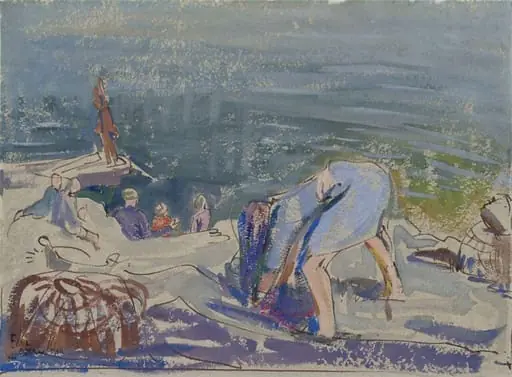
Study for Composition
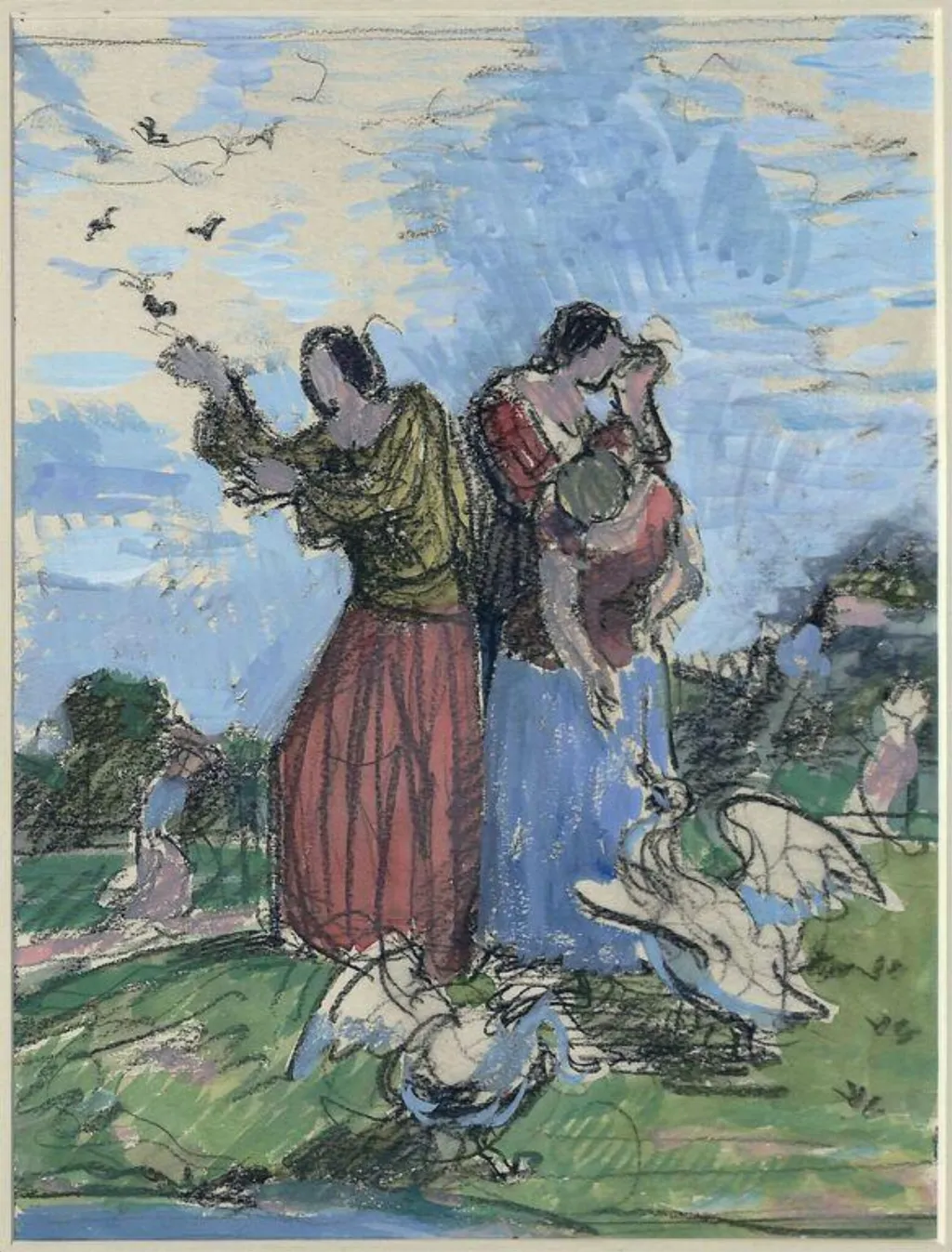
Study for Composition is a watercolor work on paper by the Arts and Crafts movement artist Michael Rothenstein. It dates from 1928 and is held in the collection of the Victoria and Albert Museum.
About this work
Overview
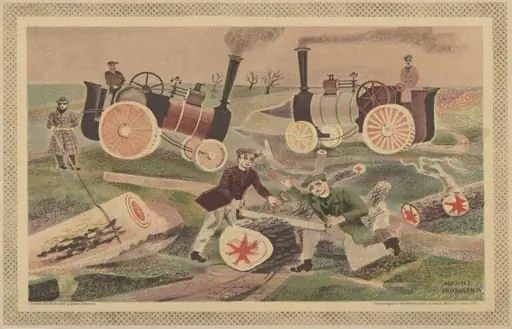
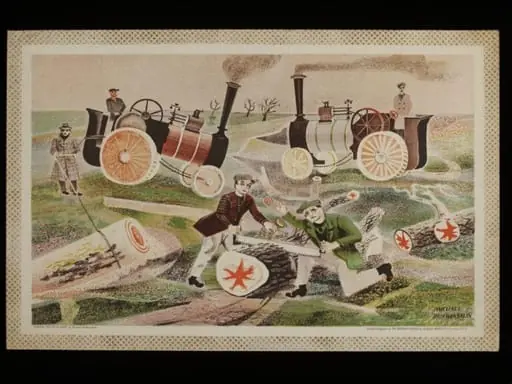
This 1928 watercolour study by Michael Rothenstein explores movement through rapid, expressive brushwork. Executed in watercolour with charcoal and crayon, it functions as a preparatory sketch for a larger composition. The loose handling and unfinished quality suggest an emphasis on capturing transient motion rather than detailed representation, reflecting the artist’s interest in dynamic form.
Subject & Meaning
Two figures, one in a red skirt and green top, the other in a pink dress with a dark shawl, are depicted mid-motion with arms raised. Their gestures suggest dance or reaching, evoking a sense of spontaneous energy rather than narrative. The absence of context or setting directs focus to bodily expression, implying themes of rhythm, release, or communal celebration without literal storytelling.
Technique & Style
The blurred edges and fragmented forms emphasize immediacy, aligning with early modernist interests in capturing sensation over precision.
Rothenstein employed watercolour with swift, uneven strokes, allowing pigment to bleed and blend organically. Charcoal and crayon define contours and add contrast, while the background—sketched in loose washes of blue and green—suggests sky, hills, and trees without detail. The blurred edges and fragmented forms emphasize immediacy, aligning with early modernist interests in capturing sensation over precision.
History & Provenance
Created in 1928, this work belongs to a series of studies Rothenstein made during a period of formal experimentation. It was likely produced in his London studio, where he explored abstraction and movement in response to contemporary European modernism. The piece remains in private hands, with no public exhibition history documented beyond its initial creation context.
Context
In the late 1920s, British artists were increasingly engaging with continental modernism, particularly French and German expressive styles. Rothenstein’s use of fluid media and gestural forms reflects this influence, paralleling contemporaries like Ben Nicholson and Barbara Hepworth. The work aligns with broader trends toward abstraction and the prioritization of emotional expression over realism in interwar British art.
Legacy
Though not widely exhibited, this study exemplifies Rothenstein’s early engagement with movement and abstraction, foreshadowing his later abstract works. It contributes to understanding the development of modernist practice in Britain, particularly how watercolour—often seen as a minor medium—was used experimentally to challenge traditional boundaries of form and finish.
Artist & collection

 Burns and his Highland Mary
 Astronomy
 Dance by the Sea
 The Feast of Tabernacles
 Wooded Landscape with Putti Helping a Woman Undress
 Nymph and Faun
 Two Figures in Classical Dress
 The Fall of Man (Der Sündenfall)
 Nude Figures on the Beach
 Prinsessa ja sikopaimen
 The Little Girl (Le petite fille)
 Study at Portscatho, Cornwall