Artwork
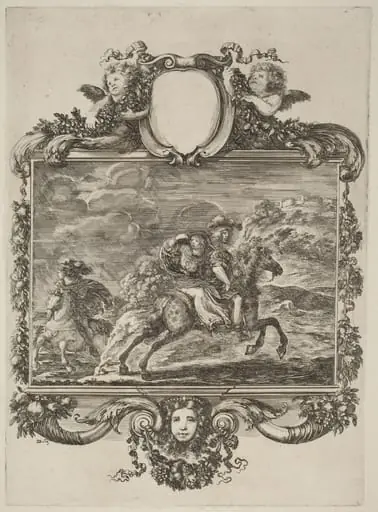
The Rape of Deianeira
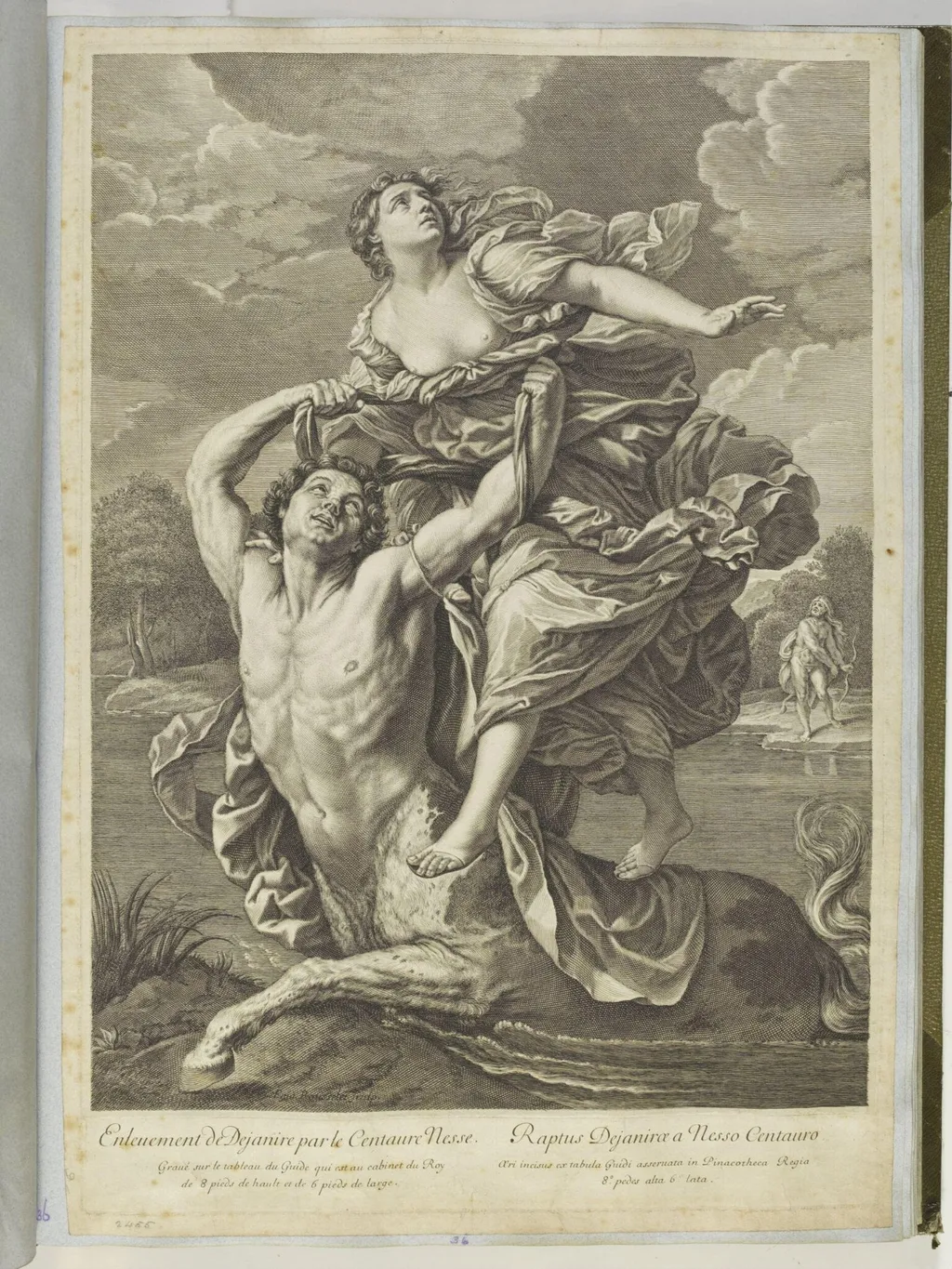
The Rape of Deianeira is a print by the Baroque artist Gilles Rousselet. It dates from 1625 and is held in the collection of the Victoria and Albert Museum. This paper print reproduces a composition originally devised by the Italian Baroque painter Guido Reni.
About this work
Overview
This paper print reproduces a composition originally devised by the Italian Baroque painter Guido Reni. The image was transferred to the medium of engraving by the French printmaker Gilles Rousselet, rendering the dramatic mythological scene in black‑and‑white. The work is titled *The Rape of Deianeira*, referencing the abduction of the mythic heroine.
Subject & Meaning
The scene captures the moment Deianeira, clothed in flowing garments, seizes a male figure by the arm and pulls him forward. The man's anguished expression and twisted posture suggest resistance, while the heroine’s dynamic pose conveys urgency. In the background, a rocky shoreline meets a calm sea, and a diminutive figure stands at a distance, adding narrative depth to the mythic episode.
Technique & Style
Rousselet employed deep chiaroscuro, carving pronounced shadows and bright highlights to intensify the composition’s tension. The engraving’s line work delineates the swirling drapery and hair, while the contrast between dark foreground and lighter background creates a sense of movement characteristic of Baroque visual drama.
History & Provenance
The print originates from a collaboration that combined Reni’s Italian Baroque design with Rousselet’s French engraving expertise in the mid‑17th century. It reflects the period’s practice of disseminating celebrated paintings through prints, allowing broader audiences to engage with Reni’s narrative imagery.
Artist & collection