Artwork
Holy Family
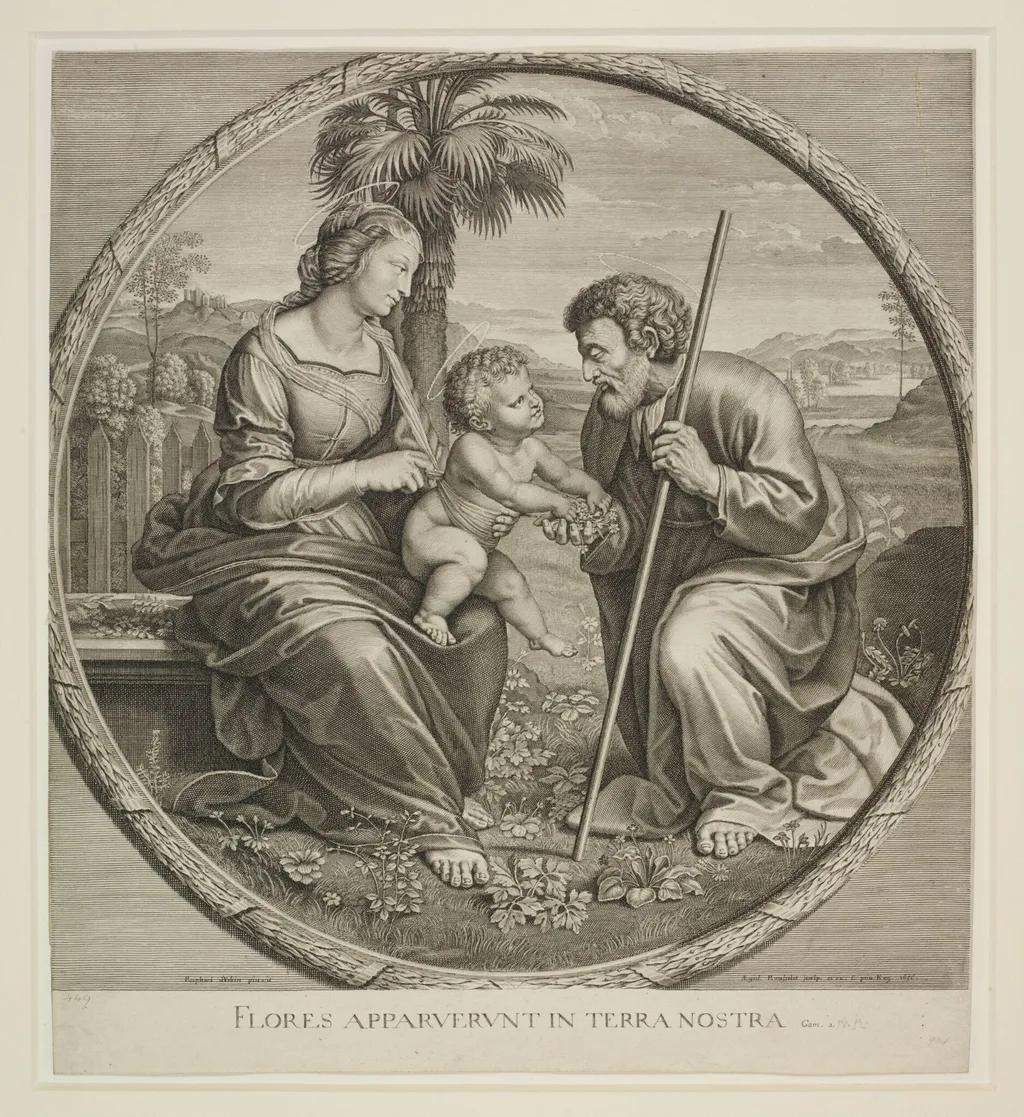
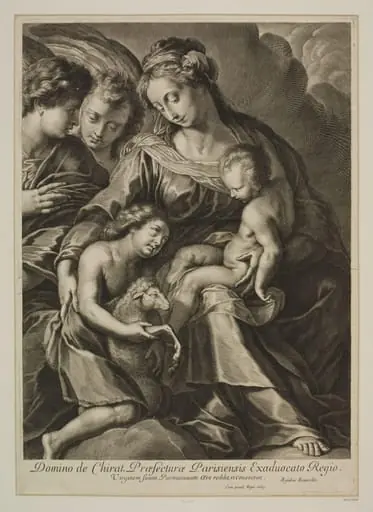
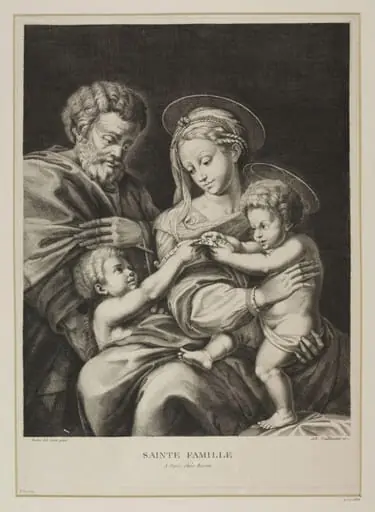
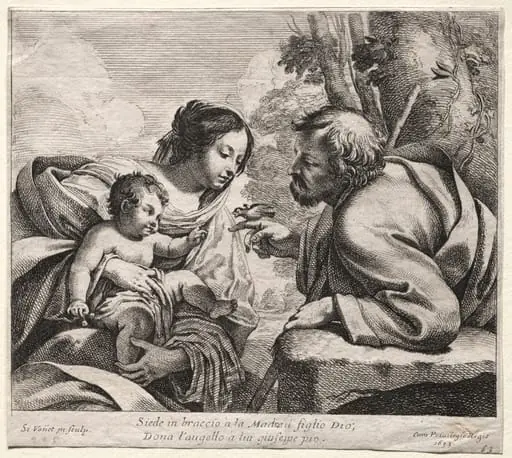
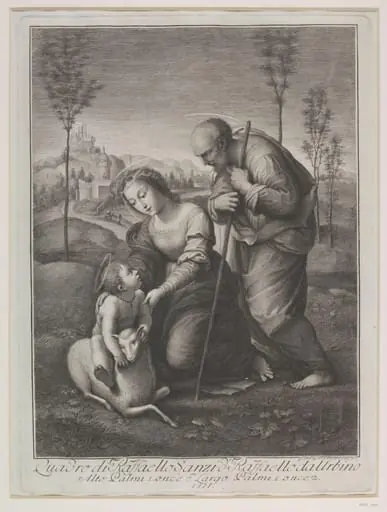
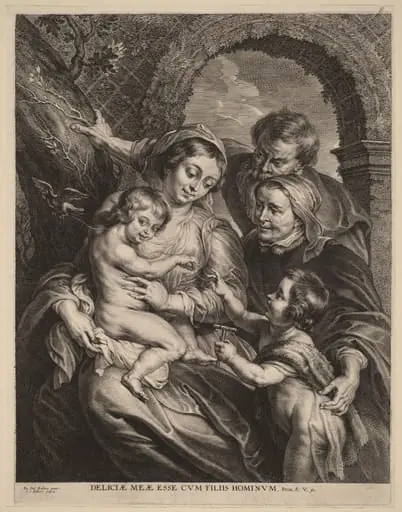
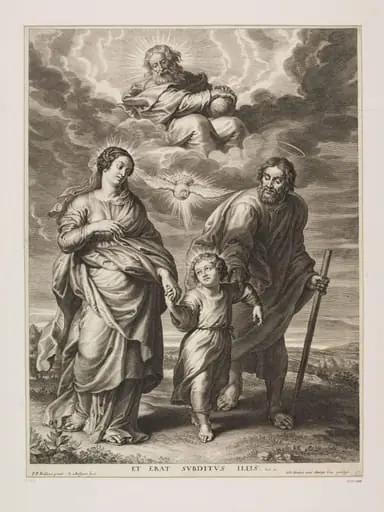
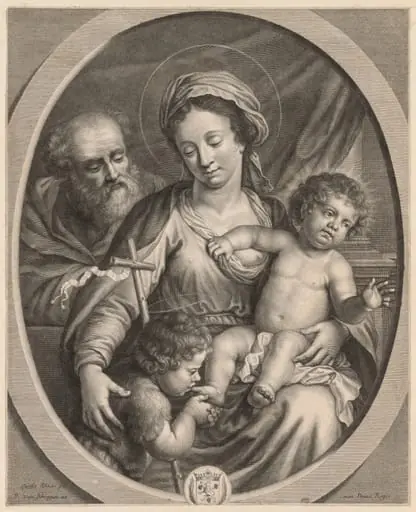
Holy Family is a print by the Baroque artist Gilles Rousselet. It dates from 1625 and is held in the collection of the Victoria and Albert Museum.
About this work
Overview
The work exemplifies the reproductive print tradition of the early 17th century, translating painted compositions into accessible graphic form.
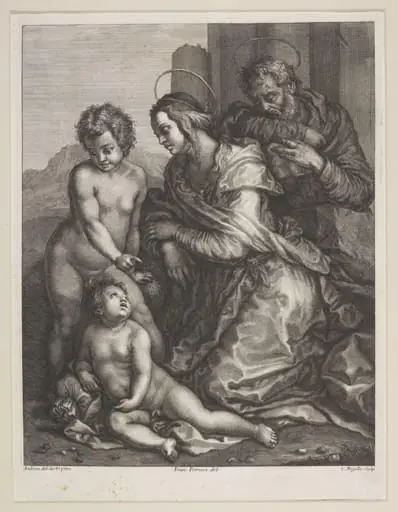
This 1625 print on paper reproduces a composition originally created by Raphael, rendered in etching by Gilles Rousselet. It depicts the Holy Family—Mary, Joseph, and the infant Jesus—in a calm, intimate setting. The scene is framed by a palm tree, grounding the figures in a natural yet symbolic environment. The work exemplifies the reproductive print tradition of the early 17th century, translating painted compositions into accessible graphic form.
Subject & Meaning
The Holy Family is portrayed in a moment of quiet domesticity, emphasizing emotional connection over grandeur. Mary and Joseph are shown in tender interaction with the child, their postures suggesting protection and devotion. The inclusion of the palm tree, a traditional symbol of martyrdom and eternal life, subtly introduces theological resonance without disrupting the scene’s simplicity. The focus remains on human relationships within a sacred context.
Technique & Style
Rousselet employed fine, deliberate etching lines to define forms and textures, capturing the softness of fabric, the grain of wood, and the leafy detail of the palm. He used chiaroscuro to model the figures with subtle gradations of light and shadow, lending volume and spatial depth. The contrast between darkened areas and illuminated surfaces enhances the emotional stillness of the scene, reflecting Raphael’s compositional clarity adapted to the graphic medium.
History & Provenance
Created in 1625, the print was part of a broader European practice of disseminating Renaissance compositions through engraved reproductions. Rousselet, a French engraver active in Paris, was known for his faithful renderings of Italian masterworks. This print likely circulated among collectors and artists, serving both as a study tool and a devotional image, though its early ownership records remain undocumented.
Context
In early 17th-century France, reproductive prints played a key role in spreading the influence of Italian High Renaissance art. Raphael’s compositions were especially admired for their harmony and balance, making them frequent subjects for engravers. Rousselet’s work reflects the cultural exchange between Italy and France, as well as the growing market for religious imagery in domestic and scholarly settings.
Legacy
Rousselet’s print preserved Raphael’s composition for later generations, ensuring its continued visibility beyond the original painting. It contributed to the canonization of the Holy Family as a recurring theme in European print culture. While not widely known today, the work remains a significant example of how engraving bridged artistic traditions and sustained devotional imagery across centuries.
Artist & collection