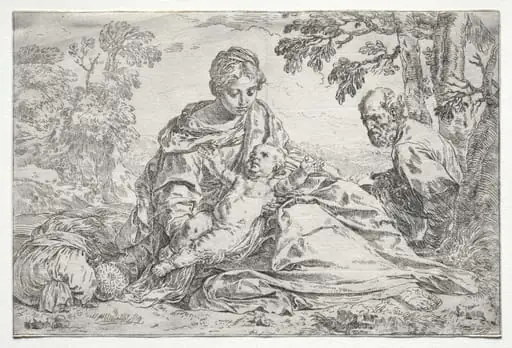
Artwork
The Marriage of St. Catherine
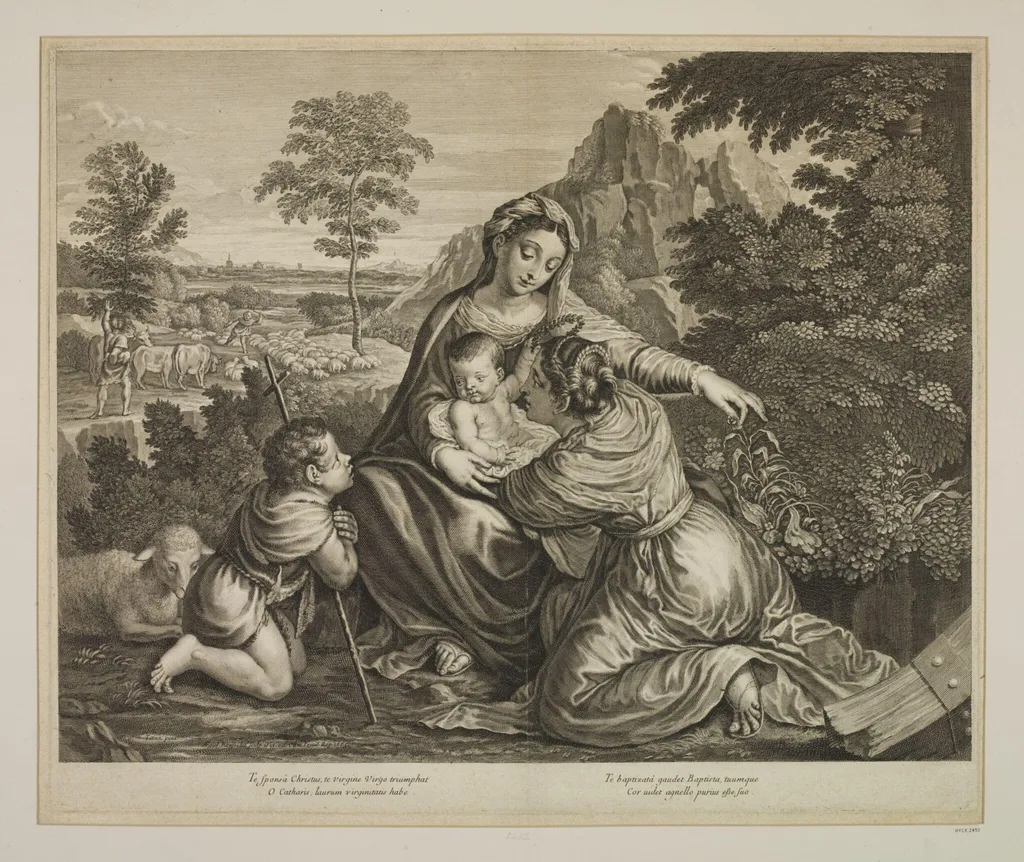
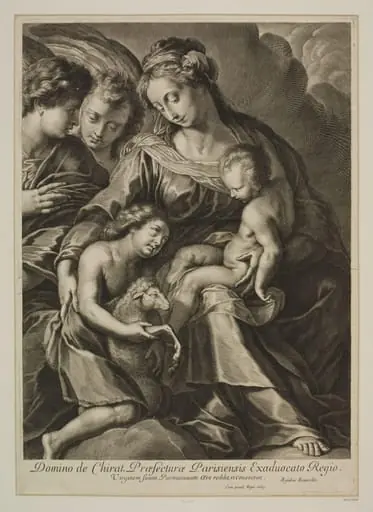
The Marriage of St. Catherine is a print by the Baroque artist Gilles Rousselet. It dates from 1625 and is held in the collection of the Victoria and Albert Museum.
About this work
Overview
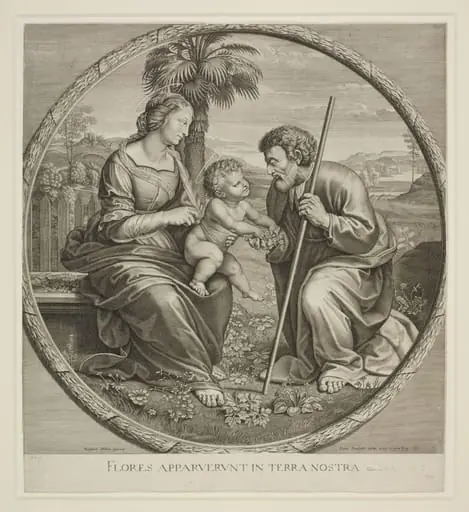
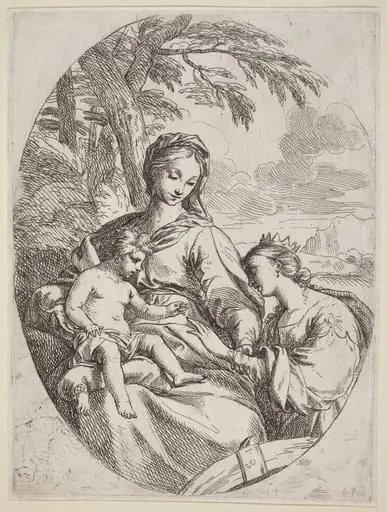
Gilles Rousselet’s 1625 print, titled *The Marriage of St. Catherine*, translates a composition originally devised by Titian into a monochrome work on paper. The image presents a conventional Christian episode in which Saint Catherine is symbolically united with the infant Christ, a theme frequently rendered in devotional art.
Subject & Meaning
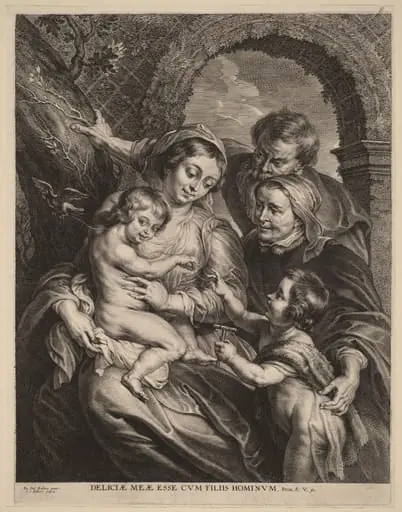
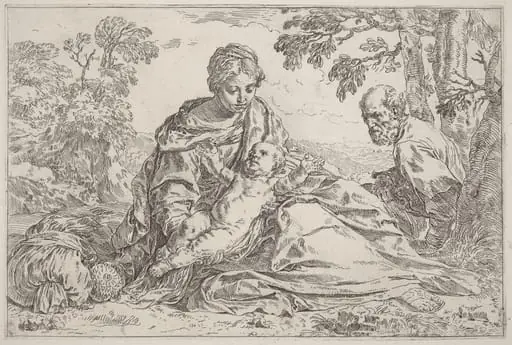
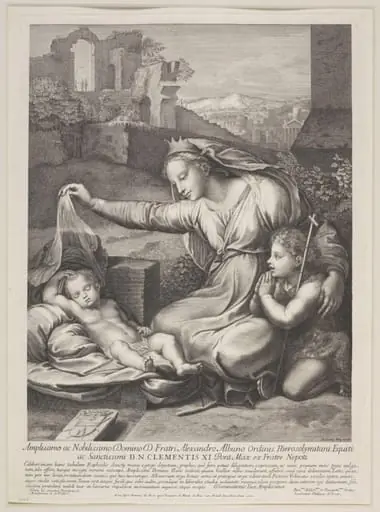
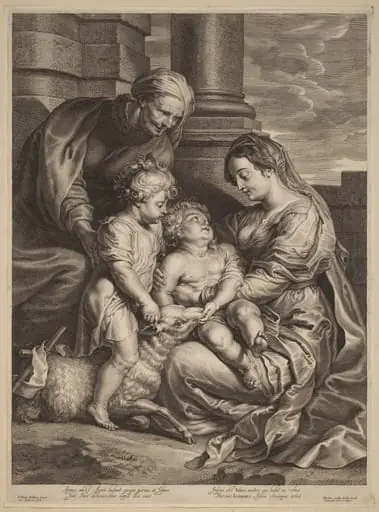
In the foreground, a woman—identified as Saint Catherine—cradles a baby, representing the Christ Child, while a youthful attendant kneels beside her, gesturing toward a lamb that signifies Christ’s sacrificial role. The tableau conveys the mystic bond between the saint and the divine, underscoring themes of purity and spiritual betrothal.
Technique & Style
Rousselet employs pronounced chiaroscuro, using deep shadows and illuminated highlights to model the figures against a muted landscape. This dramatic lighting, characteristic of Baroque printmaking, accentuates the three‑dimensionality of the forms and directs the viewer’s focus toward the central interaction.
History & Provenance
The print was produced in 1625, a period when French engravers often reproduced Italian masterpieces for wider circulation. Rousselet, active in Paris, adapted Titian’s original composition, thereby extending the Venetian painter’s influence into the French market and print culture of the early seventeenth century.
Context
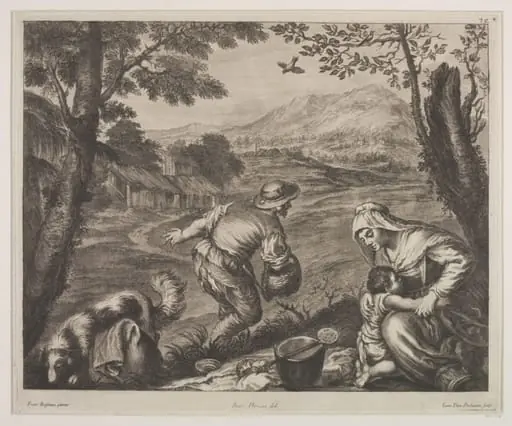
The work reflects the Counter‑Reformation’s emphasis on accessible religious imagery, employing a familiar narrative to inspire devotion. The pastoral background—green hills, scattered trees, and distant architecture—provides a serene setting that frames the sacred encounter without detracting from its theological focus.
Artist & collection