Artwork
Four o'Clock in Town
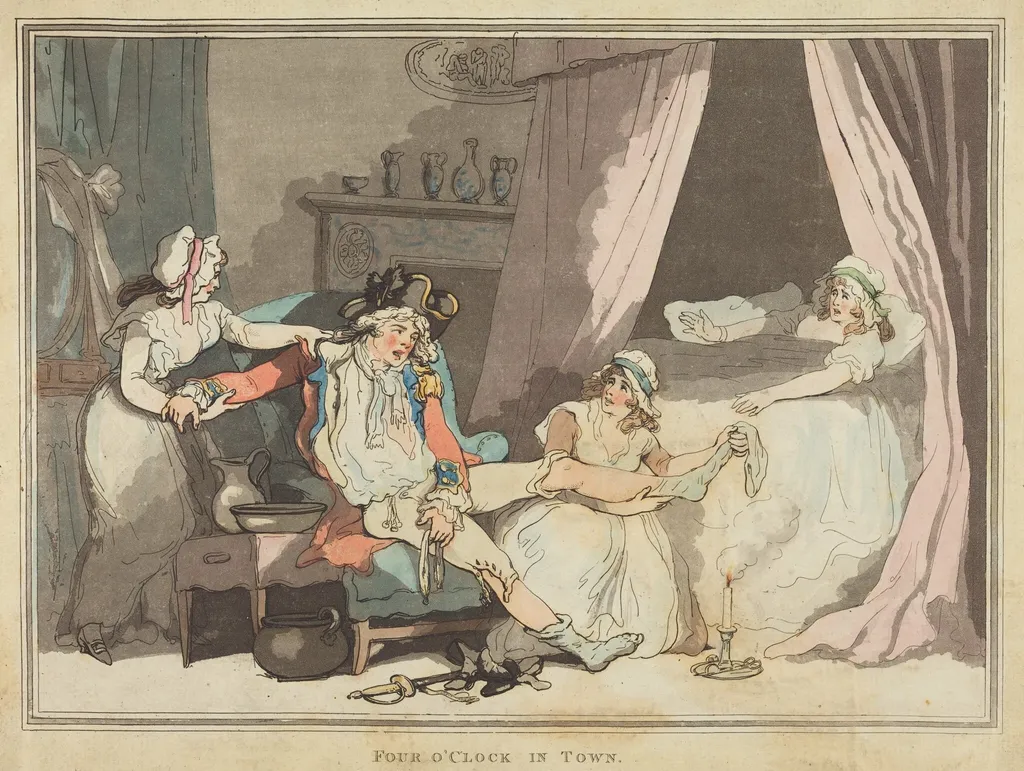
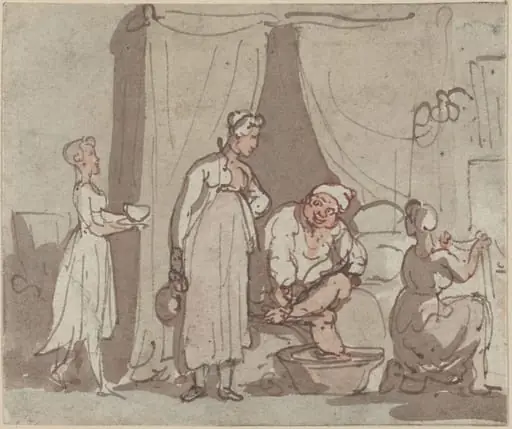
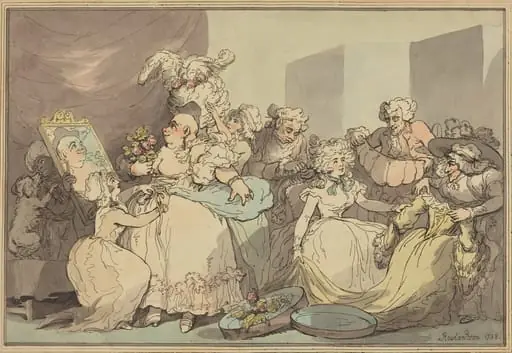
Four o'Clock in Town is an ink print by the Romanticist artist Thomas Rowlandson. It dates from 1788 and is held in the collection of the National Gallery of Art.
About this work
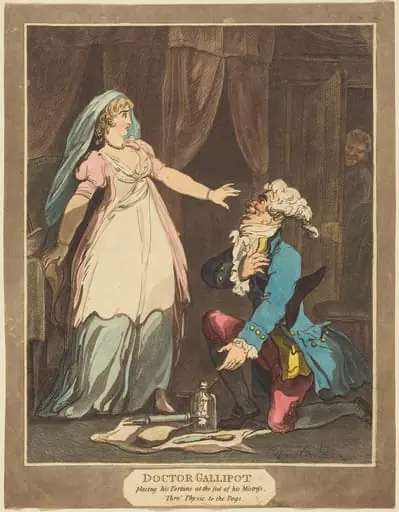
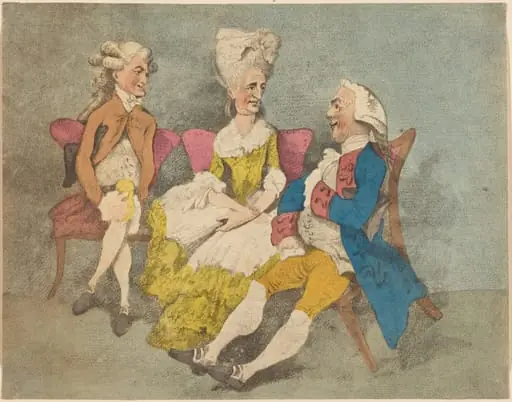
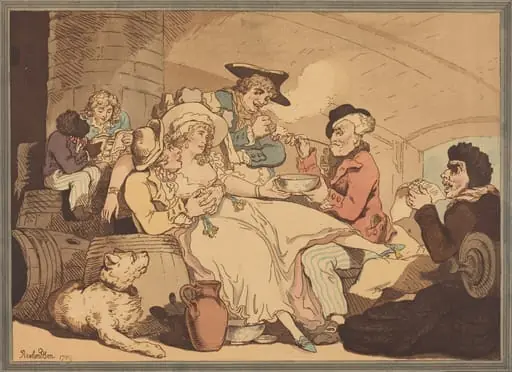
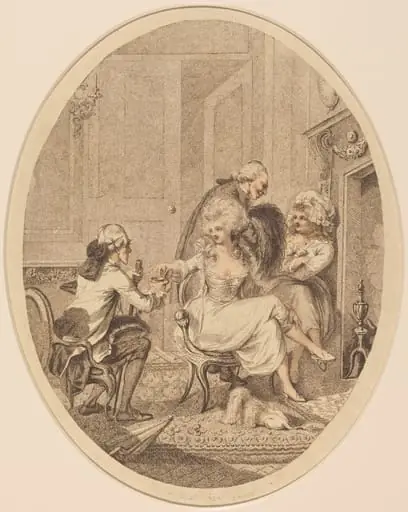
The women are dressed in long dresses and bonnets, and they appear to be engaged in some sort of activity.
In this painting, a man sits in a chair, wearing a hat and holding a sword. He is surrounded by four women, one of whom is holding a candle. The scene is set in a room with a fireplace and a window with curtains.
The women are dressed in long dresses and bonnets, and they appear to be engaged in some sort of activity. The man's expression is serious, while the women seem to be more playful.
The painting is a genre scene, depicting everyday life in the late 18th century. It is an example of Romanticism, a movement that emphasized emotion and imagination. You can learn more about this movement by exploring the Romanticism movement.
Overview
Created in 1788, *Four o’Clock in Town* is a hand‑coloured etching and aquatint on laid paper by Thomas Rowlandson. The image captures a domestic interior where a formally dressed gentleman sits with a sword, surrounded by four women in long gowns and bonnets, one holding a candle. The composition balances a serious male figure with the lighter, playful demeanor of the women, offering a snapshot of everyday social interaction in late‑eighteenth‑century England.
Subject & Meaning
The scene presents a genre moment: a gentleman, perhaps a military officer, occupies a chair while four women engage in a communal activity, suggested by the candle’s illumination. The contrast between the man's solemn expression and the women's more animated gestures may hint at a commentary on gender roles or the social rituals of evening gatherings, reflecting Rowlandson’s interest in the quirks of contemporary life.
Technique & Style
Rowlandson combined etching with aquatint to achieve both line work and tonal depth, then applied hand‑colouring to enhance details such as the women’s dresses and interior furnishings. The use of laid paper provides a textured surface that supports the subtle gradations of aquatint, while the hand‑applied pigments introduce a vivid, almost theatrical quality typical of Rowlandson’s satirical prints.
History & Provenance
The print was produced during Rowlandson’s prolific period of social and political caricature, a time when he supplied images to publishers for broad distribution. While specific ownership records are scarce, the work appears in several eighteenth‑century print collections, indicating it was circulated among the middle‑class market that favored humorous domestic scenes.
Context
*Four o’Clock in Town* belongs to the broader Georgian visual culture that documented urban life with a blend of observation and wit. Rowlandson’s oeuvre often juxtaposed the respectable with the ribald, and this image aligns with that approach, offering insight into the leisure practices and interior décor of the period, as well as the emerging taste for printed genre scenes.
Artist & collection
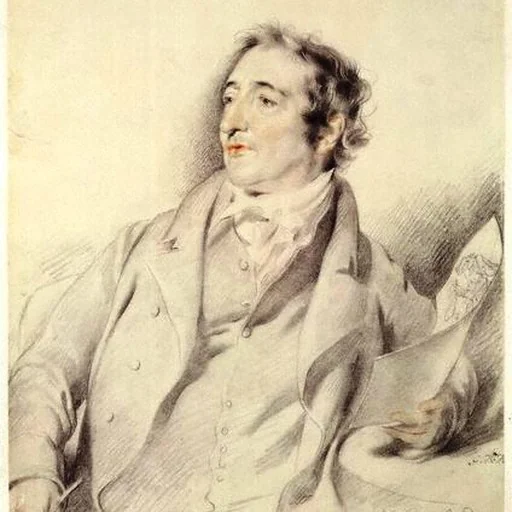
Artist
Thomas Rowlandson (; 13 July 1757 – 21 April 1827) was an English artist and caricaturist of the Georgian Era, noted for his political satire and social observation.