Artwork
The French Fireside
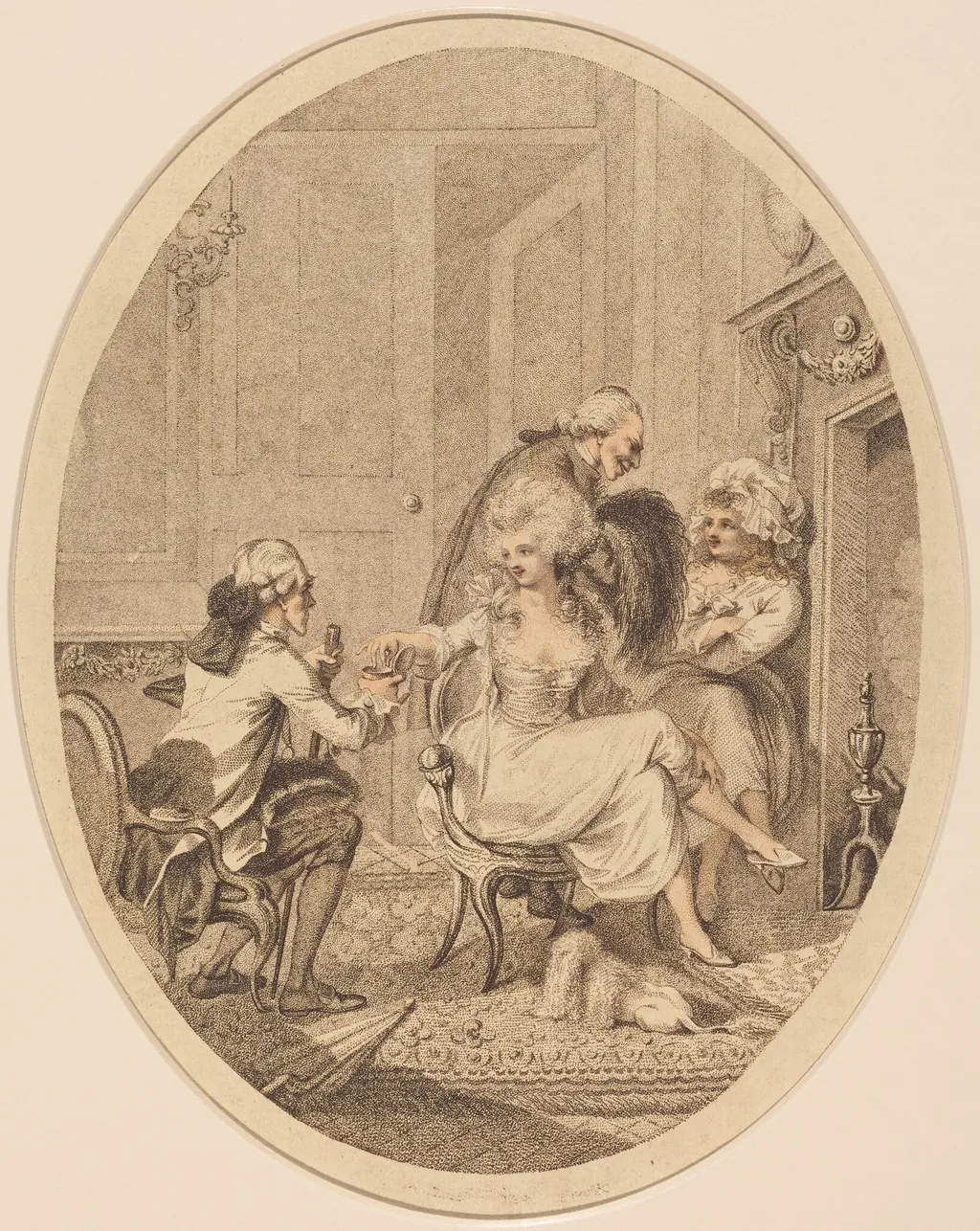
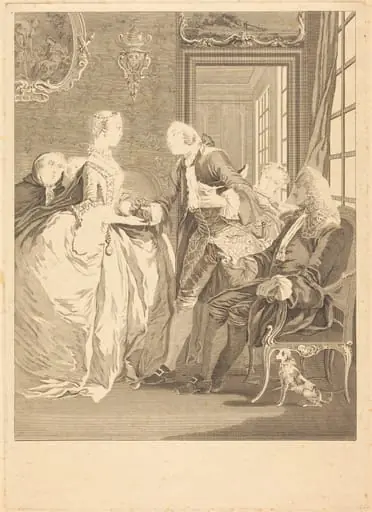
The French Fireside is an ink print by the Romanticist artist Peltro William Tomkins. It dates from 1800 and is held in the collection of the National Gallery of Art.
About this work
Overview
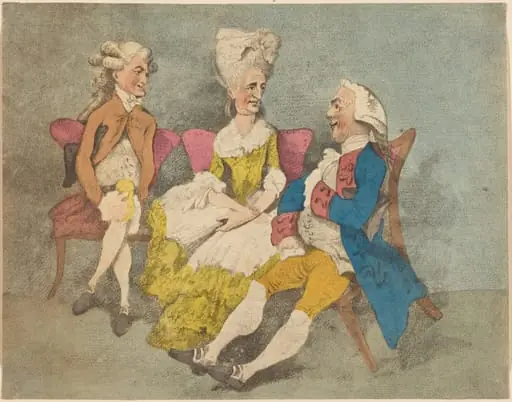
The French Fireside, executed in 1800 by the English printmaker Peltro William Tomkins, is a hand‑coloured stipple etching. The work measures the intimate interior of a domestic setting, rendered in a delicate network of dots that give the scene a soft, atmospheric quality. The print combines line work with subtle colour washes, preserving the original’s muted palette.
Subject & Meaning
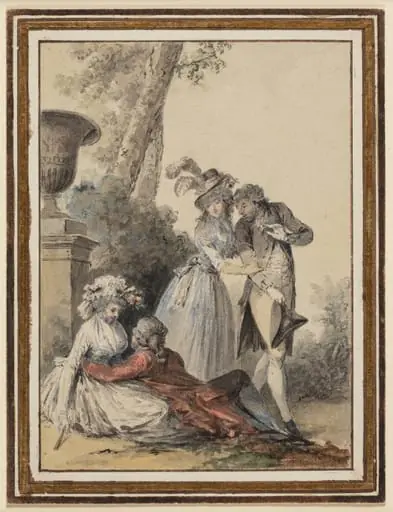
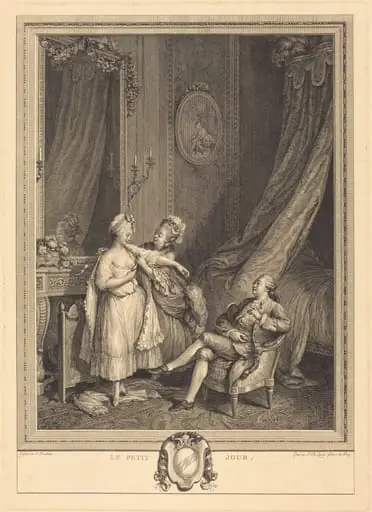
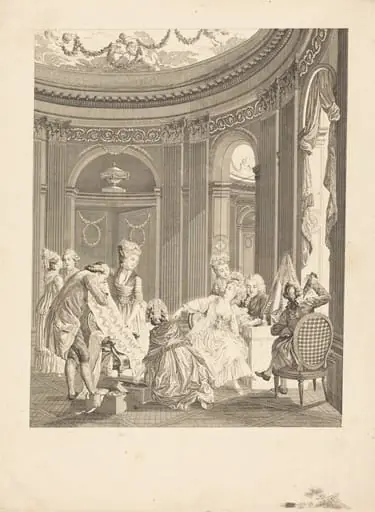
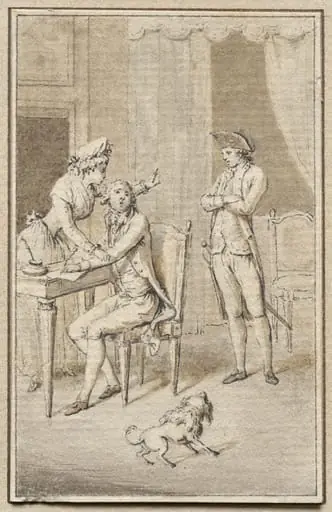
Four figures occupy a modestly furnished room, gathered around a low table. A man on the left reads, a glass of wine at his elbow, while a woman in a voluminous gown leans toward him, fan in hand. Behind them, a second couple stands near a fireplace, dressed in elaborate, period attire. The composition conveys a sense of quiet sociability and domestic comfort.
Technique & Style
This approach aligns the work with early‑19th‑century British print practices that blended drawing precision with painterly effects.
Tomkins employed stipple etching, a method that builds tone through countless fine dots rather than lines, producing a velvety surface and gentle gradations of light. The hand‑colouring, though faded, highlights the patterns of the garments and the warm glow of the fire. This approach aligns the work with early‑19th‑century British print practices that blended drawing precision with painterly effects.
History & Provenance
Created at the turn of the nineteenth century, The French Fireside reflects the period’s fascination with genre scenes of everyday life. While specific ownership records are scarce, the print was likely circulated among collectors of fashionable domestic imagery and may have been included in Tomkins’s commercial series of coloured prints sold in London.
Context
The image appears amid a broader European interest in depicting intimate interiors, a trend that paralleled the rise of the middle class and its domestic ideals. Tomkins’s choice of a French setting, despite his English background, taps into contemporary curiosity about foreign customs and the romanticised notion of the French household.
Artist & collection