Artwork
Conway Castle and Coracle, Caernarvonshire
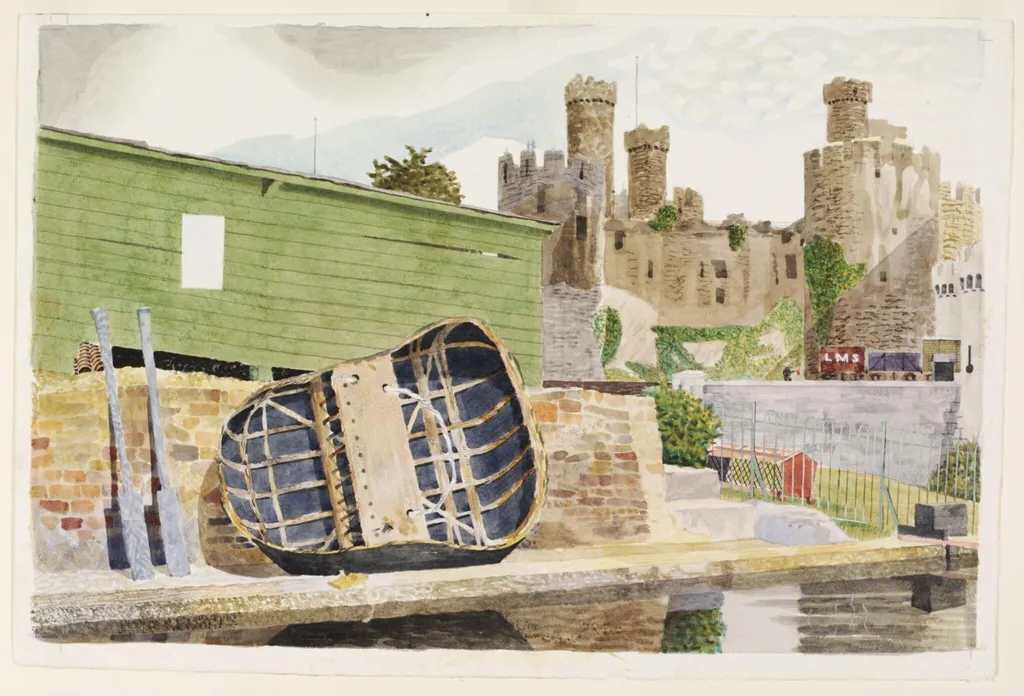
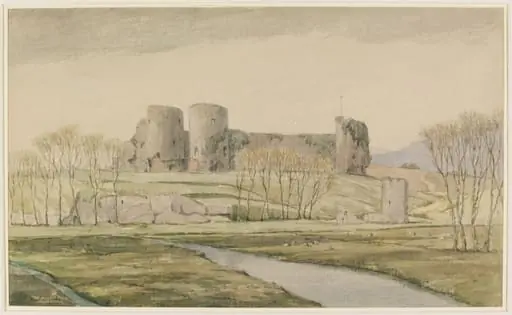
Conway Castle and Coracle, Caernarvonshire is a watercolor work on paper by Kenneth Rowntree. It dates from 1940 and is held in the collection of the Victoria and Albert Museum.
About this work
Overview
The foreground centers on a coracle and a modest, green-roofed structure, likely a mussel-cleansing station, grounding the composition in everyday rural labor.
This 1940 watercolour by an unnamed artist captures a quiet riverside scene in Caernarvonshire, focusing on the interplay between human activity and historic architecture. Conway Castle appears faintly in the distance, its stone towers softened by distance and foliage. The foreground centers on a coracle and a modest, green-roofed structure, likely a mussel-cleansing station, grounding the composition in everyday rural labor.
Subject & Meaning
The painting juxtaposes the enduring presence of Conway Castle with the transient, utilitarian functions of the riverside station and the coracle — a traditional Welsh boat still in use. The castle, though historically significant, is rendered as a backdrop, suggesting a shift in focus toward vernacular life. This reflects the Recording Britain scheme’s aim to document ordinary, at-risk traditions amid wartime uncertainty.
Technique & Style
The artist employs delicate watercolour washes to suggest texture and depth, using subtle tonal variations to define the castle’s weathered stone, the coracle’s tarred canvas, and the mossy stone wall. Fine brushwork captures the irregularities of natural surfaces — plants clinging to masonry, the weave of the boat’s frame. Light is handled with restraint, avoiding dramatic chiaroscuro in favor of quiet, observational realism.
History & Provenance
Created in 1940 as part of the Recording Britain initiative, this work was commissioned to preserve visual records of landscapes and customs deemed vulnerable during the Second World War. The scheme, supported by the Pilgrim Trust, employed artists across the UK to document scenes of daily life and heritage sites. This watercolour entered institutional collections following its completion, remaining a testament to wartime cultural preservation efforts.
Context
During the early years of the war, Britain faced threats to its physical and cultural landscape from bombing, industrial expansion, and social disruption. The Recording Britain project emerged as a quiet act of resistance — not through protest, but through documentation. Artists like this one turned their attention to rural economies and vernacular architecture, valuing the overlooked as much as the monumental.
Legacy
The painting endures as part of a broader archive that reshaped how British heritage was understood — not solely through grand monuments, but through the rhythms of everyday life. Its inclusion in public collections ensures continued access to a moment when art served as a repository of resilience, capturing the quiet dignity of places and practices that might otherwise have faded from memory.
Artist & collection
Artist
Kenneth Rowntree painted quiet British places in watercolour around 1940, from barn-stacked Essex fields to the carved oak pews of Caernarvonshire chapels.

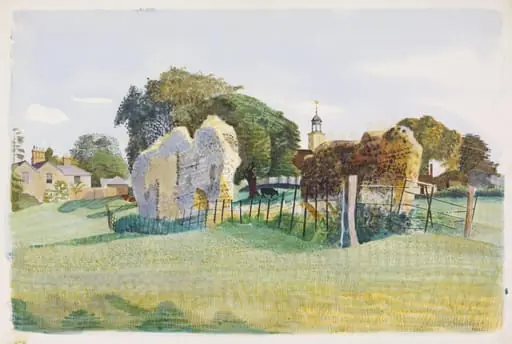 View of the Ruins of the Cloister, the Belfry of St. Mary's Church, and the Vicarage, Tilty
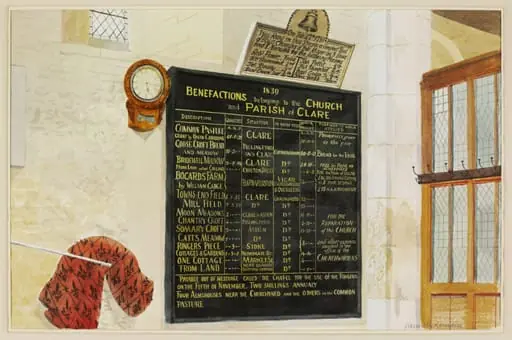 The Bellringer's Chamber, SS. Peter and Paul Church, Clare
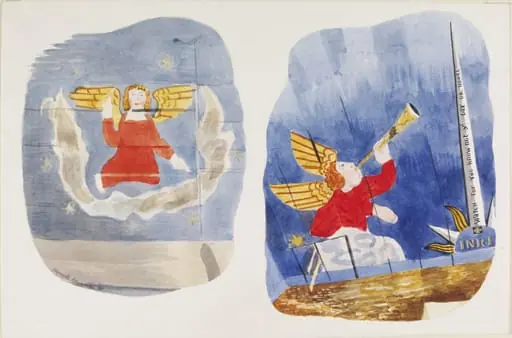 Detail of Ceiling at Gwydir Uchar Chapel, Llanrwst, Caernarvonshire
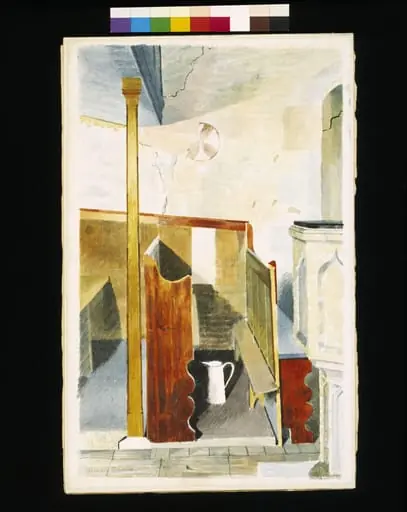 Interior of SS Peter and Paul, Little Saling, Essex
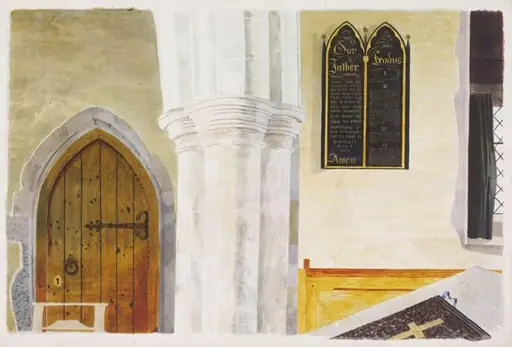 Interior of the Church of St. Mary the Virgin, Lindsell
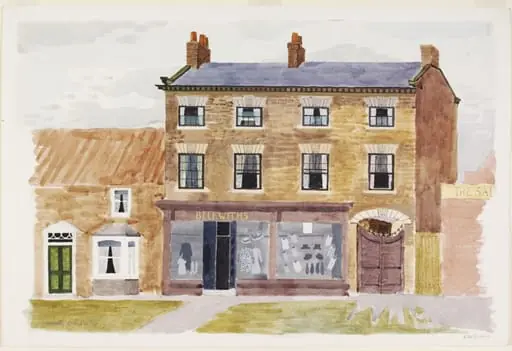 House at Easingwold
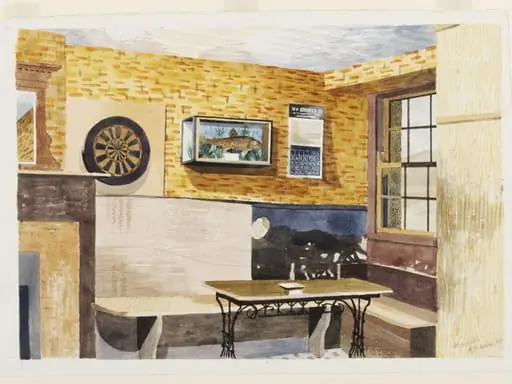 The Smoke Room, Ashopton Inn
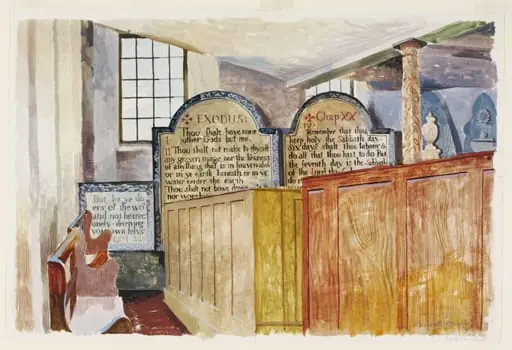 Pews in St Mary's Church, Whitby