Artwork
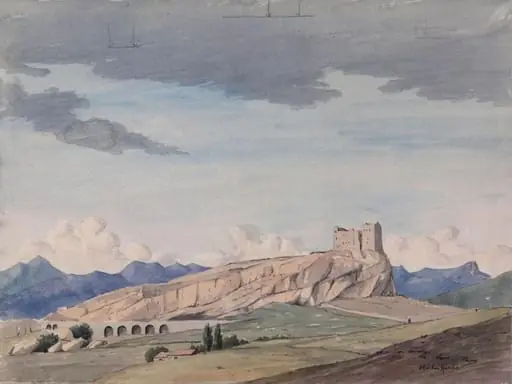
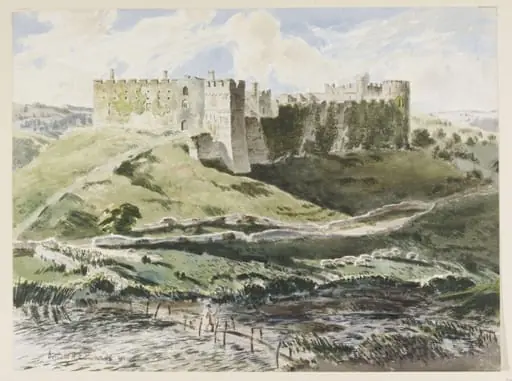
Rhuddlan Castle, Flintshire
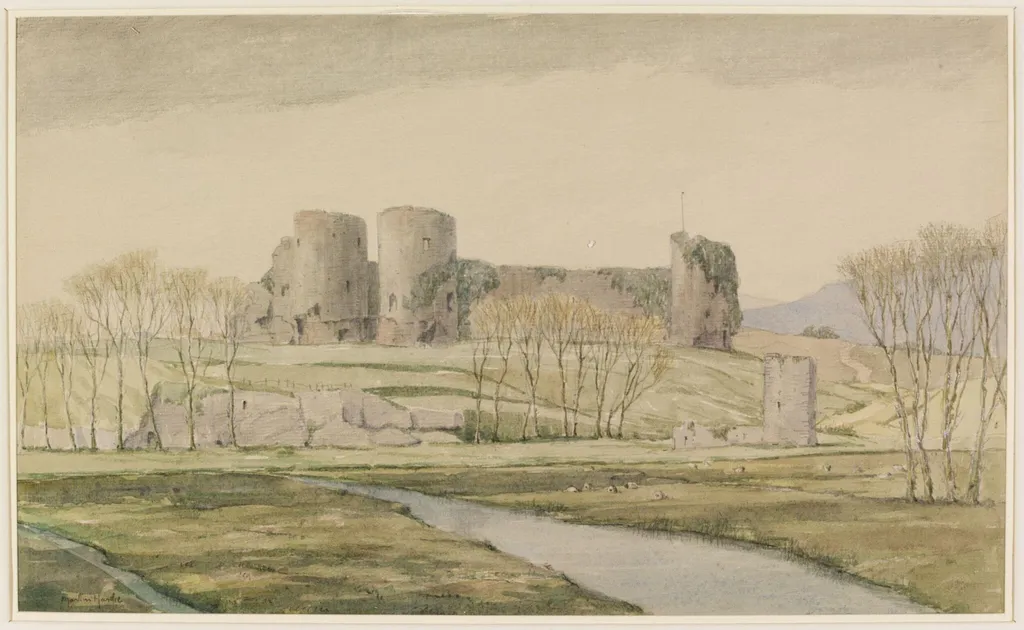
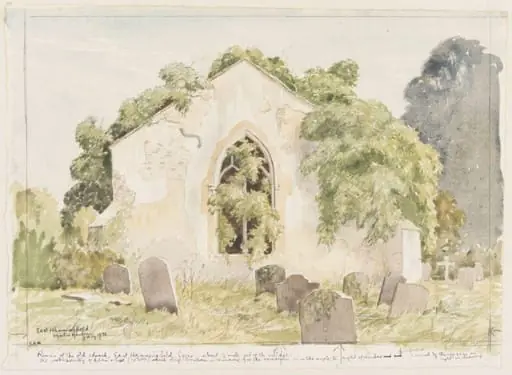
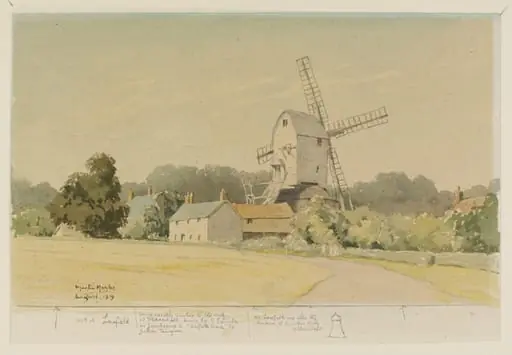
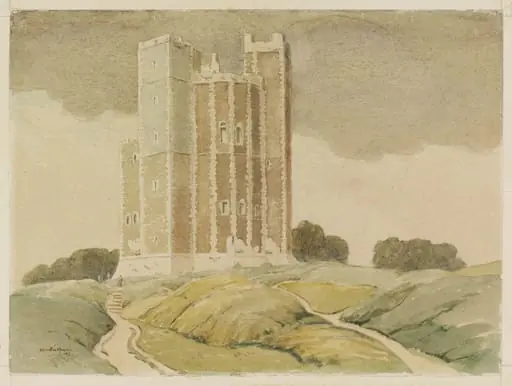
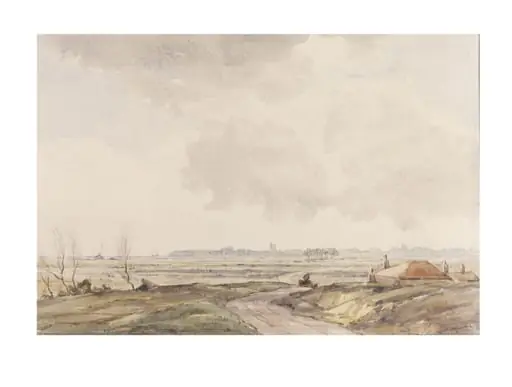
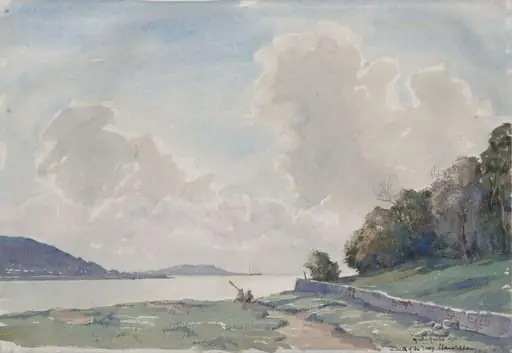
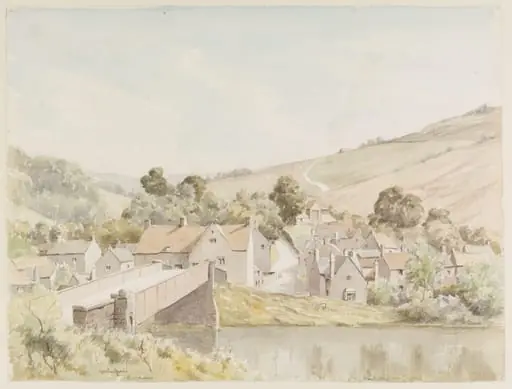
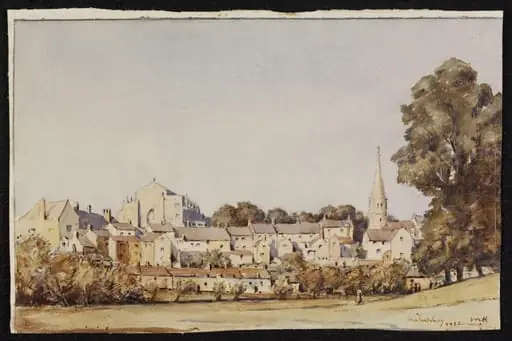
Rhuddlan Castle, Flintshire is a watercolor work on paper by Martin Hardie. It dates from 1940 and is held in the collection of the Victoria and Albert Museum.
About this work
Overview
Martin Hardie's 1940 watercolour captures Rhuddlan Castle in Flintshire, rendered with quiet precision and restrained tones.
Martin Hardie's 1940 watercolour captures Rhuddlan Castle in Flintshire, rendered with quiet precision and restrained tones. The scene presents the medieval fortress nestled against open fields, framed by bare trees and a narrow stream. Executed during the Second World War, the work belongs to the 'Recording Britain' project, a government-backed effort to visually archive vulnerable landscapes and architecture before they could be lost to conflict or change.
Subject & Meaning
The painting centers on Rhuddlan Castle, a 13th-century stronghold built by Edward I, now in ruins. Its isolated position amid winter-bare trees and quiet countryside suggests stillness and endurance. The absence of human figures and the muted palette evoke a sense of contemplation, reinforcing the project’s goal to preserve the visual memory of places deemed at risk—not as monuments of glory, but as quiet witnesses to history.
Technique & Style
Hardie employed transparent watercolour washes to build subtle gradations of grey, brown, and muted green, capturing the damp atmosphere of a winter day. Delicate linework defines the castle’s stonework and skeletal trees, while the river is suggested with minimal brushstrokes. The composition avoids dramatic contrast, favoring a restrained, observational approach typical of the Recording Britain artists, who prioritized accuracy over emotional flourish.
History & Provenance
Commissioned in 1940 under the Recording Britain initiative, the work was funded by the Pilgrim Trust and directed by Sir Kenneth Clark. The project enlisted over 150 artists to document rural and historic sites across Britain, with a focus on England; Welsh subjects like Rhuddlan were less common. Hardie’s watercolour was acquired as part of this national archive, later housed in the Victoria and Albert Museum.
Context
During wartime, fears of aerial bombardment and rapid modernization spurred efforts to preserve Britain’s visual heritage. Recording Britain emerged as a cultural countermeasure, valuing vernacular architecture and unassuming landscapes. Though Wales was underrepresented, Hardie’s depiction of Rhuddlan offered rare attention to a Welsh site, reflecting its historical significance despite the project’s regional biases.
Legacy
Hardie’s watercolour remains part of a broader archive that continues to inform historical and architectural research. Its quiet realism offers a documentary record of Rhuddlan’s condition in 1940, before later restoration efforts. As one of few Welsh entries in the collection, it also underscores the uneven geographic scope of wartime preservation efforts, adding nuance to the project’s historical footprint.
Artist & collection

Artist
Martin Hardie (1875–1952) was a painter in watercolour, printmaker, art historian and museum curator.