Artwork
Paysage
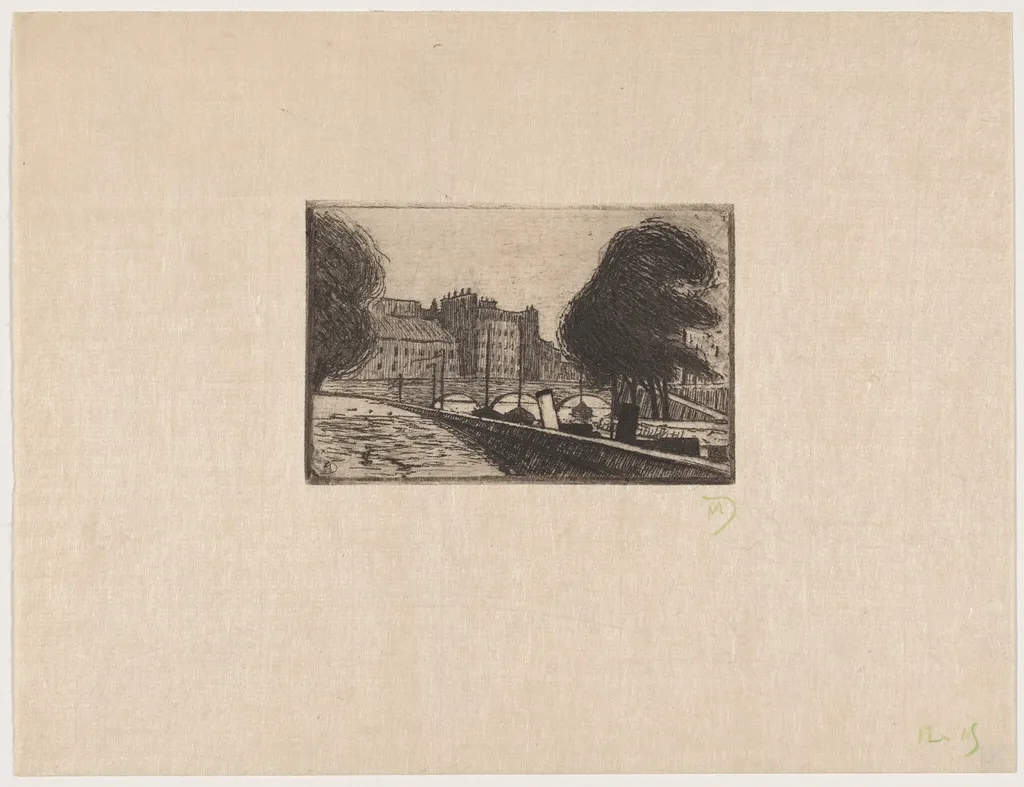
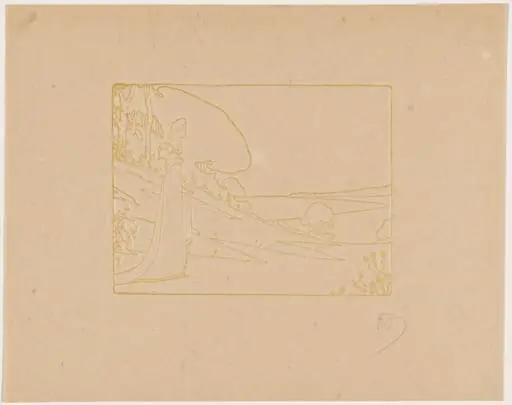
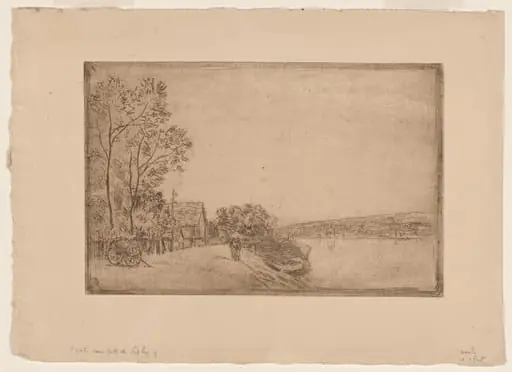
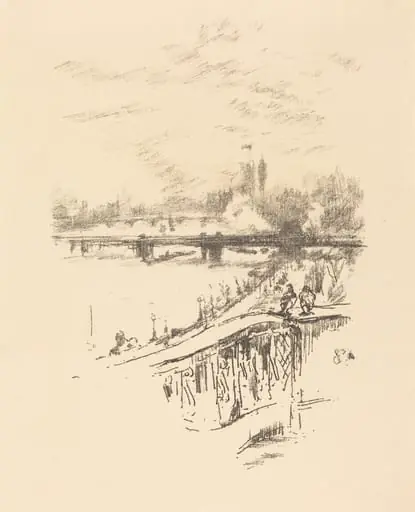
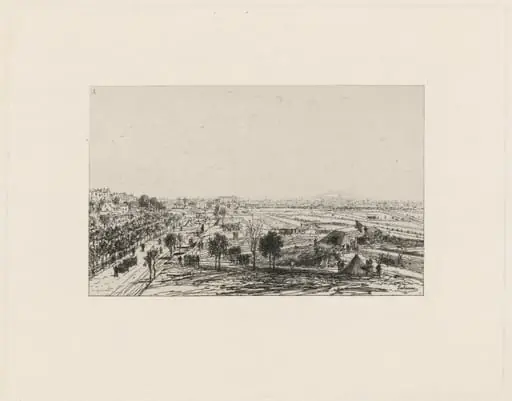
Paysage is an ink print by the Impressionist artist Maurice Dumont. It dates from 1895 and is held in the collection of the National Gallery of Art.
About this work
Overview
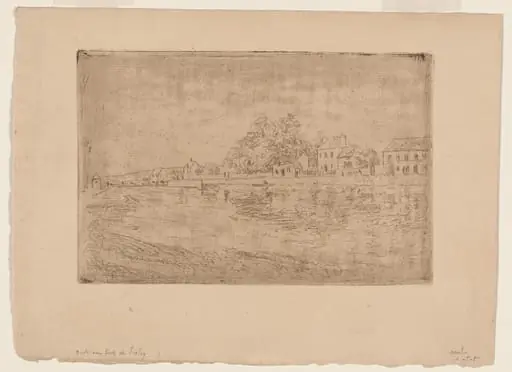
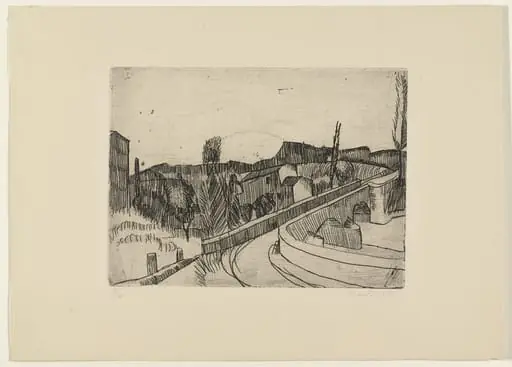
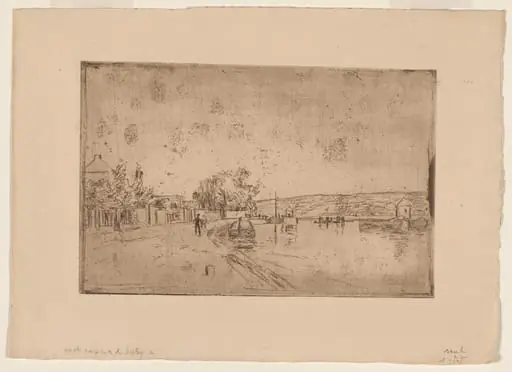
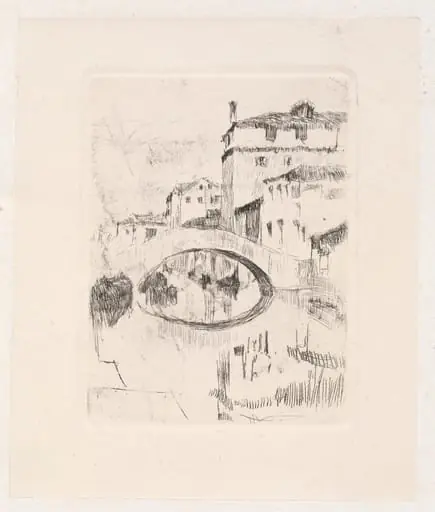
Paysage is a black etching on japan paper, created by Maurice Dumont in 1895, depicting a serene landscape.
Subject & Meaning
The etching portrays a daytime riverbank scene with a winding road or path, flanked by trees and distant buildings under a light sky. The composition emphasizes depth, with the foreground focusing on the riverbank and road, while the background elements recede into the distance.
Technique & Style
Executed in etching, the work leverages the medium's textural capabilities to convey depth and dimensionality. The style, characterized by soft, suggestive lines, aligns with the aesthetic explorations of the Impressionist movement.
History & Provenance
Created in 1895 by Maurice Dumont, specific provenance details are not provided in the available information.
Context
Paysage reflects the late 19th-century artistic interest in capturing everyday landscapes, a theme common among Impressionist and related movements of the time.
Legacy
While Paysage does not redefine the Impressionist canon, it contributes to the broader legacy of landscape etching in the late 19th century, showcasing Dumont's engagement with contemporary artistic trends.
Artist & collection