Artwork
The Sluice
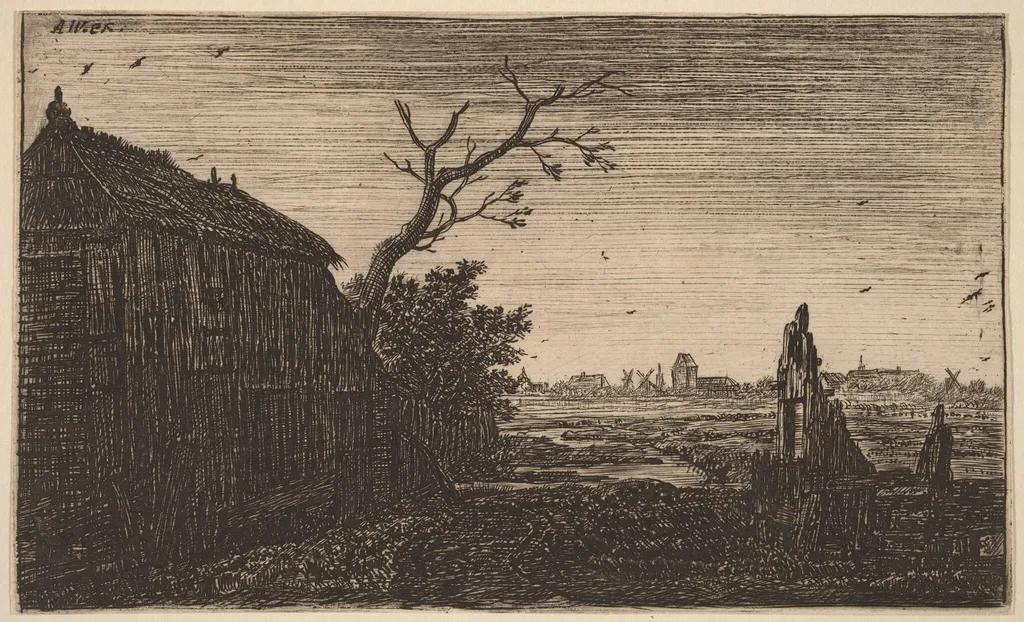
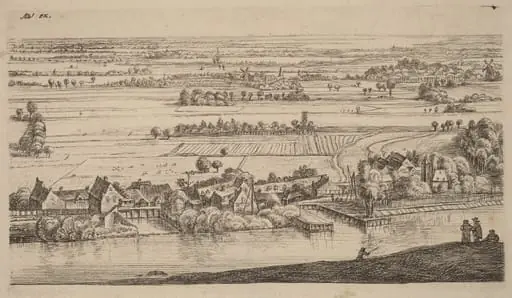
The Sluice is an ink print by the Baroque artist Johannes Ruisscher. It dates from 1640 and is held in the collection of the National Gallery of Art.
About this work
Overview
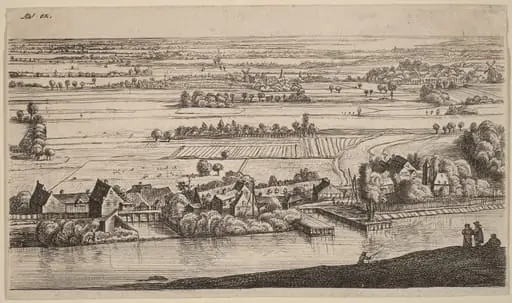
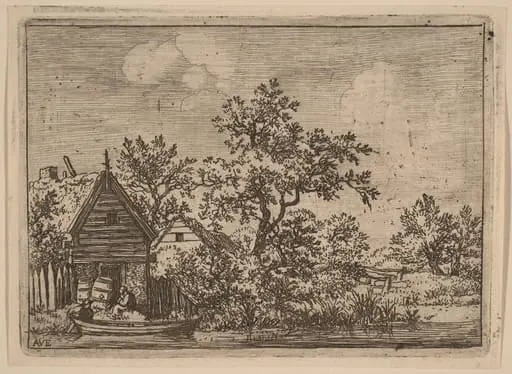
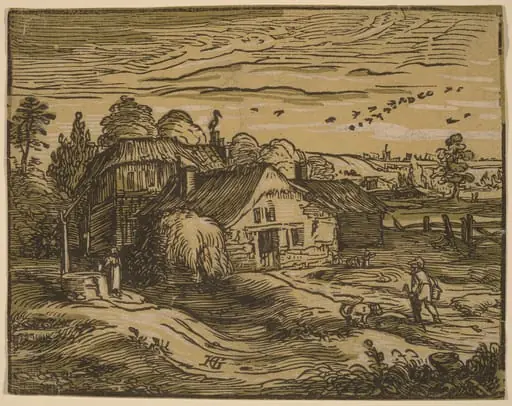
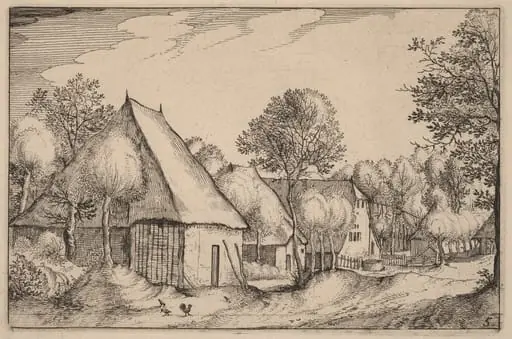
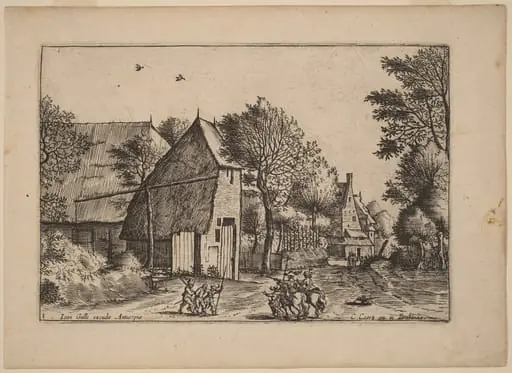
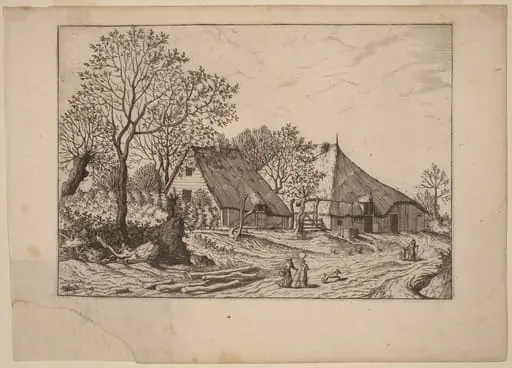
Johannes Ruisscher’s 1640 print, titled The Sluice, is executed in etching and engraving on laid paper. The monochrome image presents a tranquil riverside landscape, dominated by a modest thatched-roof dwelling on the left, a solitary leafless tree, and a broad river that bisects the scene. Distant structures—small houses and windmills—occupy the horizon, suggesting a rural Dutch setting.
Subject & Meaning
The composition captures an everyday moment of rural life, emphasizing the relationship between human habitation and the waterway that sustains it. The solitary tree and the modest architecture convey a sense of quiet perseverance, while the river’s gentle flow hints at commerce and transport that would have been central to the community’s livelihood.
Technique & Style
Ruisscher combines etching’s fluid lines with the precision of engraving to render textures such as thatch, timber, and rippling water. Fine cross‑hatching creates the illusion of depth in the grass and river surface, while the sky is suggested by barely perceptible strokes, allowing the viewer’s eye to fill in the atmospheric space.
History & Provenance
Created in 1640, The Sluice reflects the Dutch Golden Age’s fascination with landscape and engineering. The print has survived in several collections, documented in early 18th‑century catalogues of Dutch prints, and remains a representative example of Ruisscher’s work in the medium of printmaking.
Artist & collection