Artwork
The Little Shed (Le petit Hangar)
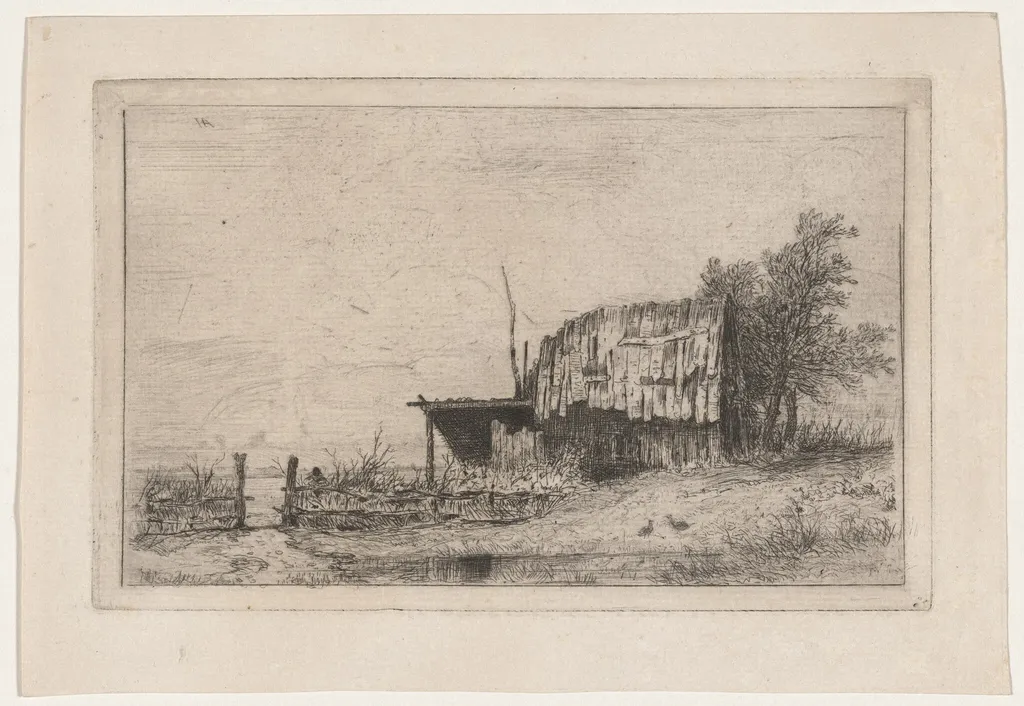
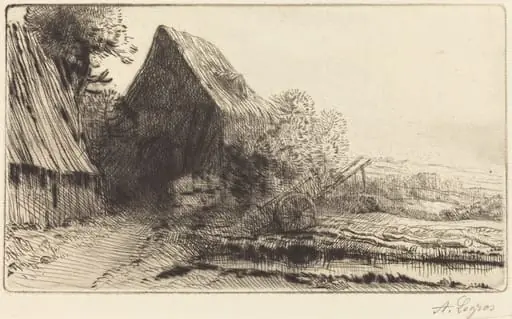
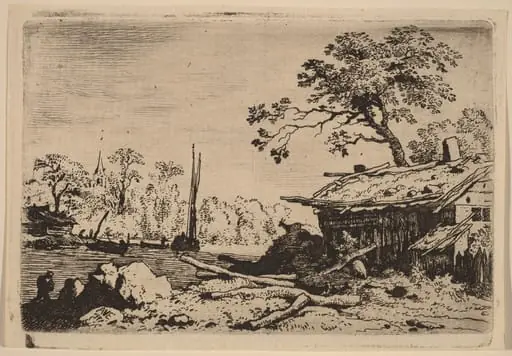
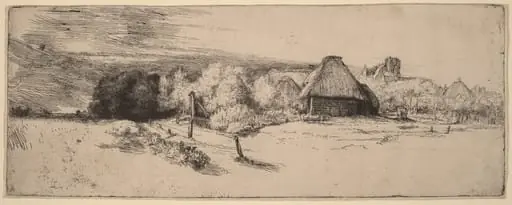
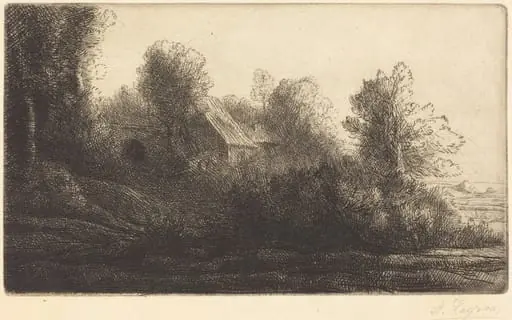
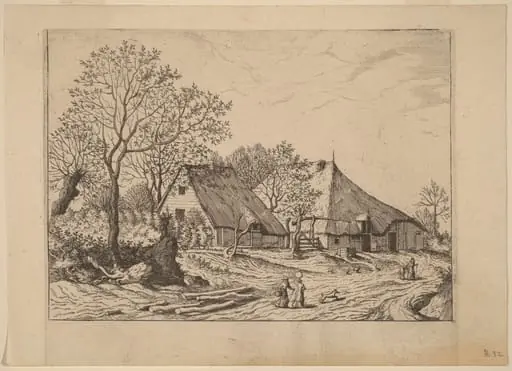
The Little Shed (Le petit Hangar) is an ink print by the Romanticist artist Louis Hector François Allemand. It dates from 1855 and is held in the collection of the National Gallery of Art.
About this work
Overview
, and exemplifies 19th-century printmaking techniques focused on quiet, observational subjects rather than grand narratives.
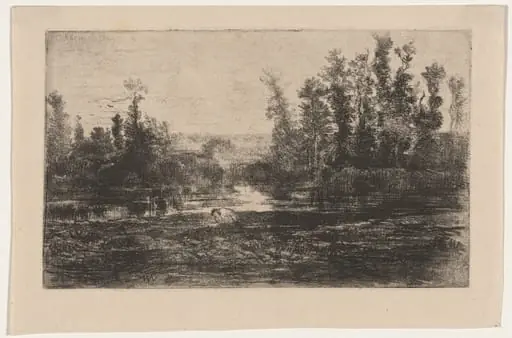
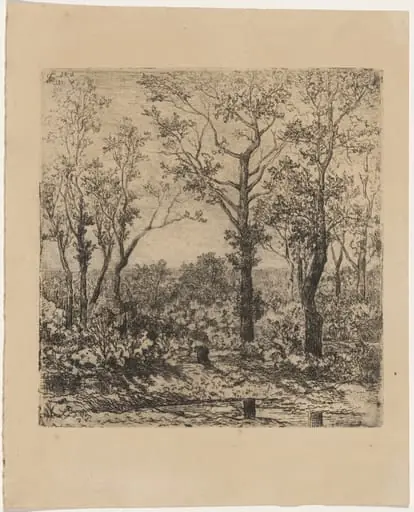
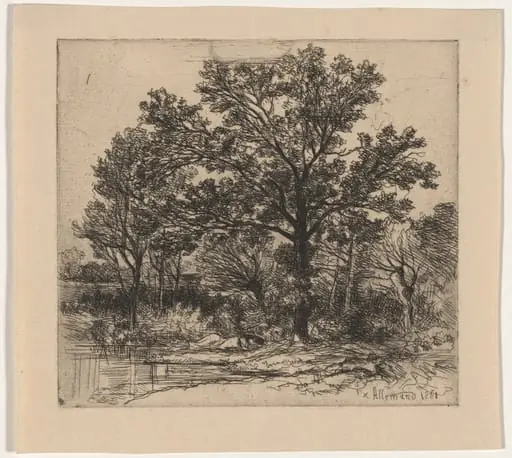
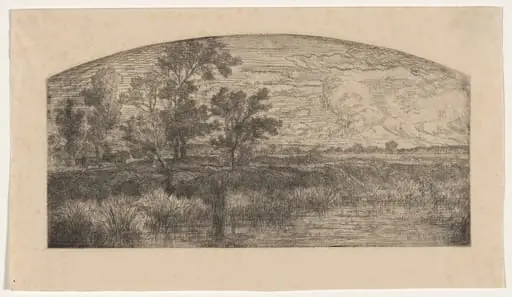
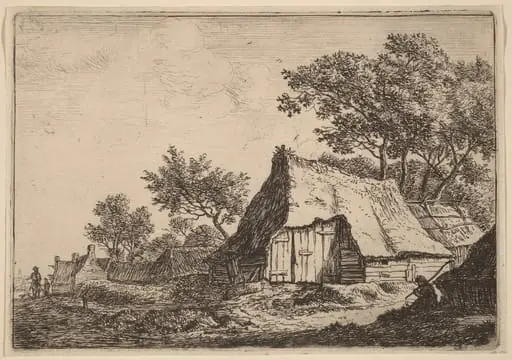
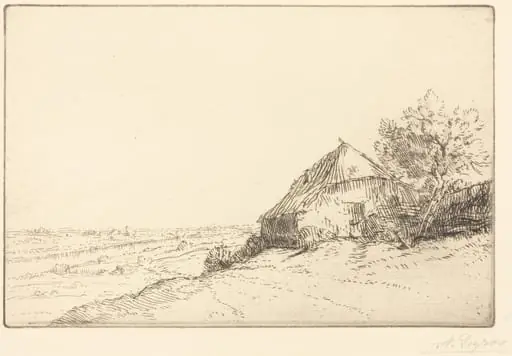
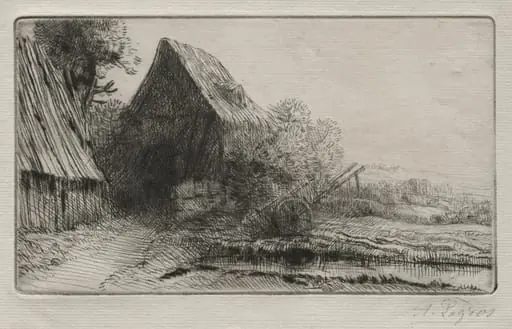
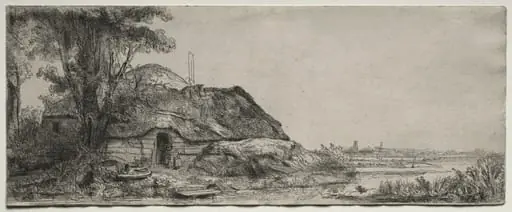
Created in 1855 by Louis Hector François Allemand, The Little Shed is an etching and drypoint on laid paper. It depicts a modest rural scene near water, rendered with delicate, incised lines that capture texture and atmosphere. The work is part of the National Gallery of Art’s collection in Washington, D.C., and exemplifies 19th-century printmaking techniques focused on quiet, observational subjects rather than grand narratives.
Subject & Meaning
The scene centers on a weathered wooden shed leaning against a tree, beside a small boat moored to a fragile fence on a grassy bank. Scattered sticks and uneven ground suggest a place neglected by time. There is no human presence, yet the arrangement implies daily use and quiet abandonment. The image conveys a sense of stillness and solitude, reflecting a common 19th-century interest in the poetry of ordinary, unremarkable landscapes.
Technique & Style
Allemand employed etching and drypoint to build texture through layered, scratchy lines. The drypoint’s burr creates soft, fuzzy edges, especially in the grass and weathered wood, while etching defines sharper contours. The absence of aquatint keeps the tonal range subtle, relying on line density for depth. This method emphasizes tactility, making the rough planks and uneven earth feel tangible without relying on shading or wash.
History & Provenance
The print was made in 1855 and entered the National Gallery of Art’s collection through established acquisition channels, though its earlier ownership history is not publicly documented. It reflects the period’s growing appreciation for prints as independent artworks, not merely reproductive tools. Its preservation in a major institution underscores its significance within the context of French printmaking of the mid-19th century.
Context
In mid-19th-century France, artists increasingly turned to intimate, everyday scenes as alternatives to academic history painting. Allemand’s work aligns with this shift, echoing the quiet realism found in the prints of contemporaries like Daumier or the Barbizon painters. The focus on rural decay and modest structures resonates with broader cultural interests in authenticity and the passage of time.
Legacy
The Little Shed remains a quiet example of how etching and drypoint could convey emotional resonance through minimal means. While not widely reproduced or celebrated in popular discourse, it contributes to the understanding of printmaking as a medium for personal, observational art. Its presence in a major museum collection affirms its role in the evolution of modern graphic art.
Artist & collection
Artist
Louis Hector François Allemand
Louis Hector François Allemand (1809–1886) was a French artist, born in Lyon.