Artwork
Village Road
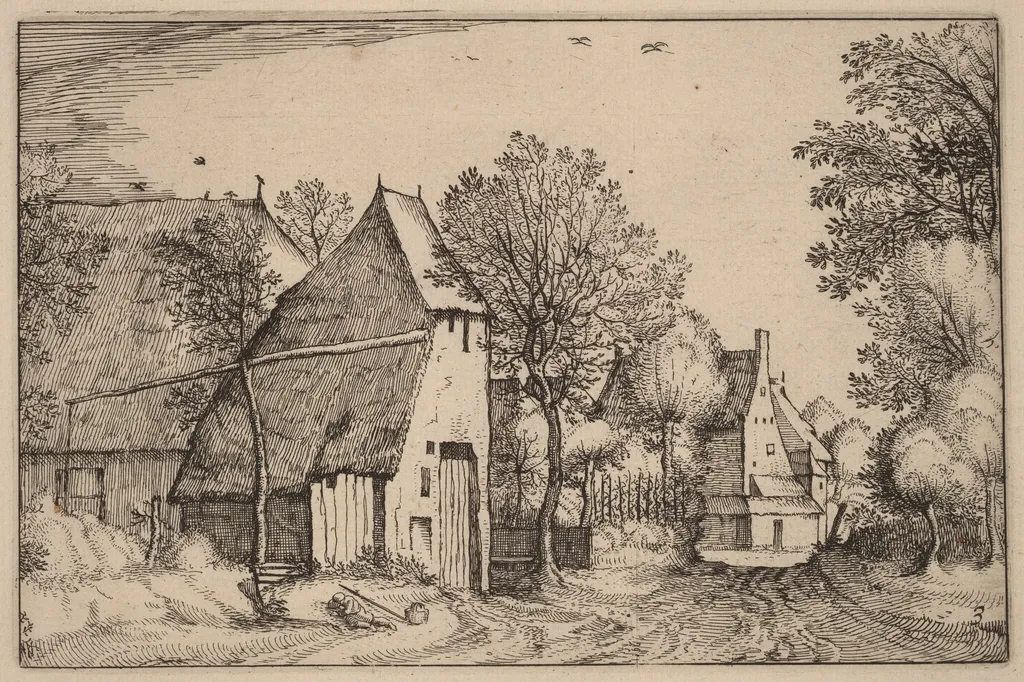
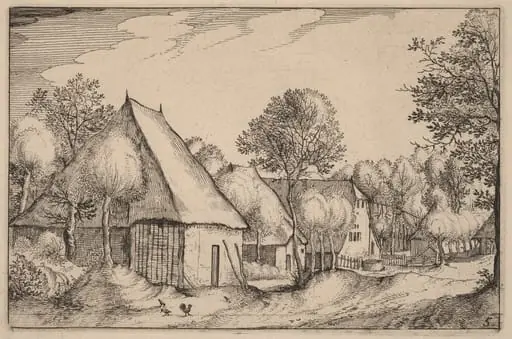
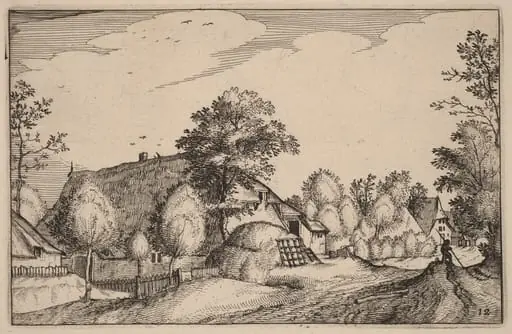
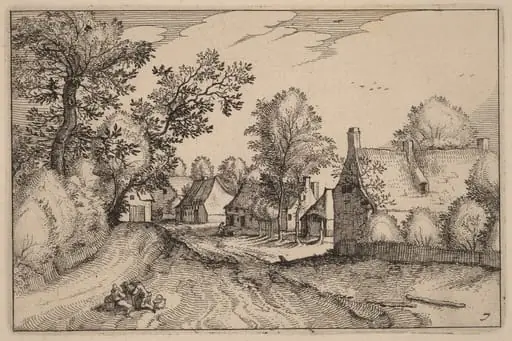
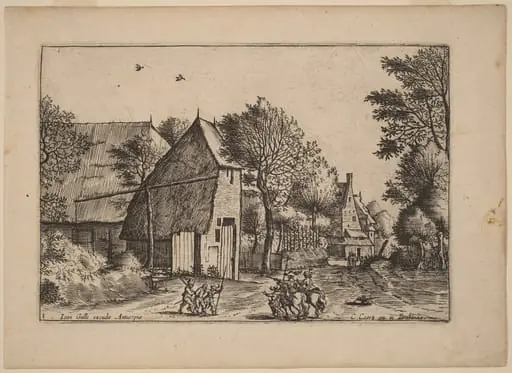
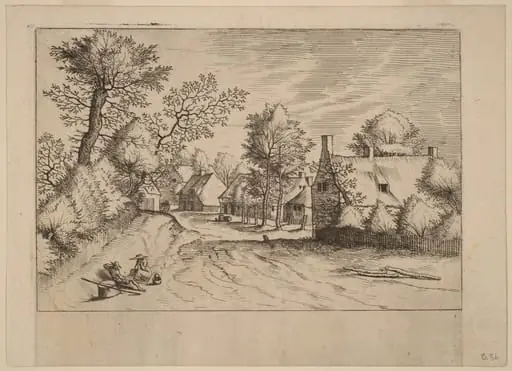
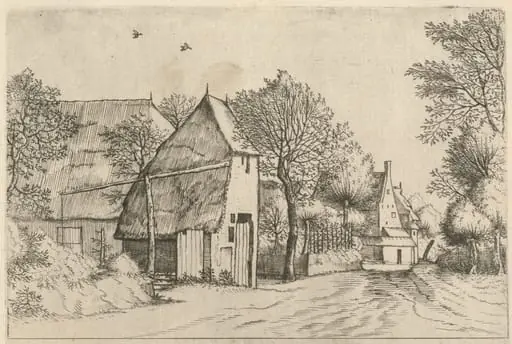
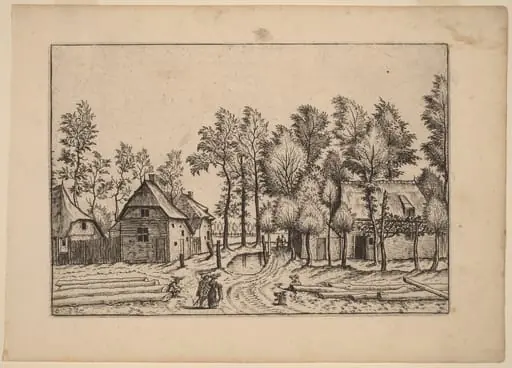
Village Road is an ink print by the Baroque artist Claes Jansz Visscher. It dates from 1612 and is held in the collection of the National Gallery of Art.
About this work
Overview
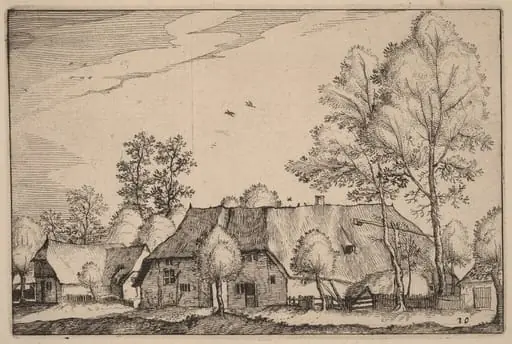
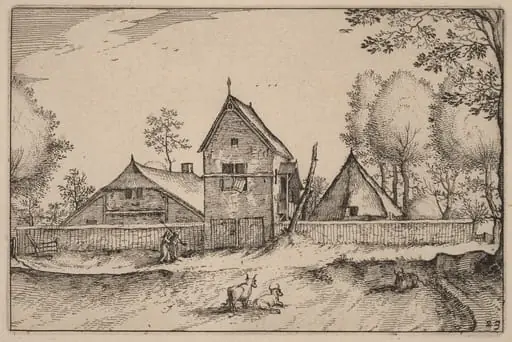
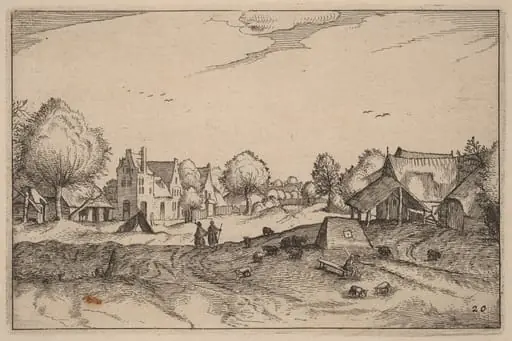
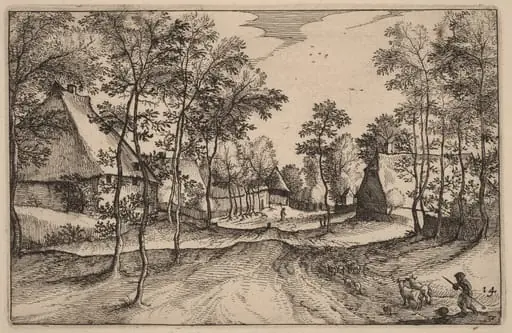
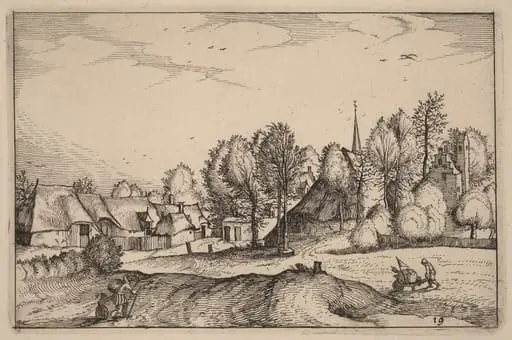
Created in 1612, *Village Road* is an etching by Claes Janszoon Visscher, a Dutch draughtsman and publisher active during the early seventeenth‑century Golden Age. The work presents a tranquil rural tableau rendered in monochrome, illustrating a modest village setting typical of the period’s everyday life.
Subject & Meaning
The image portrays a narrow dirt lane flanked by three thatched houses, their steep roofs and simple wooden fences suggesting modest dwellings. Trees line the road, a shallow stream crosses the foreground, and a few figures are scattered—one reclines on the grass, another stands near the houses—evoking a calm, lived-in atmosphere of a provincial community.
Technique & Style
Vissburg employed the etching process, incising lines into a metal plate with acid before inking and pressing it onto paper. This method allowed him to achieve delicate line work and subtle textural variations, evident in the rendering of foliage, water, and architectural details.
History & Provenance
Visscher founded a notable map‑making and publishing house in Amsterdam, a business that remained in his family for generations. *Village Road* reflects the broader flourishing of printmaking in the Dutch Republic, where such prints were widely circulated for both decorative and informational purposes.
Context
The early 1600s saw a surge in demand for printed images that documented everyday scenes, complementing the era’s booming cartographic output. Visscher’s work aligns with this trend, offering a visual record of rural Dutch life alongside his more renowned maps and city views.
Artist & collection

Artist
Claes Janszoon Visscher (1587 – 19 June 1652) was a Dutch Golden Age draughtsman, engraver, mapmaker, and publisher.