Artwork
Jupiter and Leda
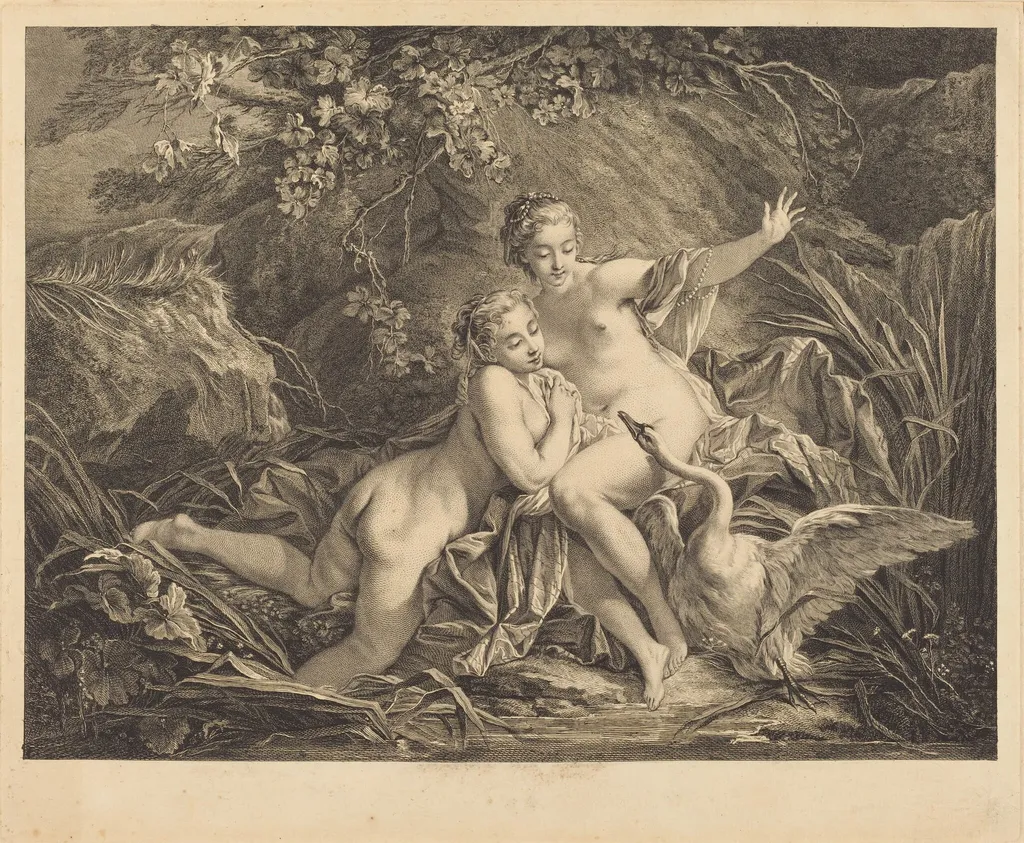
Jupiter and Leda is an ink print by the Romanticist artist William Wynne Ryland. It dates from 1758 and is held in the collection of the National Gallery of Art.
About this work
Overview
The overall effect is one of vigorous natural entanglement, rendered through stark contrasts of line and shadow.
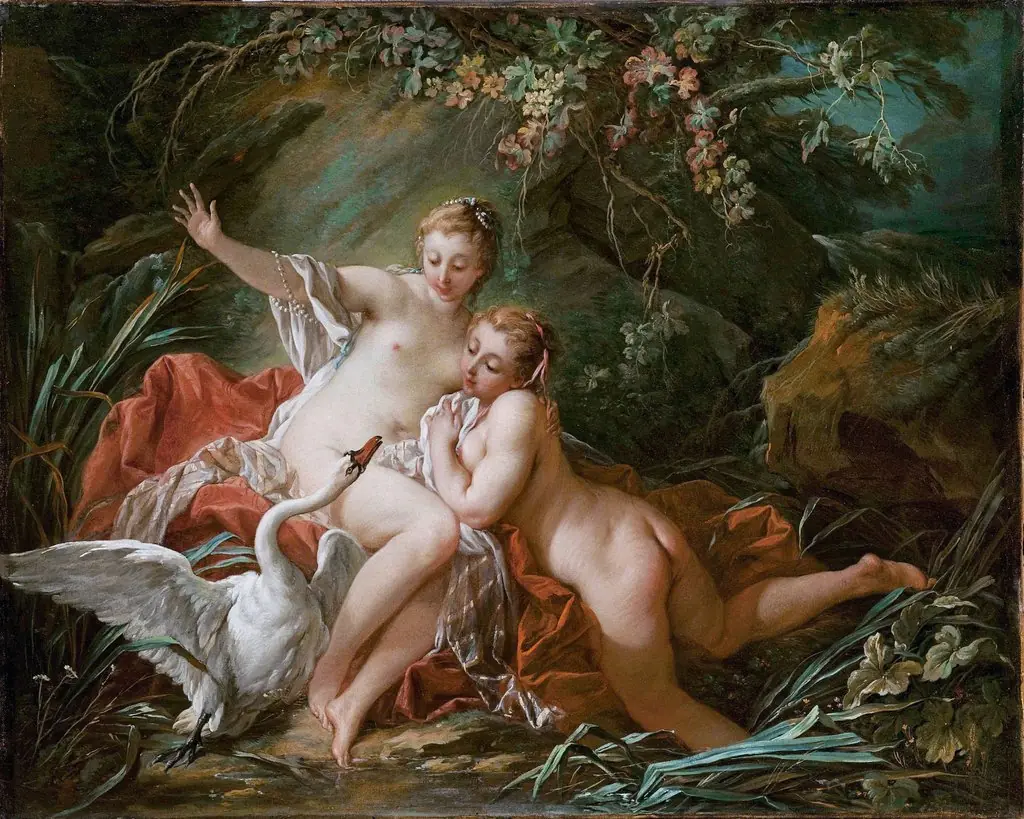
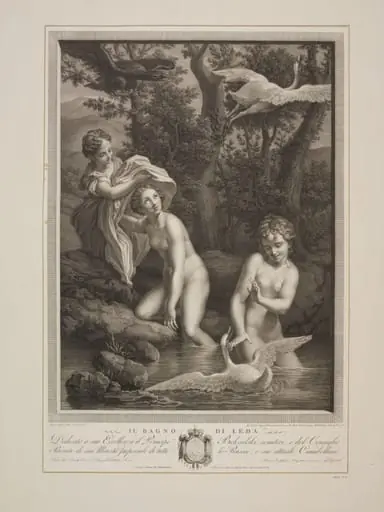
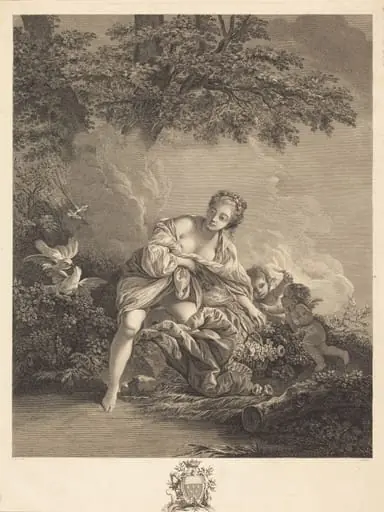
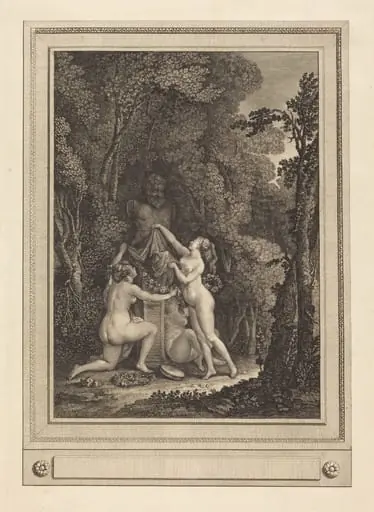
William Wynne Ryland’s 1758 print titled *Jupiter and Leda* is executed as an engraving combined with etching. The work presents a densely vegetated composition in which a female figure with outstretched arms embraces a small child, while a bird with spread wings perches amid the tangled foliage. The overall effect is one of vigorous natural entanglement, rendered through stark contrasts of line and shadow.
Subject & Meaning
The scene draws on the mythological encounter between the god Jupiter, disguised as a swan, and Leda. Ryland emphasizes the intimate moment by focusing on the intertwined bodies and the surrounding vines, suggesting both the sensuality of the myth and the encroaching wildness of nature. The bird, rendered as a swan, serves as the narrative focal point linking the divine and mortal participants.
Technique & Style
Ryland employed a hybrid process, first incising the design into a metal plate by engraving, then enriching tonal variation through etching. The print is distinguished by meticulously rendered foliage; each leaf and feather is delineated with fine, cross‑hatching lines that create texture and depth. Strong chiaroscuro achieved by deep, dark shadows contrasts with the delicate, linear detailing of the figures.
History & Provenance
Created in 1758, the print belongs to the later phase of Ryland’s career, when he was exploring classical subjects through printmaking. Though specific ownership records are scarce, the work appears in several 18th‑century catalogues of British prints and has been held in institutional collections that focus on the development of British engraving.
Artist & collection