Artwork
Untitled
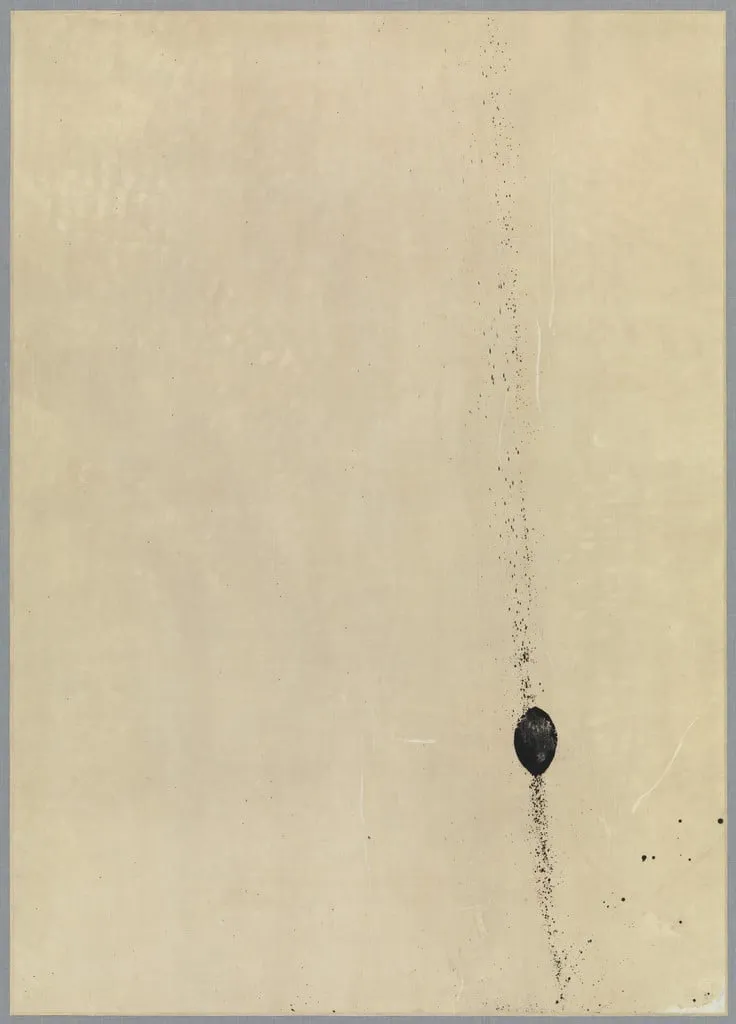
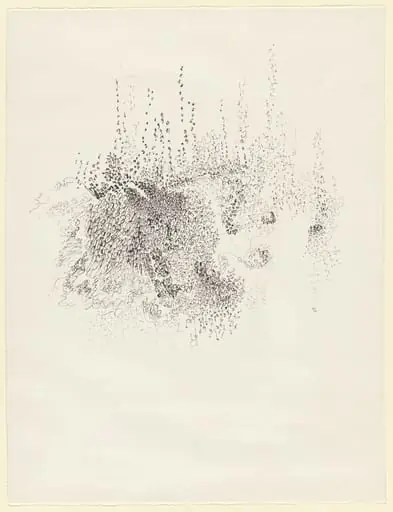
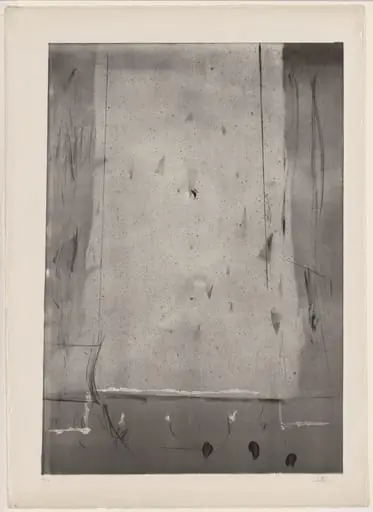
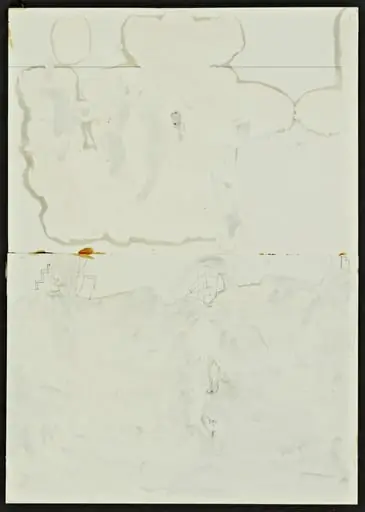
Untitled is an acrylic drawing by Saburo Murakami. It dates from 1954 and is held in the collection of the Museum of Modern Art.
About this work
Overview
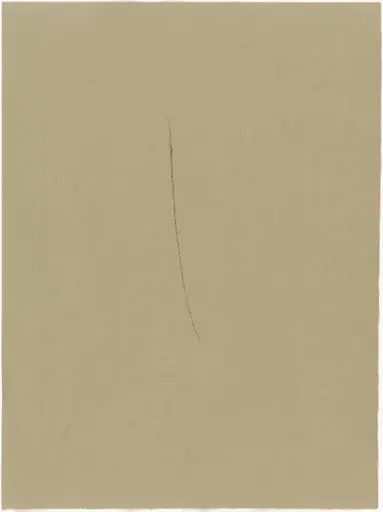
It presents an extremely restrained composition: a pale yellow field serves as the sole backdrop for a single vertical element.
Created in 1954, this acrylic work on paper by Saburo Murakami is part of The Museum of Modern Art’s collection. It presents an extremely restrained composition: a pale yellow field serves as the sole backdrop for a single vertical element. The work’s minimalism invites close attention to subtle material gestures rather than symbolic content, aligning with postwar Japanese experimental practices that prioritized process over representation.
Subject & Meaning
The piece contains no recognizable forms or narrative elements. A small black dot anchors the center, from which a faint, tapering line ascends, dissolving into scattered particles near the top edge. This gesture suggests an act of mark-making—perhaps a deliberate drip or brushstroke—emphasizing the physicality of paint and the passage of time. The absence of context or symbolism directs focus to the act of creation itself.
Technique & Style
Murakami applied acrylic paint with controlled yet spontaneous gestures. The central line appears to have been drawn slowly upward, allowing the pigment to thin and fragment as it rose, creating a delicate fade. The pale yellow ground remains untouched, heightening the contrast with the dark mark. The work’s economy of means reflects an interest in material behavior and the limits of visual language, characteristic of Gutai group experiments.
History & Provenance
The work was produced in 1954 during Murakami’s active involvement with the Gutai Art Association, a collective known for radical, performance-oriented approaches to art. It entered The Museum of Modern Art’s collection through documented acquisition, likely as part of broader postwar efforts to recognize Japanese avant-garde practices. Its preservation underscores its significance within the history of experimental drawing.
Context
Emerging from postwar Japan, this piece reflects the Gutai group’s rejection of traditional aesthetics in favor of embodied, material-based expression. Murakami’s work shares affinities with contemporaneous Western movements like Abstract Expressionism and Art Informel, yet it retains a distinct quietude. The emphasis on process over spectacle aligns with broader Japanese artistic inquiries into impermanence and presence during this period.
Legacy
This work contributes to the recognition of Japanese postwar abstraction as a distinct and influential current in global modernism. Its restrained language has informed later generations of artists exploring minimalism, gesture, and the materiality of mark-making. While not widely exhibited, its presence in MoMA’s collection affirms its role as a quiet but pivotal example of experimental drawing from mid-century Japan.
Artist & collection
Artist
Saburo Murakami was a Japanese visual and performance artist. He was a member of the Gutai Art Association and is best known for his paper-breaking performances (kami-yaburi) in which he burst through kraft paper…