Artwork
The Rich Man and Lazarus
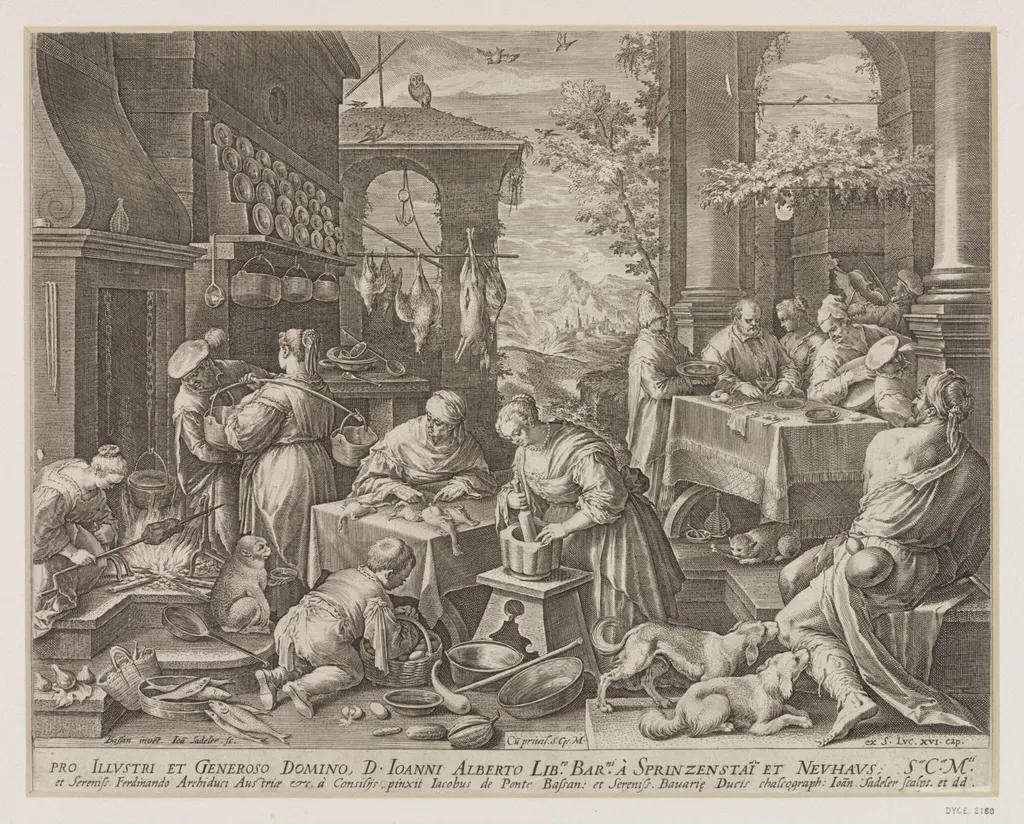
The Rich Man and Lazarus is a print by Jan Sadeler. It dates from 1550 and is held in the collection of the Victoria and Albert Museum.
About this work
Overview
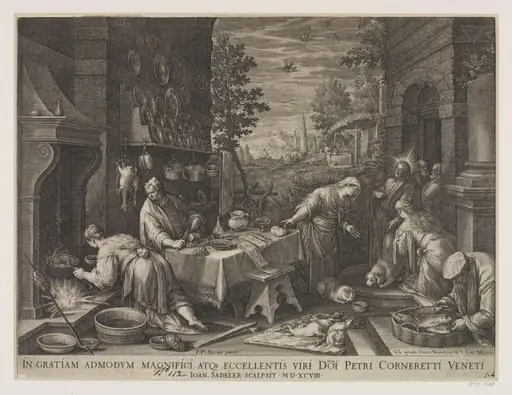
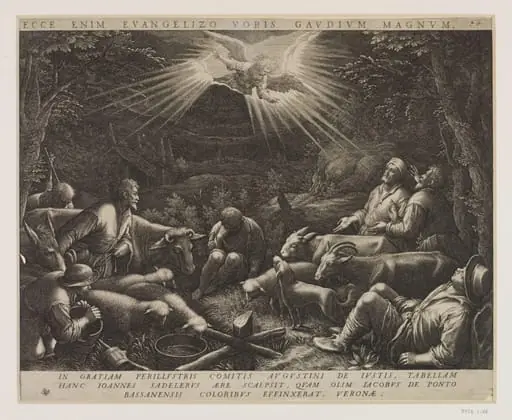
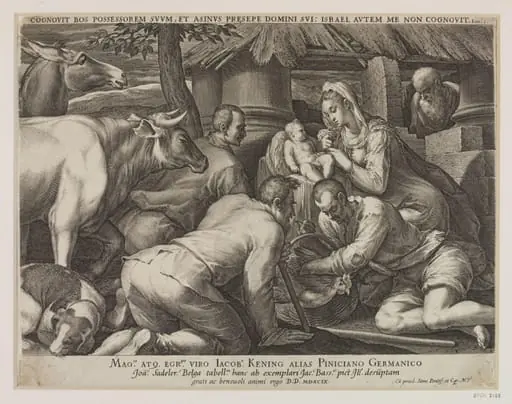
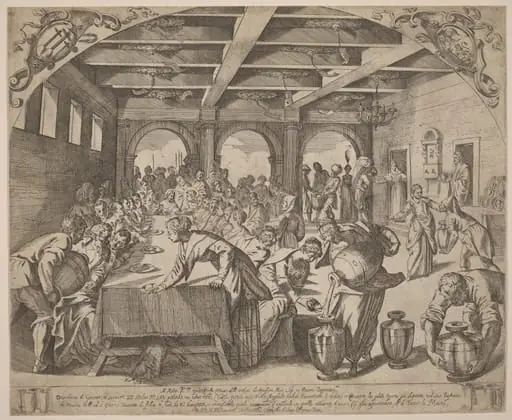
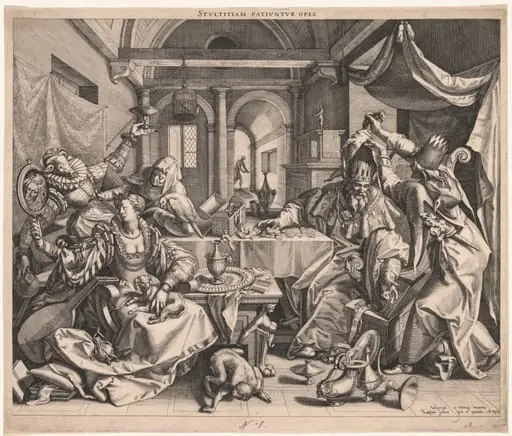
This engraving illustrates the biblical parable of the Rich Man and Lazarus, based on a composition by Jacopo Bassano the Elder and executed in fine line by Jan I Sadeler. Rendered on paper through meticulous engraving, the work translates a painted scene into a detailed monochrome print, preserving the narrative contrast between wealth and destitution through precise tonal gradations and sharp linear definition.
Subject & Meaning
The scene divides into two spatial realms: on the left, a wealthy man reclines amid opulent feasting, while on the right, Lazarus, a destitute beggar, lies abandoned at his gate, attended only by a dog. The juxtaposition underscores the parable’s moral warning about earthly privilege and divine judgment, emphasizing spiritual neglect over material abundance without overt symbolism.
Technique & Style
Sadeler employed fine engraving lines to model form and texture, using controlled hatching to suggest volume and shadow.
Sadeler employed fine engraving lines to model form and texture, using controlled hatching to suggest volume and shadow. Light falls from the left, casting deep contrasts that isolate the figures and heighten emotional tension. The technique reflects Northern Renaissance print traditions, prioritizing clarity and detail over painterly brushwork, while echoing the chiaroscuro effects of Italian painting.
History & Provenance
The image derives from a lost painting by Jacopo Bassano, likely created in the mid-16th century. Jan I Sadeler, a Flemish engraver active in Venice and Prague, reproduced it around 1590–1600 as part of a series translating Italian compositions for Northern European audiences. Its survival in multiple impressions suggests wide circulation among collectors and religious institutions.
Context
Produced during the Counter-Reformation, the print aligned with Catholic teachings emphasizing charity and the perils of greed. Reproductions like this served devotional and didactic purposes, making biblical narratives accessible beyond church walls. The choice of Bassano’s composition reflects the period’s interest in Italianate drama, adapted through Northern printmaking’s precision.
Legacy
The engraving contributed to the dissemination of Bassano’s visual language across Europe, influencing later depictions of the parable in both print and painting. While not widely celebrated as an original work, it remains a significant example of cross-regional artistic exchange, preserving a lost composition through the durability of the printed image.
Artist & collection
Artist
Jan Sadeler made prints in the second half of the 1500s, a time when religious scenes were often turned into pictures for books and walls.