Artwork
Stultitiam patiuntur opes (Wealth permits Stupidity), or, Allegory of Wealth, Lust, and Stupidity
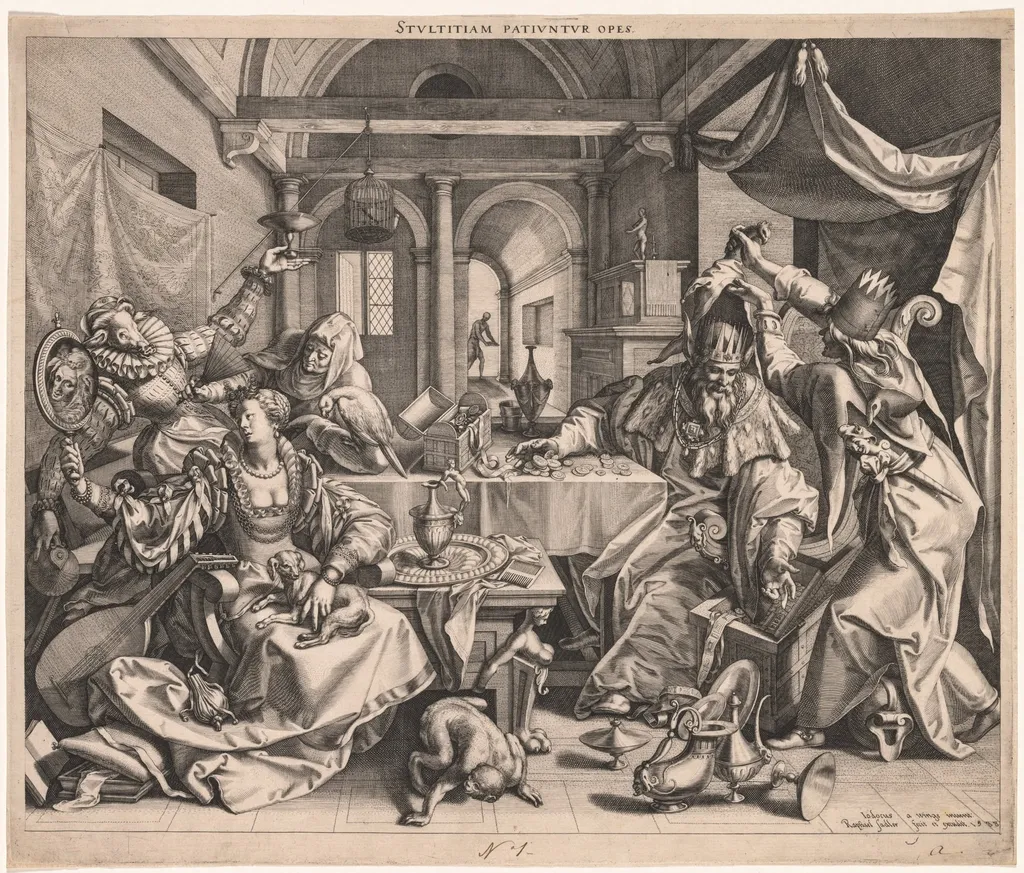
Stultitiam patiuntur opes (Wealth permits Stupidity), or, Allegory of Wealth, Lust, and Stupidity is a print by the Renaissance artist Raphael Sadeler. It dates from 1588 and is held in the collection of the Cleveland Museum of Art. The print presents a king and a woman surrounded by opulent objects, each engaged in activities that expose the folly of excess.
About this work
Overview
The print presents a king and a woman surrounded by opulent objects, each engaged in activities that expose the folly of excess.
The print presents a king and a woman surrounded by opulent objects, each engaged in activities that expose the folly of excess. The monarch tallies his riches at a table while a jester crowns him with a fool’s hat, and the woman, absorbed in her own reflection, is attended by servants and a boar‑headed figure that serves her. The composition functions as a visual caution about the perils of wealth.
Subject & Meaning
The king embodies wealth, his preoccupation with counting coins underscored by the jester’s act of placing a fool’s cap on his head, suggesting that riches can lead to foolishness. The female figure, adorned in lavish attire, gazes into a mirror, symbolizing vanity; her entourage of flattery and a boar‑headed attendant serving food and drink reinforces the theme that luxury breeds both self‑absorption and stupidity. The allegory warns viewers to examine their own relationship with material abundance.
Technique & Style
Executed as a print, the work employs line and shading to delineate the figures and their surrounding symbols, creating a clear narrative tableau. The composition balances detailed rendering of clothing and accessories with broader, more stylized gestures that emphasize the moral message. The use of allegorical iconography—fool’s hat, mirror, boar’s head—aligns the piece with the tradition of didactic prints popular in early modern Europe.
Context
Allegorical prints of this type were common in the period as both entertainment and moral instruction, often circulated among educated audiences. By juxtaposing regal authority with overt symbols of folly, the image reflects contemporary concerns about the corrupting influence of wealth and the need for self‑reflection. Such works served as visual sermons, urging viewers to consider the ethical dimensions of prosperity.
Artist & collection

Artist
The Sadeler family were the largest, and probably the most successful of the dynasties of Flemish engravers that were dominant in Northern European printmaking in the later 16th and 17th centuries, as both artists and publishers.

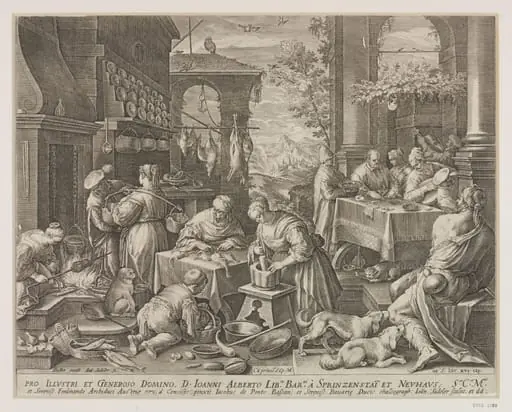 The Rich Man and Lazarus
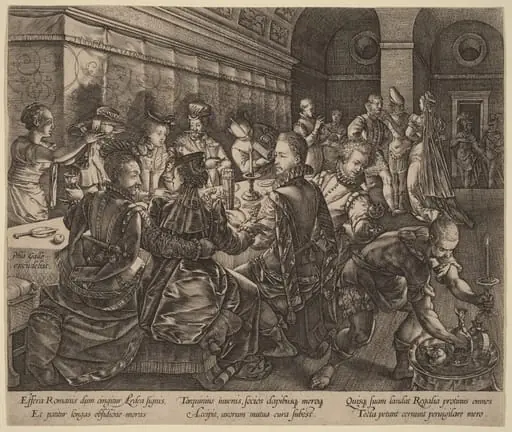 Banquet at the House of Tarquinius Collatinus
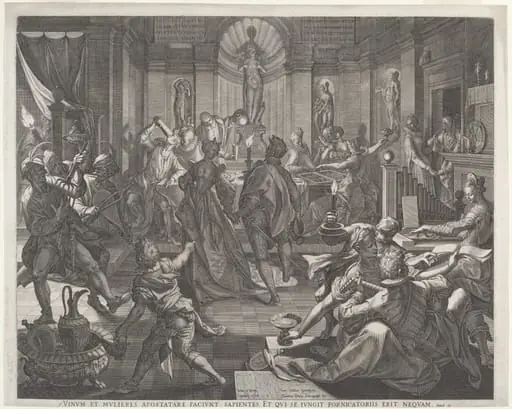 A Pleasure House
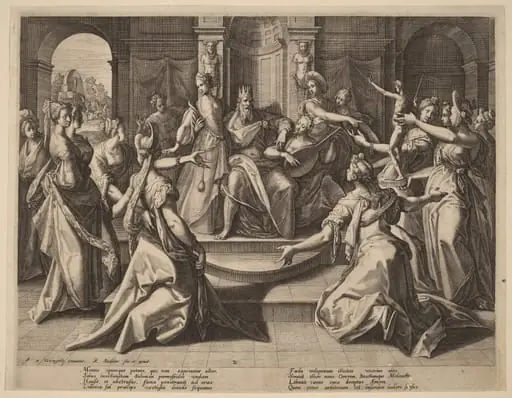 Solomon Led to Idolatry by His Wives
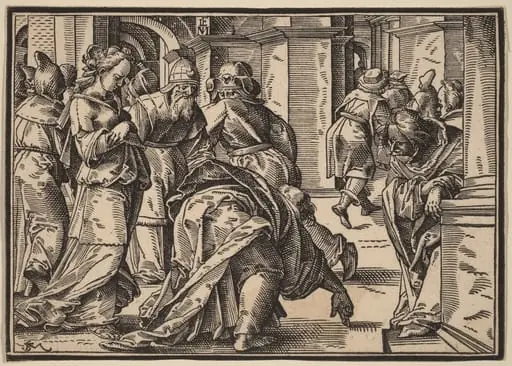 Christ Tells His Disciples of the Last Judgment
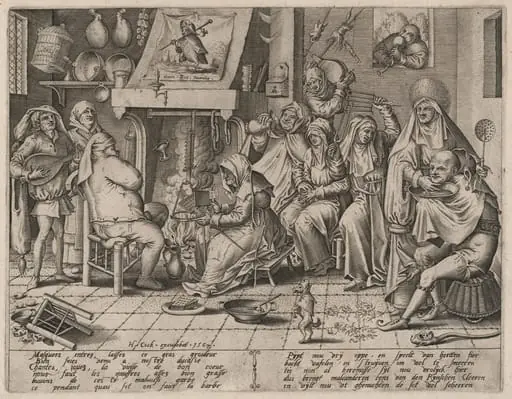 Shrove Tuesday
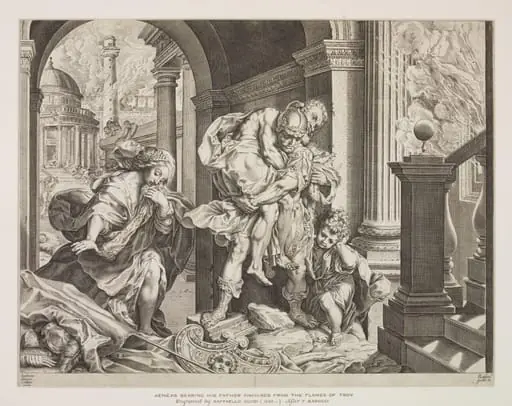 Untitled
 Pharaoh and the Plague of Frogs
 Josiah Celebrating Passover
 The Dissolute Household
 The Cobbler's Unruly Family
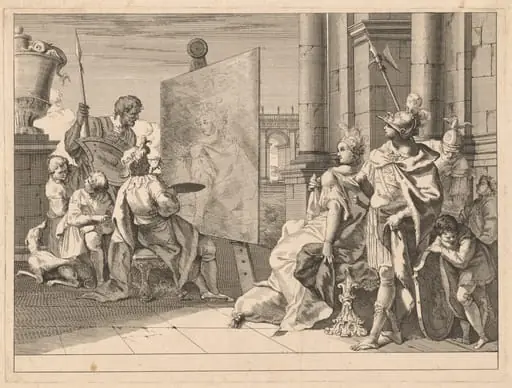 Alexander the Great and Campaspe in the Studio of Apelles