Artwork
Josiah Celebrating Passover
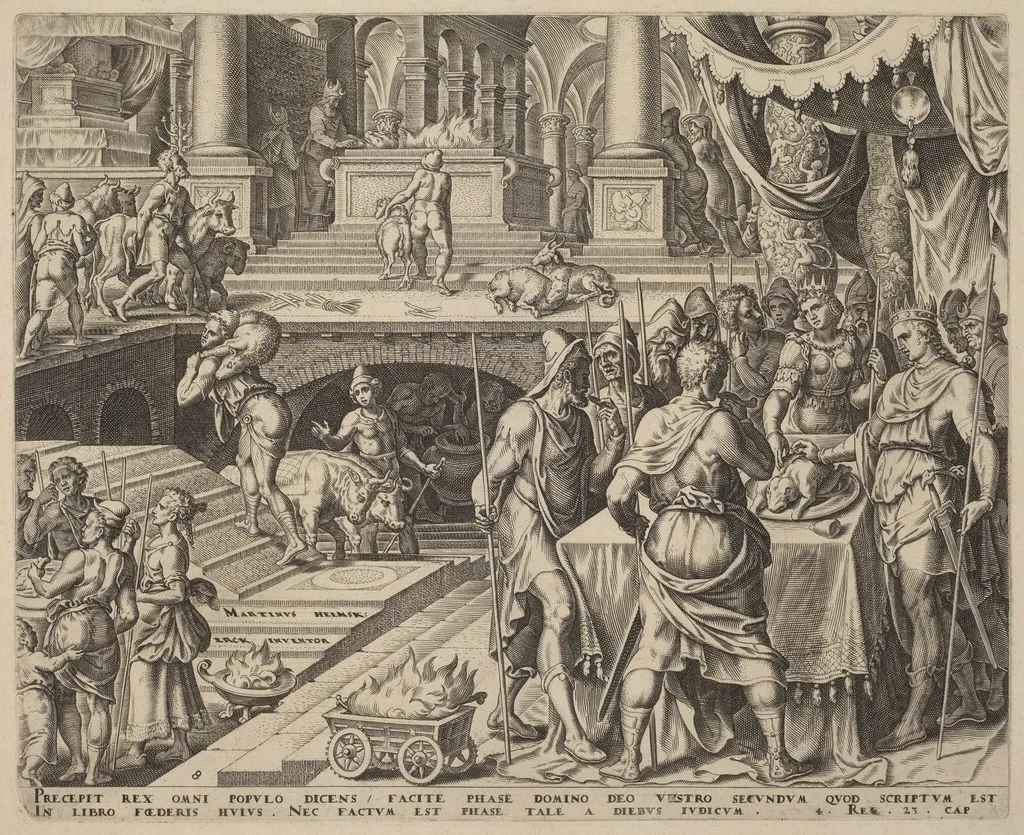
Josiah Celebrating Passover is an ink print by the Renaissance artist Philip Galle. It dates from 1569 and is held in the collection of the National Gallery of Art.
About this work
Overview
Galle, known for translating paintings into engraved compositions, worked in Antwerp during a period of intense print production.
Created around 1569 by Dutch engraver Philip Galle, this print reproduces a biblical scene in fine linear detail on laid paper. Galle, known for translating paintings into engraved compositions, worked in Antwerp during a period of intense print production. The image captures King Josiah’s religious reforms as recounted in the Hebrew Bible, rendered through precise engraving techniques that emphasize texture and spatial depth.
Subject & Meaning
The scene illustrates King Josiah’s restoration of the Passover ritual, as described in 2 Kings 23. Central figures include the king on a throne, surrounded by attendants and ritual participants. A reclining man may represent the rediscovered Book of the Law, while symbolic elements—such as the bull’s head and pedestal figure—likely allude to the eradication of pagan practices. The Latin inscription reinforces the biblical narrative, framing the event as divine renewal.
Technique & Style
Galle employed fine, controlled engraving lines to build form and shadow, characteristic of Northern Renaissance reproductive prints. The composition is densely packed, with sharp contours defining figures, animals, and architectural elements. Darker areas are achieved through closely spaced hatching, while lighter zones suggest volume and distance. The use of laid paper, with its visible chain lines, was standard for high-quality prints of the era.
History & Provenance
Produced in Antwerp, a major center for print publishing, the work was part of Galle’s broader effort to disseminate religious imagery through prints. It likely circulated among educated audiences familiar with biblical texts and humanist scholarship. No specific early ownership records are documented, but similar prints by Galle were widely distributed across Europe, often bound into devotional or scholarly collections.
Context
In the mid-sixteenth century, Protestant and Catholic reformers alike used visual imagery to communicate theological ideas. Galle’s print aligns with efforts to promote scriptural authority and ritual purity, resonating with reform-minded audiences. The emphasis on Josiah’s destruction of idols mirrored contemporary campaigns against Catholic iconography, making the image politically and spiritually relevant in a divided Christendom.
Legacy
Galle’s engraving contributed to the standardization of biblical narratives in print culture. While not widely reproduced in later centuries, it exemplifies the role of reproductive engraving in shaping religious visual literacy. The work remains a reference for understanding how Northern European artists translated sacred texts into accessible, detailed imagery for a literate public.
Artist & collection
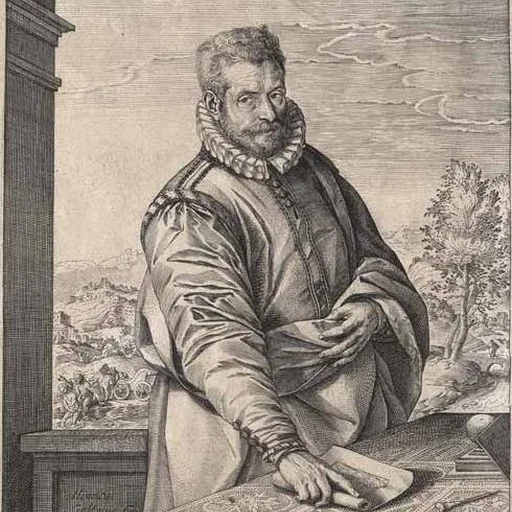
Artist
Philip (or Philips) Galle (1537 – March 1612) was a Dutch publisher, best known for publishing old master prints, which he also produced as designer and engraver. He is especially known for his reproductive engravings of paintings.

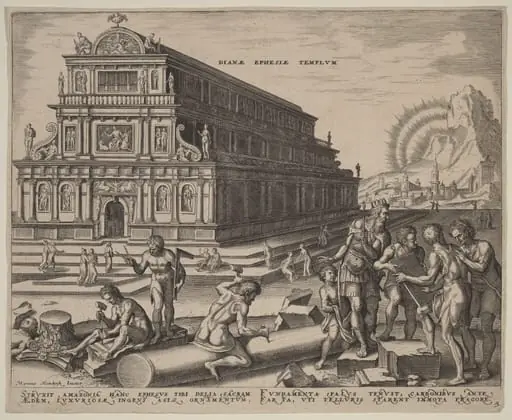 Dianae Ephesiae Templum (The Temple of Diana at Ephesus)
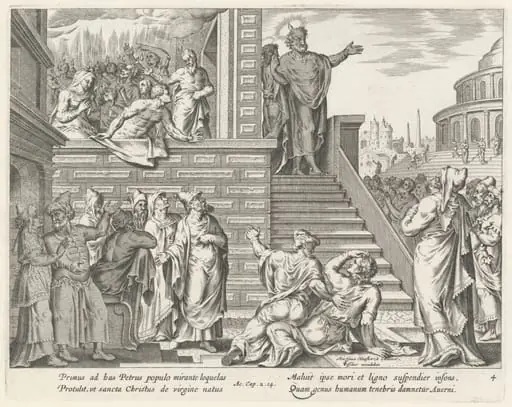 Saint Peter Speaks to the People about Christ
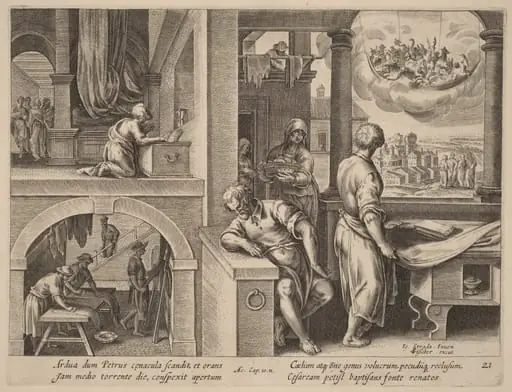 The Vision of Saint Peter
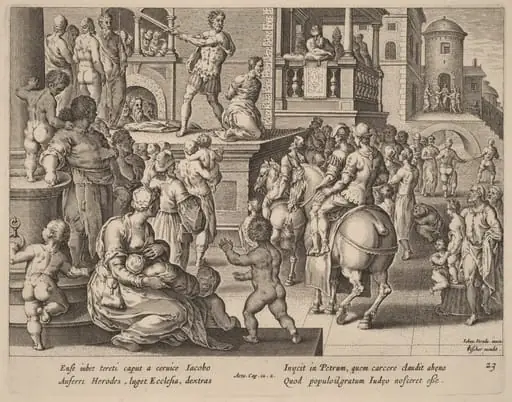 Beheading of Saint James
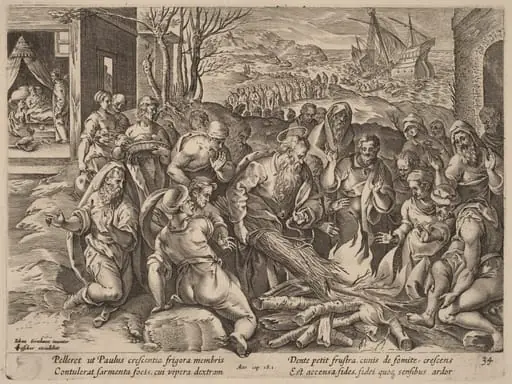 Saint Paul Shipwrecked on the Island of Melita
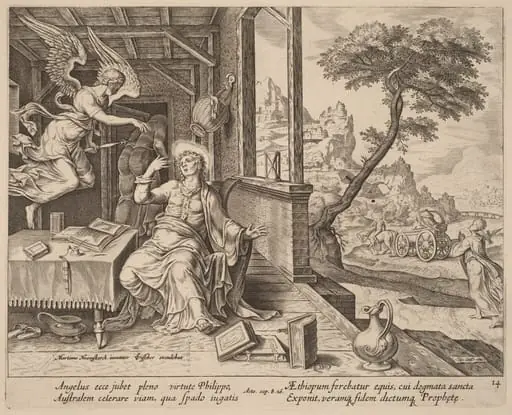 The Angel Orders Saint Philip to Accompany the Ethiopian Eunuch
 Notorious Examples of Wealth from Antiquity
 The Parable of the Wise and Foolish Virgins
 Saint Stephen before the Council
 The Book of the Law Read before the People
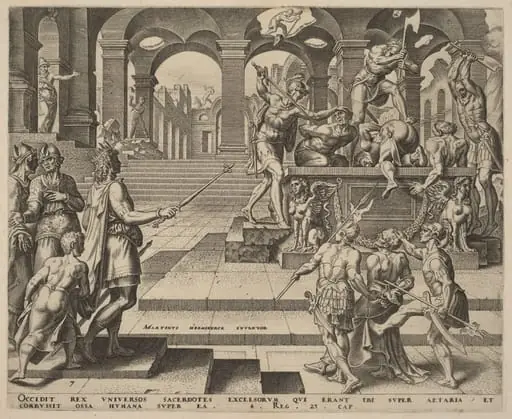 The Slaughter of the Priests of Samaria
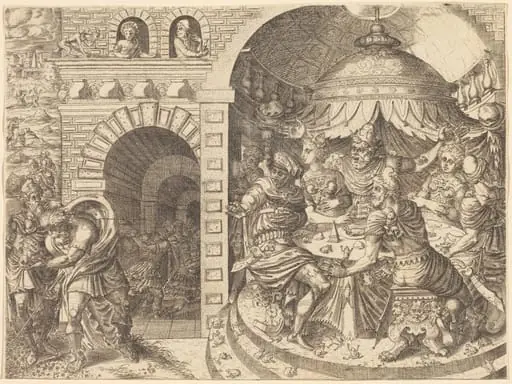 Pharaoh and the Plague of Frogs
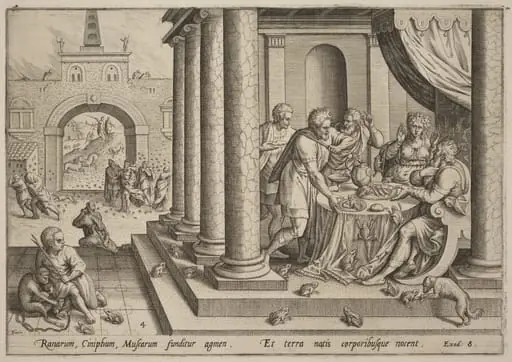 The Invasion of the Frogs
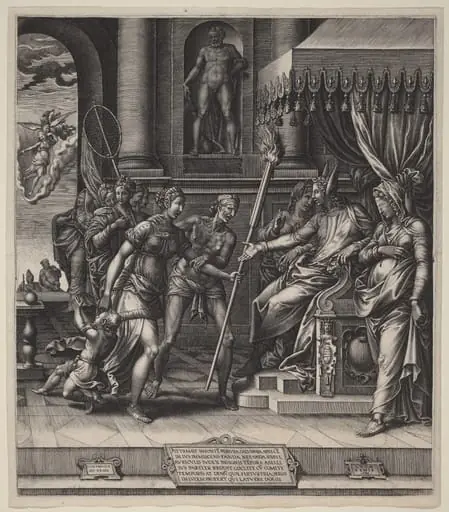 The Calumny of Apelles
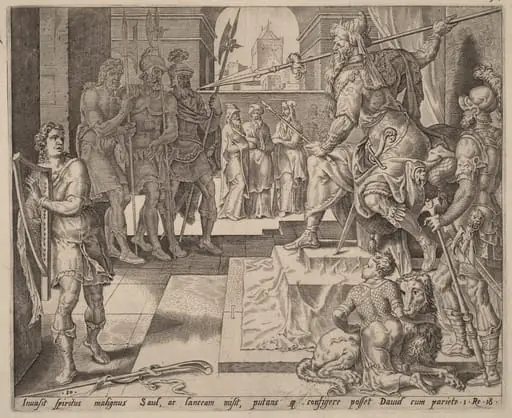 David before Saul
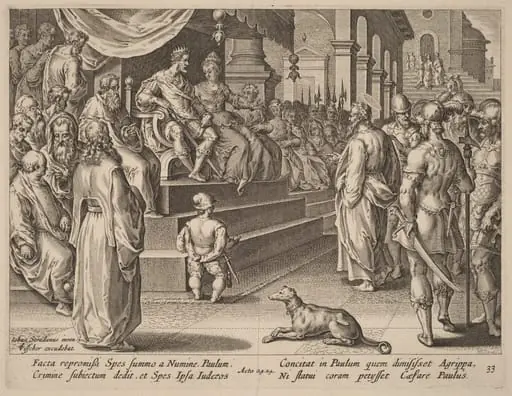 Saint Paul before Festus and Agrippa
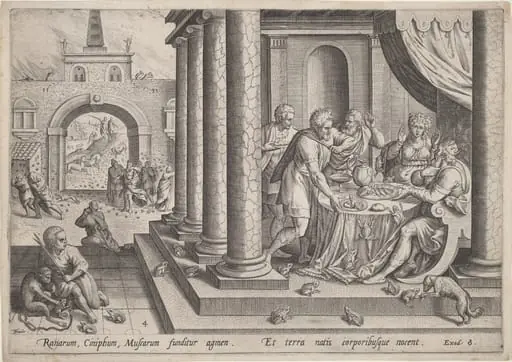 The Plague of Frogs
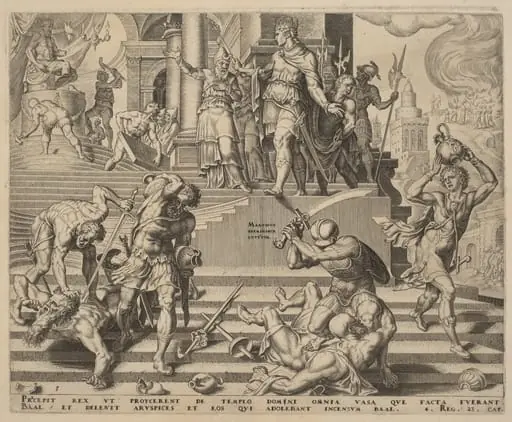 The Destruction of the Temple of Baal and the Slaughter of His Priests
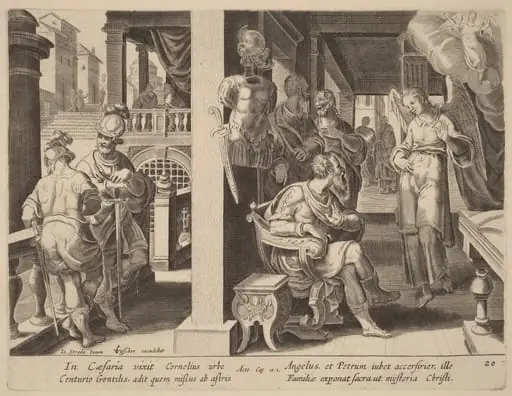 The Angel Commands Cornelius to Fetch Saint Peter