Artwork
Martyrdom of St. Lawrence
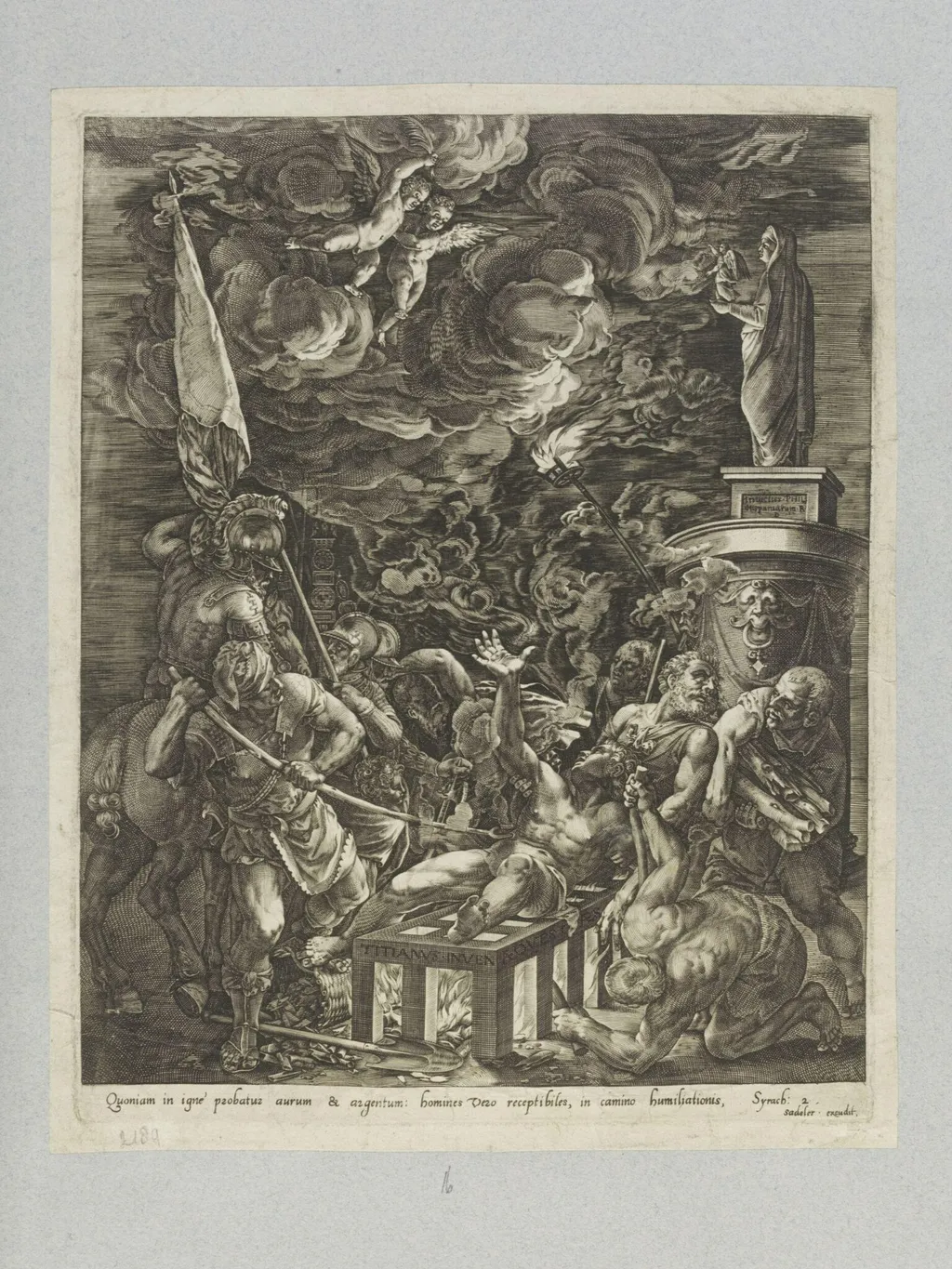
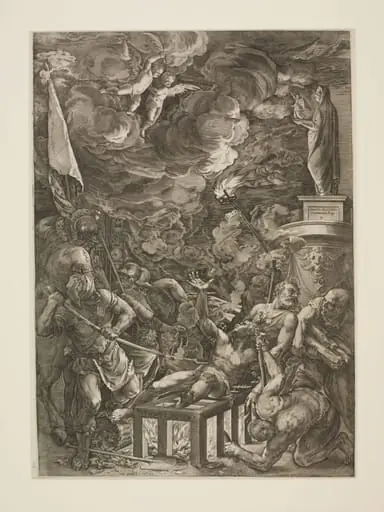
Martyrdom of St. Lawrence is a print by Marcus Christoph Sadeler. It dates from 1650 and is held in the collection of the Victoria and Albert Museum. This print captures the martyrdom of St.
About this work
Overview
The scene is rendered with careful attention to emotional intensity and spatial depth, characteristic of late Mannerist and early Baroque printmaking.
This print captures the martyrdom of St. Lawrence, based on a composition originally painted by Titian. Created around 1650 by Marcus Christoph Sadeler, it is an engraved work on paper, part of a tradition of reproductive prints that disseminated major paintings to wider audiences. The scene is rendered with careful attention to emotional intensity and spatial depth, characteristic of late Mannerist and early Baroque printmaking.
Subject & Meaning
The image portrays St. Lawrence, a 3rd-century deacon, being executed by roasting on a gridiron—a punishment ordered by the Roman authorities for refusing to surrender church treasures. His raised arms suggest both resignation and spiritual transcendence. Figures surrounding him express anguish and urgency, reinforcing the narrative of persecution and faith. The scene functions as both a historical account and a devotional image meant to inspire steadfastness in adversity.
Technique & Style
Sadeler employed fine, controlled engraving lines to model form and movement, using contrast between light and shadow to heighten drama. The chiaroscuro effect, inherited from Titian’s painting, directs focus to the central figure while deepening the emotional weight. Background elements are simplified, allowing the human figures and their gestures to dominate. The print’s precision reflects the technical standards of Flemish reproductive engraving in the mid-17th century.
History & Provenance
The print was produced by Marcus Christoph Sadeler, a member of a prominent family of Flemish engravers active across Europe. It was made after Titian’s lost painting, likely based on a drawing or earlier print. Sadeler’s version circulated in Catholic regions as a devotional image, possibly commissioned by religious institutions or collectors seeking accessible versions of renowned compositions. Its survival in multiple institutional collections suggests sustained interest in the subject.
Context
In the mid-17th century, religious imagery remained central to visual culture, especially in Catholic territories recovering from the upheavals of the Reformation. Depictions of martyrdom served to affirm faith and resilience. Reproductive prints like this one allowed the faithful to engage with high art without access to original paintings. Sadeler’s work fits within a broader trend of translating major Italian compositions into prints for northern European audiences.
Legacy
Though Titian’s original painting is no longer extant, Sadeler’s engraving preserves its compositional structure and emotional tone. The print contributed to the enduring visual legacy of St. Lawrence’s martyrdom in European art. It exemplifies how engravers acted as intermediaries between major painters and broader publics, ensuring that iconic religious narratives remained visually present across generations and regions.
Artist & collection
Artist
Marcus Christoph Sadeler carved prints in the 1600s, specializing in religious scenes.

 The Sacrifice of Abraham
 The Sacrifice of Abraham
 France Crowned with Victory by Louis XIV
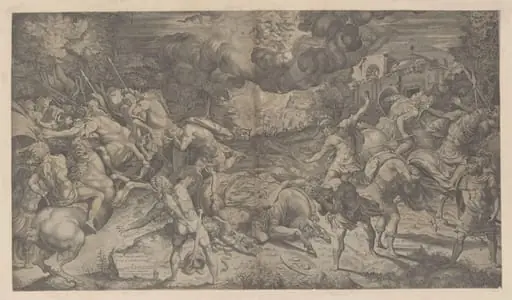 Conversion of Saul
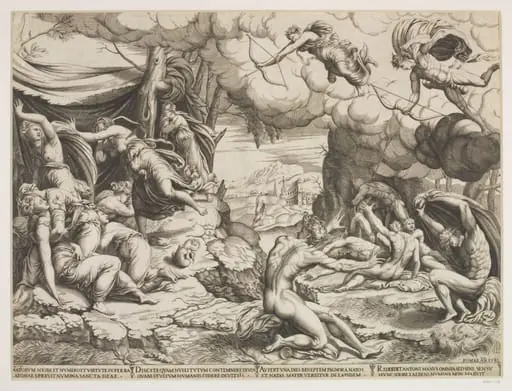 The Daughters of Niobe
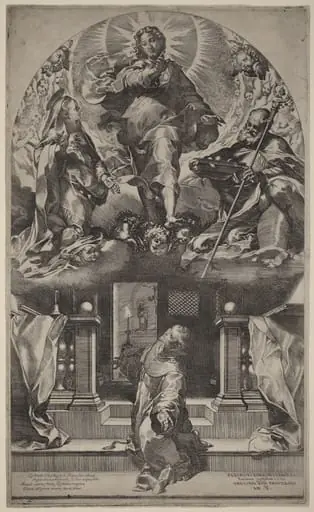 Vision of Saint Francis
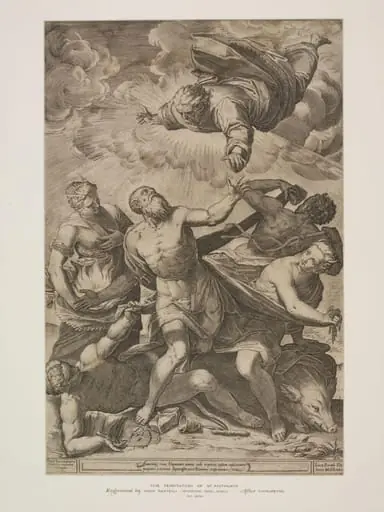 Temptation of Saint Anthony
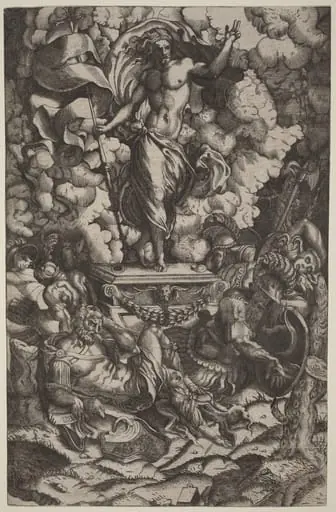 The Resurrection
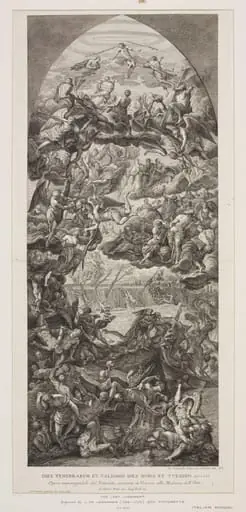 The Last Judgment
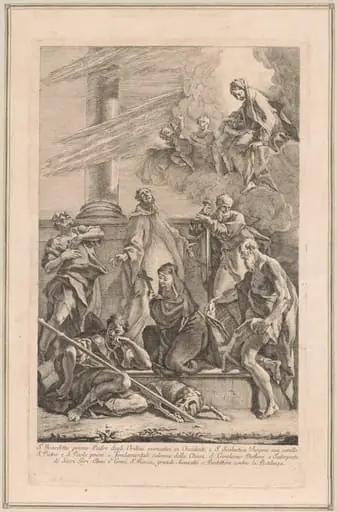 The Madonna and Child with Two Angels and Saints Scholastica, Benedict, Roch, Peter, Paul and Jerome
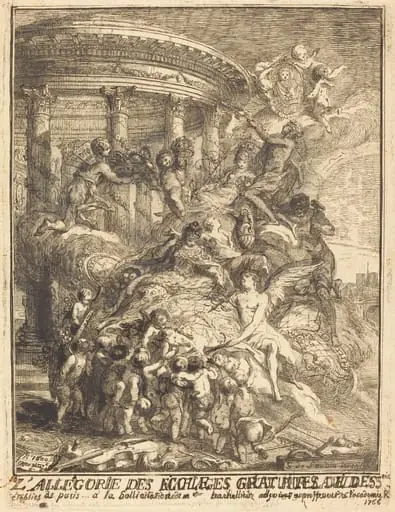 Allégorie des Ecoles gratuites du dessein (Allegory of the Free Drawing Schools)
 Martyrdom of St. Lawrence