Artwork
The Last Judgment
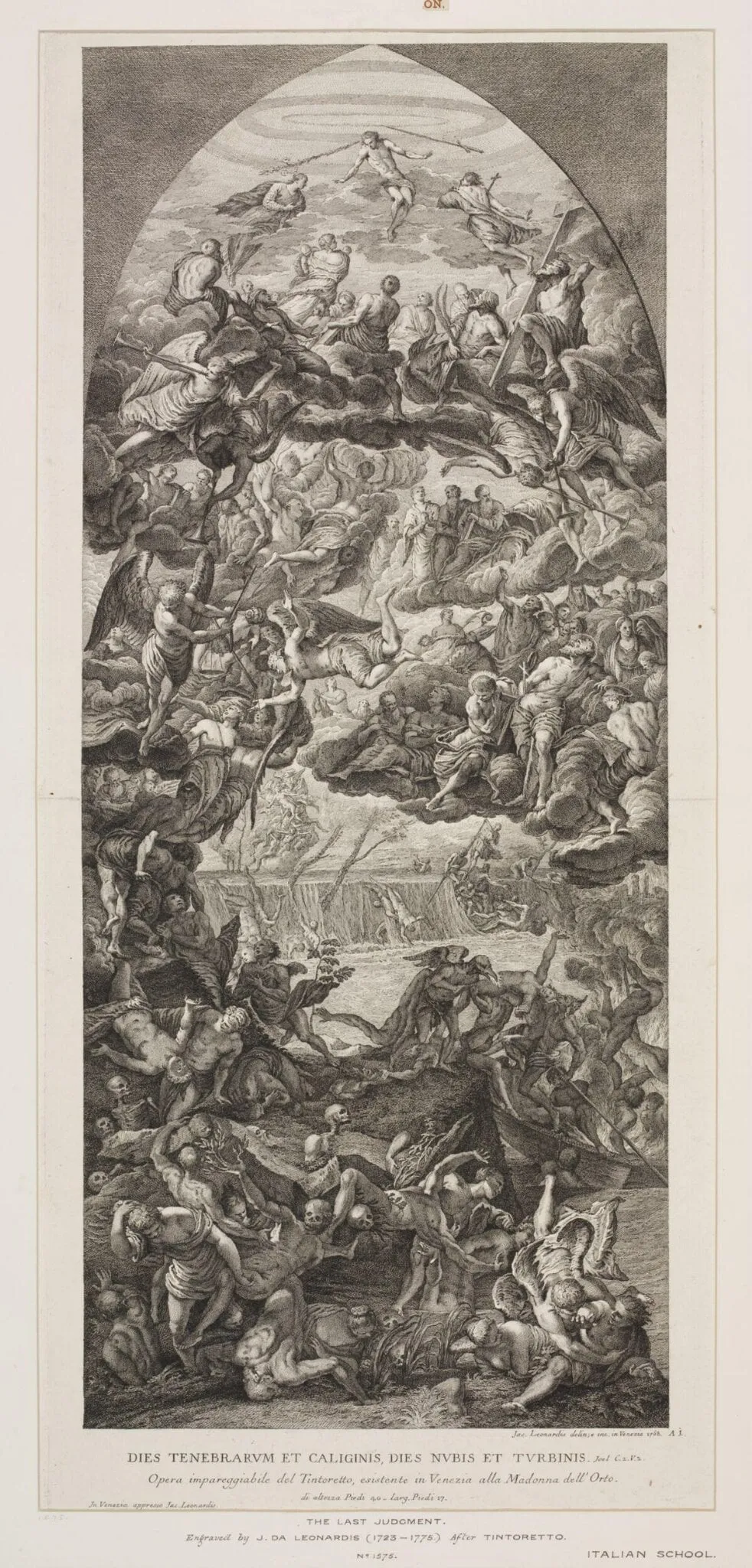
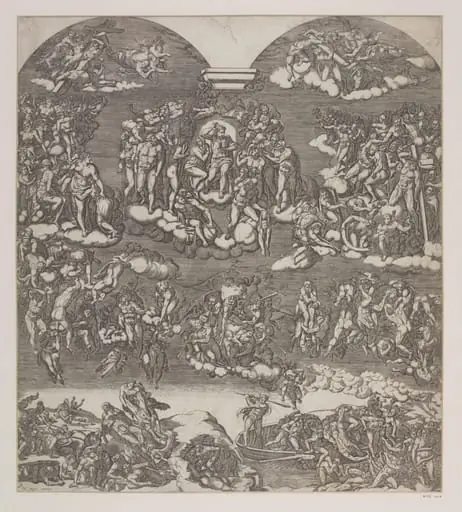
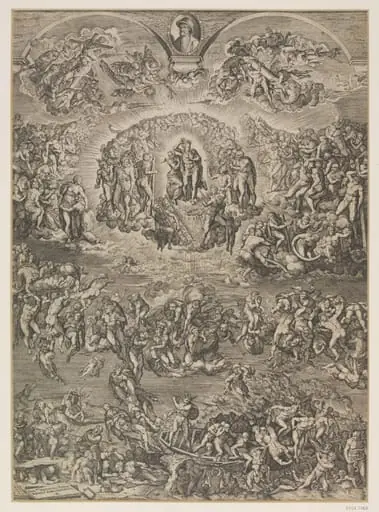
The Last Judgment is a print by Jacopo Leonardis. It dates from 1750 and is held in the collection of the Victoria and Albert Museum.
About this work
Overview
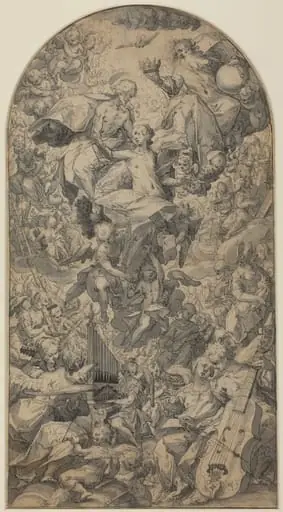
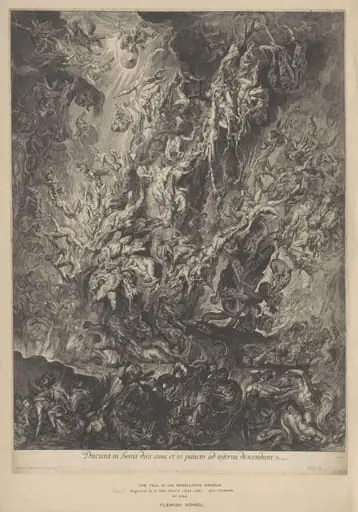
The composition is tightly packed with figures in motion, arranged in vertical tiers that guide the viewer’s eye from divine ascent to earthly torment.
Created in 1750 by Jacopo Leonardis, this black-and-white print is a reproductive engraving after Tintoretto’s original composition. It depicts the apocalyptic scene of the Last Judgment, rendered in dense, intricate detail across the entire sheet. The composition is tightly packed with figures in motion, arranged in vertical tiers that guide the viewer’s eye from divine ascent to earthly torment. The work reflects 18th-century printmaking practices aimed at disseminating major religious artworks to a broader audience.
Subject & Meaning
The scene illustrates the Christian doctrine of divine judgment at the end of time, where souls are separated into salvation and damnation. Figures ascend toward celestial light, while others are dragged downward in anguish. The absence of color emphasizes moral contrast: light as grace, shadow as punishment. Though crowded, the arrangement follows theological hierarchy, with Christ at the center—though not visually dominant—implied by the directional movement of all souls.
Technique & Style
Leonardis employed fine, controlled line work to mimic the dramatic chiaroscuro of Tintoretto’s painting. Deep shadows and sharp highlights model the figures with sculptural intensity, giving volume to tangled robes and contorted bodies. The engraving’s precision captures the dynamism of the original, translating brushwork into etched lines. The composition’s density and rhythmic flow reflect Mannerist influences, prioritizing emotional expression over spatial clarity.
History & Provenance
The print was made during a period when reproductive engravings were widely circulated across Europe, allowing access to major works for those unable to view originals. Leonardis, active in Venice, specialized in translating large-scale paintings into print form. This piece likely originated as part of a series or commission intended for collectors and religious institutions, serving both devotional and educational purposes in the mid-18th century.
Context
In 1750, religious imagery remained central to public and private devotion, even as Enlightenment thought gained ground. The persistence of apocalyptic themes in print reflects enduring cultural engagement with salvation and judgment. Venice, as a hub of artistic reproduction, provided the infrastructure for such works. Leonardis’s print thus bridges the legacy of Renaissance painting with the emerging print culture of the Enlightenment era.
Legacy
Though not widely exhibited today, the print exemplifies the role of reproductive engraving in preserving and transmitting major artistic narratives. It documents how Tintoretto’s dramatic style influenced later generations through mechanical reproduction. The work remains a valuable artifact of 18th-century visual culture, illustrating the intersection of religious iconography, print technology, and artistic homage.
Artist & collection
Artist
This 18th-century printmaker carved biblical scenes into copper plates. Jacopo Leonardis turned two dramatic moments—The Last Judgment and The Golden Calf—into dark, finely detailed images meant to be pasted on walls or…