Artwork
Allégorie sur l'Erection de la Statue de Louis XV (Allegory on the Establishment of a Statue of Louis XV)
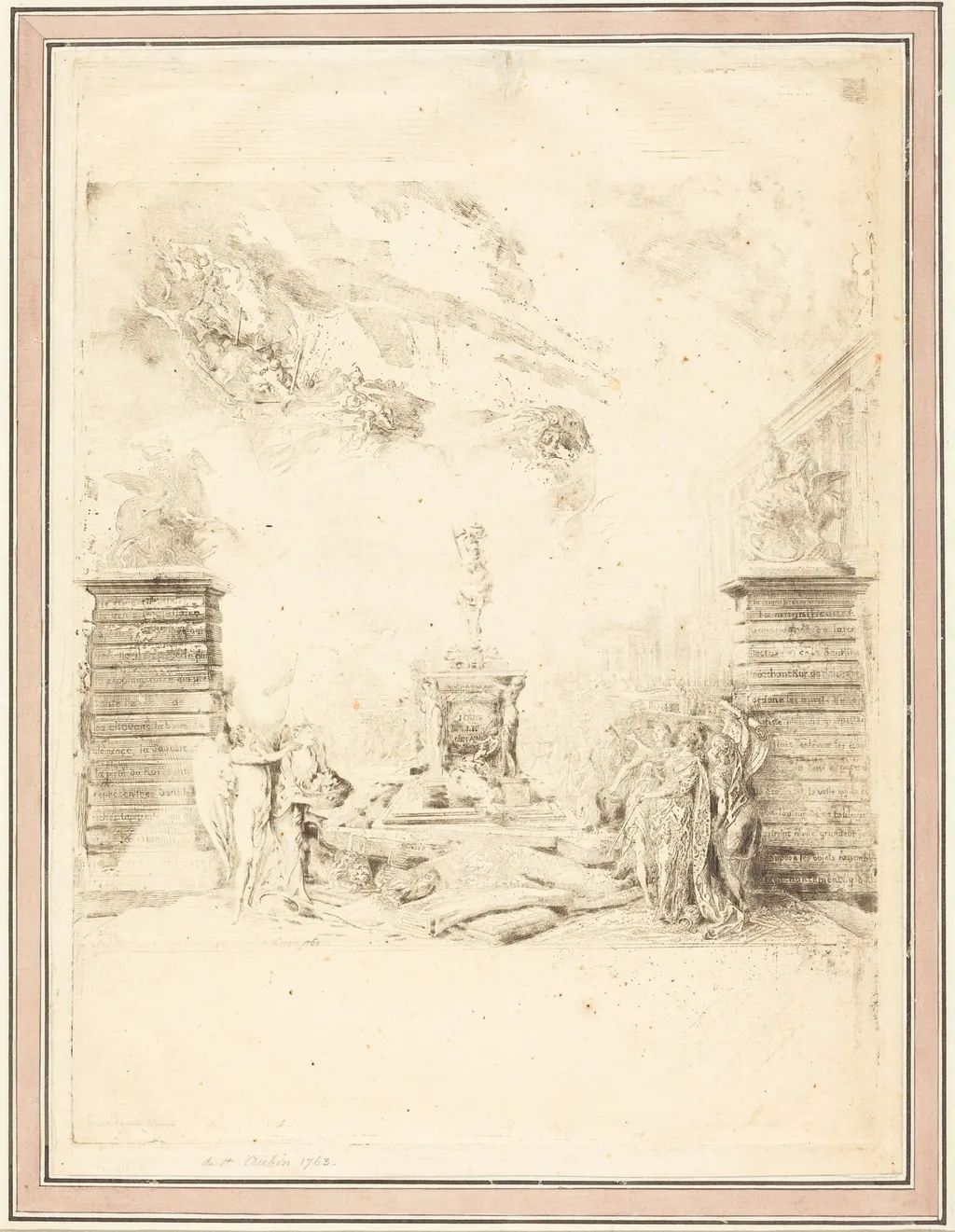
Allégorie sur l'Erection de la Statue de Louis XV (Allegory on the Establishment of a Statue of Louis XV) is an ink print by the Romanticist artist Gabriel de Saint-Aubin. It dates from 1763 and is held in the collection of the National Gallery of Art.
About this work
Overview
Created around 1763, this etching by Gabriel de Saint-Aubin captures a moment in the planned installation of a statue honoring Louis XV.
Created around 1763, this etching by Gabriel de Saint-Aubin captures a moment in the planned installation of a statue honoring Louis XV. Rendered in delicate lines on laid paper, the composition presents an unfinished sculptural site: two figures kneel before a damaged pedestal, while two inscribed stone blocks stand nearby. The work bears the marks of a preparatory sketch—pencil underdrawings, smudges, and unrefined contours—suggesting it was made during the planning phase rather than as a finished print.
Subject & Meaning
The scene functions as an allegory for the delayed or disrupted honoring of the king. The broken statue atop the pedestal implies a failed or abandoned project, while the kneeling figures, holding carving tools, represent artisans at work. The inscribed stone blocks may contain dedicatory text, their illegibility emphasizing uncertainty. Together, the elements suggest a moment of pause or loss in the royal commemorative program, reflecting broader anxieties about legacy and impermanence.
Technique & Style
Saint-Aubin employed etching to achieve fine, expressive lines, using acid to bite into a metal plate after drawing with a needle. The print retains the spontaneity of a sketch, with loose hatching and visible corrections. The paper’s laid texture enhances the tactile quality of the work. Unlike polished official prints, this piece embraces its unfinished state, revealing the artist’s process and the provisional nature of the monument it depicts.
History & Provenance
The etching was produced during a period when public monuments to Louis XV were being planned across France, though many faced delays or cancellation. Saint-Aubin, known for documenting Parisian artistic life, likely recorded this scene as part of his interest in the mechanics of public commemoration. Its survival as a rare preparatory work suggests it was kept within artistic circles rather than distributed widely, preserving its intimate, observational character.
Context
In the 1760s, French royal iconography was under increasing scrutiny, with public sentiment shifting amid political tensions. The planned statue may have been part of a broader effort to reinforce royal authority through public art. Yet its apparent failure—or at least its depiction as incomplete—hints at underlying doubts about the permanence of such symbols. Saint-Aubin’s focus on the workshop, not the ceremony, offers a quiet counterpoint to official narratives.
Legacy
This etching stands as a rare visual record of the behind-the-scenes labor involved in royal monuments. Its unfinished aesthetic anticipates later artistic interest in process over product. While not widely circulated in its time, it now serves as a document of how public commemoration was negotiated in practice—revealing the fragility of political symbolism through the lens of artisanal work.
Artist & collection

Artist
Gabriel de Saint-Aubin was a French draftsman, printmaker, etcher and painter.


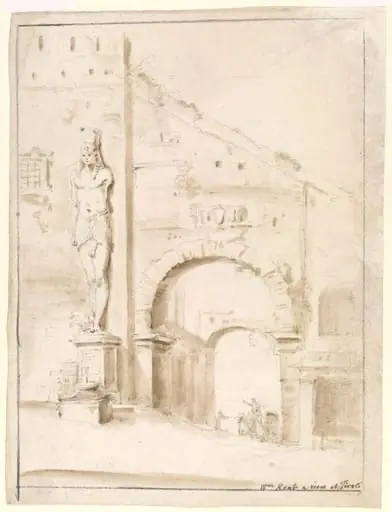 Untitled
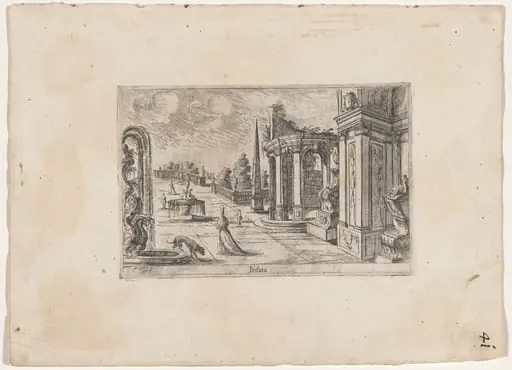 Design for a Garden Court
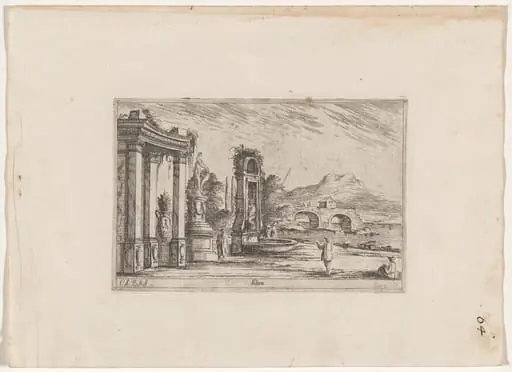 Veduta: Design for a Garden Court with a Mountain View
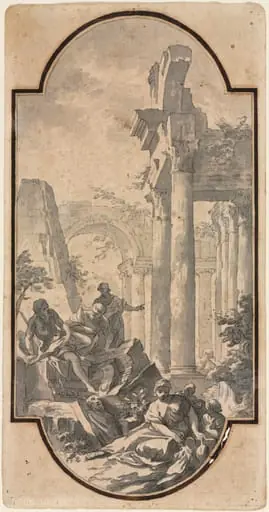 Figures Near the Ruins of a Corinthian Temple (recto)
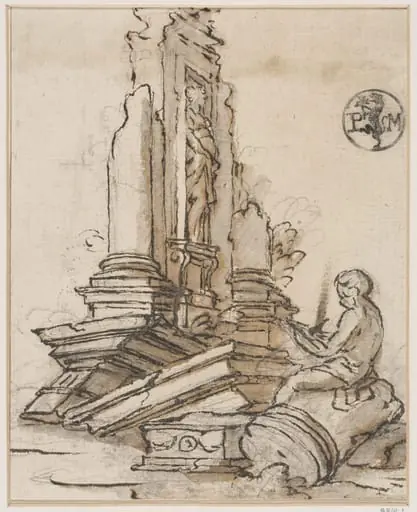 A boy writing or drawing, seated on a fallen column before a ruined niche containing a sculptured figure of a woman
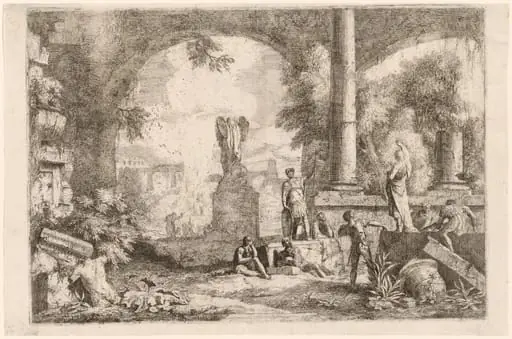 Capriccio of Antique Ruins with Men Gazing at a Classical Orator
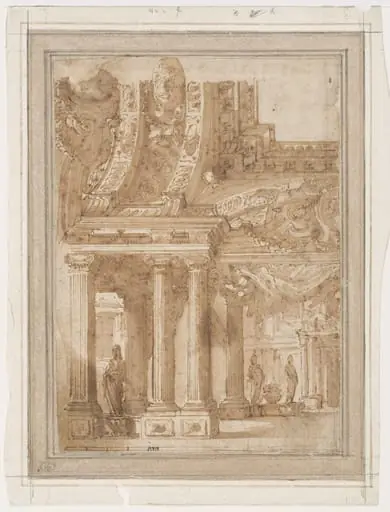 Untitled
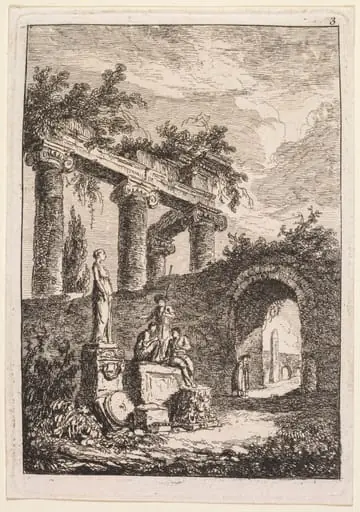 The Statue in Front of Ruins
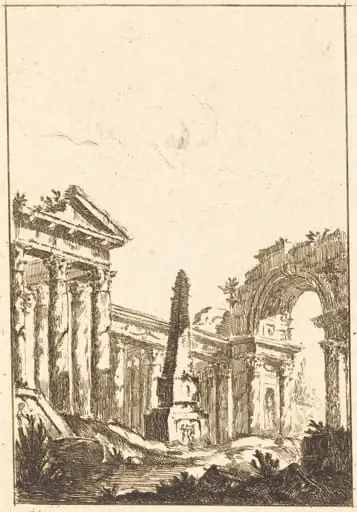 Capriccio with Ruins and an Obelisk
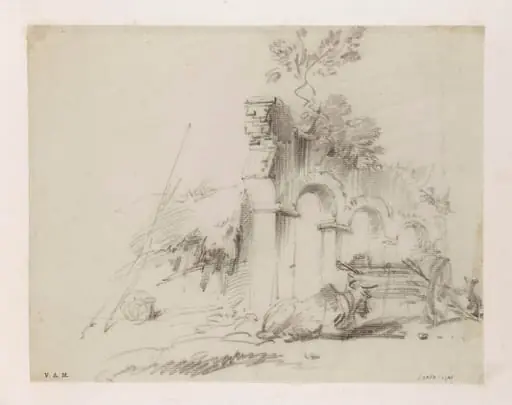 An ox and cart by a ruined building, Bengal