Artwork
Capriccio with Ruins and an Obelisk
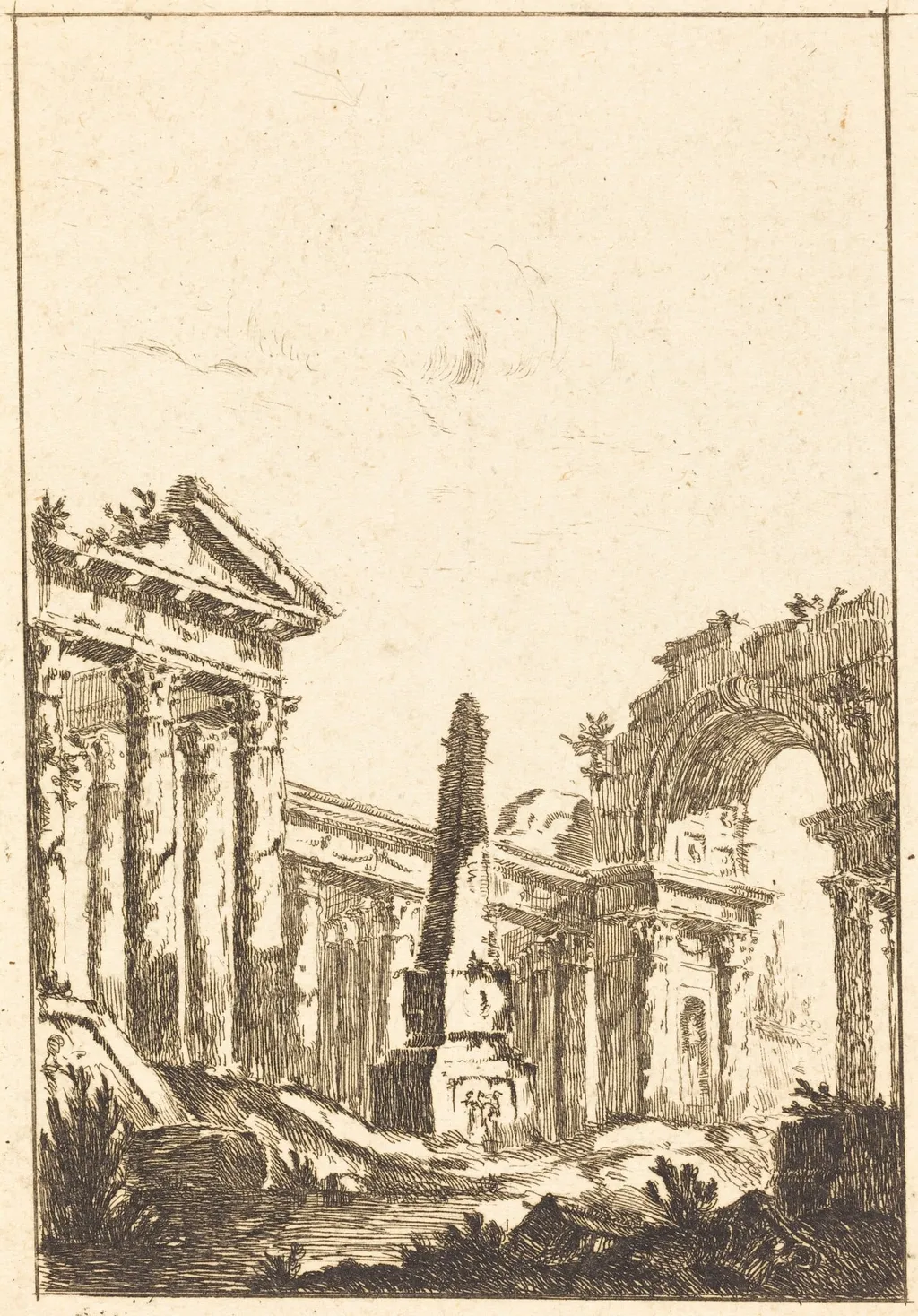
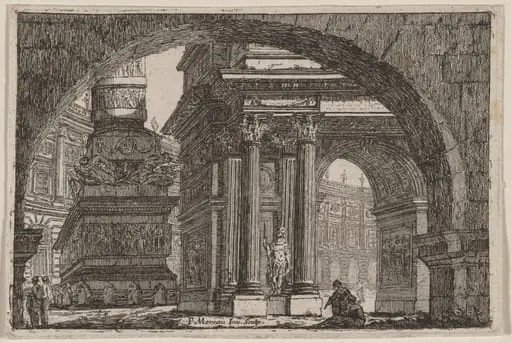
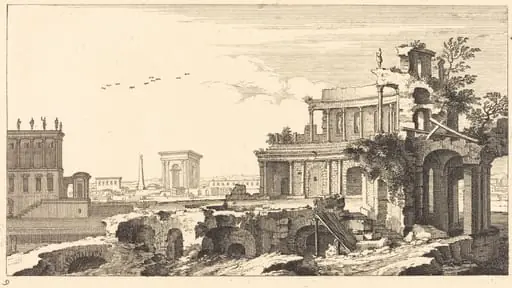
Capriccio with Ruins and an Obelisk is an ink print by the Baroque artist Jérôme Charles Bellicard. It dates from 1726 and is held in the collection of the National Gallery of Art.
About this work
Overview
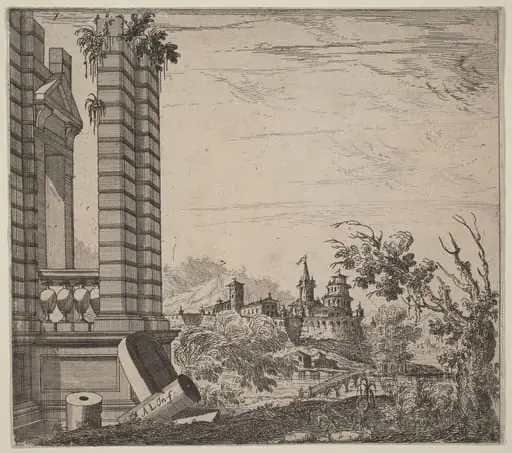
Capriccio with Ruins and an Obelisk is an etching on laid paper created by Jérôme Charles Bellicard in 1726, characterized by meticulously rendered, crumbling architectural elements.
Subject & Meaning
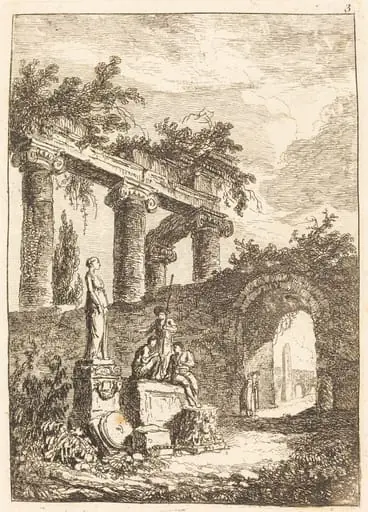
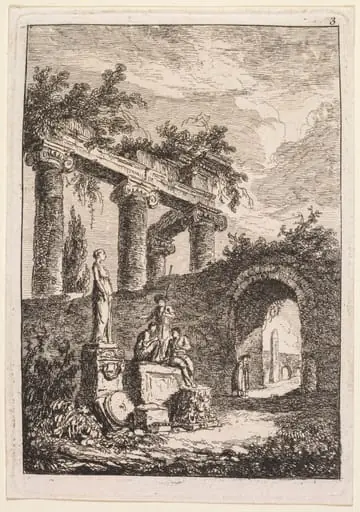
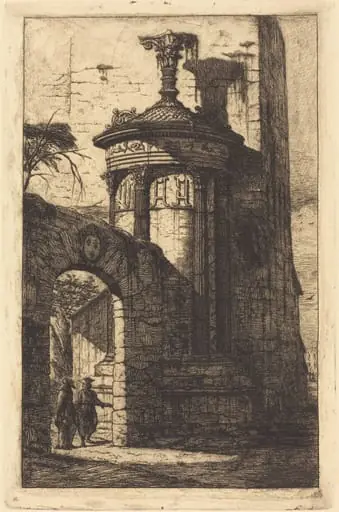
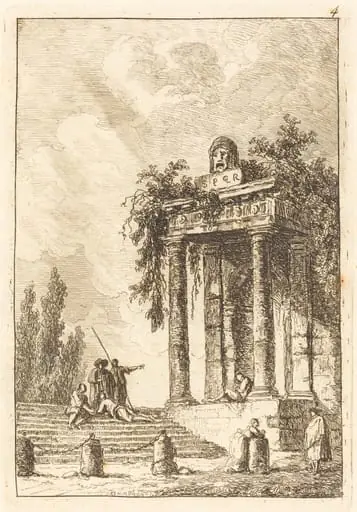
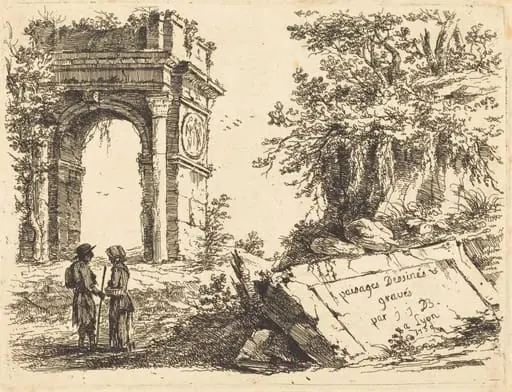
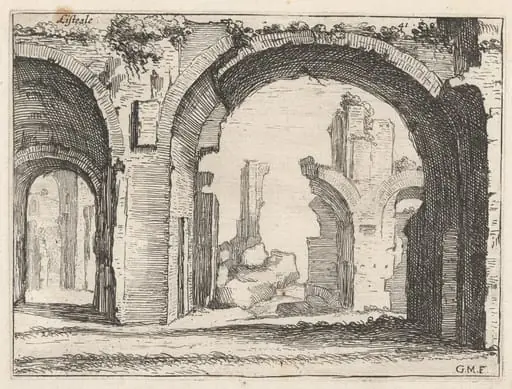
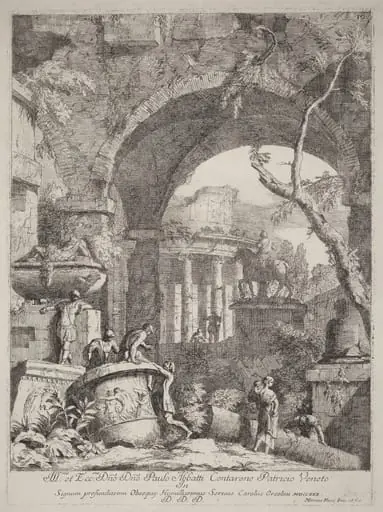
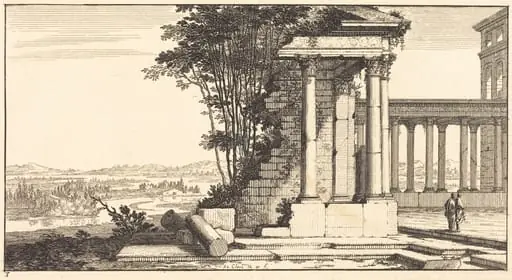
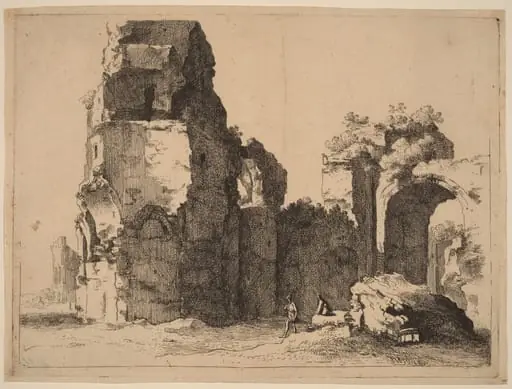
The print depicts a scene of ancient ruins, featuring broken columns, a central obelisk, and diminutive figures, juxtaposing the grandeur of antiquity with the passage of time.
Technique & Style
Executed with a sharp etching tool, the work exhibits the detailed, high-contrast lines typical of 18th-century etching techniques, contributing to its dark, intricate visual appeal.
History & Provenance
Created in 1726, the etching reflects the artistic preferences of its time, though specific ownership or exhibition histories are not detailed here.
Context
The piece aligns with the 18th-century European fascination with classical antiquity and the capriccio genre, which combined imaginary and real architectural elements.
Artist & collection