Artwork
Alexander Macomb, Jr.
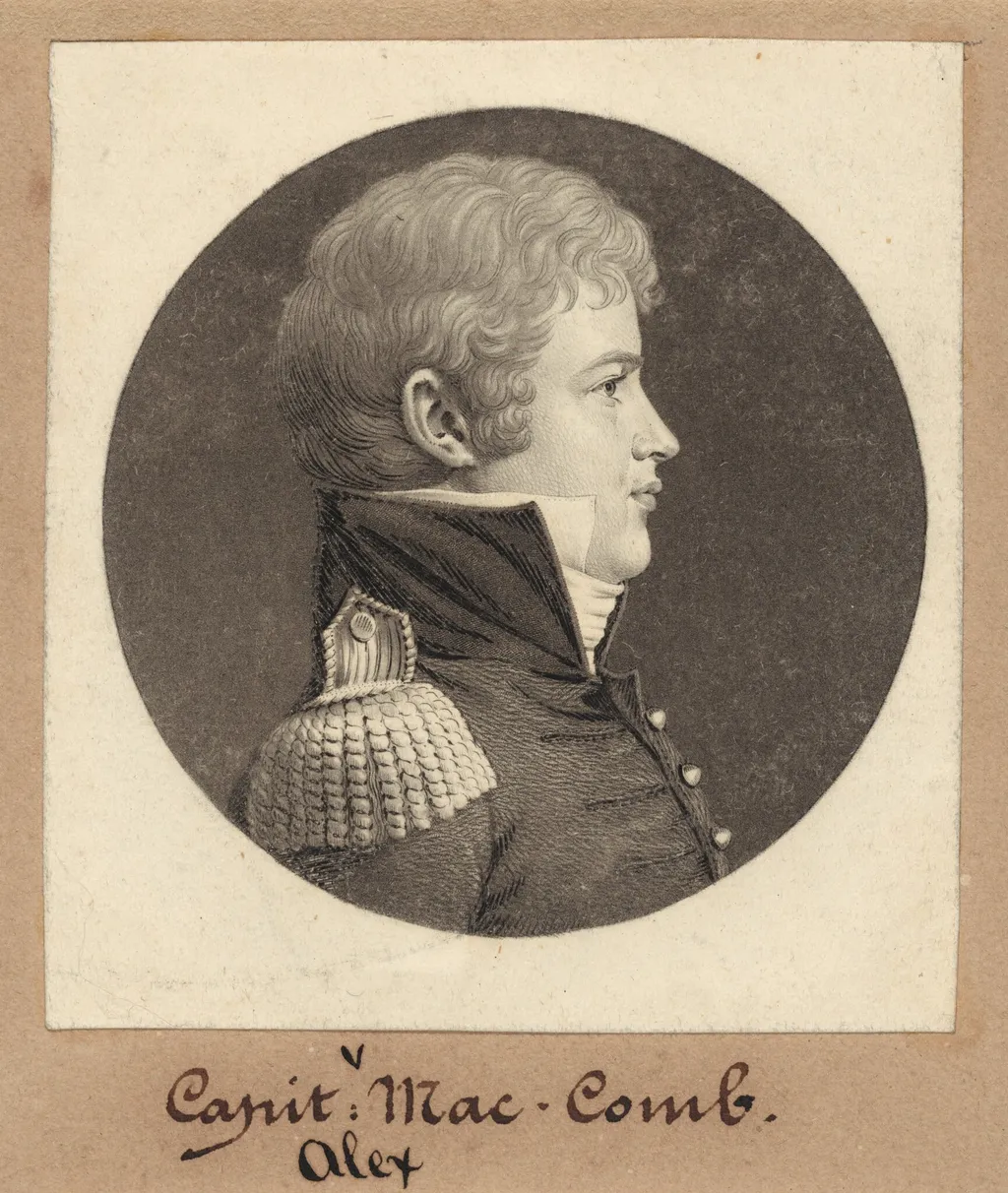
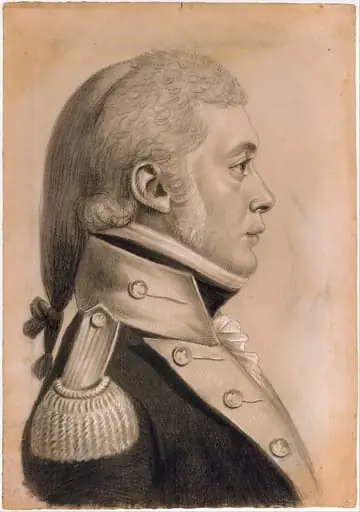
Alexander Macomb, Jr. is an ink print by the Romanticist artist Charles Balthazar Julien Févret de Saint-Mémin. It dates from 1809 and is held in the collection of the National Gallery of Art.
About this work
Overview
Measuring just over five and a half centimeters in both dimensions, the work is notable for its compact scale and fine detail.
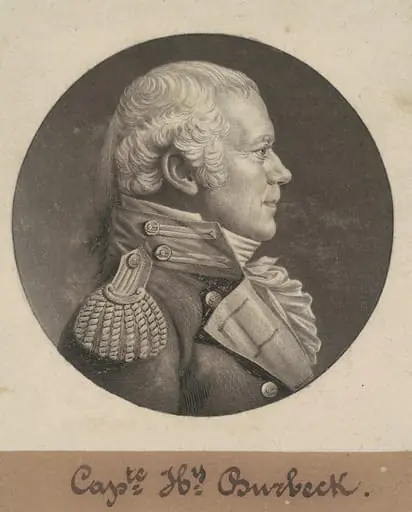
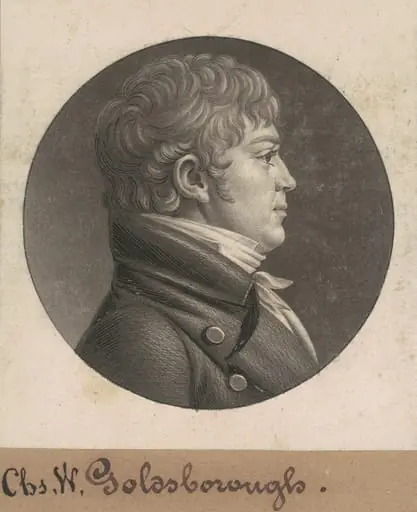
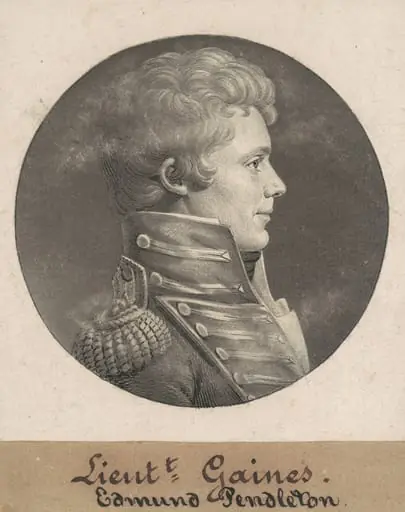
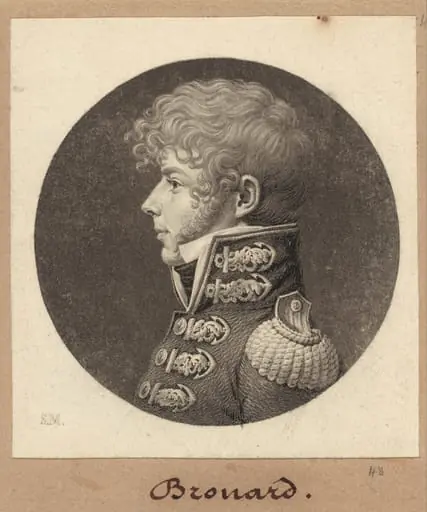
This 1809 print depicts Alexander Macomb, Jr., rendered in mezzotint and engraving on wove paper, then mounted to a brown wove support. Measuring just over five and a half centimeters in both dimensions, the work is notable for its compact scale and fine detail. It belongs to the Corcoran Collection, originally produced as part of a series of portrait prints by Charles B. J. Févret de Saint-Mémin, who specialized in small-scale likenesses for private collectors.
Subject & Meaning
Alexander Macomb, Jr., a military officer and land speculator, is portrayed with formal composure, reflecting his social standing. The portrait emphasizes his facial features and attire with precision, suggesting a desire to convey dignity and authority. Unlike grand ceremonial portraits, this intimate scale implies a personal or commemorative purpose, possibly intended for family or close associates rather than public display.
Technique & Style
Saint-Mémin employed mezzotint to achieve subtle tonal gradations, complemented by fine engraving lines that define texture in fabric and hair. The small format demanded exceptional control, as each mark had to contribute to clarity without overcrowding. His method favored clarity over dramatic contrast, resulting in a restrained, almost miniature-like realism that was characteristic of his portrait prints during this period.
History & Provenance
Created in 1809, the print was part of Saint-Mémin’s broader project to document prominent American figures through engraved portraits. It entered the Corcoran Collection in the 19th century and remained there until the collection’s dispersal in 2014. Its survival in good condition reflects careful preservation, likely due to its status as a finely executed example of early American printmaking.
Context
In the early 19th century, mezzotint portraits were popular among the American elite as affordable alternatives to painted likenesses. Saint-Mémin, a French émigré, became a leading practitioner of this technique in the United States, producing hundreds of such portraits. This work fits within a cultural moment when visual identity was increasingly documented through reproducible media, bridging personal commemoration and emerging print culture.
Legacy
Though modest in size, the portrait exemplifies Saint-Mémin’s influence on American printmaking. His technique set a standard for detail and precision in small-scale portraiture, and his series remains a valuable historical record of early American figures. The work continues to be studied for its technical execution and as a window into the social values of its time, rather than for its fame or scale.
Artist & collection

Artist
Charles Balthazar Julien Févret de Saint-Mémin
Charles Balthazar Julien Févret de Saint-Mémin (French pronunciation: ; 1770–1852) was a French portrait painter and museum director.