Artwork
George Raleigh Dearborn
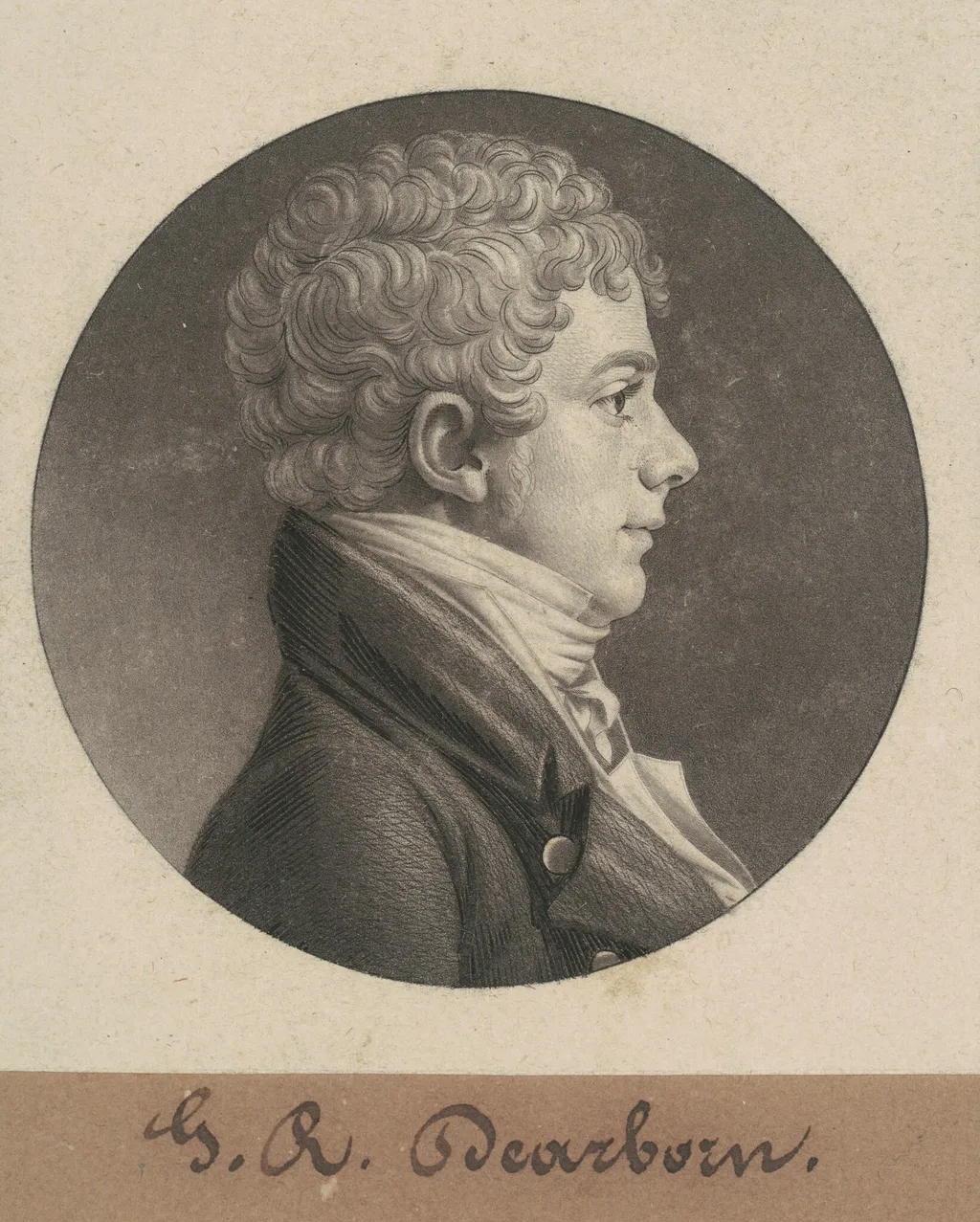
George Raleigh Dearborn is an ink print by the Romanticist artist Charles Balthazar Julien Févret de Saint-Mémin. It dates from 1806 and is held in the collection of the National Gallery of Art.
About this work
Overview
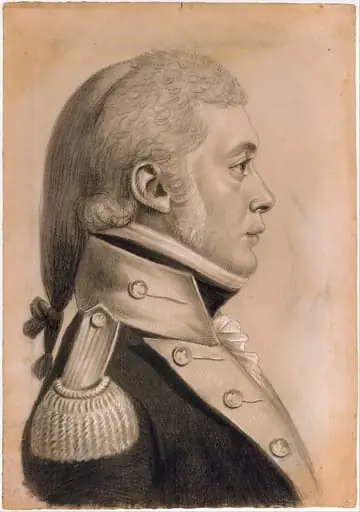
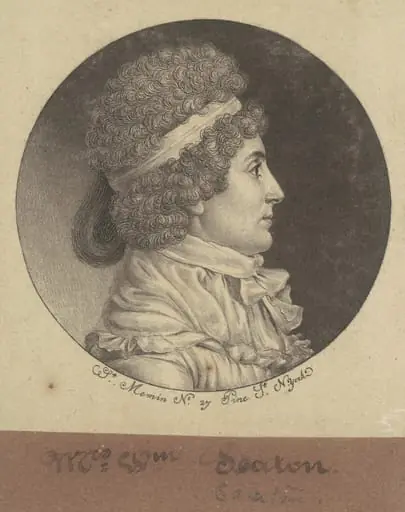
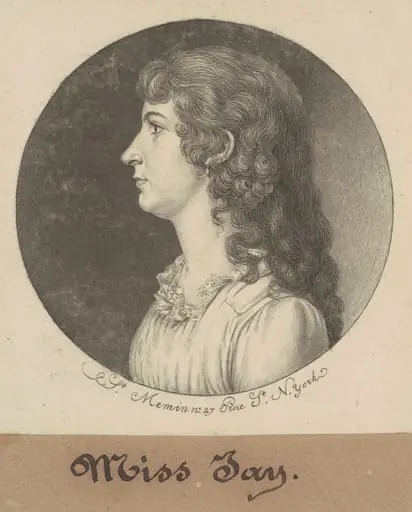
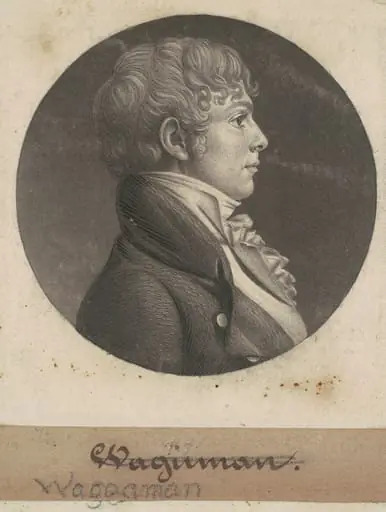
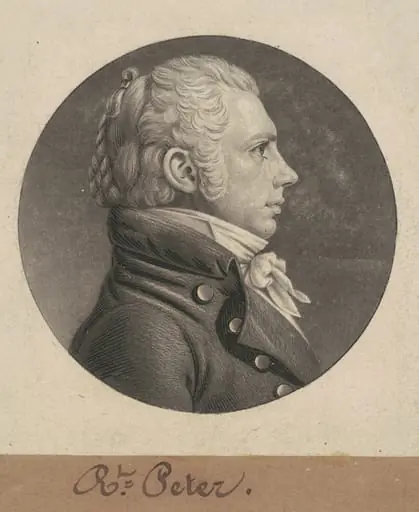
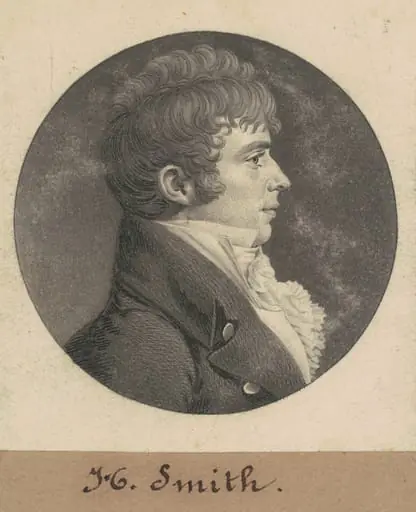
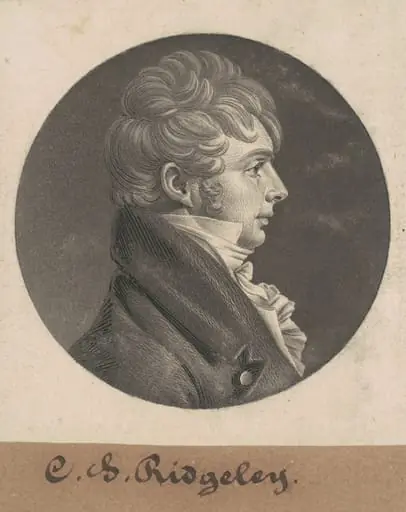
This small portrait, executed in 1806, presents George Raleigh Dearborn in profile through the combined techniques of mezzotint and engraving. Rendered in black ink on wove paper and mounted to a brown support, the work measures just over five and a half centimeters square. Its compact scale and precise line work reflect the precision demanded by portrait miniatures of the early 19th century.
Subject & Meaning
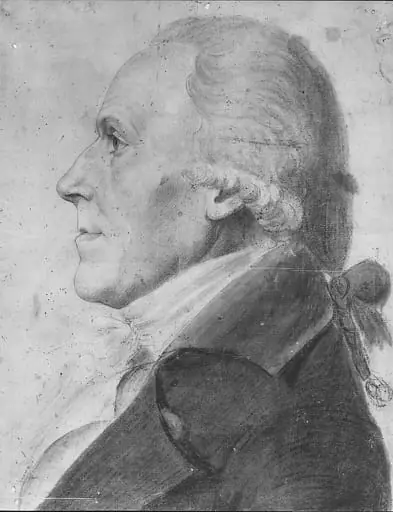
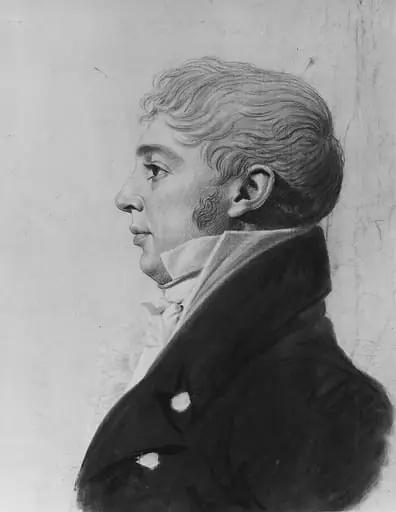
George Raleigh Dearborn is depicted without overt symbolism or narrative context, his identity conveyed solely through facial structure and attire. The formal jacket, high collar, and cravat signal social standing, while the profile view—common in this era—emphasizes clarity of feature over emotional expression. The portrait functions as a personal keepsake or identifier, typical of its time.
Technique & Style
Févret de Saint-Mémin, was known for his skill in translating three-dimensional likenesses into flat, controlled impressions.
The image was produced using mezzotint for tonal depth and engraving for fine linear detail, a hybrid method favored for its ability to capture subtle gradations in skin and fabric. The artist, Charles B. J. Févret de Saint-Mémin, was known for his skill in translating three-dimensional likenesses into flat, controlled impressions. The result is a crisp, intimate rendering with minimal background.
History & Provenance
Created in 1806, the print likely originated as part of a series of portrait miniatures commissioned by American elites. Saint-Mémin, a French émigré, produced hundreds of such works during his time in the United States. The mounting on brown paper suggests careful preservation, possibly by a family member or collector seeking to protect the delicate impression.
Context
Profile portraits were widely circulated in the early 1800s as affordable alternatives to oil paintings, often used for personal correspondence or family albums. The rise of mechanical reproduction techniques like mezzotint allowed middle-class individuals to own likenesses of themselves or relatives. This piece reflects a broader cultural shift toward visual documentation of identity.
Legacy
Though modest in size, the portrait exemplifies the technical refinement of early American printmaking. Saint-Mémin’s work remains a key resource for understanding how portraiture functioned in a pre-photographic society. The survival of such small, fragile prints offers insight into the private visual culture of the era.
Artist & collection

Artist
Charles Balthazar Julien Févret de Saint-Mémin
Charles Balthazar Julien Févret de Saint-Mémin (French pronunciation: ; 1770–1852) was a French portrait painter and museum director.