Artwork
Jane Macomb Kennedy
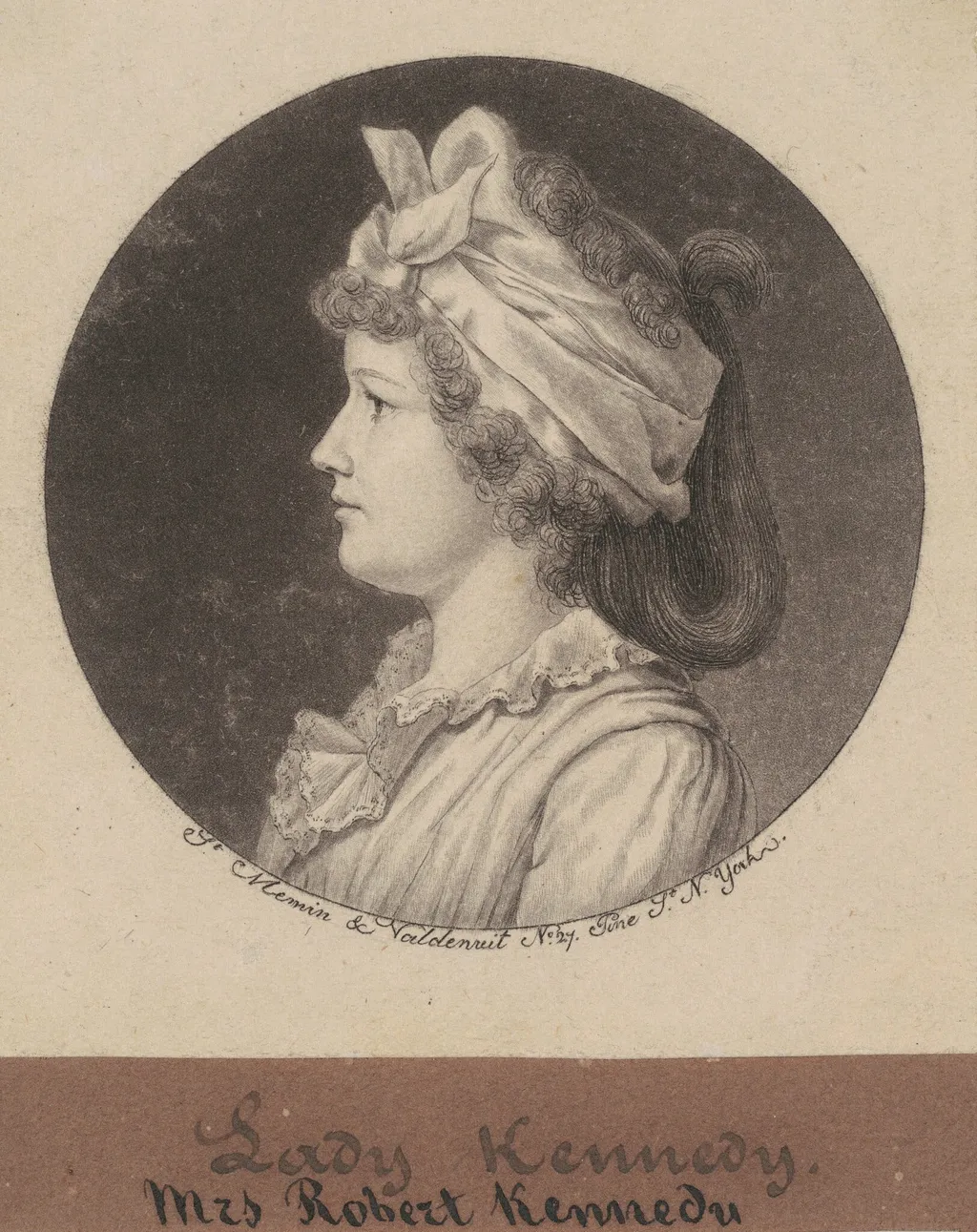
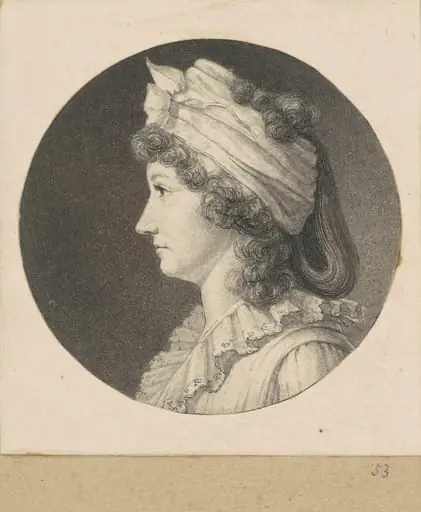
Jane Macomb Kennedy is an ink print by the Romanticist artist Charles Balthazar Julien Févret de Saint-Mémin. It dates from 1797 and is held in the collection of the National Gallery of Art.
About this work
Overview
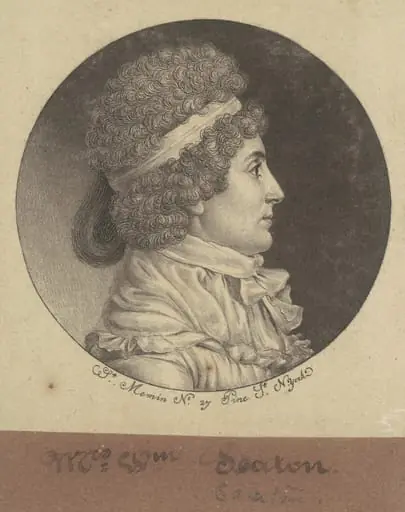
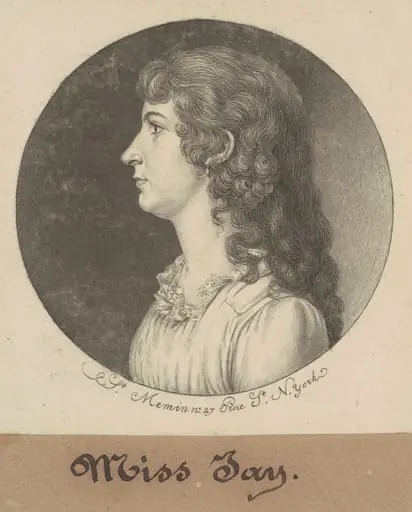
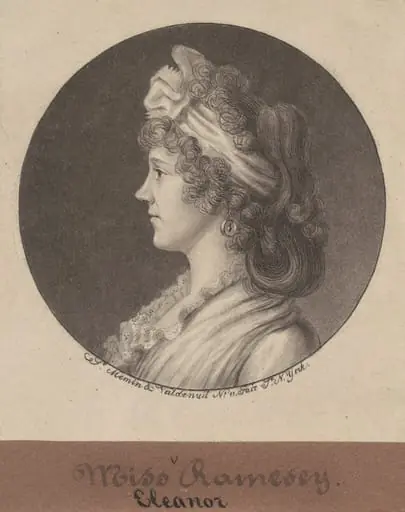
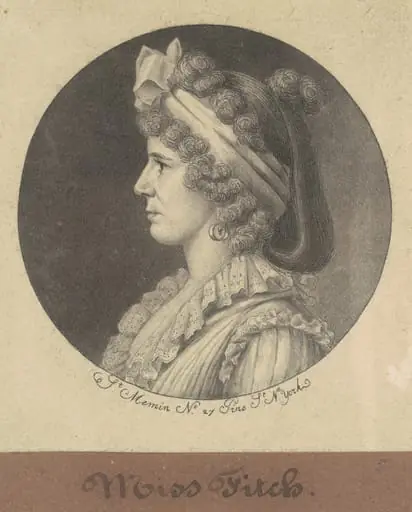
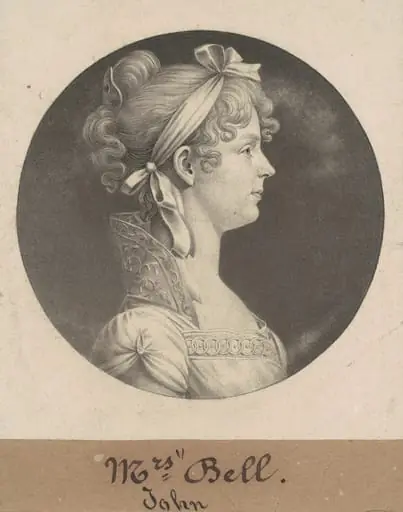
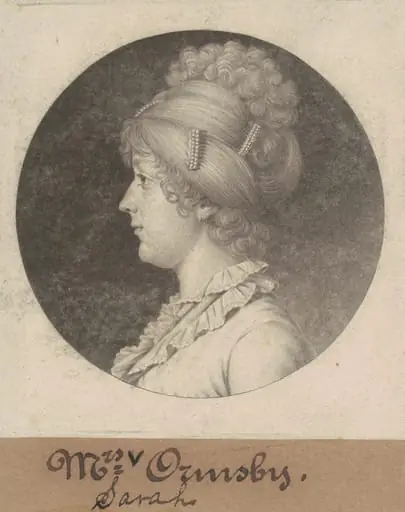
A portrait of Jane Macomb Kennedy, rendered in mezzotint and engraving on wove paper, is mounted on a brown wove support. The work captures her in strict profile, with fine tonal gradations defining her features and texture. The dark, unadorned background isolates the figure, focusing attention on her form and attire, typical of early 19th-century American portraiture in print.
Subject & Meaning
Jane Macomb Kennedy is portrayed with quiet dignity, her curled hair partially secured by a bow, suggesting both personal adornment and social refinement. The emphasis on her distinct facial structure and the delicate ruffle of her collar conveys individual identity within the conventions of formal portraiture, reflecting values of decorum and personal distinction in her social circle.
Technique & Style
The artist employed mezzotint for rich, velvety shadows and engraving for crisp linear detail, particularly in the hair and lace collar. The contrast between the softly modeled face and the sharply defined edges of the ruffle demonstrates technical precision. The monochrome palette and circular framing align with neoclassical ideals of clarity and restraint.
History & Provenance
Created by Charles B. J. Févret de Saint-Mémin, the print dates to the early 1800s, a period when he produced numerous profile portraits of American elites. This work was likely commissioned as a keepsake or social token, circulating among families and institutions. Its mounting on brown paper suggests careful preservation, common for personal collections of the era.
Context
Saint-Mémin’s profile portraits were part of a broader trend in post-Revolutionary America, where individuals sought to document their status through refined, miniature-like images. These works drew from European traditions but adapted to American tastes, favoring simplicity and psychological presence over ornate settings or symbolism.
Legacy
The portrait stands as an example of how printmaking democratized portraiture in early America, allowing middle- and upper-class families to own likenesses without commissioning oil paintings. Saint-Mémin’s technique influenced later engravers, and his profile portraits remain key references for understanding visual culture and identity in the young republic.
Artist & collection

Artist
Charles Balthazar Julien Févret de Saint-Mémin
Charles Balthazar Julien Févret de Saint-Mémin (French pronunciation: ; 1770–1852) was a French portrait painter and museum director.