Artwork
Sarah Mahon Ormsby
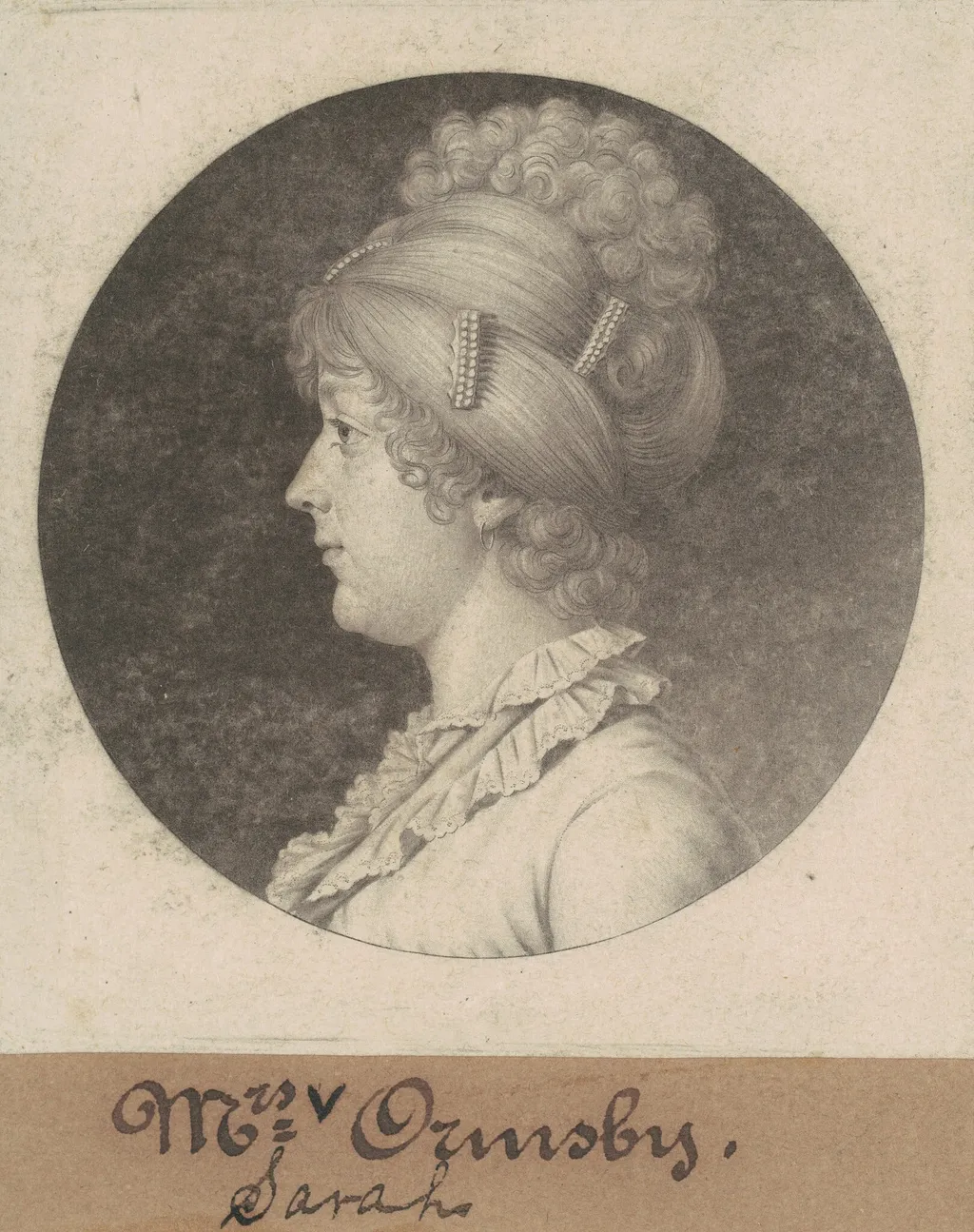
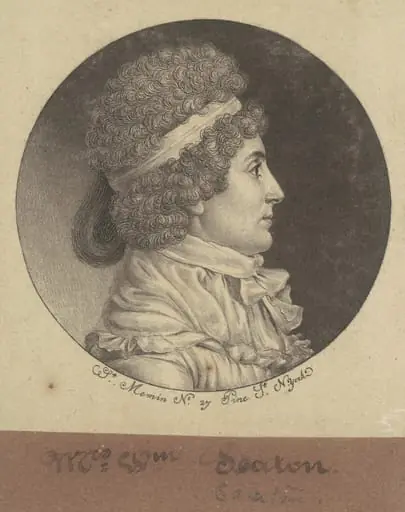
Sarah Mahon Ormsby is an ink print by the Romanticist artist Charles Balthazar Julien Févret de Saint-Mémin. It dates from 1801 and is held in the collection of the National Gallery of Art.
About this work
Overview
The image is mounted on a brown wove paper support, typical of the period’s print presentation.
Sarah Mahon Ormsby is a printed portrait created in 1801 by Charles Balthazar Julien Févret de Saint-Mémin, using mezzotint and engraving techniques on wove paper. The image is mounted on a brown wove paper support, typical of the period’s print presentation. The work resides in the National Gallery of Art’s collection, where it exemplifies the precision and refinement characteristic of early 19th-century American portraiture in print.
Subject & Meaning
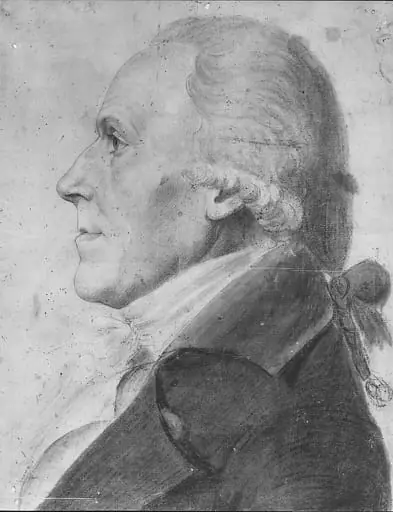
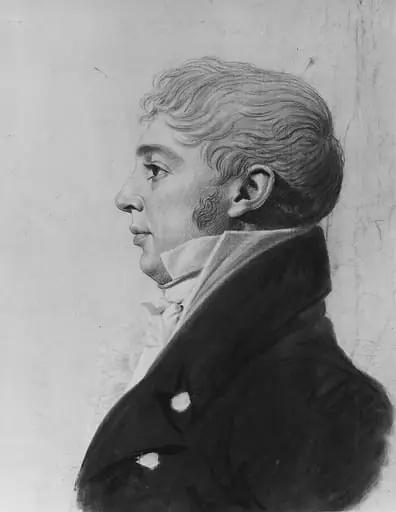
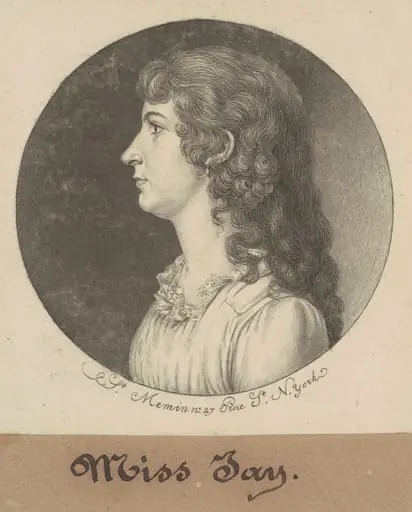
The sitter, Sarah Mahon Ormsby, is depicted with composed stillness, her gaze direct and unadorned by theatrical expression. Her attire—elaborate for the era—suggests social standing, while the careful rendering of lace, jewelry, and coiffure underscores a desire to convey dignity and refinement. The portrait functions less as a narrative and more as a formal record of personal presence within the cultural norms of the time.
Technique & Style
Saint-Mémin employed mezzotint and engraving to achieve subtle tonal gradations and fine linear detail. The mezzotint process, involving roughened copper plates, allowed for rich blacks and soft transitions, while engraving added crisp definition to features like hair and fabric. This combination demanded exceptional control, reflecting the artist’s training in European academic traditions and his adaptation to American portraiture demands.
History & Provenance
The portrait was produced during Saint-Mémin’s time in the United States, where he worked as a portraitist for elite families between 1796 and 1810. Created in 1801, the print likely served as a keepsake or status object for the Ormsby family. It entered the National Gallery of Art’s collection through established institutional acquisitions, preserving its historical and technical significance.
Context
In early 1800s America, engraved portraits were among the most accessible forms of visual representation for the affluent. Saint-Mémin’s work bridged European printmaking traditions with the emerging American elite’s desire for personal commemoration. His method contrasted with oil painting by offering reproducible, detailed likenesses that could be distributed beyond the original sitter’s circle.
Legacy
Saint-Mémin’s prints, including this one, remain important for understanding the dissemination of portraiture in the early republic. His technical rigor influenced later American printmakers and preserved the visual language of early national identity. The portrait stands as a quiet testament to the intersection of craftsmanship, social aspiration, and the limits of representation in a pre-photographic age.
Artist & collection

Artist
Charles Balthazar Julien Févret de Saint-Mémin
Charles Balthazar Julien Févret de Saint-Mémin (French pronunciation: ; 1770–1852) was a French portrait painter and museum director.