Artwork
John Francis William Ghequiere
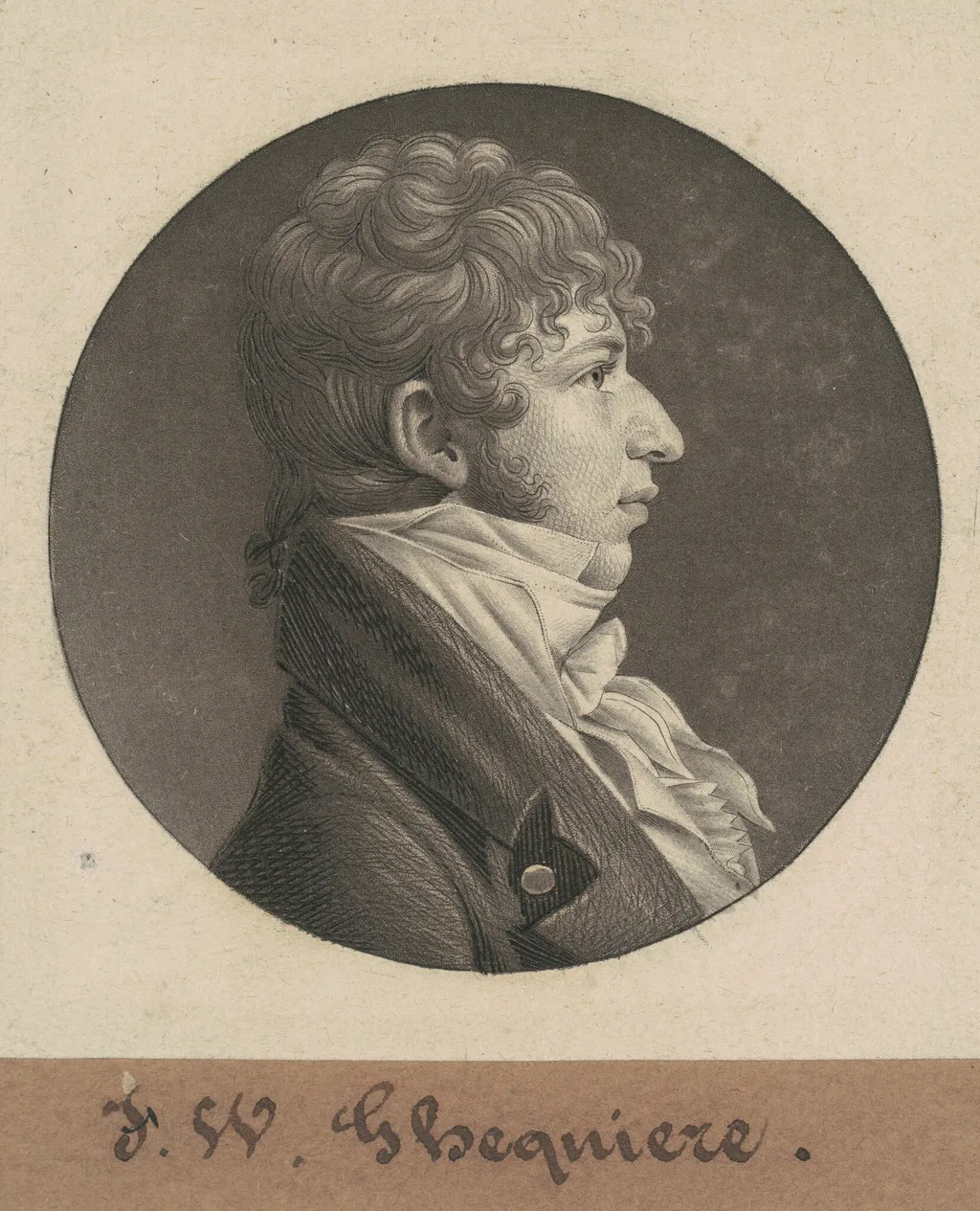
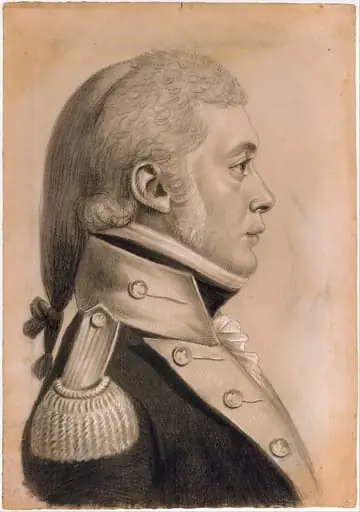
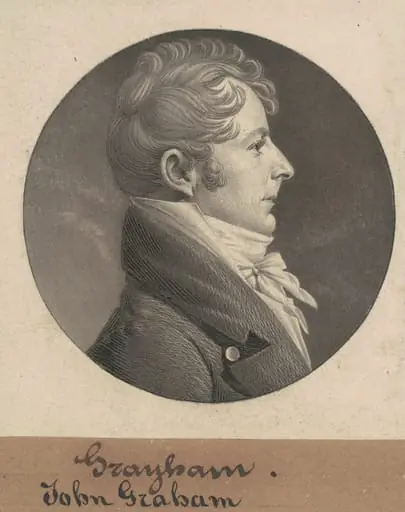
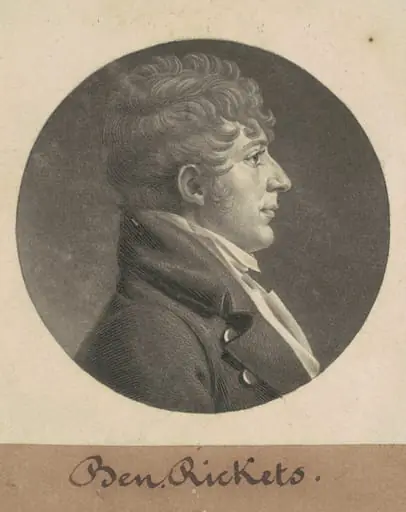
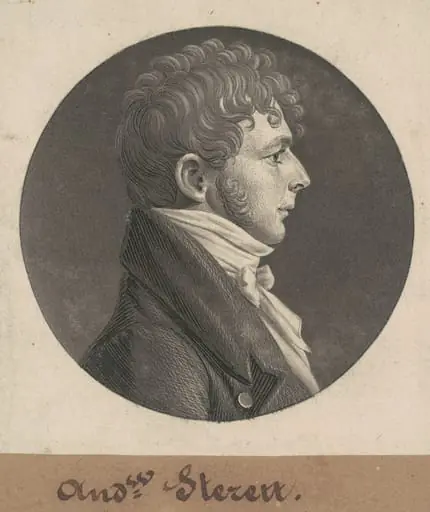
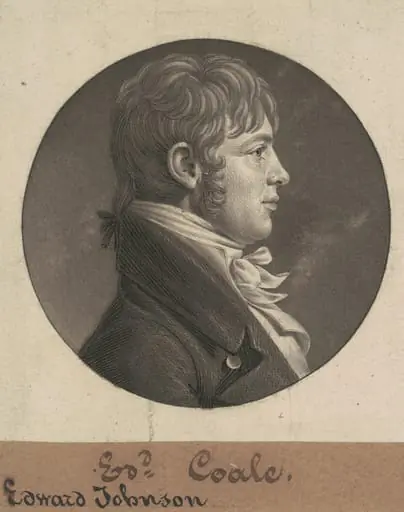
John Francis William Ghequiere is an ink print by the Romanticist artist Charles Balthazar Julien Févret de Saint-Mémin. It dates from 1804 and is held in the collection of the National Gallery of Art.
About this work
Overview
This small-scale portrait print presents John Francis William Ghequiere rendered in black mezzotint and engraving on wove paper, mounted to a brown backing. Measuring just 5.56 by 5.56 centimeters, the work demonstrates the capacity for fine detail within a compact format, characteristic of early‑19th‑century printmaking.
Subject & Meaning
The image depicts John Francis William Ghequiere, positioned against an unadorned background that focuses attention on his facial features and attire. The restrained setting suggests a straightforward, documentary intent rather than allegorical or narrative embellishment, typical of portraiture intended for personal or familial circulation.
Technique & Style
Févret de Saint‑Mémin in 1804, the piece combines mezzotint’s tonal richness with the linear precision of engraving.
Executed by Charles B. J. Févret de Saint‑Mémin in 1804, the piece combines mezzotint’s tonal richness with the linear precision of engraving. The artist achieved subtle gradations of light and shadow through careful burnishing of the mezzotint ground, while the engraved lines define facial contours and clothing details, illustrating the hybrid approach popular among French printmakers of the period.
History & Provenance
Created in the early Napoleonic era, the print reflects the era’s demand for portable, affordable likenesses of notable individuals. While specific ownership records are limited, the work’s survival on wove paper indicates it was likely intended for private collection rather than public exhibition, aligning with contemporary practices of distributing portrait prints among acquaintances.
Context
The portrait belongs to a broader tradition of French portrait prints that merged artistic skill with reproducibility. Saint‑Mémin, known for his work in both painting and printmaking, employed this technique to capture the likenesses of patrons and acquaintances, situating Ghequiere’s image within the social networks of early 19th‑century France.
Legacy
Although modest in size, the print exemplifies the technical proficiency achievable in mezzotint‑engraving hybrids. It serves as a reference point for scholars studying the diffusion of portraiture through print media and the nuanced craftsmanship of artists like Saint‑Mémin during a period of expanding visual culture.
Artist & collection

Artist
Charles Balthazar Julien Févret de Saint-Mémin
Charles Balthazar Julien Févret de Saint-Mémin (French pronunciation: ; 1770–1852) was a French portrait painter and museum director.