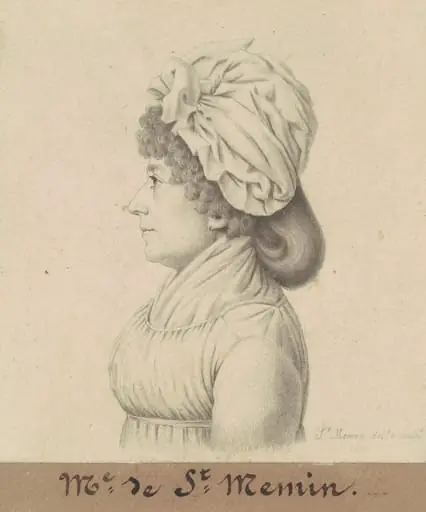
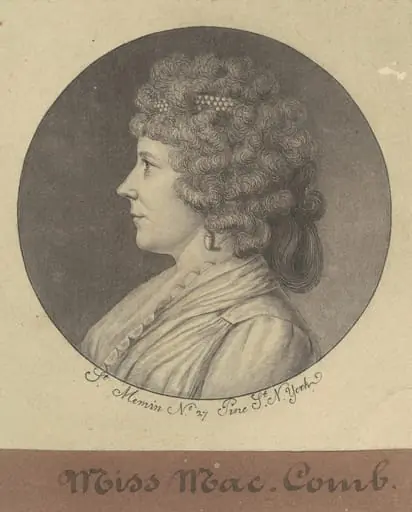
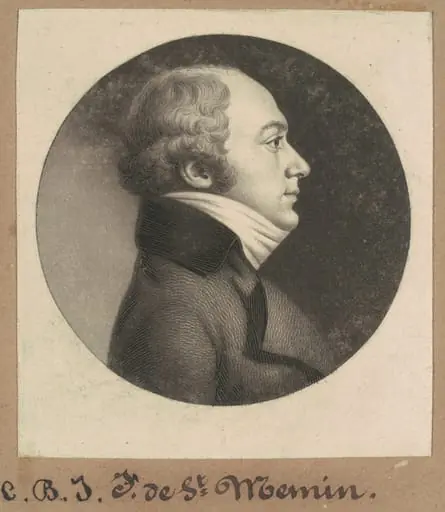
Artwork
Martha Round Caldwell
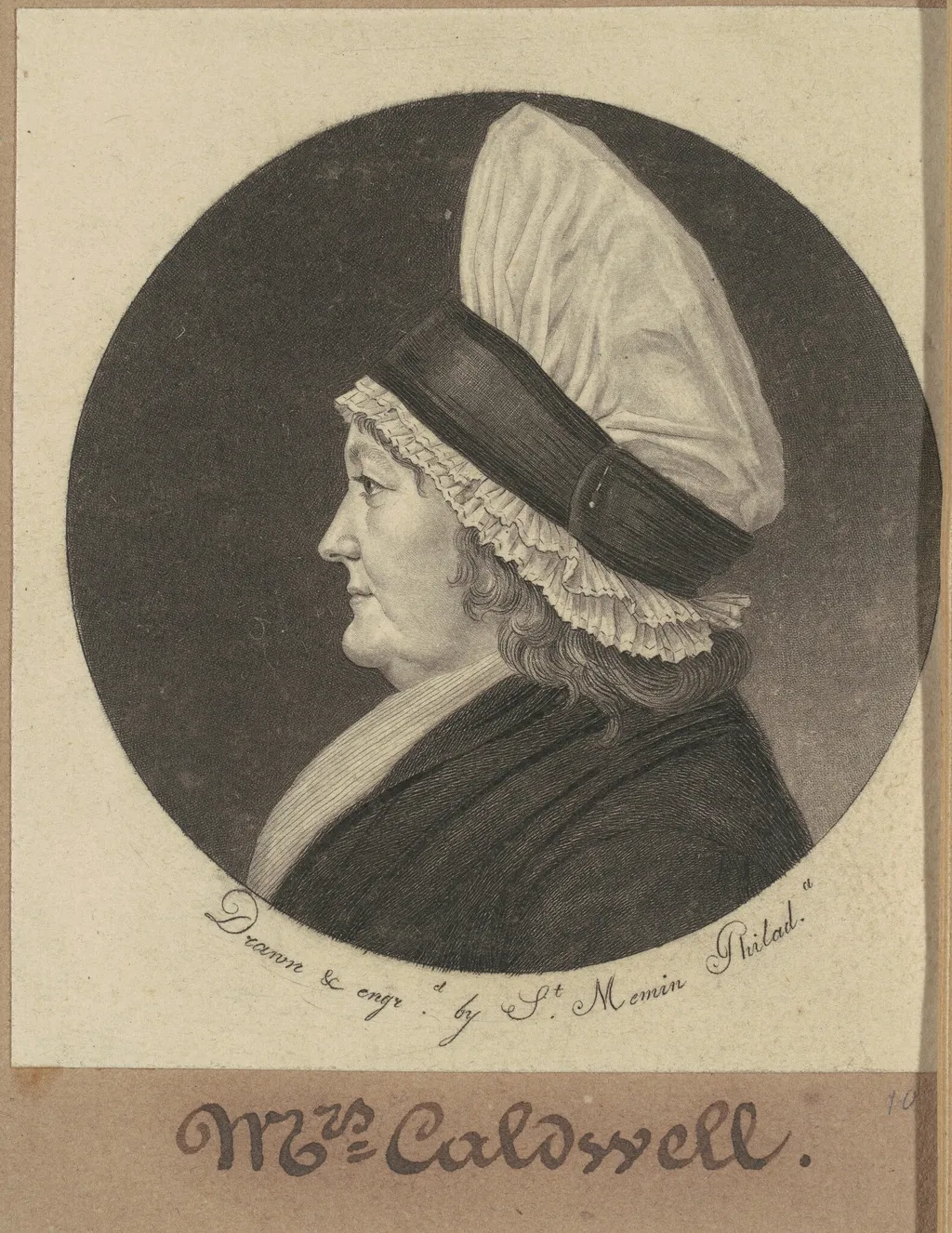
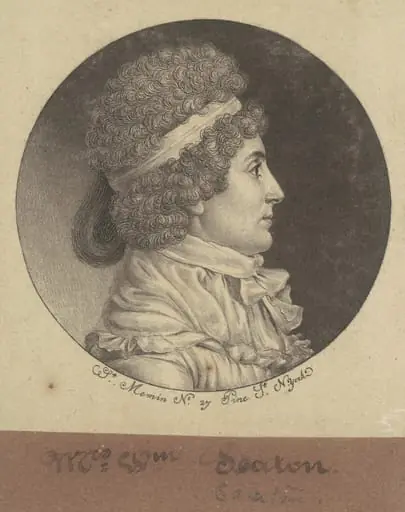
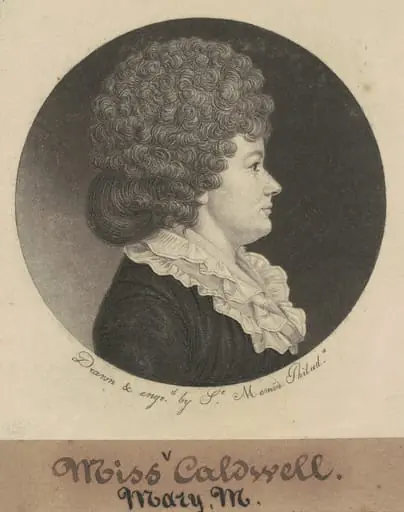
Martha Round Caldwell is an ink print by the Romanticist artist Charles Balthazar Julien Févret de Saint-Mémin. It dates from 1800 and is held in the collection of the National Gallery of Art.
About this work
Overview
Executed in mezzotint and engraving on wove paper, it is mounted on a brown wove support.
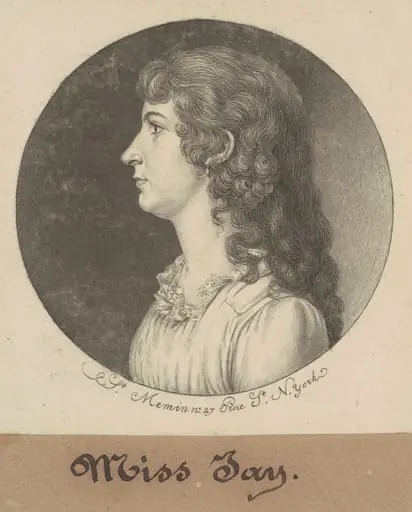
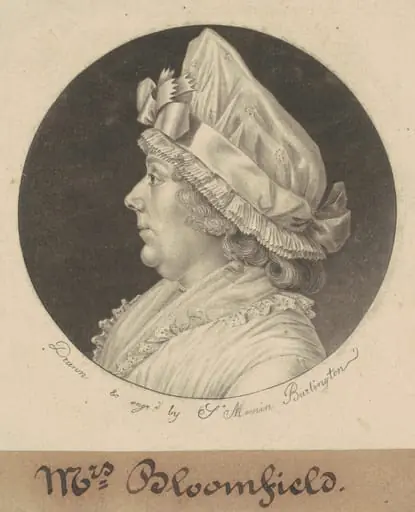
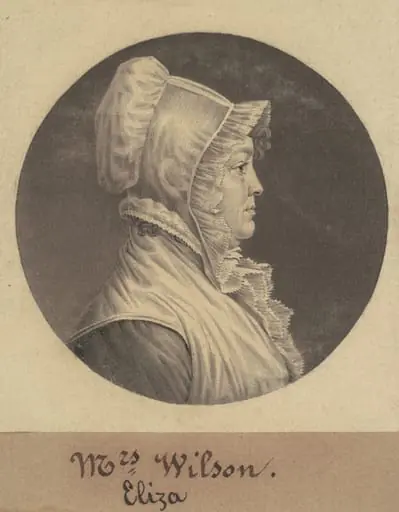
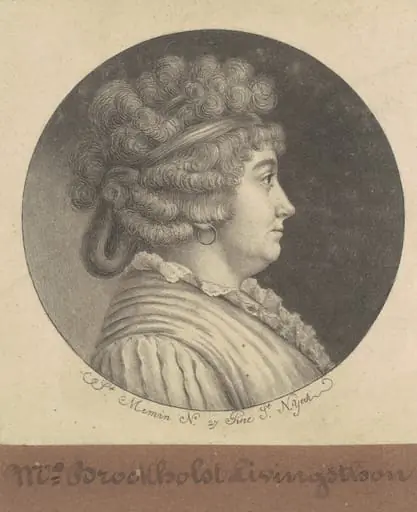
Martha Round Caldwell is a portrait print created by Charles B. J. Févret de Saint-Mémin between 1798 and 1803. Executed in mezzotint and engraving on wove paper, it is mounted on a brown wove support. The work belongs to a series of portraits Saint-Mémin produced during his time in the United States, documenting prominent individuals through precise graphic techniques. The piece reflects his technical focus and commitment to capturing individual likeness.
Subject & Meaning
The portrait depicts Martha Round Caldwell, a woman of likely social standing, rendered in period-appropriate attire that reflects late 18th-century fashion. Her composed expression and formal dress suggest a desire to convey dignity and social identity. Saint-Mémin’s portraits were not merely likenesses but records of personal and cultural presence, serving as visual archives of early American society.
Technique & Style
Saint-Mémin employed mezzotint, a labor-intensive intaglio method, to achieve subtle tonal gradations and rich textures in the fabric and skin. Engraving added fine linear detail to features and ornamentation. The combination allowed for a lifelike rendering of light and shadow, emphasizing realism without idealization. His technique prioritized accuracy over ornament, aligning with his documentary approach to portraiture.
History & Provenance
Created during Saint-Mémin’s residency in the United States, the portrait was part of a larger project to compile a visual catalog of notable Americans. The work remained within his personal collection and was later dispersed through institutional acquisitions. Its preservation on mounted paper indicates careful handling and recognition of its value as a historical document.
Context
In the early republic, portraiture served as a means of establishing personal and civic identity. Saint-Mémin, a French émigré, brought European printmaking traditions to America, adapting them to a new cultural context. His portraits of civic leaders, merchants, and their families contributed to a growing visual record of American society during a formative period.
Legacy
Saint-Mémin’s portraits, including that of Martha Round Caldwell, remain significant for their technical precision and historical documentation. They offer insight into the appearance, dress, and social demeanor of early American elites. His body of work is studied today as a key resource for understanding the intersection of art, identity, and print culture in the young United States.
Artist & collection

Artist
Charles Balthazar Julien Févret de Saint-Mémin
Charles Balthazar Julien Févret de Saint-Mémin (French pronunciation: ; 1770–1852) was a French portrait painter and museum director.