Artwork
Mary Wright Sonntag Wells
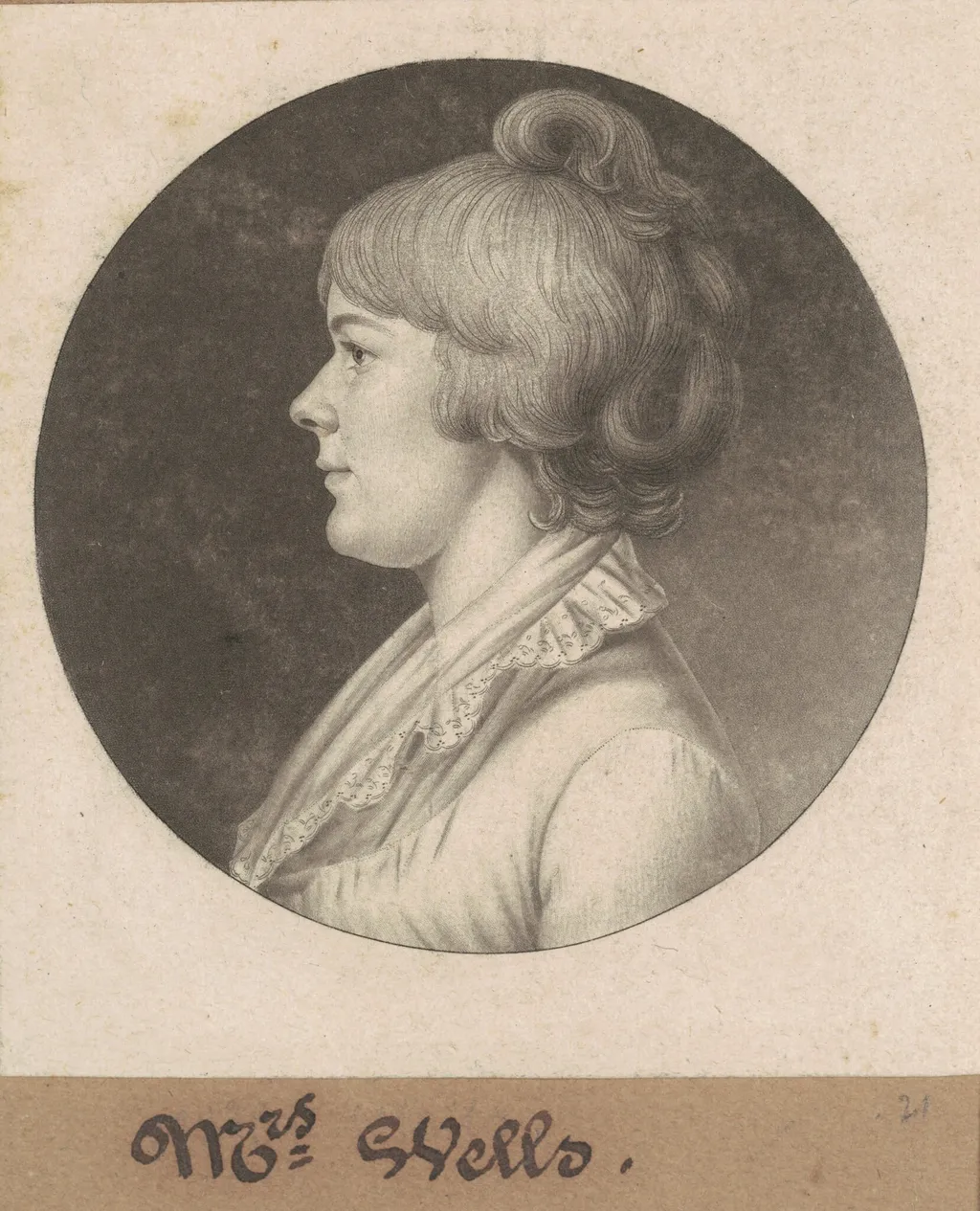
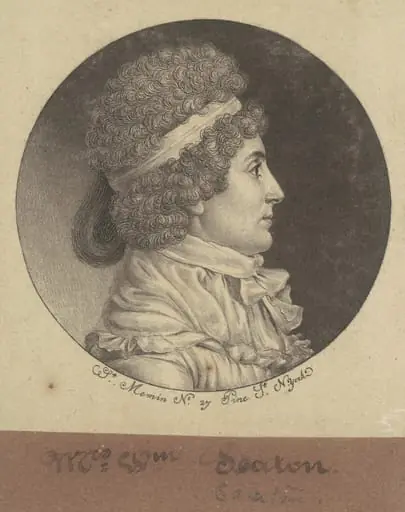
Mary Wright Sonntag Wells is an ink print by the Romanticist artist Charles Balthazar Julien Févret de Saint-Mémin. It dates from 1802 and is held in the collection of the National Gallery of Art.
About this work
Overview
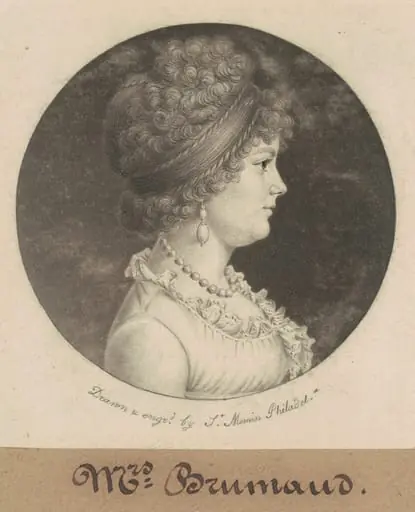
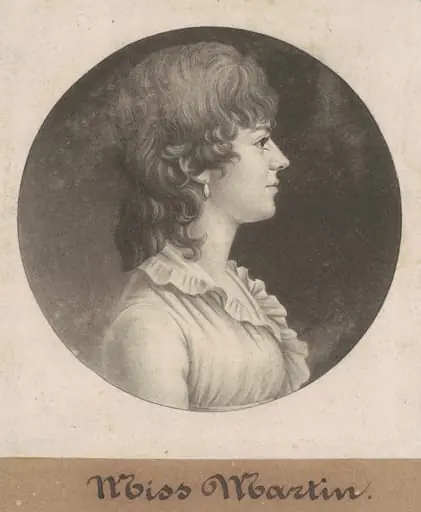
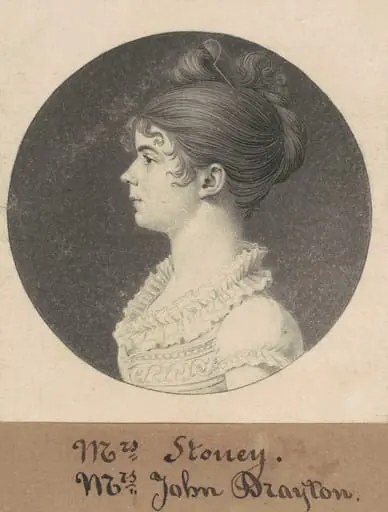
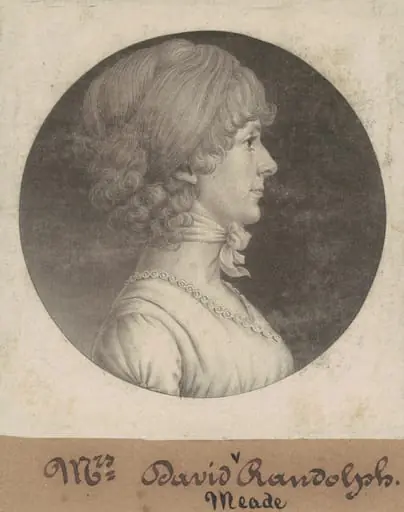
Created in 1802, this black‑and‑white print presents Mary Wright Sonntag Wells in a seated pose. Rendered through mezzotint and engraving on wove paper, the image is mounted on a brown‑toned backing, giving it a subtle contrast that emphasizes the sitter’s calm expression and refined attire.
Subject & Meaning
The work depicts Mary Wright Sonntag Wells, a woman of the early nineteenth century, rendered with a gentle smile and composed demeanor. The portrait reflects the period’s conventions of decorum, presenting the sitter as polite and properly attired, embodying the ideals of genteel femininity of her time.
Technique & Style
Charles B. J. Févret de Saint‑Mémin employed mezzotint—a tonal printing method that allows for rich gradations—combined with fine engraving lines to capture delicate details such as hair texture and fabric folds. The use of black ink on wove paper, later mounted to a brown sheet, creates depth while maintaining a restrained, documentary quality typical of early American portrait prints.
History & Provenance
The portrait was produced by French‑American artist Charles B. J. Févret de Saint‑Mémin, known for his portraiture of notable figures in the early United States. The print has remained within collections of American prints, documenting both the sitter’s personal history and the artist’s practice of disseminating likenesses through reproducible media.
Artist & collection

Artist
Charles Balthazar Julien Févret de Saint-Mémin
Charles Balthazar Julien Févret de Saint-Mémin (French pronunciation: ; 1770–1852) was a French portrait painter and museum director.