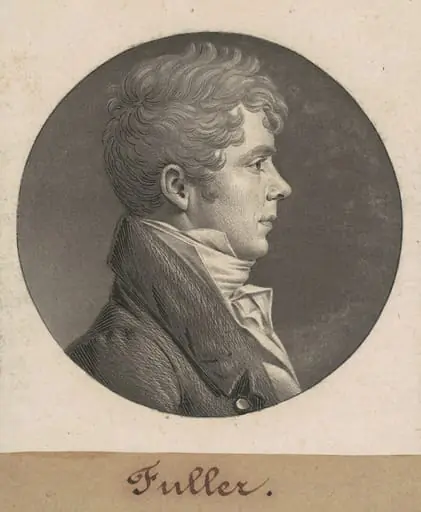
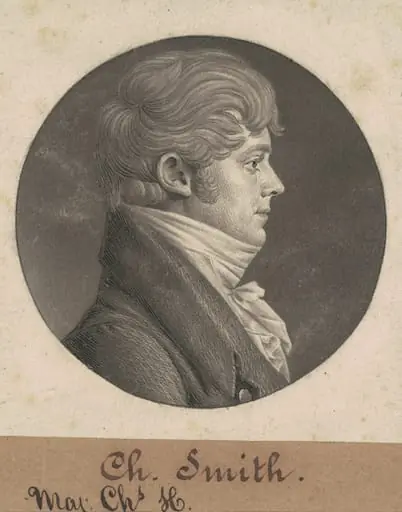
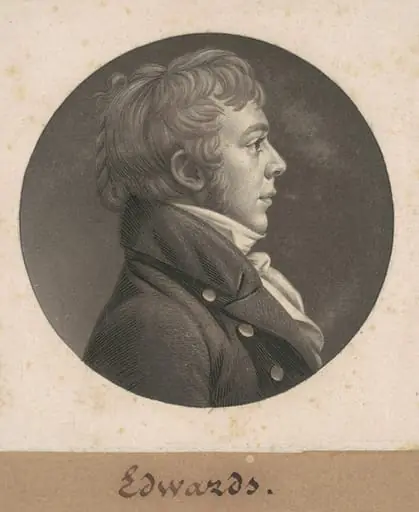
Artwork
Samuel Hambleton
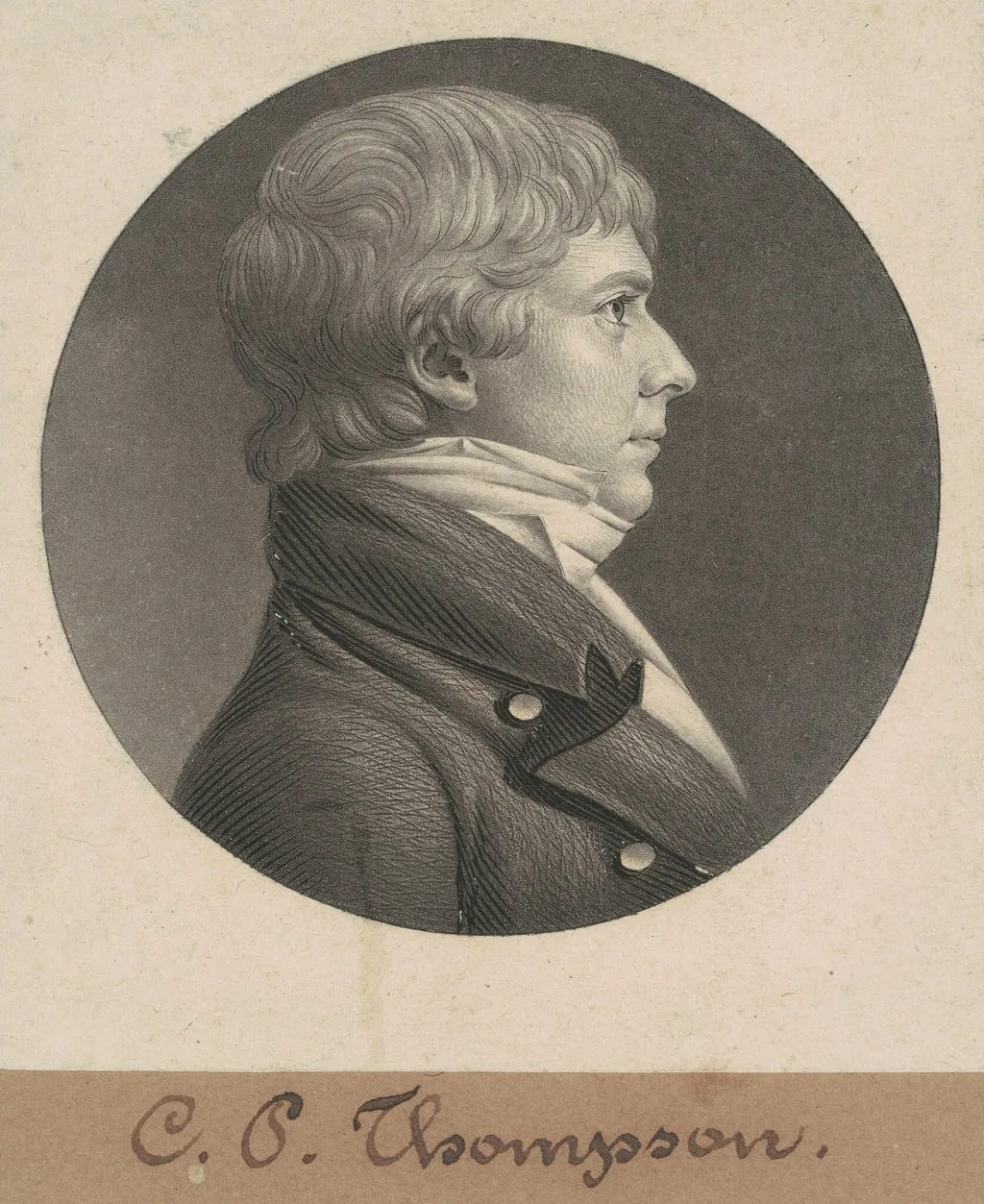
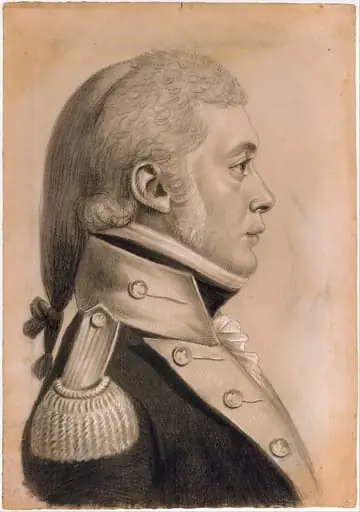
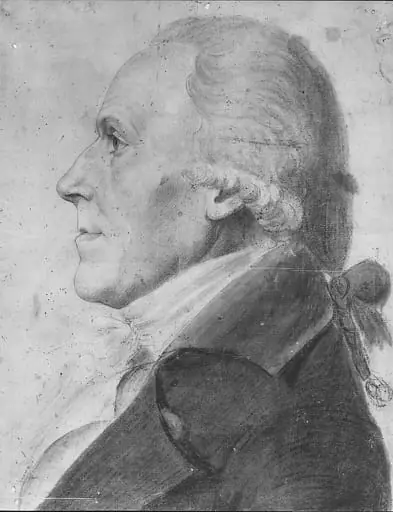
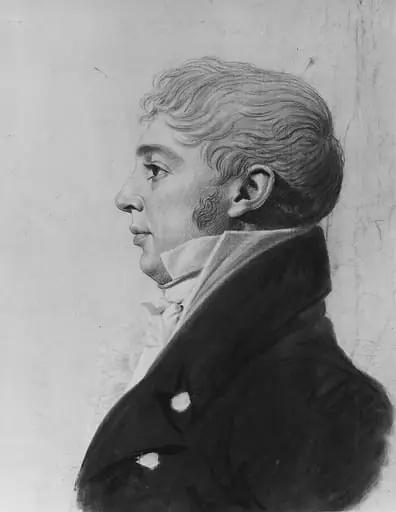
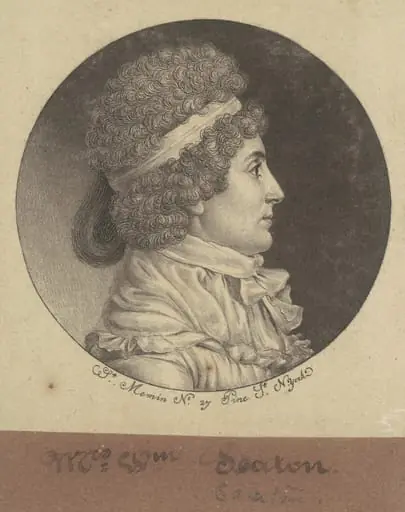
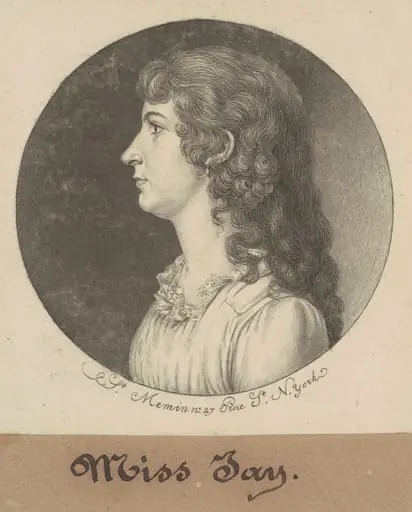
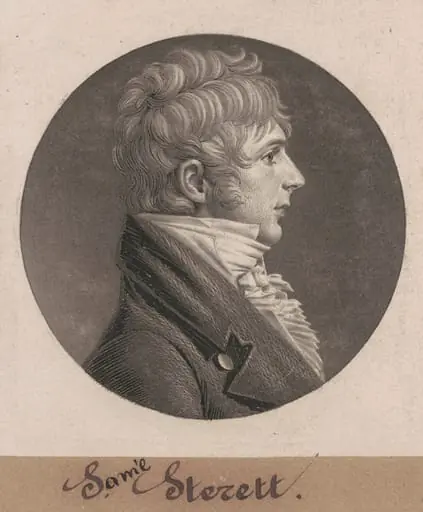
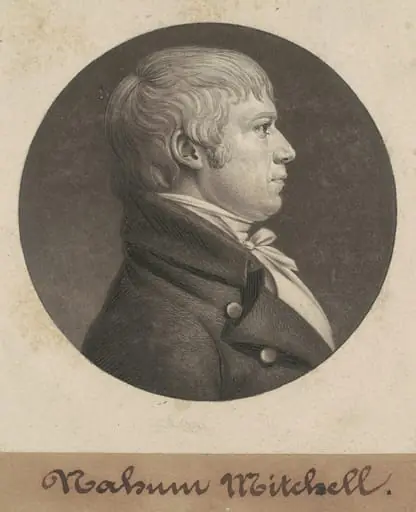
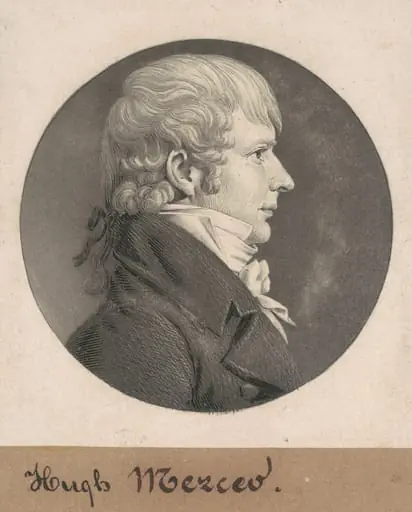
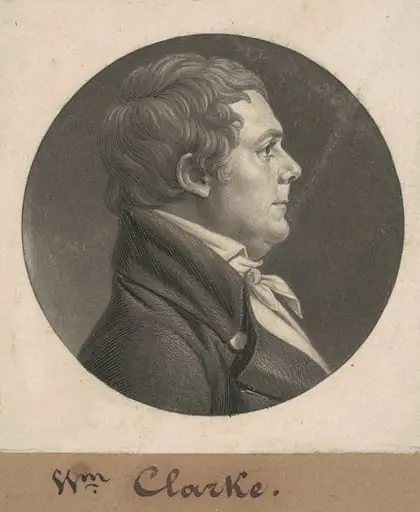
Samuel Hambleton is an ink print by the Romanticist artist Charles Balthazar Julien Févret de Saint-Mémin. It dates from 1806 and is held in the collection of the National Gallery of Art. Created in 1806 by French artist Charles B.
About this work
Overview
Created in 1806 by French artist Charles B. J. Févret de Saint‑Mémin, this small print depicts the naval officer Samuel Hambleton. Executed as a mezzotint and engraving on wove paper, the work measures just under six centimeters on each side, presenting a compact yet detailed likeness.
Subject & Meaning
The portrait captures Hamletton’s face in stark monochrome, emphasizing the play of light across his cheek and forehead while deep shadows outline the contours of his eyes and mouth. The rendering conveys a sense of solemnity and presence, typical of early‑19th‑century portraiture intended to record the individual’s status.
Technique & Style
Fine lines were then incised with a burin to define details such as the curls of Hamletton’s hair, creating a nuanced tonal range within the limited scale.
Saint‑Mémin employed the labor‑intensive mezzotint process, beginning with a uniformly roughened copper plate. By smoothing selected areas, he produced the luminous highlights on the subject’s features, while leaving the surrounding surface rough to retain deep, velvety blacks. Fine lines were then incised with a burin to define details such as the curls of Hamletton’s hair, creating a nuanced tonal range within the limited scale.
Context
Mezzotint was prized in the early 1800s for its ability to render subtle gradations of tone, making it a favored medium for portraiture before the rise of photography. Saint‑Mémin, known for his skill in both engraving and painting, applied this technique to convey the gravitas of a naval figure during a period when portrait prints served both commemorative and documentary functions.
Artist & collection

Artist
Charles Balthazar Julien Févret de Saint-Mémin
Charles Balthazar Julien Févret de Saint-Mémin (French pronunciation: ; 1770–1852) was a French portrait painter and museum director.