Artwork
Title Page: Oval Design from the Church of San Michele de Bosco, Bologna
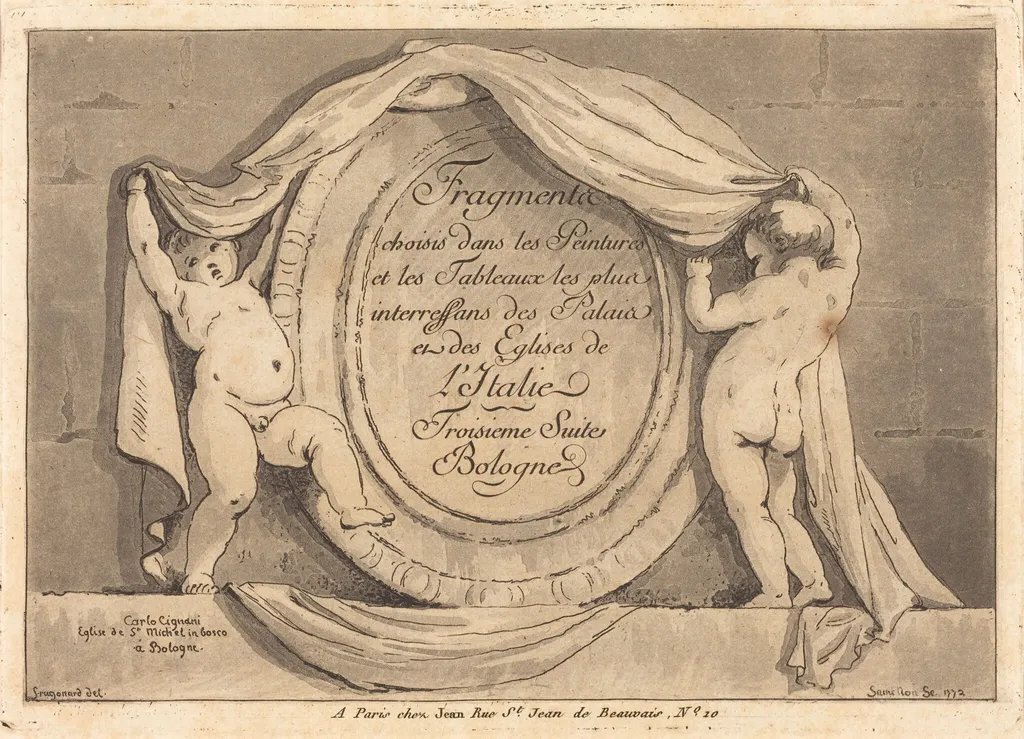
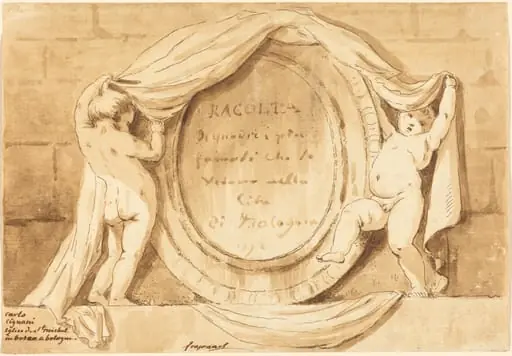
Title Page: Oval Design from the Church of San Michele de Bosco, Bologna is an ink print by the Romanticist artist Jean-Claude-Richard, Abbé de Saint-Non. It dates from 1772 and is held in the collection of the National Gallery of Art.
About this work
Overview
It belongs to a larger series documenting architectural and sculptural details of Italian religious sites.
This print, created in 1772 by Jean-Claude-Richard, Abbé de Saint-Non, is an etching and aquatint depicting a decorative fragment originally from the Church of San Michele de Bosco in Bologna. It belongs to a larger series documenting architectural and sculptural details of Italian religious sites. The composition centers on a worn oval frame containing a faint rendering of a building with figures, surrounded by two nude figures supporting a curved stone element resembling a lintel or arch.
Subject & Meaning
The two nude figures, positioned as if bearing the weight of a stone slab, may reference classical allegories of endurance or the preservation of sacred architecture. The faded oval within suggests a lost or deteriorated mural or relief, reinforcing the theme of fragmentary survival. The inscription labeling it a 'fragment' underscores the print’s purpose: to record artistic remnants at risk of being forgotten or lost to time.
Technique & Style
Saint-Non employed etching and aquatint to achieve subtle tonal gradations and a sense of aged texture. The heavy lines defining the stone slab contrast with the soft, blurred outlines of the interior architectural scene, mimicking the effects of weathering and time. The overall aesthetic is deliberately muted, emphasizing the antiquity of the source material rather than decorative flourish.
History & Provenance
The print was produced as part of a documented series commissioned to catalog significant Italian artworks during the late 18th century. Saint-Non, a French clergyman and art collector, traveled extensively in Italy to record monuments and sculptures. This particular plate was likely compiled for scholarly or aristocratic audiences interested in preserving visual records of ecclesiastical art before further decay or political upheaval.
Context
In the decades before the French Revolution, European intellectuals and collectors increasingly sought to document classical and Renaissance heritage. This print reflects a broader movement to archive cultural artifacts through reproductive prints, especially those tied to religious institutions. The choice of a Bolognese church fragment aligns with growing interest in regional Italian art beyond Rome and Florence.
Legacy
Though not widely exhibited today, the print remains a valuable record of 18th-century antiquarian practices. It exemplifies how printmaking served as a tool for cultural preservation, capturing details of artworks that may no longer survive. Its inclusion in institutional collections, such as the National Gallery of Art, underscores its role as a historical document rather than a standalone artistic achievement.
Artist & collection

Artist
Jean-Claude-Richard, Abbé de Saint-Non
Saint-Non, Jean-Claude-Richard, Abbé de (1727–1791) was an artist.

 A Gardener and a Gentleman
 Interior of a Roman Villa
 Le concert
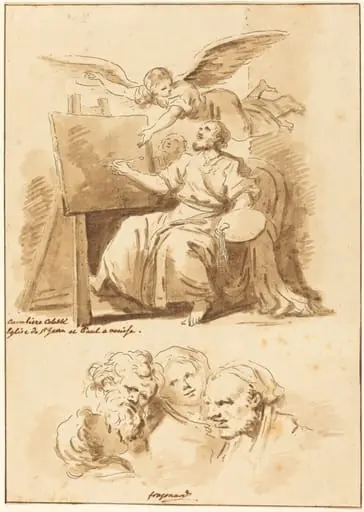 Saint Luke at His Easel and Four Expressive Heads
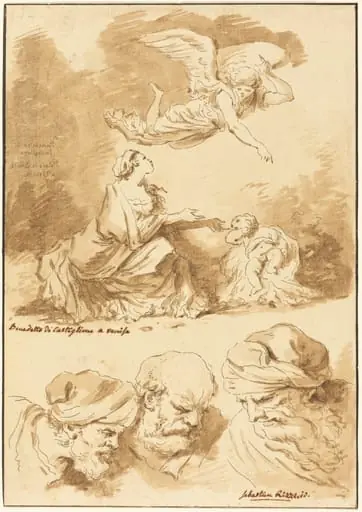 Hagar Consoled by an Angel (from a painting by Castiglione) and Three Heads of Old Men (from a painting by Ricci of Jesus and the Adultress)
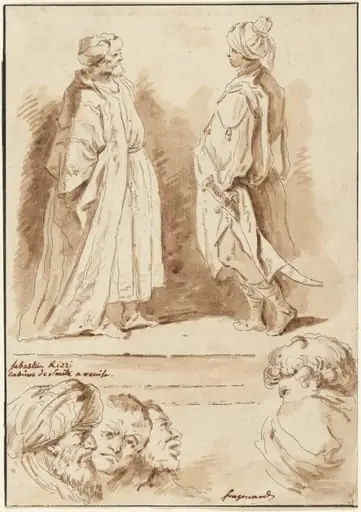 Details from "The Adoration of the Magi" and "The Pool at Bethesda"
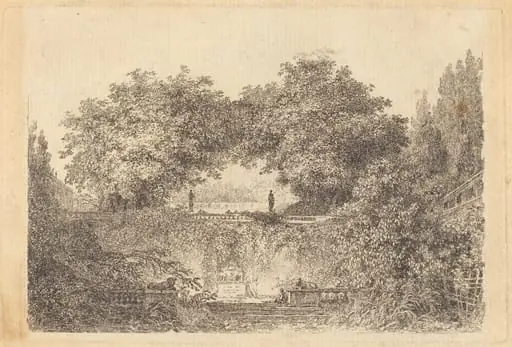 Le Petit Parc
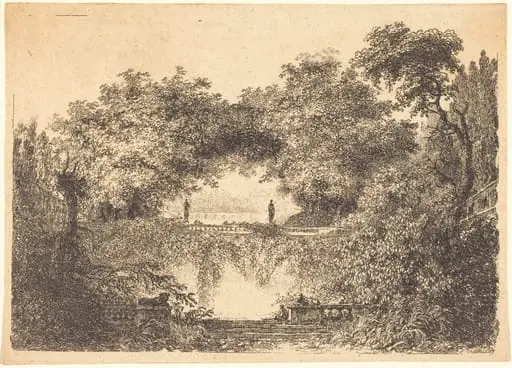 Le Petit Parc
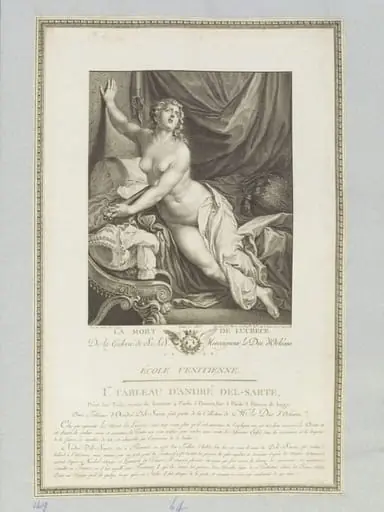 The Death of Lucretia
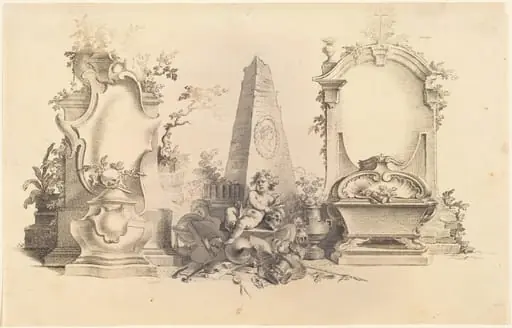 Cartouche Moderne with Emblems of Death
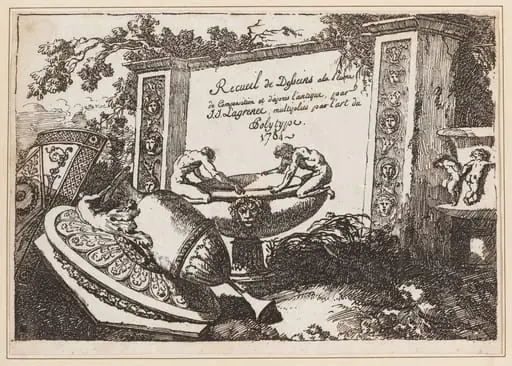 Title Page
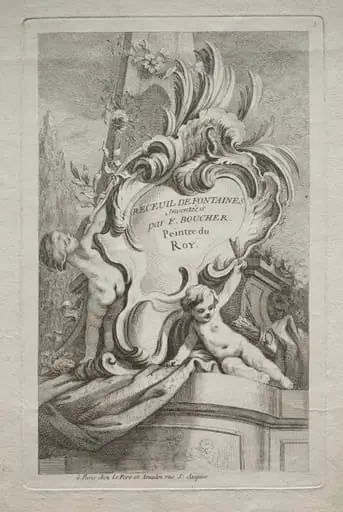 No. 1: Title Page
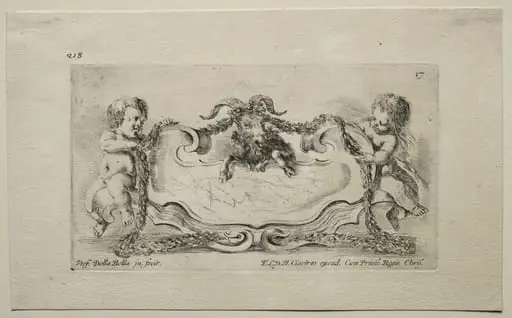 Collection of Various Caprices and New Designs of Cartouches and Ornaments: No 17
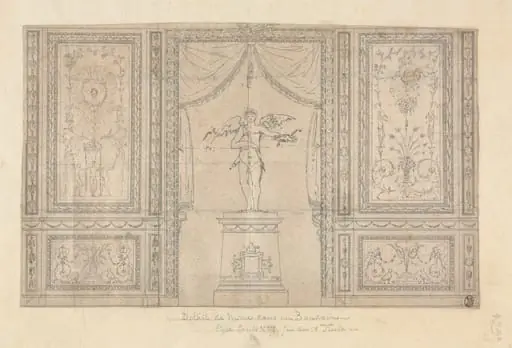 Statue of Cupid in a Wall Niche
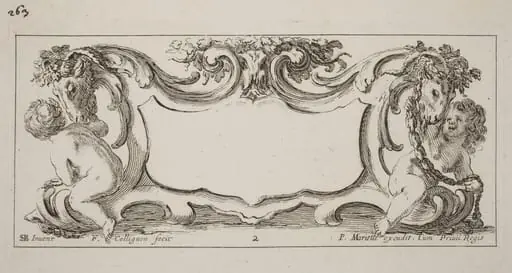 Cartouche
 Title Page
 Venus en reflection
 The Four Seasons
 Fountain in a Summerhouse
 Title Page: Oval Design from the Church of San Michele de Bosco, Bologna